Jari Ojala – författare
Visar alla böcker från författaren Jari Ojala. Handla med fri frakt och snabb leverans.
12 produkter
Nordic Economic, Social and Political Model
Challenges in the 21st Century
Av Anu Koivunen, Jari Ojala m. fl.
Inbunden, 2021
2601 kr
Lägg i varukorg
The Nordic Model is the 20th-century Scandinavian recipe for combining stable democracies, individual freedom, economic growth and comprehensive systems for social security. But what happens when Sweden and Finland – two countries topping global indexes for competitiveness, productivity, growth, …
Nordic Economic, Social and Political Model
Challenges in the 21st Century
Av Anu Koivunen, Jari Ojala m. fl.
Häftad, 2023
671 kr
Lägg i varukorg
The Nordic Model is the 20th-century Scandinavian recipe for combining stable democracies, individual freedom, economic growth and comprehensive systems for social security. But what happens when Sweden and Finland – two countries topping global indexes for competitiveness, productivity, growth, …
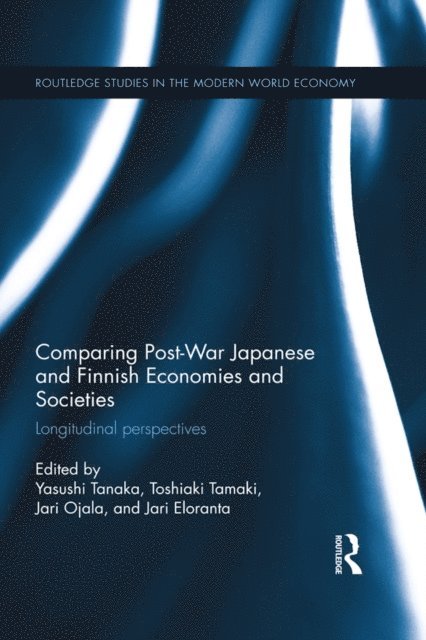
Comparing Post War Japanese and Finnish Economies and Societies
Longitudinal perspectives
Av Yasushi Tanaka, Toshiaki Tamaki m. fl.
Inbunden, 2014
2760 kr
Lägg i varukorg
This book compares two countries with striking parallels in economic and political outcomes, yet with some distinct features in terms of institutional structures, relative size, and culture. Therefore, this book forms a fruitful platform for the study of the similarities and differences in the …
Comparing Post War Japanese and Finnish Economies and Societies
Longitudinal perspectives
Av Yasushi Tanaka, Toshiaki Tamaki m. fl.
Häftad, 2018
725 kr
Lägg i varukorg
This book compares two countries with striking parallels in economic and political outcomes, yet with some distinct features in terms of institutional structures, relative size, and culture. Therefore, this book forms a fruitful platform for the study of the similarities and differences in the …
Comparing Post War Japanese and Finnish Economies and Societies
Longitudinal perspectives
Av Jari Eloranta, Jari Ojala m. fl.
E-bok, 2014
849 kr
Lägg i varukorg
This book compares two countries with striking parallels in economic and political outcomes, yet with some distinct features in terms of institutional structures, relative size, and culture. Therefore, this book forms a fruitful platform for the study of the similarities and differences in the …
Comparing Post War Japanese and Finnish Economies and Societies
Longitudinal perspectives
Av Jari Eloranta, Jari Ojala m. fl.
E-bok, 2014
830 kr
Lägg i varukorg
This book compares two countries with striking parallels in economic and political outcomes, yet with some distinct features in terms of institutional structures, relative size, and culture. Therefore, this book forms a fruitful platform for the study of the similarities and differences in the …
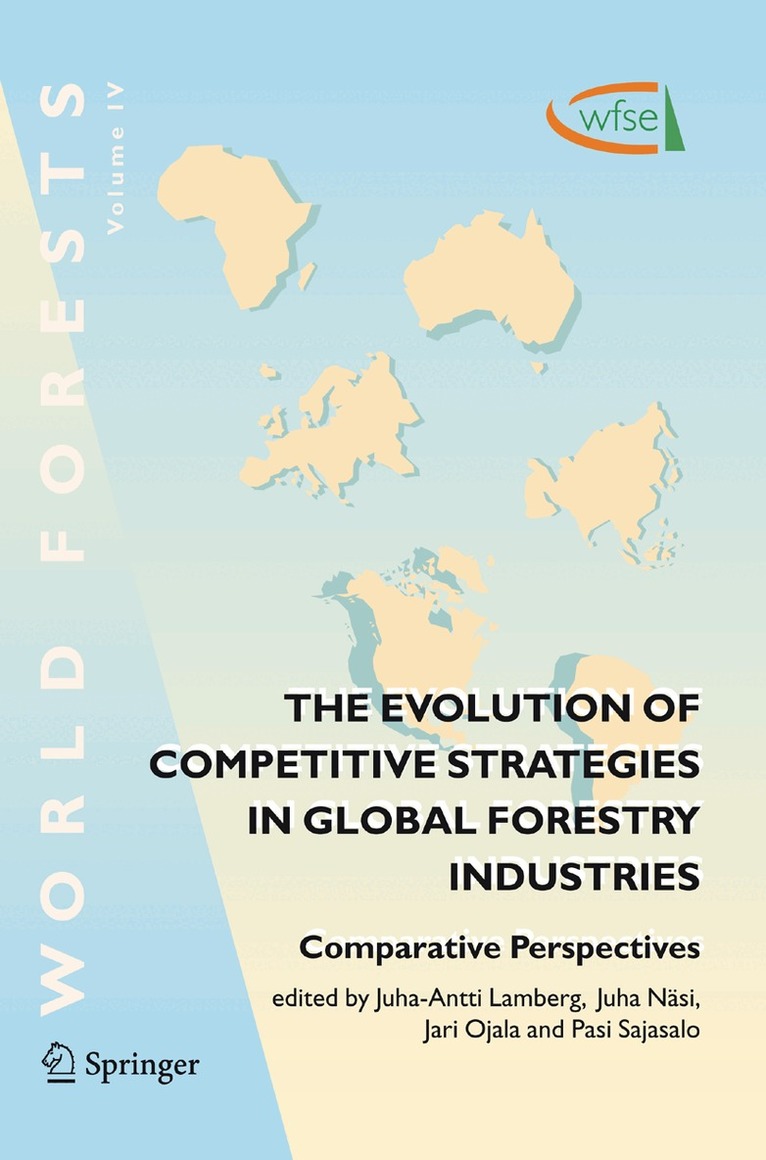
Evolution of Competitive Strategies in Global Forestry Industries
Comparative Perspectives
Av Juha-Antti Lamberg, Juha Näsi m. fl.
Inbunden, 2005
1691 kr
Lägg i varukorg
An analysis of the evolution of competitive strategies within the forestry industry is presented in this book. The argument is that the chosen context serves as an illustrative setting for a discussion related to global corporate evolution. Therefore, this analytical and rigorous book contributes …
Evolution of Competitive Strategies in Global Forestry Industries
Comparative Perspectives
Av Pasi Sajasalo, Jari Ojala m. fl.
E-bok, 2006
2127 kr
Lägg i varukorg
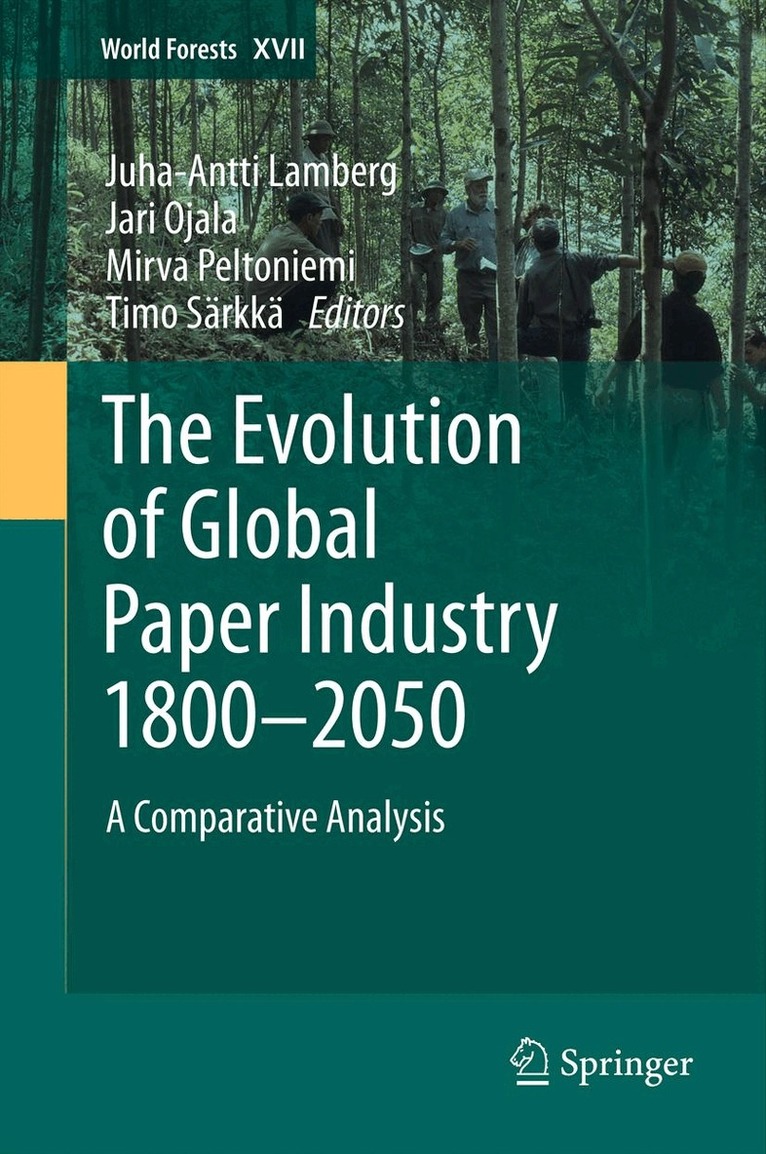
Evolution of Global Paper Industry 1800¬–2050
A Comparative Analysis
Av Juha-Antti Lamberg, Jari Ojala m. fl.
Inbunden, 2012
2808 kr
Lägg i varukorg
This book presents an historical analysis of the global paper industry evolution from a comparative perspective. At the centre are 16 producing countries (Finland, Sweden, Norway, the USA, Germany, Canada, Japan, the UK, the Netherlands, Italy, Spain, Portugal, Chile, Brazil, Uruguay and Russia). A …
Evolution of Global Paper Industry 1800 -2050
A Comparative Analysis
Av Timo Sarkka, Mirva Peltoniemi m. fl.
E-bok, 2012
3344 kr
Lägg i varukorg
This book presents an historical analysis of the global paper industry evolution from a comparative perspective. At the centre are 16 producing countries (Finland, Sweden, Norway, the USA, Germany, Canada, Japan, the UK, the Netherlands, Italy, Spain, Portugal, Chile, Brazil, Uruguay and Russia). A …
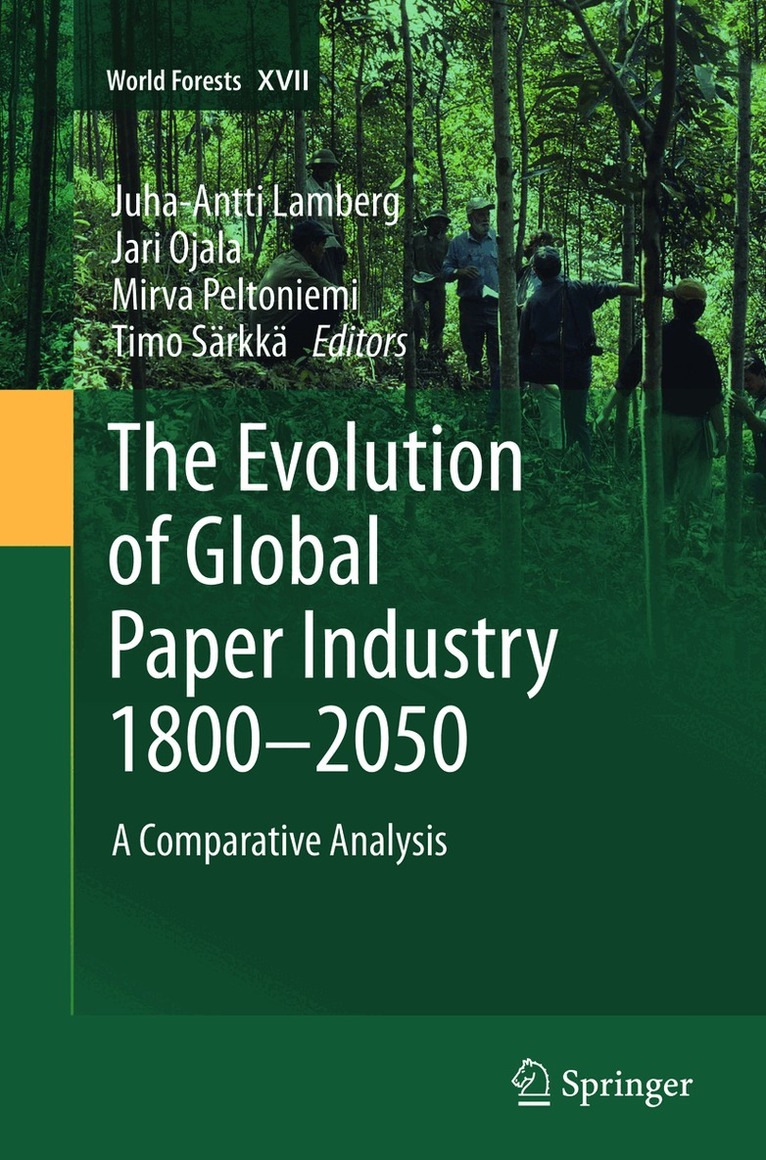
Evolution of Global Paper Industry 1800¬–2050
A Comparative Analysis
Av Juha-Antti Lamberg, Jari Ojala m. fl.
Häftad, 2015
2808 kr
Lägg i varukorg
This book presents an historical analysis of the global paper industry evolution from a comparative perspective. At the centre are 16 producing countries (Finland, Sweden, Norway, the USA, Germany, Canada, Japan, the UK, the Netherlands, Italy, Spain, Portugal, Chile, Brazil, Uruguay and Russia). A …
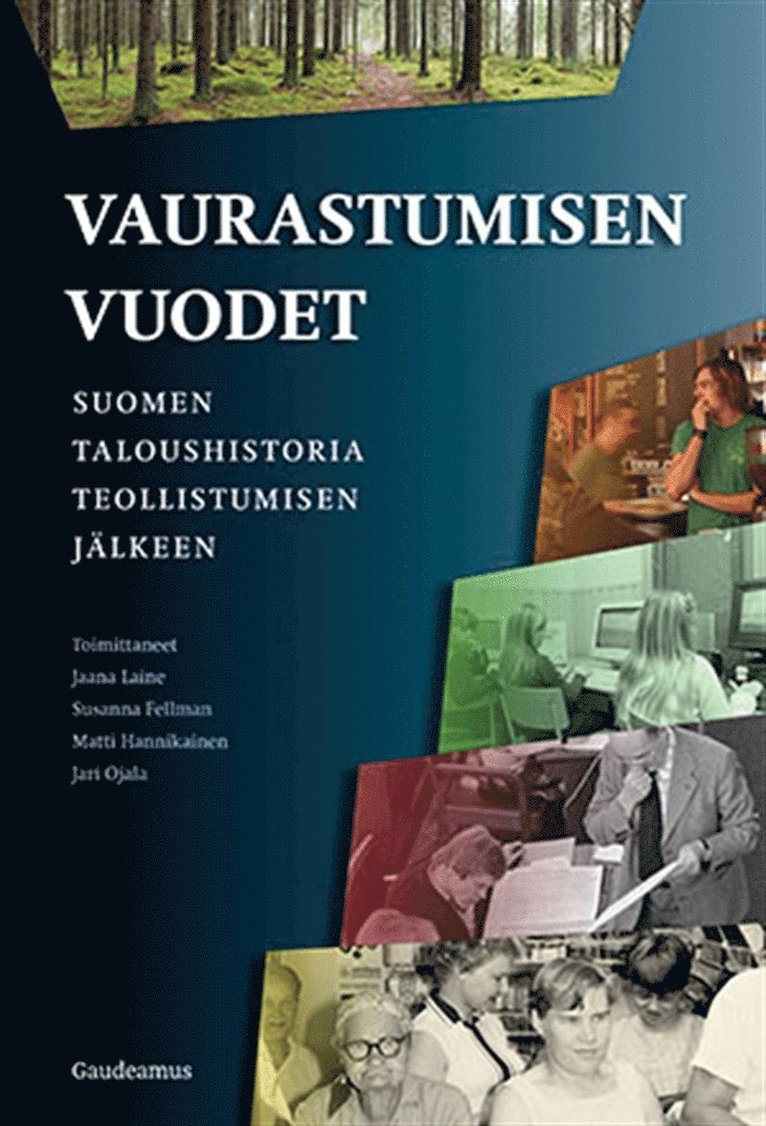
Vaurastumisen vuodet
Av Jaana Laine, Susanna Fellman m. fl.
E-bok, 2019
299 kr
Lägg i varukorg
Maailmansodan jälkeen Suomi oli teollistuva maatalousyhteiskunta, mutta puolessa vuosisadassa se nousi takamatkalta maailman vauraimpien maiden joukkoon, jälkiteolliseksi hyvinvointiyhteiskunnaksi. Talouspolitiikka siirtyi vuosikymmenten aikana vahvasta sääntelystä kohti liberaalia …