Trang Phan – författare
Visar alla böcker från författaren Trang Phan. Handla med fri frakt och snabb leverans.
9 produkter
Syntax of Vietnamese Tense, Aspect, and Negation
Av Trang Phan
E-bok, 2023
768 kr
Lägg i varukorg
The Syntax of Vietnamese Tense, Aspect, and Negation investigates familiar grammatical phenomena including Tense, Aspect, and Negation in a theoretically understudied language, Vietnamese. The purpose of this book is to thoroughly examine how these categories are realised and how they interact with …
Syntax of Vietnamese Tense, Aspect, and Negation
Av Trang Phan
E-bok, 2023
768 kr
Lägg i varukorg
The Syntax of Vietnamese Tense, Aspect, and Negation investigates familiar grammatical phenomena including Tense, Aspect, and Negation in a theoretically understudied language, Vietnamese. The purpose of this book is to thoroughly examine how these categories are realised and how they interact with …
Syntax of Vietnamese Tense, Aspect, and Negation
Av Trang Phan
Inbunden, 2023
2601 kr
Lägg i varukorg
The Syntax of Vietnamese Tense, Aspect, and Negation investigates familiar grammatical phenomena including Tense, Aspect, and Negation in a theoretically understudied language, Vietnamese.The purpose of this book is to thoroughly examine how these categories are realised and how they interact with …
Syntax of Vietnamese Tense, Aspect, and Negation
Av Trang Phan
Häftad, 2024
671 kr
Lägg i varukorg
The Syntax of Vietnamese Tense, Aspect, and Negation investigates familiar grammatical phenomena including Tense, Aspect, and Negation in a theoretically understudied language, Vietnamese.The purpose of this book is to thoroughly examine how these categories are realised and how they interact with …
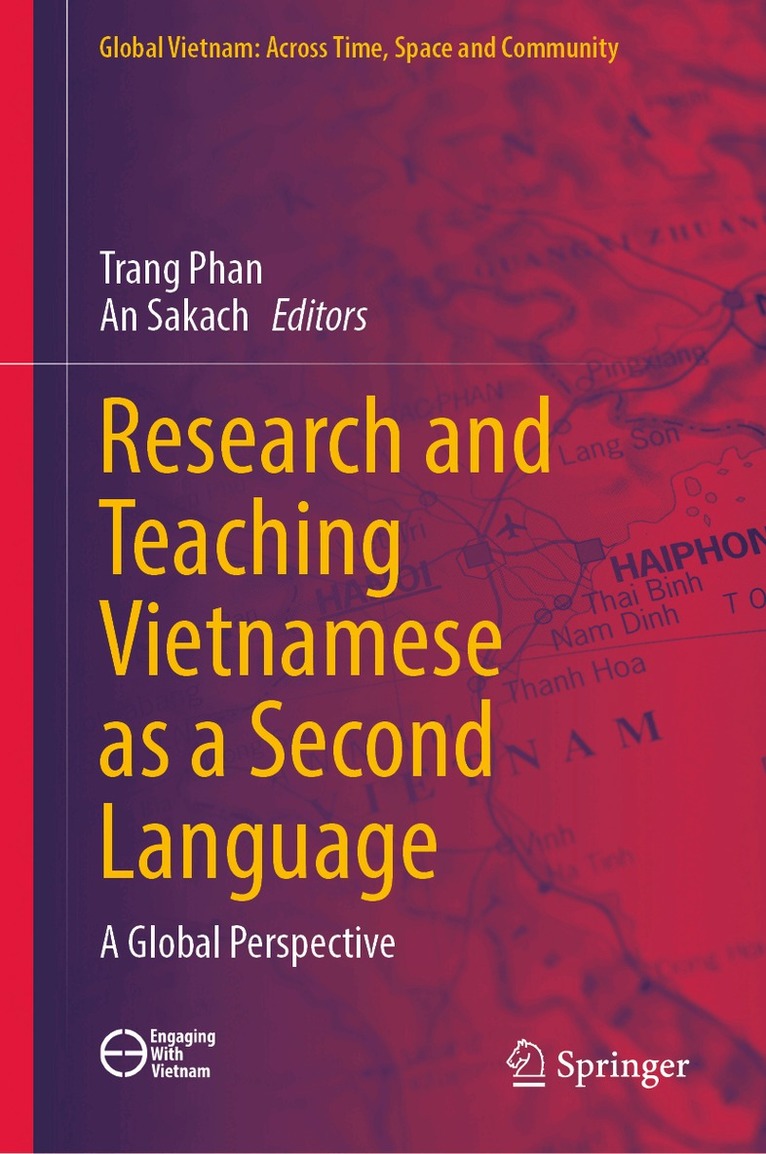
Research and Teaching Vietnamese as a Second Language
A Global Perspective
Av Trang Phan, An Sakach
Inbunden, 2026
1480 kr
Lägg i varukorg
This book fosters a global scholarly dialogue on teaching and researching Vietnamese as a second language, with particular attention to pedagogy, identity, and research innovation. It positions Vietnamese within the framework of Less Commonly Taught Languages (LCTLs), highlighting both the …
Research and Teaching Vietnamese as a Second Language
A Global Perspective
Av An Sakach, Trang Phan
E-bok, 2026
2006 kr
Lägg i varukorg
This book fosters a global scholarly dialogue on teaching and researching Vietnamese as a second language, with particular attention to pedagogy, identity, and research innovation. It positions Vietnamese within the framework of Less Commonly Taught Languages (LCTLs), highlighting both the …
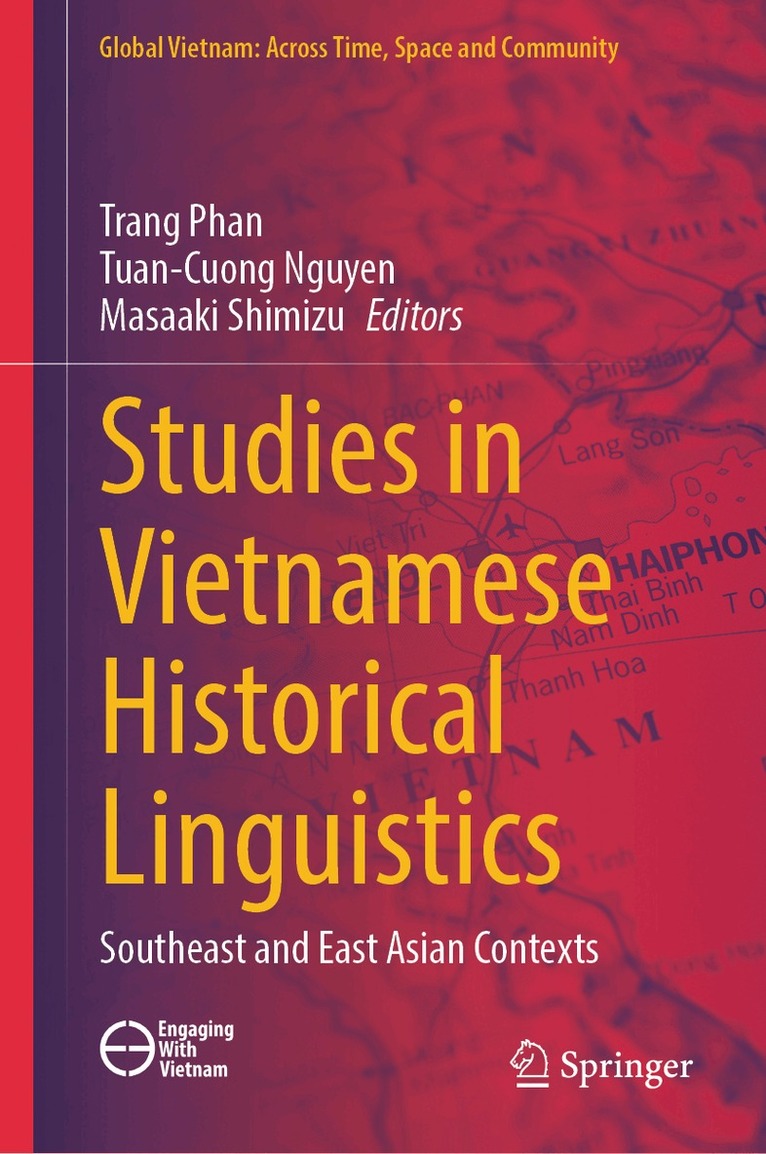
Studies in Vietnamese Historical Linguistics
Southeast and East Asian Contexts
Av Trang Phan, Tuan-Cuong Nguyen m. fl.
Inbunden, 2024
1680 kr
Lägg i varukorg
This book facilitates constructive interdisciplinary dialogue among linguistics and philology specialists concerning various languages in Vietnam, East Asia, and Southeast Asia. The book’s principal objective is to investigate the interdisciplinary nature of language change, with a particular focus …
Studies in Vietnamese Historical Linguistics
Southeast and East Asian Contexts
Av Masaaki Shimizu, Tuan-Cuong Nguyen m. fl.
E-bok, 2024
2350 kr
Lägg i varukorg
This book facilitates constructive interdisciplinary dialogue among linguistics and philology specialists concerning various languages in Vietnam, East Asia, and Southeast Asia. The book’s principal objective is to investigate the interdisciplinary nature of language change, with a particular focus …
Studies in Vietnamese Historical Linguistics
Southeast and East Asian Contexts
Av Trang Phan, Tuan-Cuong Nguyen m. fl.
Häftad, 2025
1800 kr
Lägg i varukorg
This book facilitates constructive interdisciplinary dialogue among linguistics and philology specialists concerning various languages in Vietnam, East Asia, and Southeast Asia. The book’s principal objective is to investigate the interdisciplinary nature of language change, with a particular focus …