Truman Packard - Böcker
Visar alla böcker från författaren Truman Packard. Handla med fri frakt och snabb leverans.
7 produkter
7 produkter
2 858 kr
Skickas inom 3-6 vardagar
715 kr
Skickas inom 3-6 vardagar
Empirical analysis of two decades of pioneering pension and social security reform in Latin America and the Caribbean shows that much has been achieved, but that critical challenges remain. In tackling the unfinished agenda, a great deal can be learned from the reform experience of countries in the region. Keeping the Promise, produced by the chief economist's office in the Latin America and Caribbean Region at the World Bank, evaluates policy reforms in twelve countries, points to successes and shortcomings, and proposes priorities and options for future reform. The authors argue that poverty in old age can be prevented by relentless efforts to extend coverage to broader segments of society, and by encouraging personal savings.
350 kr
Skickas inom 10-15 vardagar
This white paper focuses on the policy interventions made to help people manage risk, uncertainty and the losses from events whose impacts are channelled primarily through the labour market.
447 kr
Skickas inom 10-15 vardagar
A better policy framework for preventing, managing, and helping people recover from crises is crucial to lifting long-term growth and livelihoods in Latin America and the Caribbean (LAC). The need for this policy framework has never been more urgent as the region faces the monumental task of recovery from the worldwide COVID-19 pandemic. Whether specific policy responses will deliver the expected growth dividends will depend on the underlying vision of how labor markets adjust to crises and the quality of the policies enacted. This report estimates how crises change labor market flows, assesses how these changes affect people, and discusses the key policy responses.The key findings are threefold. First, crises have significant impacts on employment dynamics and structure in Latin America. Different labor market dynamics hide behind similar reductions in labor demand. Crises increase unemployment. This is the principal margin of adjustment despite highly informal labor markets. Across the region, the biggest employment losses are in the formal sector, driven by a reduction in job-finding rates rather than higher job-loss rates. Adjustment through reduction in hours worked does not seem to be an important factor in most countries' formal or informal sectors. Crises do not just shape worker flows temporarily—they have significant after-crisis effects on the structure of employment that last for several years. These effects are such that good job opportunities are gradually shrinking. Whereas in some countries the whole economy shrinks, in others informality serves as a partial buffer. Second, crises leave scars. Some workers recover from displacement and other livelihood shocks, while others are permanently scarred. For lower-skilled workers, earnings losses are persistent. Workers with higher education suffer no impacts of the crisis on their wages and very short-lived impacts on their employment. The responses are similar across male and female workers and workers with high and low previous participation in the formal labor market. New entrants to the labor market during a crisis face a worse career start – one from which it is difficult to recover. Yet, crises also bring efficiency gains, as detailed in this report.This study finds that both the structure of product markets and the conditions in local labor markets matter for the severity of crisis-induced employment and earnings losses across localities and sectors. Workers in more protected sectors that enjoy rents are sheltered from adjustment, while workers in localities with more informality cope better. This suggests the need for integrated responses at the worker, sector, and locality levels.Third, this study considers how the region’s policy frameworks can more effectively respond to crises—mitigating scarring, speeding adjustment, and promoting long-term growth. It proposes a three-pronged strategy, including (i) creating a more stable macroeconomic environment at the aggregate level to smooth the impacts of crises, including "automatic stabilizers" such as countercyclical, publicly-financed income support that is lacking in LAC; (ii) increasing the capacity of social protection and labor policies to provide income support as well prepare workers for change through reemployment assistance; and (iii) tackling structural issues, including addressing product market competition, contestability issues, and the spatial dimension behind poor labor market adjustment.
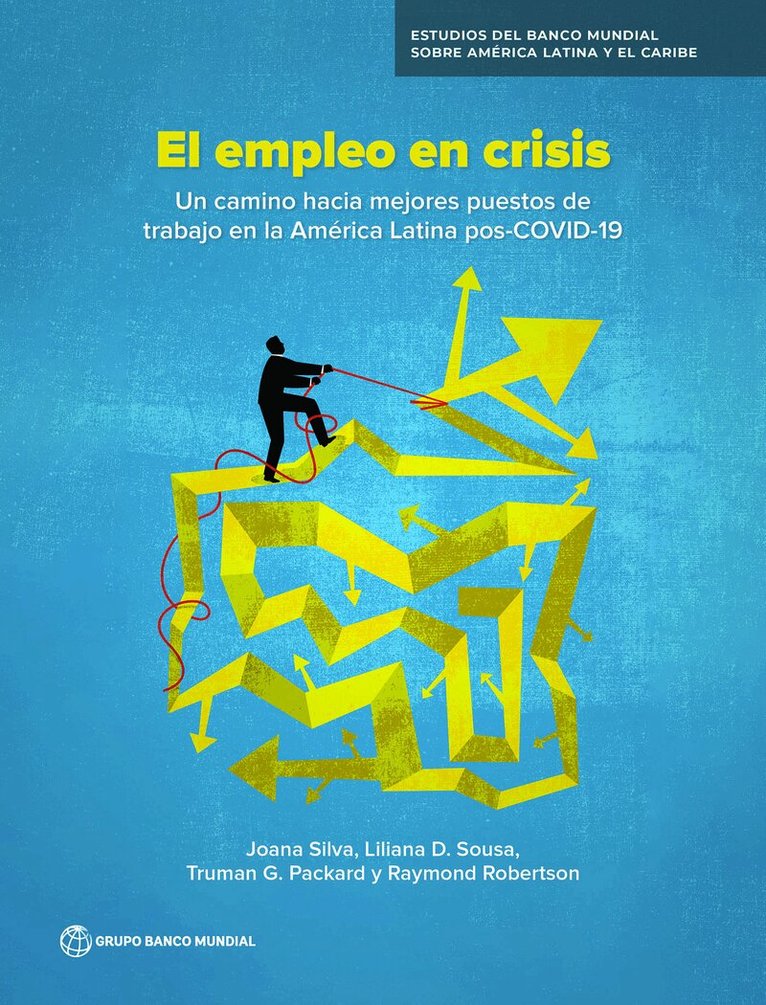
Employment in Crisis (Spanish Edition)
The Path to Better Jobs in a Post-COVID-19 Latin America
Häftad, Spanska, 2021
447 kr
Skickas inom 10-15 vardagar
A better policy framework for preventing, managing, and helping people recover from crises is crucial to lifting long-term growth and livelihoods in Latin America and the Caribbean (LAC). The need for this policy framework has never been more urgent as the region faces the monumental task of recovery from the worldwide COVID-19 pandemic. Whether specific policy responses will deliver the expected growth dividends will depend on the underlying vision of how labor markets adjust to crises and the quality of the policies enacted. This report estimates how crises change labor market flows, assesses how these changes affect people, and discusses the key policy responses.The key findings are threefold. First, crises have significant impacts on employment dynamics and structure in Latin America. Different labor market dynamics hide behind similar reductions in labor demand. Crises increase unemployment. This is the principal margin of adjustment despite highly informal labor markets. Across the region, the biggest employment losses are in the formal sector, driven by a reduction in job-finding rates rather than higher job-loss rates. Adjustment through reduction in hours worked does not seem to be an important factor in most countries' formal or informal sectors. Crises do not just shape worker flows temporarily—they have significant after-crisis effects on the structure of employment that last for several years. These effects are such that good job opportunities are gradually shrinking. Whereas in some countries the whole economy shrinks, in others informality serves as a partial buffer.Second, crises leave scars. Some workers recover from displacement and other livelihood shocks, while others are permanently scarred. For lower-skilled workers, earnings losses are persistent. Workers with higher education suffer no impacts of the crisis on their wages and very short-lived impacts on their employment. The responses are similar across male and female workers and workers with high and low previous participation in the formal labor market. New entrants to the labor market during a crisis face a worse career start – one from which it is difficult to recover. Yet, crises also bring efficiency gains, as detailed in this report.This study finds that both the structure of product markets and the conditions in local labor markets matter for the severity of crisis-induced employment and earnings losses across localities and sectors. Workers in more protected sectors that enjoy rents are sheltered from adjustment, while workers in localities with more informality cope better. This suggests the need for integrated responses at the worker, sector, and locality levels.Third, this study considers how the region’s policy frameworks can more effectively respond to crises—mitigating scarring, speeding adjustment, and promoting long-term growth. It proposes a three-pronged strategy, including (i) creating a more stable macroeconomic environment at the aggregate level to smooth the impacts of crises, including "automatic stabilizers" such as countercyclical, publicly-financed income support that is lacking in LAC; (ii) increasing the capacity of social protection and labor policies to provide income support as well prepare workers for change through reemployment assistance; and (iii) tackling structural issues, including addressing product market competition, contestability issues, and the spatial dimension behind poor labor market adjustment.
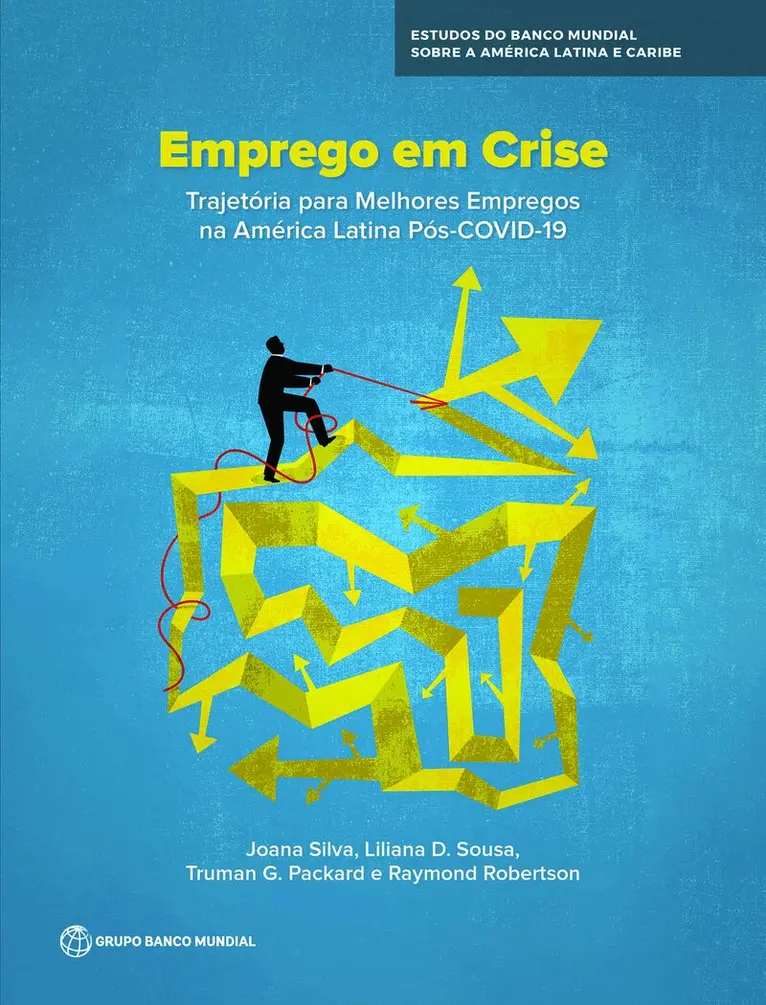
Employment in Crisis (Portuguese Edition)
The Path to Better Jobs in a Post-COVID-19 Latin America
Häftad, Portugisiska, 2021
447 kr
Skickas inom 10-15 vardagar
A better policy framework for preventing, managing, and helping people recover from crises is crucial to lifting long-term growth and livelihoods in Latin America and the Caribbean (LAC). The need for this policy framework has never been more urgent as the region faces the monumental task of recovery from the worldwide COVID-19 pandemic. Whether specific policy responses will deliver the expected growth dividends will depend on the underlying vision of how labor markets adjust to crises and the quality of the policies enacted. This report estimates how crises change labor market flows, assesses how these changes affect people, and discusses the key policy responses.The key findings are threefold. First, crises have significant impacts on employment dynamics and structure in Latin America. Different labor market dynamics hide behind similar reductions in labor demand. Crises increase unemployment. This is the principal margin of adjustment despite highly informal labor markets. Across the region, the biggest employment losses are in the formal sector, driven by a reduction in job-finding rates rather than higher job-loss rates. Adjustment through reduction in hours worked does not seem to be an important factor in most countries' formal or informal sectors. Crises do not just shape worker flows temporarily—they have significant after-crisis effects on the structure of employment that last for several years. These effects are such that good job opportunities are gradually shrinking. Whereas in some countries the whole economy shrinks, in others informality serves as a partial buffer.Second, crises leave scars. Some workers recover from displacement and other livelihood shocks, while others are permanently scarred. For lower-skilled workers, earnings losses are persistent. Workers with higher education suffer no impacts of the crisis on their wages and very short-lived impacts on their employment. The responses are similar across male and female workers and workers with high and low previous participation in the formal labor market. New entrants to the labor market during a crisis face a worse career start – one from which it is difficult to recover. Yet, crises also bring efficiency gains, as detailed in this report.This study finds that both the structure of product markets and the conditions in local labor markets matter for the severity of crisis-induced employment and earnings losses across localities and sectors. Workers in more protected sectors that enjoy rents are sheltered from adjustment, while workers in localities with more informality cope better. This suggests the need for integrated responses at the worker, sector, and locality levels.Third, this study considers how the region’s policy frameworks can more effectively respond to crises—mitigating scarring, speeding adjustment, and promoting long-term growth. It proposes a three-pronged strategy, including (i) creating a more stable macroeconomic environment at the aggregate level to smooth the impacts of crises, including "automatic stabilizers" such as countercyclical, publicly-financed income support that is lacking in LAC; (ii) increasing the capacity of social protection and labor policies to provide income support as well prepare workers for change through reemployment assistance; and (iii) tackling structural issues, including addressing product market competition, contestability issues, and the spatial dimension behind poor labor market adjustment.
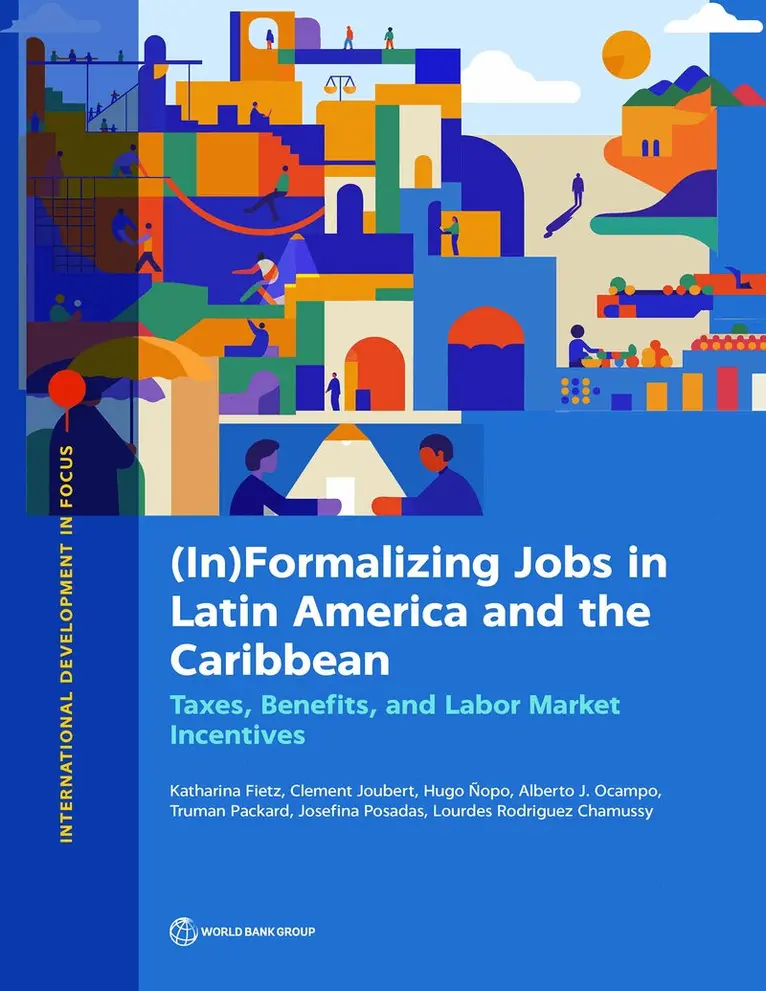
(in)Formalizing Jobs in Latin America and the Caribbean
Taxes, Benefits, and Labor Market Incentives
Häftad, Engelska, 2026
556 kr
Skickas inom 5-8 vardagar
This report aims to deepen our understanding of informality of work and employment outcomes in Latin American and Caribbean labor markets, focusing on the interplay between personal income taxation, social protection policies, and consequently firm and workers' incentives to (in)formalize agreements.