T.V. Paul - Böcker
Visar alla böcker från författaren T.V. Paul. Handla med fri frakt och snabb leverans.
17 produkter
17 produkter
231 kr
Skickas
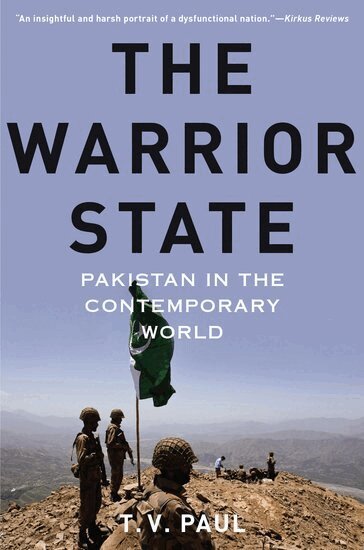
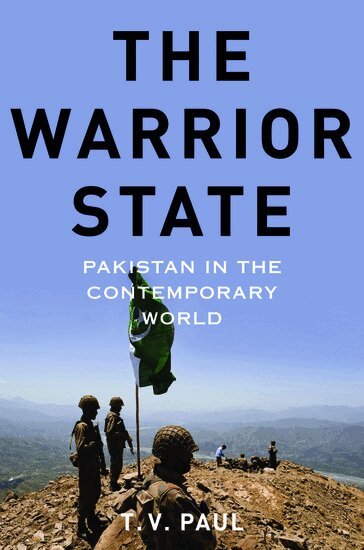
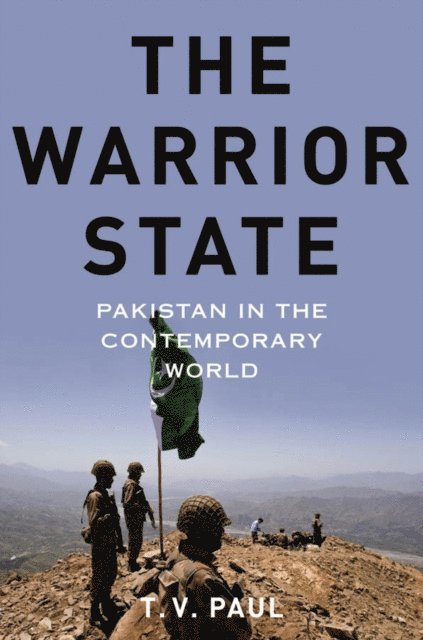
Seemingly from its birth, Pakistan has teetered on the brink of becoming a failed state. Today, it ranks 133rd out of 148 countries in global competitiveness. Its economy is as dysfunctional as its political system is corrupt; both rely heavily on international aid for their existence. Taliban forces occupy 30 percent of the country. It possesses over a hundred nuclear weapons that could easily fall into terrorists' hands. Why, in an era when countries across the developing world are experiencing impressive economic growth and building democratic institutions, has Pakistan been such a conspicuous failure? In The Warrior State, noted international relations and South Asia scholar T.V. Paul untangles this fascinating riddle. Paul argues that the "geostrategic curse"--akin to the "resource curse" that plagues oil-rich autocracies--is at the root of Pakistan's unique inability to progress. Since its founding in 1947, Pakistan has been at the center of major geopolitical struggles: the US-Soviet rivalry, the conflict with India, and most recently the post 9/11 wars. No matter how ineffective the regime is, massive foreign aid keeps pouring in from major powers and their allies with a stake in the region. The reliability of such aid defuses any pressure on political elites to launch the far-reaching domestic reforms necessary to promote sustained growth, higher standards of living, and more stable democratic institutions. Paul shows that excessive war-making efforts have drained Pakistan's limited economic resources without making the country safer or more stable. Indeed, despite the regime's emphasis on security, the country continues to be beset by widespread violence and terrorism.In an age of transnational terrorism and nuclear proliferation, understanding Pakistan's development, particularly the negative effects of foreign aid and geopolitical centrality, is more important than ever. Painstakingly researched and brilliantly The Warrior State tackles what may be the world's most dangerous powder keg and uncovers the true causes of Pakistan's enormously consequential failure.
1 414 kr
Skickas inom 3-6 vardagar
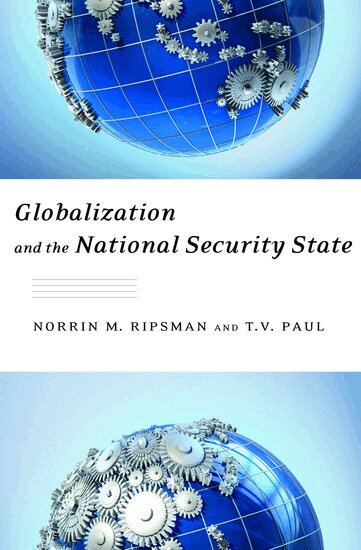
In the past two decades, many have posited a correlation between the spread of globalization and the decline of the nation-state. In the realm of national security, advocates of the globalization thesis have argued that states' power has diminished relative to transnational governmental institutions, NGOs, and transnational capitalism. Initially, they pointed to declines in both global military spending (which has risen dramatically in recent years) and interstate war. But are these trends really indicative of the decline of nation-state's role as a guarantor of national security? In Globalization and the National Security State, T.V. Paul and Norrin Ripsman test the proposition against the available evidence and find that the globalization school has largely gotten it wrong. The decline in interstate warfare can largely be attributed to the end of the Cold War, not globalization. Moreover, great powers (the US, China, and Russia) continue to pursue traditional nation-state strategies. Regional security arrangements like the EU and ASEAN have not achieved much, and weak states - the ones most impacted by the turmoil generated by globalization - are far more traditional in their approaches to national security, preferring to rely on their own resources rather than those of regional and transnational institutions. This is a bold argument, and Paul and Ripsman amass a considerable amount of evidence for their claims. It cuts against a major movement in international relations scholarship, and is sure to generate controversy.
456 kr
Skickas inom 5-8 vardagar
In the past two decades, many have posited a correlation between the spread of globalization and the decline of the nation-state. In the realm of national security, advocates of the globalization thesis have argued that states' power has diminished relative to transnational governmental institutions, NGOs, and transnational capitalism. Initially, they pointed to declines in both global military spending (which has risen dramatically in recent years) and interstate war. But are these trends really indicative of the decline of nation-state's role as a guarantor of national security? In Globalization and the National Security State, T.V. Paul and Norrin Ripsman test the proposition against the available evidence and find that the globalization school has largely gotten it wrong. The decline in interstate warfare can largely be attributed to the end of the Cold War, not globalization. Moreover, great powers (the US, China, and Russia) continue to pursue traditional nation-state strategies. Regional security arrangements like the EU and ASEAN have not achieved much, and weak states - the ones most impacted by the turmoil generated by globalization - are far more traditional in their approaches to national security, preferring to rely on their own resources rather than those of regional and transnational institutions. This is a bold argument, and Paul and Ripsman amass a considerable amount of evidence for their claims. It cuts against a major movement in international relations scholarship, and is sure to generate controversy.
308 kr
Skickas inom 5-8 vardagar
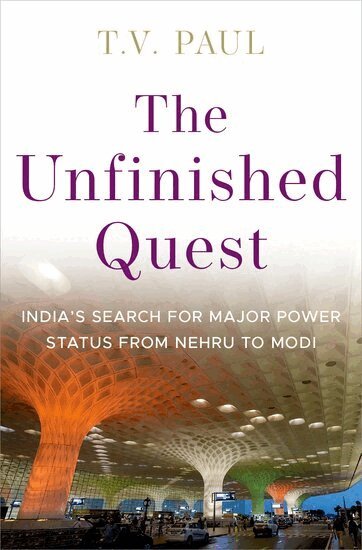
In The Unfinished Quest, T.V. Paul charts India's checkered path toward higher regional and global status, and sheds important light on its significance as the "swing power" that can mitigate China's aggressive rise in the Indo-Pacific region. In 2022, India surpassed the United Kingdom, its former colonial ruler, as the fifth largest economy in the world. Since the 1990s, a series of US presidents and secretaries of state have all acclaimed India as a rising major power that deserves to be recognized as a lead actor in the international arena. All five permanent members of the UN Security Council except China have openly acknowledged the need to include India among their ranks. But even now, India has not attained the status of a globally recognized great power. In The Unfinished Quest, leading international relations and South Asia scholar T.V. Paul charts India's checkered path toward higher regional and global status, covering both the successes and failures it has experienced since the modern nation's founding in 1947. Paul focuses on the key motivations driving Indian leaders to enhance India's global status and power, but also on the many constraints that have hindered its progress. He carefully specifies what counts as indicators of greater status and uses these as benchmarks in his assessment of each era. In this manner, he also brings forth some important insights on status competition and power transitions in the contemporary international system. Paul's analysis of India's quest for status also sheds important light on the current geo-strategic situation and serves as a new framework for understanding the China-India rivalry, as well as India's relative position in the broader Indo-Pacific theater. As the economies of China and India grow rapidly, the power balance between them will be determined by each country's ability to develop the hard and soft powers needed to outpace the other and solidify their place in the global hierarchy. Whether India can be a "swing power" able to mitigate China's aggressive rise depends on its relative power position in that theater and its own evolution as an inclusive, tolerant democracy that can develop and utilize its most priced asset, the demographic dividend. This sweeping account of India's uneven rise in the global system will serve as the authoritative work on the subject.
318 kr
Skickas inom 5-8 vardagar
Despite having devoted considerable energy and resources to its national security over the last 65 years, Pakistan remains a hotbed of international terrorism, religious extremism, and nuclear proliferation: the world's most dangerous powder keg. In The Warrior State, noted international relations and South Asia scholar T.V. Paul poses a fascinating puzzle. In many states across the developing world, military-led regimes have experienced impressive and stable economic growth and over time have evolved into at least partially democratic states. Yet Pakistan, a state in which the military has outsized power, has been a conspicuous failure. Its economy is a shambles, heavily dependent on international aid agencies. Its political system, while containing some democratic features, is notoriously corrupt and unresponsive. And despite the regime's heavy emphasis on security, the country is beset by internecine violence and terrorism. As Paul explains, this is a historical anomaly. War-making and state-building have typically gone hand in hand. After all, the inexorable rise of the European nation-state is largely due the rise of powerful militaries under the control of centralized administrations. What explains Pakistan's unique inability to progress? While there are many factors, the "geostrategic curse" looms large. Since its founding, the country has been at the center of a series of major geopolitical struggles - US-Soviet rivalry, the India-Pakistan struggle, and - most recently - the post 9/11 wars. No matter how ineffective the regime is, it always ends up being the recipient of massive amounts of aid. Moreover, given the constant state of geopolitical crisis, the state always prioritizes the military at the expense of political and economic development. Incorporating a rich theoretical explanation into a swift narrative, drawing insights from history, international relations, sociology, religious studies, political science, and comparative development, The Warrior State presents a deep, multidimensional, and readable account of how such an acutely troubled and unstable country became the way it is, as well as the forces that keep it mired in instability.
1 935 kr
Skickas inom 10-15 vardagar
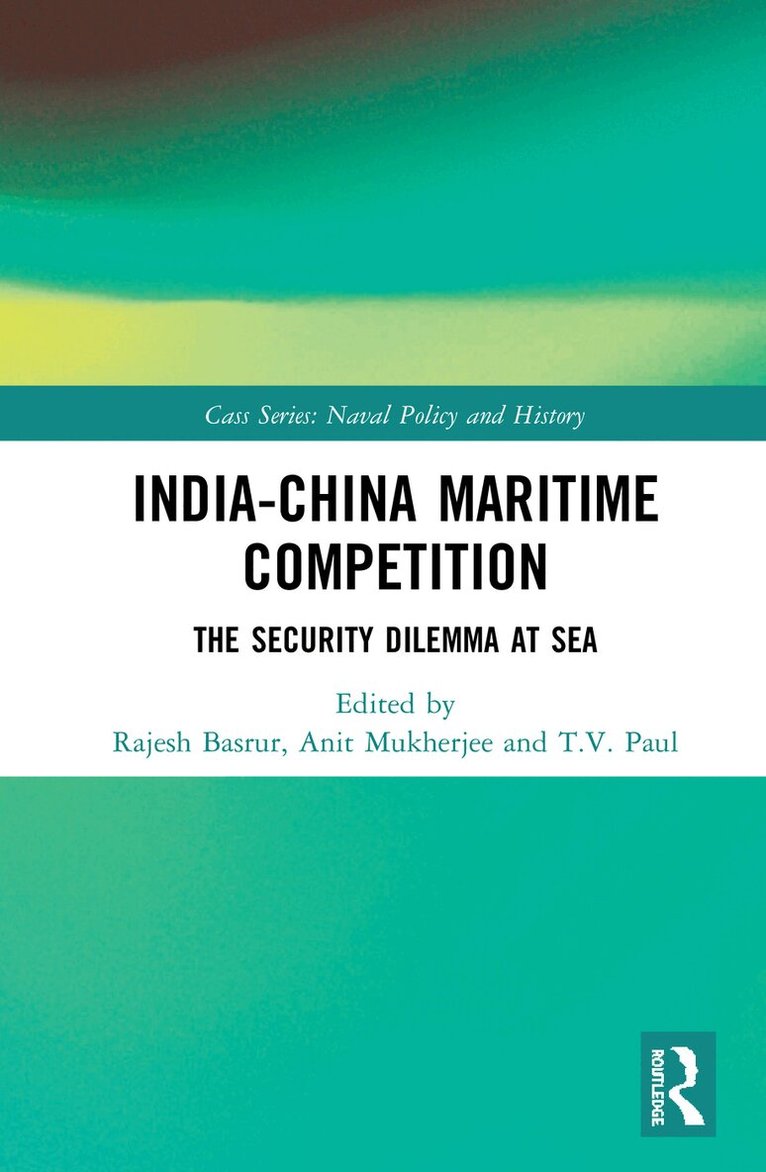
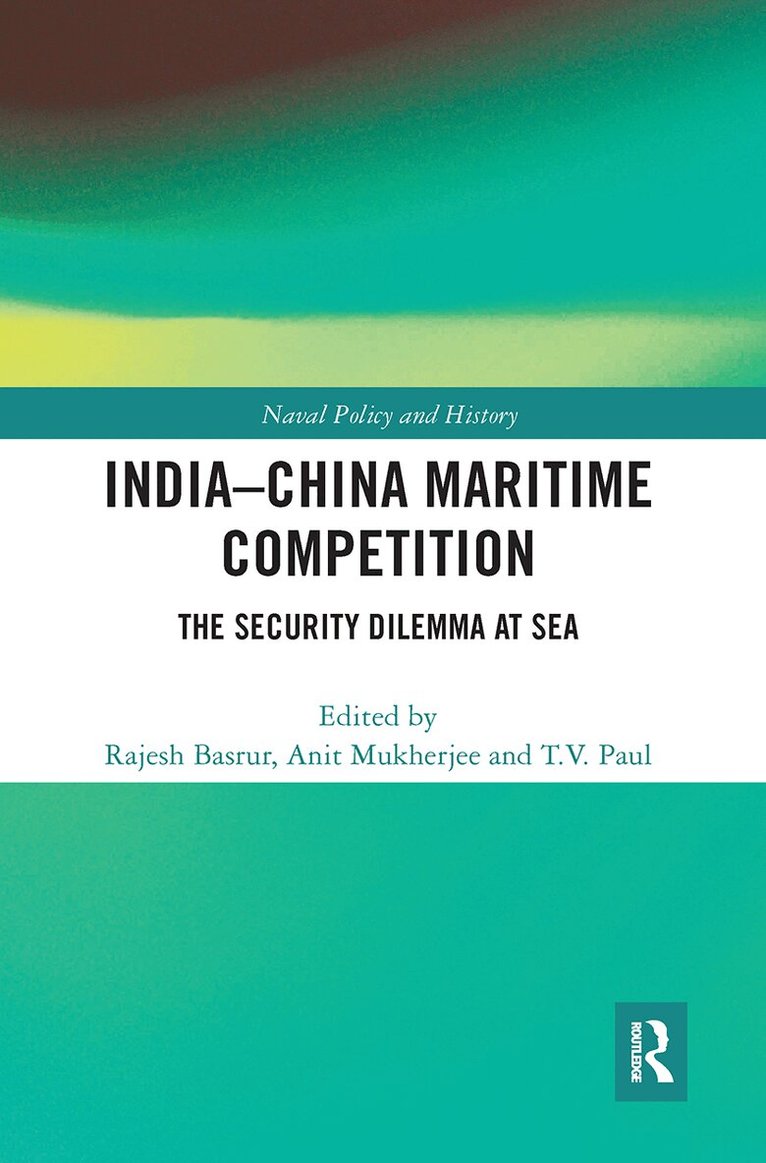
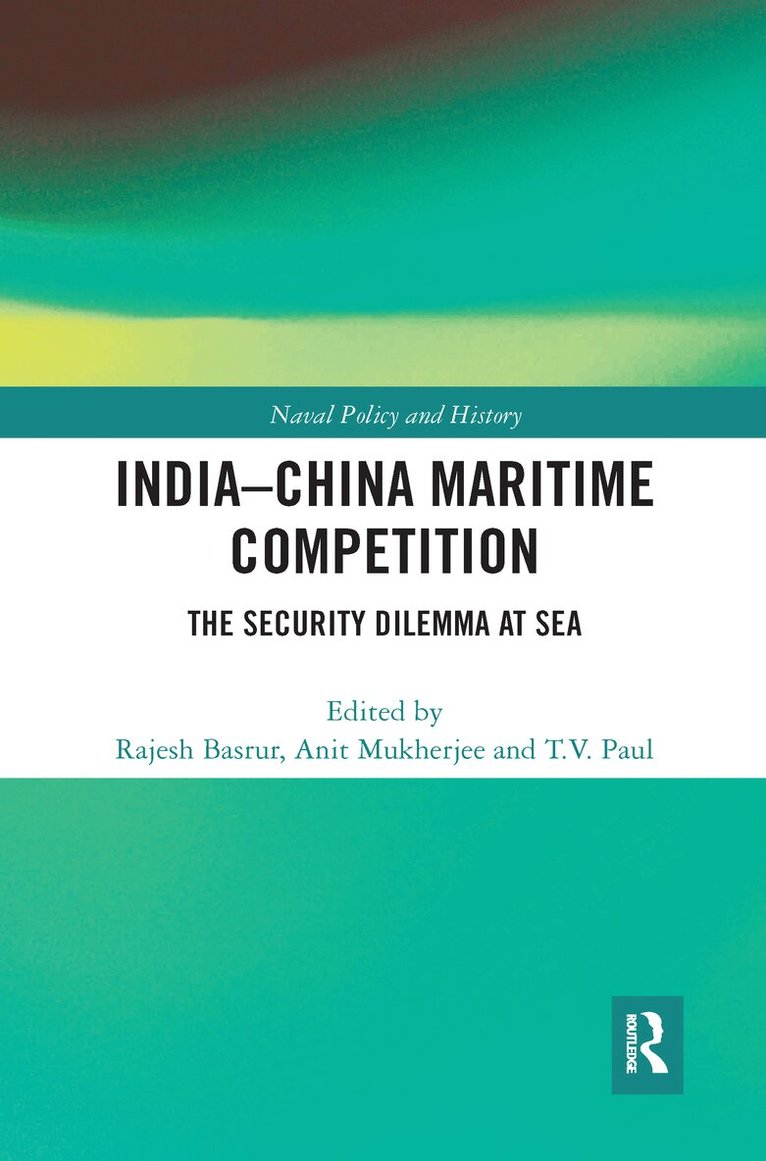
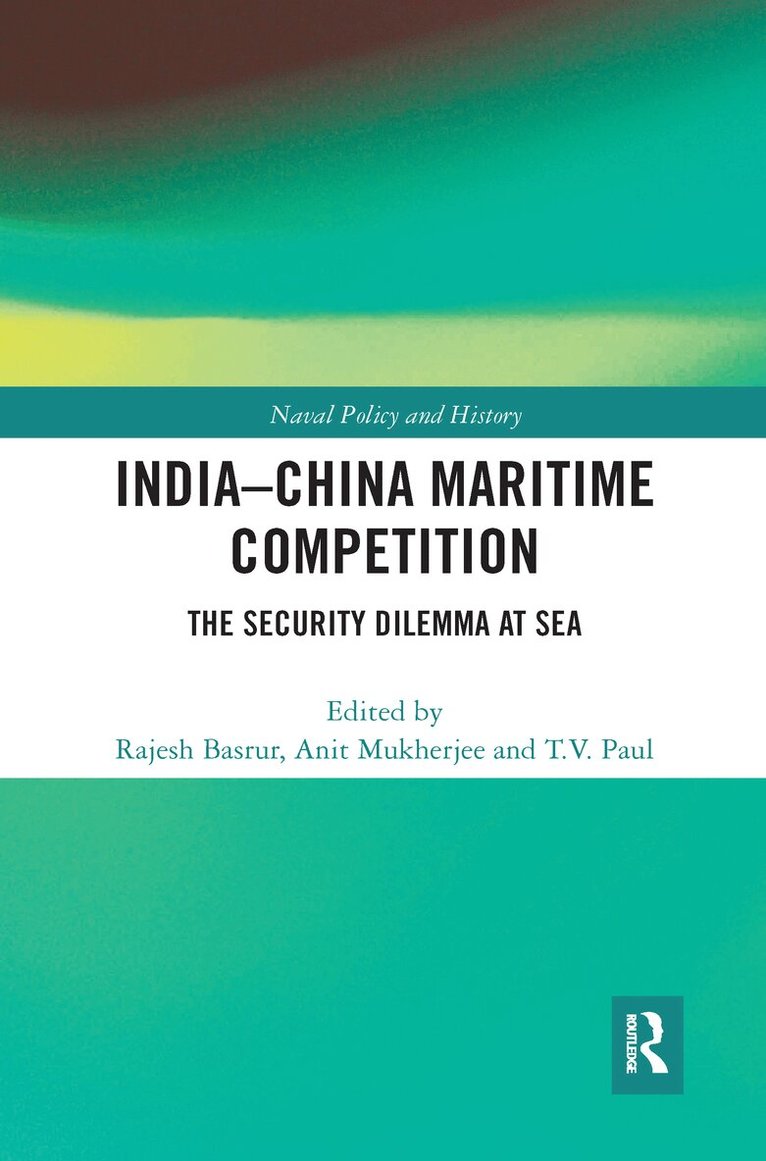
This edited volume critically examines the concept of the “security dilemma” and applies it to India–China maritime competition. Though frequently employed in academic discussion and popular commentary on the Sino-Indian relationship, the term has rarely been critically analysed. The volume addresses the gap by examining whether the security dilemma is a useful concept in explaining the naval and foreign policy strategies of India and China. China’s Belt and Road Initiative and its expansive engagement in the Indian Ocean Region have resulted in India significantly scaling up investment in its navy, adding ships, naval aircraft and submarines. This volume investigates how the rivalry is playing out in different sub-regions of the Indian Ocean, and the responses of other powers, notably the United States and prominent Southeast Asian states. Their reactions to the Sino-Indian rivalry are an underexplored topic and the chapters in this book reveal how they selectively use that rivalry while trying to steer clear of making definite choices. The book concludes with recommendations on mitigating the security dilemma. This work will be of great interest to students of strategic studies, international relations, maritime security, and Asian politics.
597 kr
Skickas inom 10-15 vardagar
This edited volume critically examines the concept of the “security dilemma” and applies it to India–China maritime competition. Though frequently employed in academic discussion and popular commentary on the Sino-Indian relationship, the term has rarely been critically analysed. The volume addresses the gap by examining whether the security dilemma is a useful concept in explaining the naval and foreign policy strategies of India and China. China’s Belt and Road Initiative and its expansive engagement in the Indian Ocean Region have resulted in India significantly scaling up investment in its navy, adding ships, naval aircraft and submarines. This volume investigates how the rivalry is playing out in different sub-regions of the Indian Ocean, and the responses of other powers, notably the United States and prominent Southeast Asian states. Their reactions to the Sino-Indian rivalry are an underexplored topic and the chapters in this book reveal how they selectively use that rivalry while trying to steer clear of making definite choices. The book concludes with recommendations on mitigating the security dilemma. This work will be of great interest to students of strategic studies, international relations, maritime security, and Asian politics.
447 kr
Skickas inom 7-10 vardagar
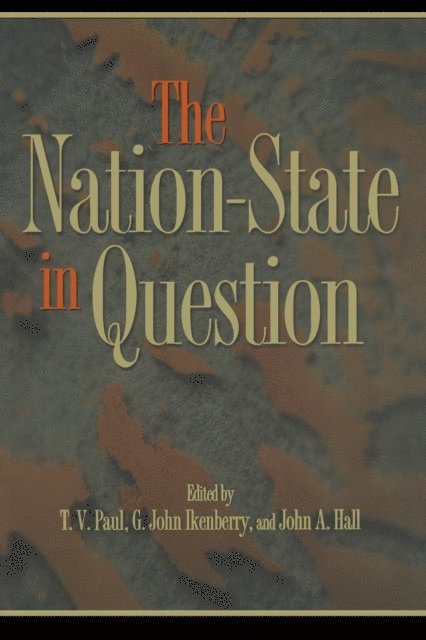
Has globalization forever undermined the state as the mighty guarantor of public welfare and security? In the 1990s, the prevailing and even hopeful view was that it had. The euphoria did not last long. Today the "return of the state" is increasingly being discussed as a desirable reality. This book is the first to bring together a group of prominent scholars from comparative politics, international relations, and sociology to systematically reassess--through a historical lens that moves beyond the standard focus on the West--state-society relations and state power at the dawn of the twenty-first century. The contributors examine the sources and forms of state power in light of a range of welfare and security needs in order to tell us what states can do today. They assess the extent to which international social forces affect states, and the capacity of states to adapt in specific issue areas. Their striking conclusion is that states have continued to be pivotal in diverse areas such as nationalism, national security, multiculturalism, taxation, and industrial relations.Offering rich insights on the changing contours of state power, The Nation-State in Question will be of interest to social scientists, students, and policymakers alike. John Hall's introduction is followed by chapters by Peter Baldwin, John Campbell, Francesco Duina, Grzegorz Ekiert, Jeffrey Herbst, Christopher Hood, Anatoly Khazanov, Brendan O'Leary, T. V. Paul, Bernard Yack, Rudra Sil, and Minxin Pei. The conclusion is by John Ikenberry.
397 kr
Skickas inom 10-15 vardagar
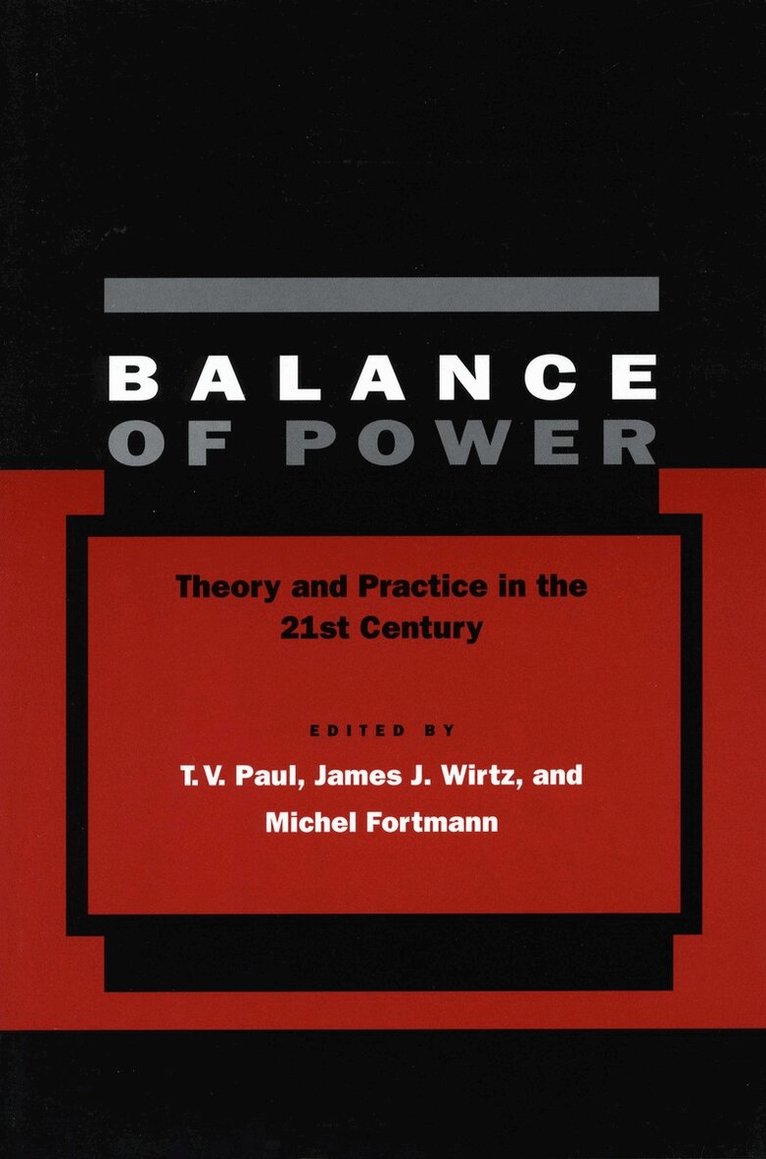
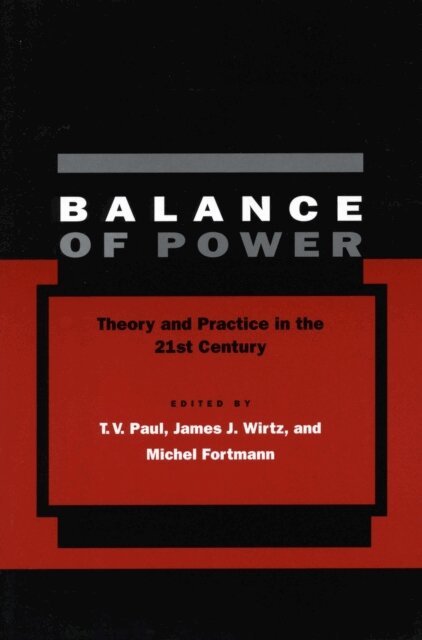
Since the 16th century, balance of power politics have profoundly influenced international relations. But in recent years—with the sudden disappearance of the Soviet Union, growing power of the United States, and increasing prominence of international institutions—many scholars have argued that balance of power theory is losing its relevance. This book examines the current position and future of balance of power dynamics in international politics. In this book, prominent scholars pay special attention to the theoretical and historical criticisms of balance of power theory while empirically assessing its validity at both global and regional levels. The volume also looks at systemic factors favoring or hindering a return to balance of power politics. It evaluates the challenges posed by subnational actors, such as terrorist groups, and weapons of mass destruction to international order. Further, it examines the relevance of balance of power axioms in selected regions: Western Europe, Eastern Europe, East Asia, South Asia, and Latin America.
1 476 kr
Skickas inom 10-15 vardagar
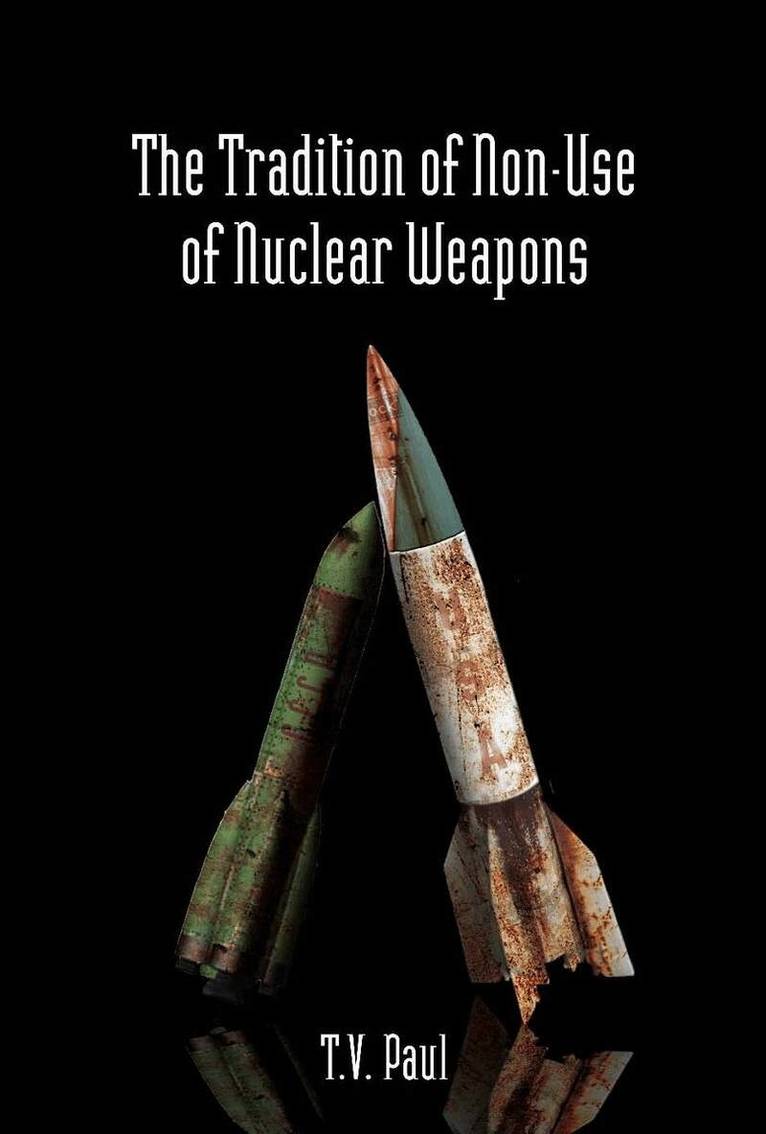
Since the Hiroshima and Nagasaki attacks, no state has unleashed nuclear weapons. What explains this? According to the author, the answer lies in a prohibition inherent in the tradition of non-use, a time-honored obligation that has been adhered to by all nuclear states—thanks to a consensus view that use would have a catastrophic impact on humankind, the environment, and the reputation of the user.The book offers an in-depth analysis of the nuclear policies of the U.S., Russia, China, the UK, France, India, Israel, and Pakistan and assesses the contributions of these states to the rise and persistence of the tradition of nuclear non-use. It examines the influence of the tradition on the behavior of nuclear and non-nuclear states in crises and wars, and explores the tradition's implications for nuclear non-proliferation regimes, deterrence theory, and policy. And it concludes by discussing the future of the tradition in the current global security environment.
365 kr
Skickas inom 7-10 vardagar
Since the Hiroshima and Nagasaki attacks, no state has unleashed nuclear weapons. What explains this? According to the author, the answer lies in a prohibition inherent in the tradition of non-use, a time-honored obligation that has been adhered to by all nuclear states—thanks to a consensus view that use would have a catastrophic impact on humankind, the environment, and the reputation of the user.The book offers an in-depth analysis of the nuclear policies of the U.S., Russia, China, the UK, France, India, Israel, and Pakistan and assesses the contributions of these states to the rise and persistence of the tradition of nuclear non-use. It examines the influence of the tradition on the behavior of nuclear and non-nuclear states in crises and wars, and explores the tradition's implications for nuclear non-proliferation regimes, deterrence theory, and policy. And it concludes by discussing the future of the tradition in the current global security environment.
1 502 kr
Skickas inom 5-8 vardagar
As the aspirations of the two rising Asian powers collide, the China-India rivalry is likely to shape twenty-first-century international politics in the region and far beyond.This volume by T.V. Paul and an international group of leading scholars examines whether the rivalry between the two countries that began in the 1950s will intensify or dissipate in the twenty-first century. The China-India relationship is important to analyze because past experience has shown that when two rising great powers share a border, the relationship is volatile and potentially dangerous. India and China’s relationship faces a number of challenges, including multiple border disputes that periodically flare up, division over the status of Tibet and the Dalai Lama, the strategic challenge to India posed by China's close relationship with Pakistan, the Chinese navy's greater presence in the Indian Ocean, and the two states’ competition for natural resources. Despite these irritants, however, both countries agree on issues such as global financial reforms and climate change and have much to gain from increasing trade and investment, so there are reasons for optimism as well as pessimism. The contributors to this volume answer the following questions: What explains the peculiar contours of this rivalry? What influence does accelerated globalization, especially increased trade and investment, have on this rivalry? What impact do US-China competition and China’s expanding navy have on this rivalry? Under what conditions will it escalate or end? The China-India Rivalry in the Globalization Era will be of great interest to students, scholars, and policymakers concerned with Indian and Chinese foreign policy and Asian security.
511 kr
Skickas inom 5-8 vardagar
As the aspirations of the two rising Asian powers collide, the China-India rivalry is likely to shape twenty-first-century international politics in the region and far beyond.This volume by T.V. Paul and an international group of leading scholars examines whether the rivalry between the two countries that began in the 1950s will intensify or dissipate in the twenty-first century. The China-India relationship is important to analyze because past experience has shown that when two rising great powers share a border, the relationship is volatile and potentially dangerous. India and China’s relationship faces a number of challenges, including multiple border disputes that periodically flare up, division over the status of Tibet and the Dalai Lama, the strategic challenge to India posed by China's close relationship with Pakistan, the Chinese navy's greater presence in the Indian Ocean, and the two states’ competition for natural resources. Despite these irritants, however, both countries agree on issues such as global financial reforms and climate change and have much to gain from increasing trade and investment, so there are reasons for optimism as well as pessimism. The contributors to this volume answer the following questions: What explains the peculiar contours of this rivalry? What influence does accelerated globalization, especially increased trade and investment, have on this rivalry? What impact do US-China competition and China’s expanding navy have on this rivalry? Under what conditions will it escalate or end? The China-India Rivalry in the Globalization Era will be of great interest to students, scholars, and policymakers concerned with Indian and Chinese foreign policy and Asian security.
2 245 kr
Skickas inom 5-8 vardagar
This book moves scholarly debates beyond the old question of whether or not international institutions matter in order to examine how they matter, even in a world of power politics. Power politics and international institutions are often studied as two separate domains, but this is in need of rethinking because today most states strategically use institutions to further their interests. Anders Wivel, T.V. Paul, and the international group of contributing authors update our understanding of how institutions are viewed among the major theoretical paradigms in international relations, and they seek to bridge the divides. Empirical chapters examine specific institutions in practice, including the United Nations, International Atomic Energy Agency, and the European Union. The book also points the way to future research. International Institutions and Power Politics provides insights for both international relations theory and practical matters of foreign affairs, and it will be essential reading for all international relations scholars and advanced students.
758 kr
Skickas inom 5-8 vardagar
This book moves scholarly debates beyond the old question of whether or not international institutions matter in order to examine how they matter, even in a world of power politics. Power politics and international institutions are often studied as two separate domains, but this is in need of rethinking because today most states strategically use institutions to further their interests. Anders Wivel, T.V. Paul, and the international group of contributing authors update our understanding of how institutions are viewed among the major theoretical paradigms in international relations, and they seek to bridge the divides. Empirical chapters examine specific institutions in practice, including the United Nations, International Atomic Energy Agency, and the European Union. The book also points the way to future research. International Institutions and Power Politics provides insights for both international relations theory and practical matters of foreign affairs, and it will be essential reading for all international relations scholars and advanced students.
1 688 kr
Skickas inom 5-8 vardagar
A compelling examination of how secondary states are preserving their strategic autonomy and are resisting spheres of influenceRussia's invasion of Ukraine and the deteriorating United States–China relationship signify the onset of the New Cold War. Unlike the original Cold War, this competition is multipolar and "multiplex," with secondary powers, small states, and even nonstate actors pragmatically selecting which of their interests intersect with those of the great powers.The New Cold War and the Remaking of Regions contends that multiplexity and multipolarity have important repercussions for the world's regional orders. Contributors to the book address the New Cold War and regional ordering processes from realist, liberal, and constructivist perspectives. They demonstrate how variable regional dynamics will lead either to peaceful change or conflict.This volume is part of a new wave of scholarship that expands the focus of international relations beyond great powers and recognizes the increasing agency that other states have gained in the twenty-first-century world order.
478 kr
Skickas
A compelling examination of how secondary states are preserving their strategic autonomy and are resisting spheres of influenceRussia's invasion of Ukraine and the deteriorating United States–China relationship signify the onset of the New Cold War. Unlike the original Cold War, this competition is multipolar and "multiplex," with secondary powers, small states, and even nonstate actors pragmatically selecting which of their interests intersect with those of the great powers.The New Cold War and the Remaking of Regions contends that multiplexity and multipolarity have important repercussions for the world's regional orders. Contributors to the book address the New Cold War and regional ordering processes from realist, liberal, and constructivist perspectives. They demonstrate how variable regional dynamics will lead either to peaceful change or conflict.This volume is part of a new wave of scholarship that expands the focus of international relations beyond great powers and recognizes the increasing agency that other states have gained in the twenty-first-century world order.