Ulla Haselstein – författare
Visar alla böcker från författaren Ulla Haselstein. Handla med fri frakt och snabb leverans.
8 produkter
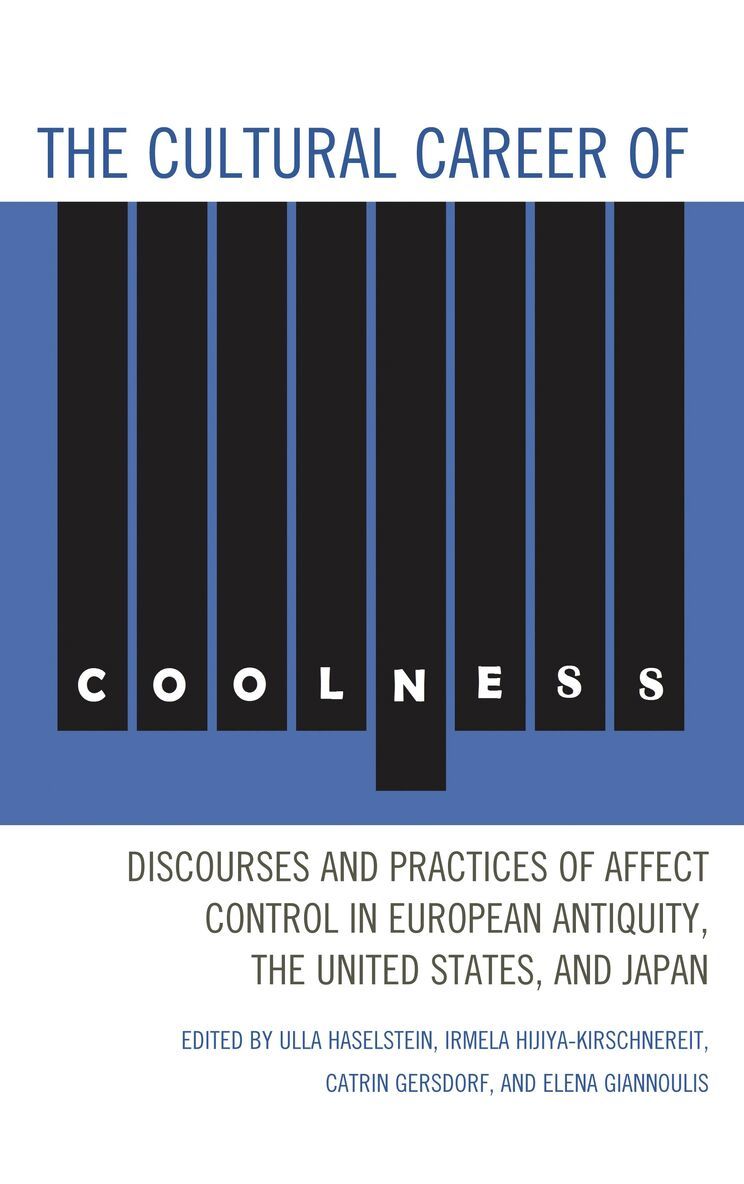
Cultural Career of Coolness
Discourses and Practices of Affect Control in European Antiquity, the United States, and Japan
Av Ulla Haselstein, Irmela Hijiya-Kirschnereit m. fl.
Inbunden, 2013
1963 kr
Lägg i varukorg
Cool is a word of American English that has been integrated into the vocabulary of numerous languages around the globe. Today it is a term most often used in advertising trendy commodities, or, more generally, in promoting urban lifestyles in our postmodern age. But what is the history of the term …
Allegorie
DFG-Symposion 2014
Inbunden, 2016
2542 kr
Lägg i varukorg
Das Symposion resümiert Perspektiven auf die Allegorie im Anschluss an Benjamin und de Man und entwickelt sie weiter. Die Allegorie wird dabei als Reflexion des Zeichens im Zeichen aufgefasst. Mit selbstreflexiven Praktiken des Fragments, des Zitats, der Collage oder beispielsweise einer ironisch …
Allegorie
DFG-Symposion 2014
E-bok, 2016
2514 kr
Lägg i varukorg
Das Symposion resümiert Perspektiven auf die Allegorie im Anschluss an Benjamin und de Man und entwickelt sie weiter. Die Allegorie wird dabei als Reflexion des Zeichens im Zeichen aufgefasst. Mit selbstreflexiven Praktiken des Fragments, des Zitats, der Collage oder beispielsweise einer ironisch …
Allegorie
DFG-Symposion 2014
E-bok, 2016
2514 kr
Lägg i varukorg
Das Symposion resümiert Perspektiven auf die Allegorie im Anschluss an Benjamin und de Man und entwickelt sie weiter. Die Allegorie wird dabei als Reflexion des Zeichens im Zeichen aufgefasst. Mit selbstreflexiven Praktiken des Fragments, des Zitats, der Collage oder beispielsweise einer ironisch …
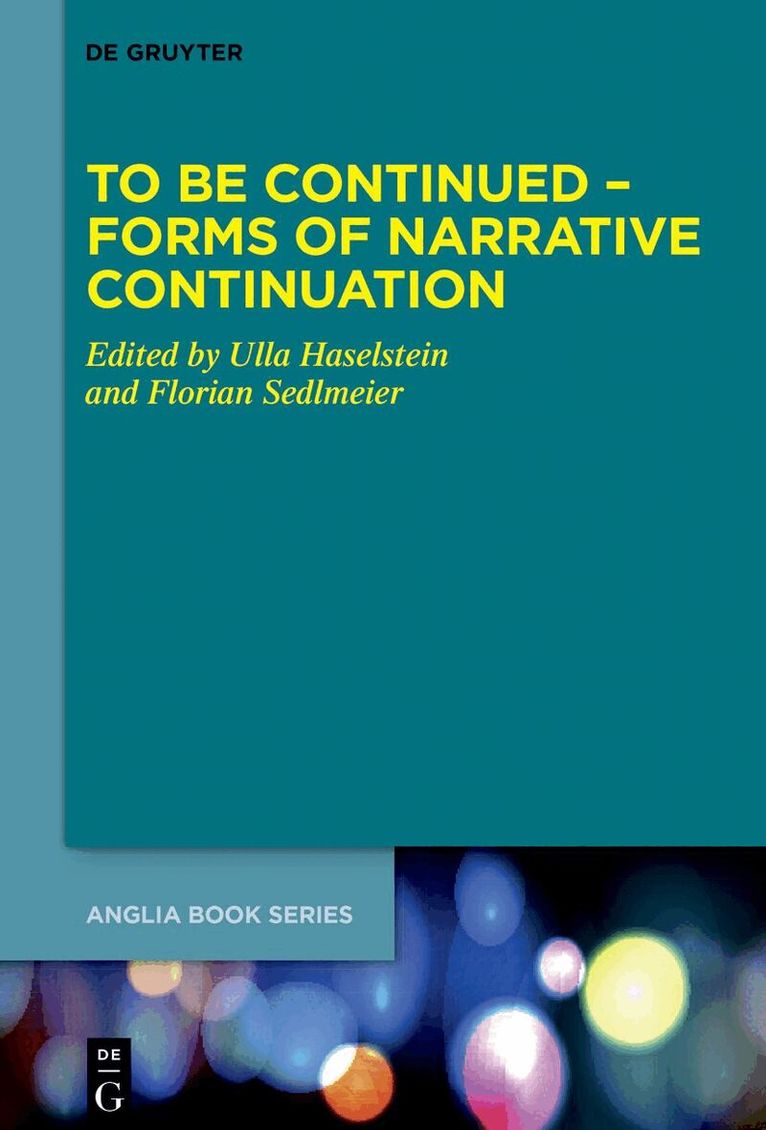
To Be Continued – Forms of Narrative Continuation
Av Ulla Haselstein, Florian Sedlmeier
Inbunden, 2025
1621 kr
Lägg i varukorg
To Be Continued discusses forms of creating narrative continuation, such as adventure, parody, the saga format, fan fiction, seriality, spin-offs in case studies ranging from the 18th century to the present. Narrative Structure. Novels organized by tight plot constructions are rather rare. Episodic …
To Be Continued - Forms of Narrative Continuation
Av Florian Sedlmeier, Ulla Haselstein
E-bok, 2025
1422 kr
Lägg i varukorg
To Be Continued discusses forms of creating narrative continuation, such as adventure, parody, the saga format, fan fiction, seriality, spin-offs in case studies ranging from the 18th century to the present. Narrative Structure. Novels organized by tight plot constructions are rather rare. Episodic …
To Be Continued - Forms of Narrative Continuation
Av Florian Sedlmeier, Ulla Haselstein
E-bok, 2025
1422 kr
Lägg i varukorg
To Be Continued discusses forms of creating narrative continuation, such as adventure, parody, the saga format, fan fiction, seriality, spin-offs in case studies ranging from the 18th century to the present. Narrative Structure. Novels organized by tight plot constructions are rather rare. Episodic …
The Power and Politics of the Aesthetic in American Culture
Av Klaus Benesch, Ulla Haselstein
Inbunden
801 kr
Lägg i varukorg