Ulrich Sedelmeier – författare
Visar alla böcker från författaren Ulrich Sedelmeier. Handla med fri frakt och snabb leverans.
14 produkter
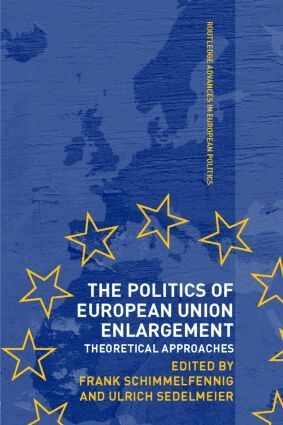
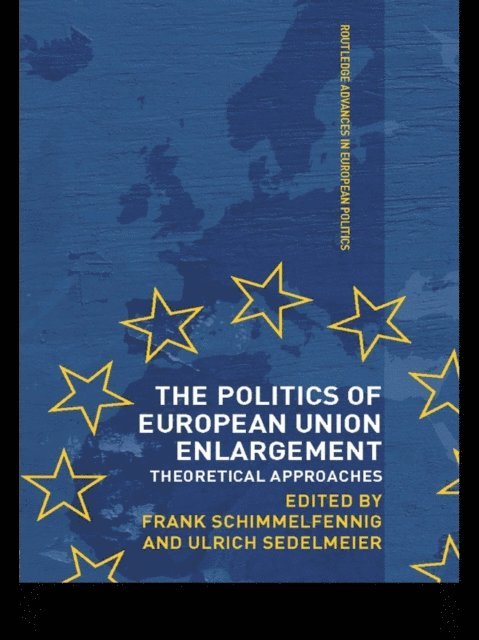
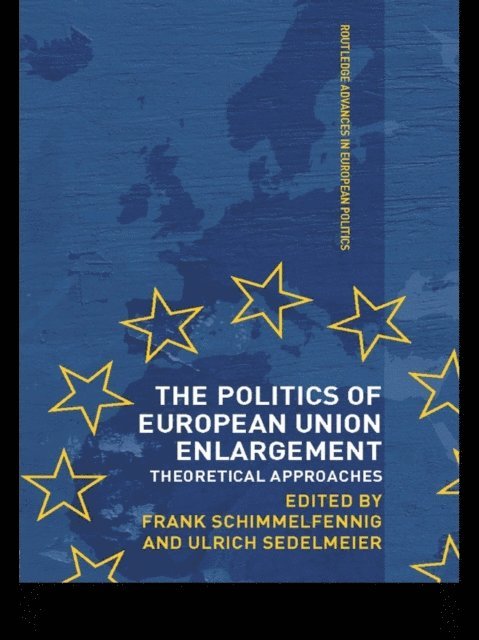
Politics of European Union Enlargement
Theoretical Approaches
Av Frank Schimmelfennig, Ulrich Sedelmeier
Inbunden, 2005
2516 kr
Lägg i varukorg
This is a key reference text presenting the latest first-rate approaches to the study of European enlargement.Developed and significantly expanded from a special issue of the leading Journal of European Public Policy, this new volume draws on the insights from the recently emerging …
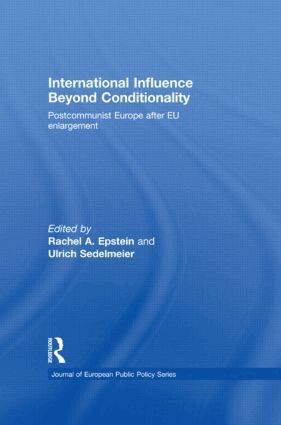
International Influence Beyond Conditionality
Postcommunist Europe after EU enlargement
Av Rachel A. Epstein, Ulrich Sedelmeier
Inbunden, 2009
1502 kr
Lägg i varukorg
The European Union’s (EU) membership conditionality has been perceived as a highly effective means of influence on non-member states in the run-up to the 2004 and 2007 enlargements. According to the incentive-based explanation that dominates the literature, conditionality has been particularly …
Politics of European Union Enlargement
Theoretical Approaches
Av Frank Schimmelfennig, Ulrich Sedelmeier
Häftad, 2009
751 kr
Lägg i varukorg
This is a key reference text presenting the latest first-rate approaches to the study of European enlargement.Developed and significantly expanded from a special issue of the leading Journal of European Public Policy, this new volume draws on the insights from the recently emerging …
International Influence Beyond Conditionality
Postcommunist Europe after EU enlargement
Av Rachel A. Epstein, Ulrich Sedelmeier
Häftad, 2013
561 kr
Lägg i varukorg
The European Union’s (EU) membership conditionality has been perceived as a highly effective means of influence on non-member states in the run-up to the 2004 and 2007 enlargements. According to the incentive-based explanation that dominates the literature, conditionality has been particularly …
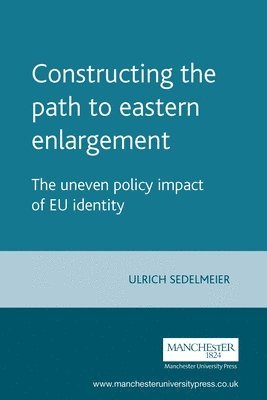
Constructing the Path to Eastern Enlargement
The Uneven Policy Impact of Eu Identity
Inbunden, 2005
1123 kr
Lägg i varukorg
This book examines the two main dimensions of the European Union’s enlargement to eight central and eastern European countries (CEECs) in 2004. Why did the EU agree to enlargement, despite the costs for some incumbents who have veto-power? How can we explain the (uneven) pattern of accommodation of …
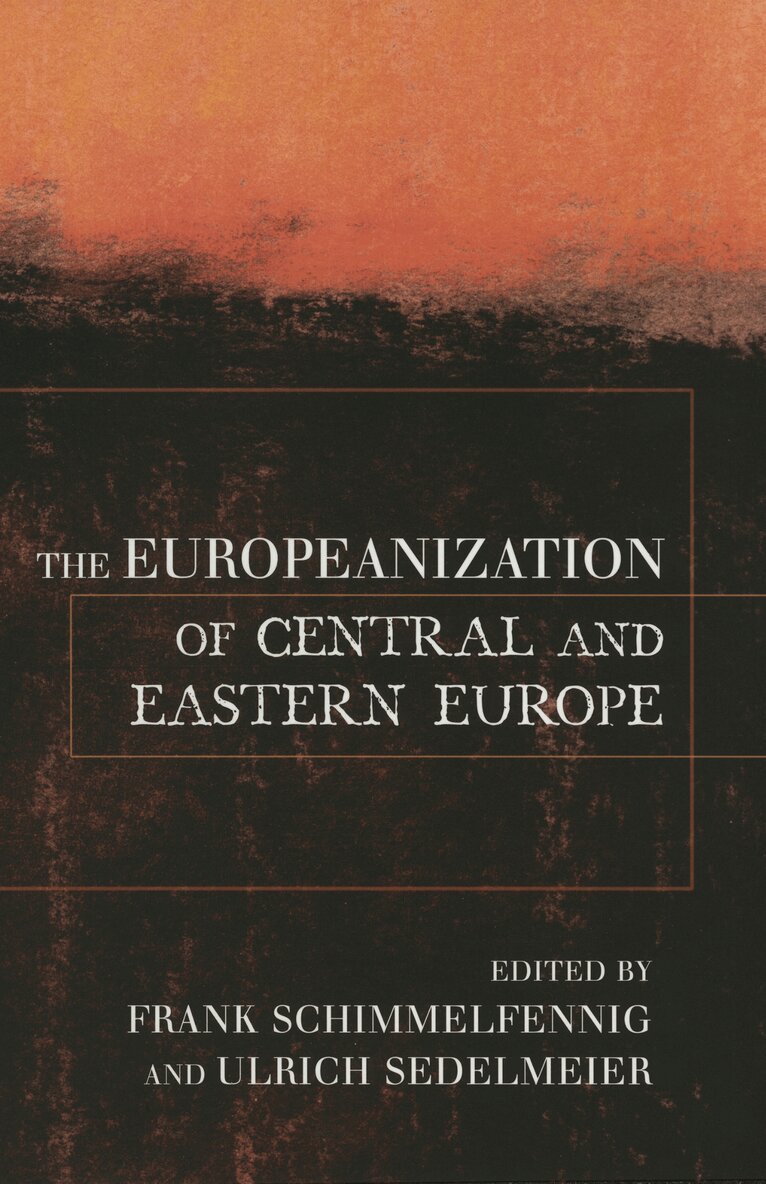
Europeanization of Central and Eastern Europe
Av Frank Schimmelfennig, Ulrich Sedelmeier
Inbunden, 2005
1649 kr
Lägg i varukorg
In May 2004, eight former Eastern Bloc countries joined the European Union: the three Baltic republics, Poland, Hungary, the Czech and Slovak republics, and Slovenia. What is involved in "accession"? How have accession dynamics affected and been affected by the domestic politics of candidate …
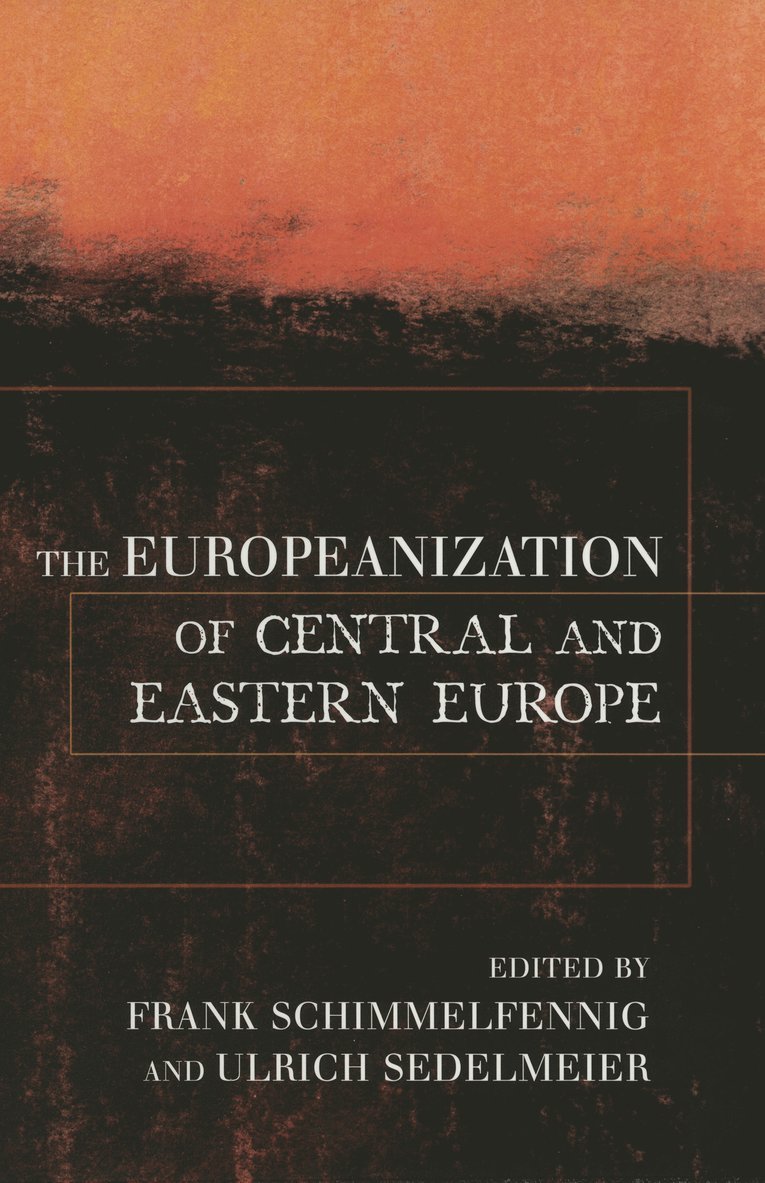
Europeanization of Central and Eastern Europe
Av Frank Schimmelfennig, Ulrich Sedelmeier
Häftad, 2005
5,0 utav 5 stjärnor. Totalt antal röster: (1)
460 kr
Lägg i varukorg
In May 2004, eight former Eastern Bloc countries joined the European Union: the three Baltic republics, Poland, Hungary, the Czech and Slovak republics, and Slovenia. What is involved in "accession"? How have accession dynamics affected and been affected by the domestic politics of candidate …
Politics of European Union Enlargement
Theoretical Approaches
Av Ulrich Sedelmeier, Frank Schimmelfennig
E-bok, 2005
864 kr
Lägg i varukorg
This is a key reference text presenting the latest first-rate approaches to the study of European enlargement. Developed and significantly expanded from a special issue of the leading Journal of European Public Policy , this new volume draws on the insights from the recently emerging …
Politics of European Union Enlargement
Theoretical Approaches
Av Ulrich Sedelmeier, Frank Schimmelfennig
E-bok, 2005
864 kr
Lägg i varukorg
This is a key reference text presenting the latest first-rate approaches to the study of European enlargement. Developed and significantly expanded from a special issue of the leading Journal of European Public Policy , this new volume draws on the insights from the recently emerging …
International Influence Beyond Conditionality
Postcommunist Europe after EU enlargement
Av Ulrich Sedelmeier, Rachel A. Epstein
E-bok, 2013
658 kr
Lägg i varukorg
The European Union’s (EU) membership conditionality has been perceived as a highly effective means of influence on non-member states in the run-up to the 2004 and 2007 enlargements. According to the incentive-based explanation that dominates the literature, conditionality has been particularly …
International Influence Beyond Conditionality
Postcommunist Europe after EU enlargement
Av Ulrich Sedelmeier, Rachel A. Epstein
E-bok, 2013
644 kr
Lägg i varukorg
The European Union’s (EU) membership conditionality has been perceived as a highly effective means of influence on non-member states in the run-up to the 2004 and 2007 enlargements. According to the incentive-based explanation that dominates the literature, conditionality has been particularly …
JCMS Annual Review of the European Union in 2005
Av Sedelmeier, Young AR m. fl.
Häftad, 2006
259 kr
Lägg i varukorg
The Annual Review, produced in association with JCMS, The Journal of Common Market Studies, covers the key developments in the European Union, its member states, and acceding and/or applicant countries in 2005/2006. It contains key analytical articles on political, economic and legal issues in the …
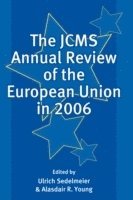
JCMS Annual Review of the European Union in 2006
Av Ulrich Sedelmeier, Alasdair R. Young
Häftad, 2007
259 kr
Lägg i varukorg
The Annual Review, produced in association with JCMS, The Journal of Common Market Studies, covers the key developments in the European Union, its member states, and acceding and/or applicant countries in 2006/2007. Contains analytical articles on key political, economic and legal issues in the EU …
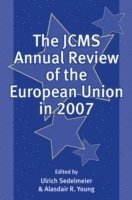
JCMS Annual Review of the European Union in 2007
Av Ulrich Sedelmeier, Alasdair R. Young
Häftad, 2008
259 kr
Lägg i varukorg
The Annual Review, produced in association with JCMS, The Journal of Common Market Studies, covers the key developments in the European Union, its member states, and acceding and/or applicant countries in 2007. It contains key analytical articles on political, economic and legal issues in the EU by …