Umang Garg - Böcker
Visar alla böcker från författaren Umang Garg. Handla med fri frakt och snabb leverans.
3 produkter
3 produkter
1 788 kr
Skickas inom 7-10 vardagar
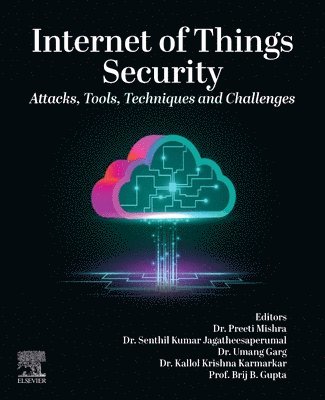
Internet of Things Security: Attacks, Tools, Techniques and Challenges delves into the essential aspects of safeguarding devices within the IoT ecosystem. This book provides a comprehensive overview of the IoT architecture, its vast applications, and the difficulties in securing such an expansive infrastructure. Readers gain insight into various security vulnerabilities present at each layer of IoT architecture, alongside viable security solutions. The book thoroughly examines distinct access control and authentication strategies, including intrusion detection systems (IDS), misuse detection, anomaly detection, DNS-based security solutions, and the implementation of artificial intelligence (AI) in cognitive IoT security.Additionally, the book explores microservice architecture for distributed IoT security and blockchain-based IoT security solutions.Covers the basic concepts of IoT security, including vulnerabilities, authentication, and detectionDiscusses advanced research areas such as light-weighted authentication mechanism, blockchain, and AI-based security solutionsContains case studies analyzing IoT attacks
1 618 kr
Skickas inom 10-15 vardagar
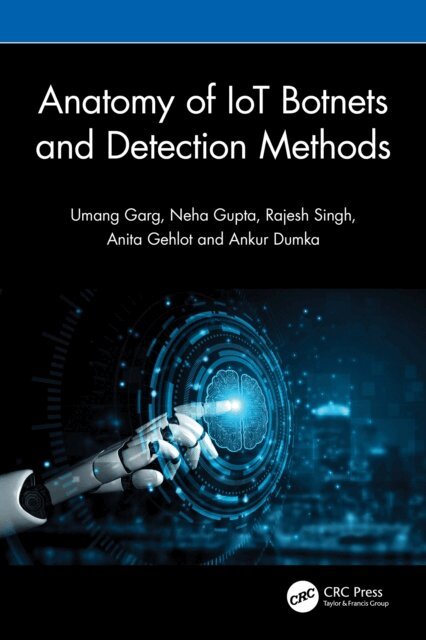
The book Anatomy of IoT Botnets and Detection Methods delves into the evolving landscape of cybersecurity threats associated with the Internet of Things (IoT), specifically focusing on the anatomy, behavior, and detection of IoT-based botnets. As IoT devices proliferate in both consumer and industrial settings, their inherent vulnerabilities—such as weak authentication, limited processing power, and lack of regular updates—make them prime targets for attackers. The book begins by exploring how IoT botnets are formed, highlighting key attack vectors such as malware propagation, command, and control (C&C) mechanisms, and commonly exploited protocols such as Telnet and UPnP. Notable case studies, including the Mirai and Mozi botnets, illustrate real-world impacts, emphasizing the scale and damage these threats can inflict. The core of the book then transitions into detection methodologies, covering both traditional and AI-driven approaches. Techniques such as signature-based detection, anomaly detection using machine learning, network traffic analysis, and honeypot deployment are thoroughly examined. The authors also address the challenges in detecting IoT botnets, including encrypted traffic, device heterogeneity, and low visibility in resource-constrained devices. Furthermore, the book emphasizes the importance of proactive defense strategies, such as firmware hardening, secure boot mechanisms, and real-time behavioral analytics. It underscores the role of collaborative intelligence sharing among stakeholders to enhance detection capabilities. By integrating theoretical concepts with practical insights and current research trends, the book provides a comprehensive guide for researchers, cybersecurity professionals, and IoT developers aiming to understand and counteract botnet threats. Ultimately, Anatomy of IoT Botnet and Detection Methods serves as a crucial resource for strengthening the cybersecurity posture of IoT ecosystems through informed detection and mitigation practices. The content of the book is categorized into the following sub-sections:Introduction to IoT and Botnets: An overview of IoT technology, its adoption, and the rising threat of botnets.IoT Device Vulnerabilities: Analysis of common security weaknesses in IoT devices that cybercriminals exploit.Botnet Architecture: Detailed examination of how IoT botnets are structured, including command-and-control mechanisms.Infection and Propagation: Methods used by attackers to spread malware across IoT networks.Detection Techniques: Overview of current detection methods, including anomaly detection, signature-based approaches, and machine learning.Mitigation Strategies: Practical advice on how to secure IoT devices, including best practices for manufacturers and users.Case Studies: Real-world examples of IoT botnet attacks and their impact.The book concludes with a discussion on the future of IoT security, emphasizing the need for continuous innovation in detection and prevention methods.
658 kr
Skickas inom 10-15 vardagar
The book Anatomy of IoT Botnets and Detection Methods delves into the evolving landscape of cybersecurity threats associated with the Internet of Things (IoT), specifically focusing on the anatomy, behavior, and detection of IoT-based botnets. As IoT devices proliferate in both consumer and industrial settings, their inherent vulnerabilities—such as weak authentication, limited processing power, and lack of regular updates—make them prime targets for attackers. The book begins by exploring how IoT botnets are formed, highlighting key attack vectors such as malware propagation, command, and control (C&C) mechanisms, and commonly exploited protocols such as Telnet and UPnP. Notable case studies, including the Mirai and Mozi botnets, illustrate real-world impacts, emphasizing the scale and damage these threats can inflict. The core of the book then transitions into detection methodologies, covering both traditional and AI-driven approaches. Techniques such as signature-based detection, anomaly detection using machine learning, network traffic analysis, and honeypot deployment are thoroughly examined. The authors also address the challenges in detecting IoT botnets, including encrypted traffic, device heterogeneity, and low visibility in resource-constrained devices. Furthermore, the book emphasizes the importance of proactive defense strategies, such as firmware hardening, secure boot mechanisms, and real-time behavioral analytics. It underscores the role of collaborative intelligence sharing among stakeholders to enhance detection capabilities. By integrating theoretical concepts with practical insights and current research trends, the book provides a comprehensive guide for researchers, cybersecurity professionals, and IoT developers aiming to understand and counteract botnet threats. Ultimately, Anatomy of IoT Botnet and Detection Methods serves as a crucial resource for strengthening the cybersecurity posture of IoT ecosystems through informed detection and mitigation practices. The content of the book is categorized into the following sub-sections:Introduction to IoT and Botnets: An overview of IoT technology, its adoption, and the rising threat of botnets.IoT Device Vulnerabilities: Analysis of common security weaknesses in IoT devices that cybercriminals exploit.Botnet Architecture: Detailed examination of how IoT botnets are structured, including command-and-control mechanisms.Infection and Propagation: Methods used by attackers to spread malware across IoT networks.Detection Techniques: Overview of current detection methods, including anomaly detection, signature-based approaches, and machine learning.Mitigation Strategies: Practical advice on how to secure IoT devices, including best practices for manufacturers and users.Case Studies: Real-world examples of IoT botnet attacks and their impact.The book concludes with a discussion on the future of IoT security, emphasizing the need for continuous innovation in detection and prevention methods.