Valerie McGuire - Böcker
Visar alla böcker från författaren Valerie McGuire. Handla med fri frakt och snabb leverans.
3 produkter
3 produkter
2 103 kr
Skickas inom 10-15 vardagar
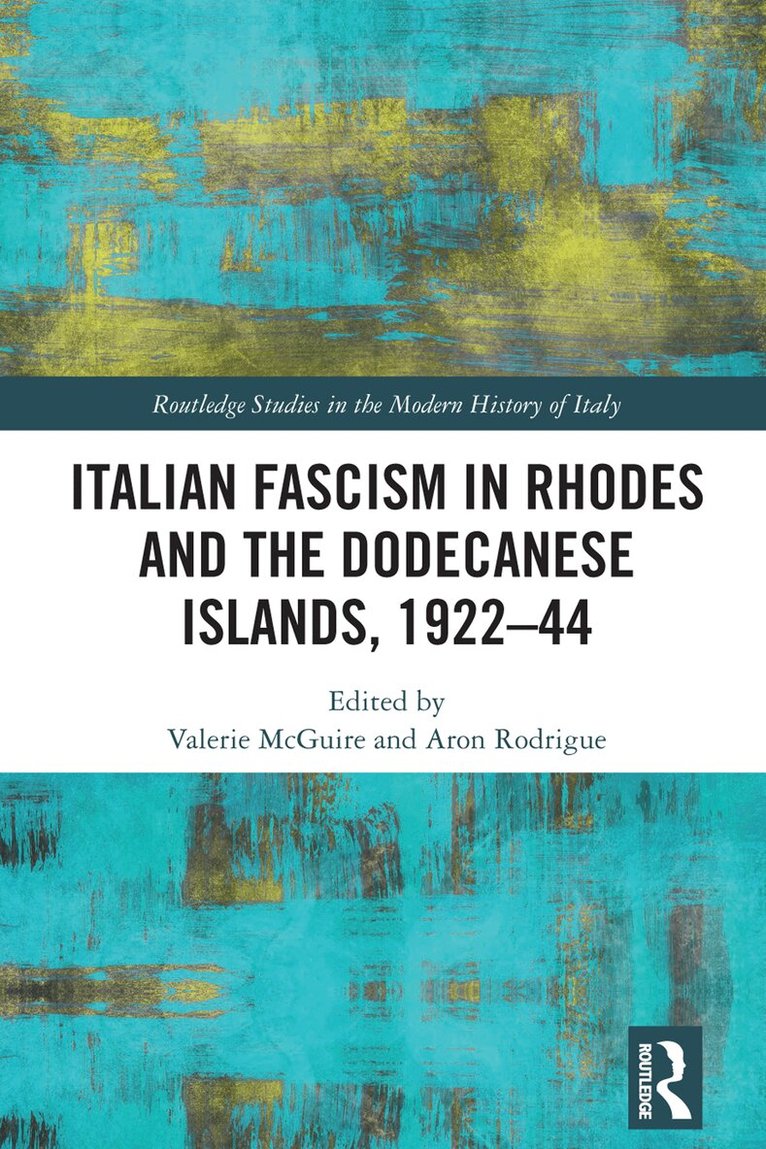
This book is the first English-language collection of scholarly essays to investigate the ambiguous and supporting role that colonialism in the Aegean Region played in Mussolini’s imperial ambitions, bringing to light a history rarely scrutinized until recently.The Dodecanese archipelago is often absent from histories of Italian fascist colonialism, as Italian territories in East Africa, Libya, and the Balkans have figured more centrally in discussions of how nationalism and later fascism relied on the empire to promote discourses of national renewal and regeneration. Over the past twenty years, a new wave of research has emerged, animated by the opening of previously closed state archives in various countries. This volume’s international contributors provide fresh perspectives on a topic frequently mythologized as a “golden period” of social and cultural intimacy among twentieth-century Greeks, Turks, and Jews. Themes include the fascist adaptation in the islands of Ottoman imperial governance, programs of infrastructure, development, and administration in the Dodecanese, Jewish history and memory in Rhodes, and the place of the islands in larger regional tensions of the interwar period.The volume will be of interest to scholars of Italian history, modern colonialism, fascism, Mediterranean studies, the end of the Ottoman Empire, and Sephardic Jewry.
Del 5 - Transnational Italian Cultures
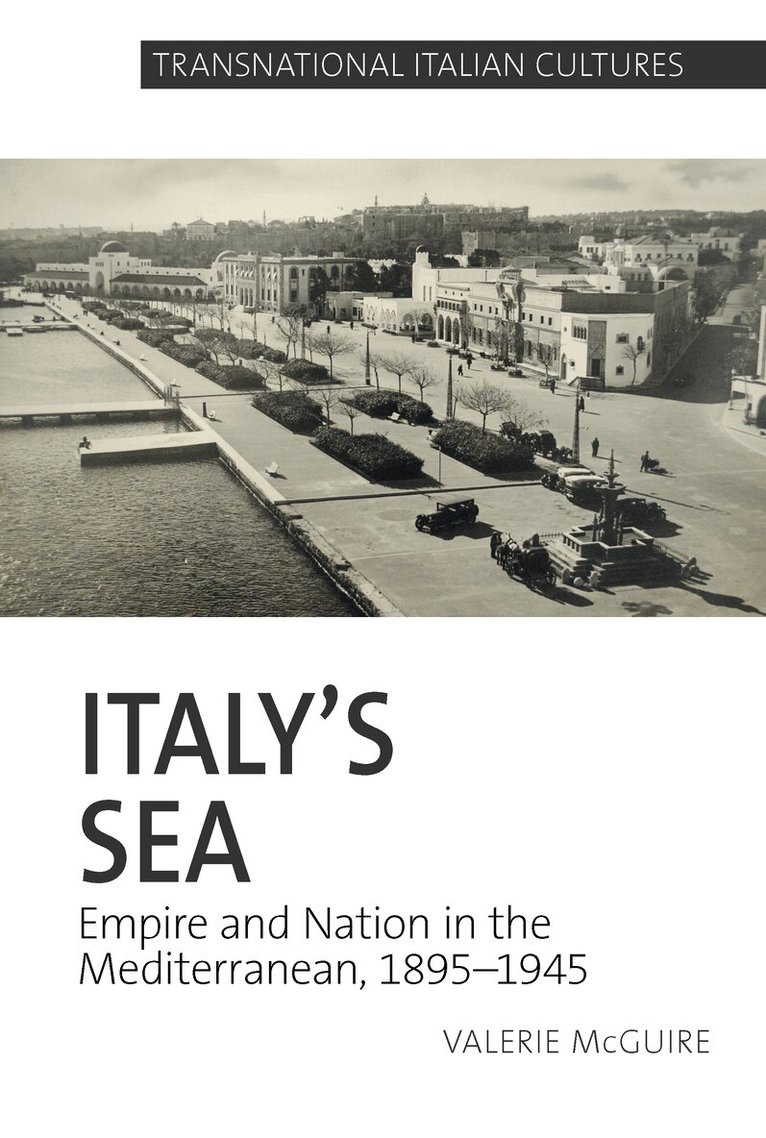
Italy’s Sea
Empire and Nation in the Mediterranean, 1895-1945
Inbunden, Engelska, 2020
1 911 kr
Skickas inom 7-10 vardagar
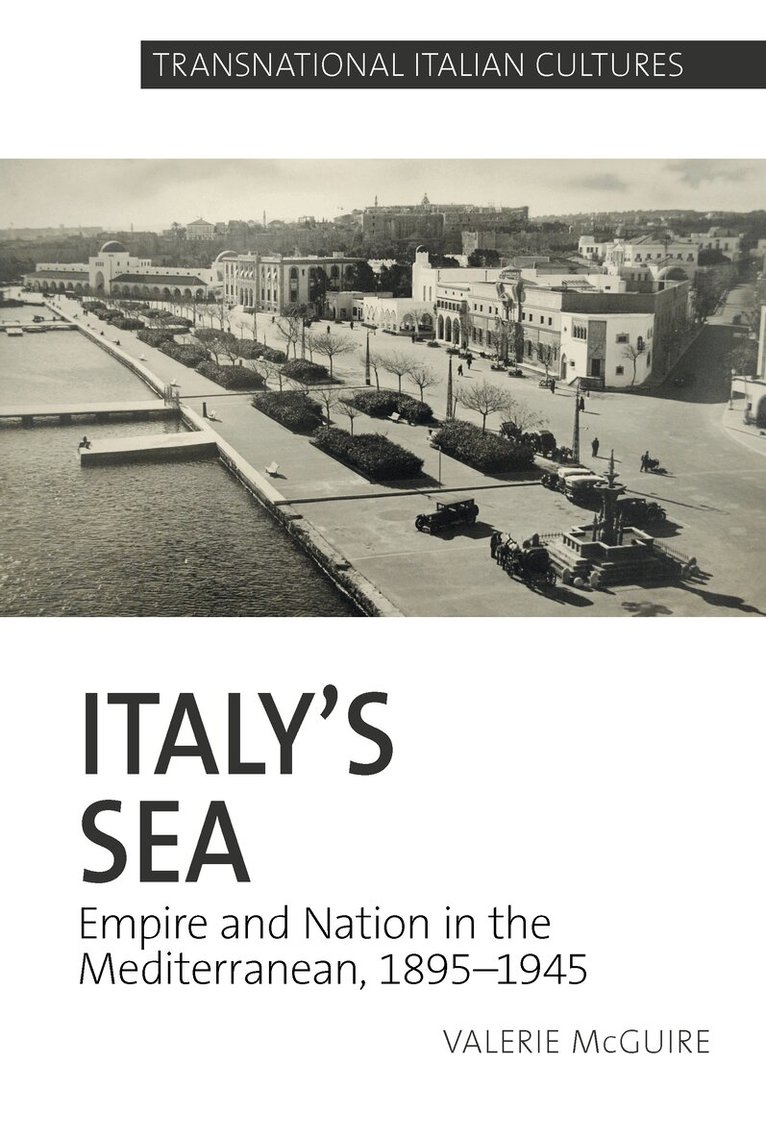
For much of the twentieth century the Mediterranean was a colonized sea. Italy’s Sea: Empire and Nation in the Mediterranean (1895-1945) reintegrates Italy, one of the least studied imperial states, into the history of European colonialism. It takes a critical approach to the concept of the Mediterranean in the period of Italian expansion and examines how within and through the Mediterranean Italians navigated issues of race, nation and migration troubling them at home as well as transnational questions about sovereignty, identity, and national belonging created by the decline and collapse of the Ottoman empire in North Africa, the Balkans, and the eastern Mediterranean, or Levant. While most studies of Italian colonialism center on the encounter in Africa, Italy’s Sea describes another set of colonial identities that accrued in and around the Aegean region of the Mediterranean, ones linked not to resettlement projects or to the rhetoric of reclaiming Roman empire, but to cosmopolitan imaginaries of Magna Graecia, the medieval Christian crusades, the Venetian and Genoese maritime empires, and finally, of religious diversity and transnational Levantine Jewish communities that could help render cultural and political connections between the Italian nation at home and the overseas empire in the Mediterranean. Using postcolonial critique to interpret local archival and oral sources as well as Italian colonial literature, film, architecture, and urban planning, the book brings to life a history of mediterraneità or Mediterraneanness in Italian culture, one with both liberal and fascist associations, and enriches our understanding of how contemporary Italy—as well as Greece—may imagine their relationships to Europe and the Mediterranean today.**
Del 5 - Transnational Italian Cultures
Italy’s Sea
Empire and Nation in the Mediterranean, 1895-1945
Häftad, Engelska, 2023
560 kr
Skickas inom 7-10 vardagar
For much of the twentieth century the Mediterranean was a colonized sea. Italy’s Sea: Empire and Nation in the Mediterranean (1895-1945) reintegrates Italy, one of the least studied imperial states, into the history of European colonialism. It takes a critical approach to the concept of the Mediterranean in the period of Italian expansion and examines how within and through the Mediterranean Italians navigated issues of race, nation and migration troubling them at home as well as transnational questions about sovereignty, identity, and national belonging created by the decline and collapse of the Ottoman empire in North Africa, the Balkans, and the eastern Mediterranean, or Levant. While most studies of Italian colonialism center on the encounter in Africa, Italy’s Sea describes another set of colonial identities that accrued in and around the Aegean region of the Mediterranean, ones linked not to resettlement projects or to the rhetoric of reclaiming Roman empire, but to cosmopolitan imaginaries of Magna Graecia, the medieval Christian crusades, the Venetian and Genoese maritime empires, and finally, of religious diversity and transnational Levantine Jewish communities that could help render cultural and political connections between the Italian nation at home and the overseas empire in the Mediterranean. Using postcolonial critique to interpret local archival and oral sources as well as Italian colonial literature, film, architecture, and urban planning, the book brings to life a history of mediterraneità or Mediterraneanness in Italian culture, one with both liberal and fascist associations, and enriches our understanding of how contemporary Italy—as well as Greece—may imagine their relationships to Europe and the Mediterranean today.**