Vanessa K. Valdes - Böcker
Visar alla böcker från författaren Vanessa K. Valdes. Handla med fri frakt och snabb leverans.
12 produkter
12 produkter
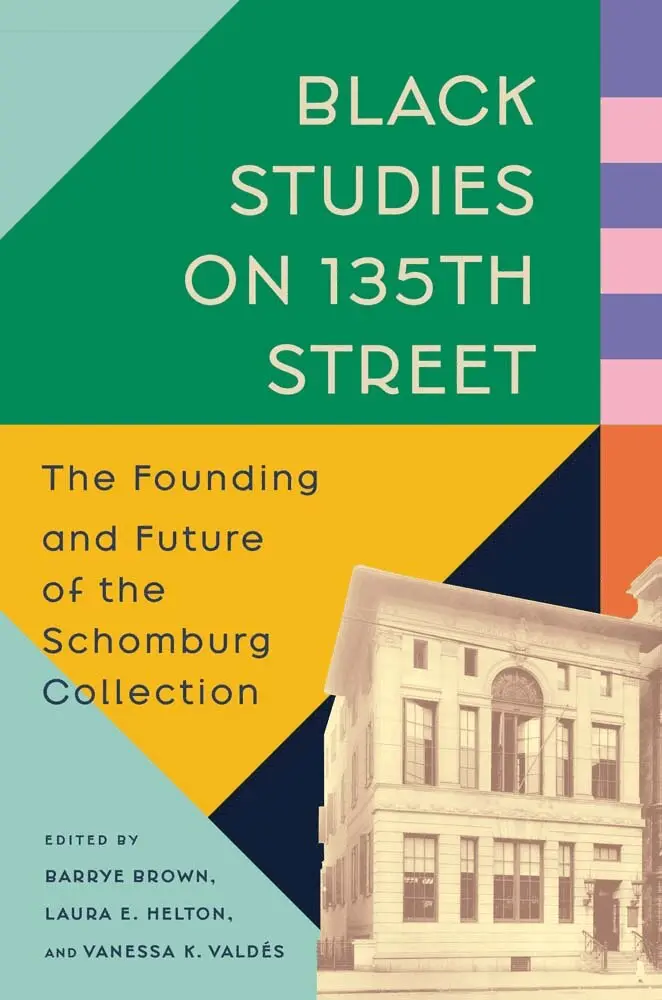
Black Studies on 135th Street
The Founding and Future of the Schomburg Collection
Inbunden, Engelska, 2026
456 kr
Kommande
A centennial celebration of the Schomburg Center for Research in Black Culture and its vital role in the development of Black Studies In 1926, the Afro–Puerto Rican bibliophile Arturo Schomburg’s collection of four thousand books, pamphlets, papers, and prints arrived at the 135th Street branch of the New York Public Library. The collection contained works in many languages and formats, offering an unparalleled look into the richness and global reach of Black history. One hundred years later, Schomburg’s collection remains a central feature of the Schomburg Center for Research in Black Culture, now the world’s premier archive for study of the African diaspora, housing more than 11 million items, and a vibrant site of Black intellectual life.This volume not only contextualizes the life and work of Schomburg and chronicles the history of the institution that bears his name but also includes a list of books and pamphlets in Schomburg’s initial “seed collection,” the fruit of a multiyear research effort to reconstruct this early Black Studies archive. Framing this list are essays and reflections written by an interdisciplinary group of scholars on the development of the Black intellectual tradition, both in Schomburg’s time and today.
1 088 kr
Tillfälligt slut
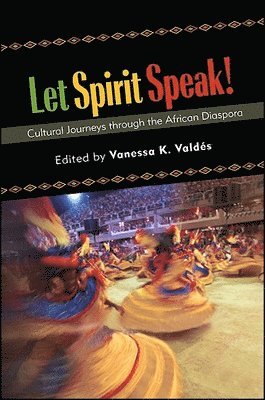
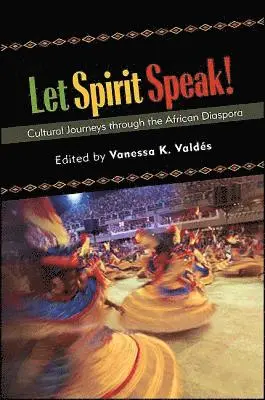
Interdisciplinary celebration of the cultural contributions of members of the African Diaspora in the Western hemisphere.In this unique and groundbreaking collection, writers, critics, historians, and poets celebrate the cultural contributions of members of the African diaspora in the Western Hemisphere. Beginning with the cries and prayers of Gina Athena Ulysse to the Haitian loa Erzulie in the aftermath of the earthquake in Haiti, each writer in the collection engages in the recovering of the past, highlighting that which has been buried in the history of time. The contributors look at a wide range of artistic productions, from poetry and fiction, to art, music, and film, and martial arts produced in Cuba, Columbia, Brazil, Haiti, and the United States. Haitian Creole, Spanish, and English are brought together, giving the reader a vivid sense of the multiplicity of voices in the African diaspora. Rather than concentrate on the dispersion of peoples of African descent, this collection focuses instead on the multiple sites of origins in the Americas, as diasporic legacies are found throughout the continent.
290 kr
Tillfälligt slut
Interdisciplinary celebration of the cultural contributions of members of the African Diaspora in the Western hemisphere.In this unique and groundbreaking collection, writers, critics, historians, and poets celebrate the cultural contributions of members of the African diaspora in the Western Hemisphere. Beginning with the cries and prayers of Gina Athena Ulysse to the Haitian loa Erzulie in the aftermath of the earthquake in Haiti, each writer in the collection engages in the recovering of the past, highlighting that which has been buried in the history of time. The contributors look at a wide range of artistic productions, from poetry and fiction, to art, music, and film, and martial arts produced in Cuba, Columbia, Brazil, Haiti, and the United States. Haitian Creole, Spanish, and English are brought together, giving the reader a vivid sense of the multiplicity of voices in the African diaspora. Rather than concentrate on the dispersion of peoples of African descent, this collection focuses instead on the multiple sites of origins in the Americas, as diasporic legacies are found throughout the continent.
491 kr
Skickas inom 3-6 vardagar
Examines the ways in which the inclusion of African diasporic religious practices serves as a transgressive tool in narrative discourses in the Americas.Finalist for the 2015 Albert J. Raboteau Prize for the Best Book in Africana Religions presented by the Journal of Africana Religions Oshun's Daughters examines representations of African diasporic religions from novels and poems written by women in the United States, the Spanish Caribbean, and Brazil. In spite of differences in age, language, and nationality, these women writers all turn to variations of traditional Yoruba religion (Santería/Regla de Ocha and Candomblé) as a source of inspiration for creating portraits of womanhood. Within these religious systems, binaries that dominate European thought-man/woman, mind/body, light/dark, good/evil-do not function in the same way, as the emphasis is not on extremes but on balancing or reconciling these radical differences. Involvement with these African diasporic religions thus provides alternative models of womanhood that differ substantially from those found in dominant Western patriarchal culture, namely, that of virgin, asexual wife/mother, and whore. Instead we find images of the sexual woman, who enjoys her body without any sense of shame; the mother, who nurtures her children without sacrificing herself; and the warrior woman, who actively resists demands that she conform to one-dimensional stereotypes of womanhood.
1 215 kr
Tillfälligt slut
Examines the ways in which the inclusion of African diasporic religious practices serves as a transgressive tool in narrative discourses in the Americas.Finalist for the 2015 Albert J. Raboteau Prize for the Best Book in Africana Religions presented by the Journal of Africana Religions Oshun's Daughters examines representations of African diasporic religions from novels and poems written by women in the United States, the Spanish Caribbean, and Brazil. In spite of differences in age, language, and nationality, these women writers all turn to variations of traditional Yoruba religion (Santería/Regla de Ocha and Candomblé) as a source of inspiration for creating portraits of womanhood. Within these religious systems, binaries that dominate European thought-man/woman, mind/body, light/dark, good/evil-do not function in the same way, as the emphasis is not on extremes but on balancing or reconciling these radical differences. Involvement with these African diasporic religions thus provides alternative models of womanhood that differ substantially from those found in dominant Western patriarchal culture, namely, that of virgin, asexual wife/mother, and whore. Instead we find images of the sexual woman, who enjoys her body without any sense of shame; the mother, who nurtures her children without sacrificing herself; and the warrior woman, who actively resists demands that she conform to one-dimensional stereotypes of womanhood.
1 122 kr
Tillfälligt slut
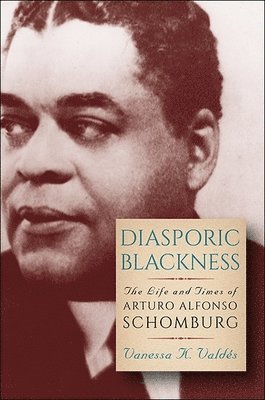
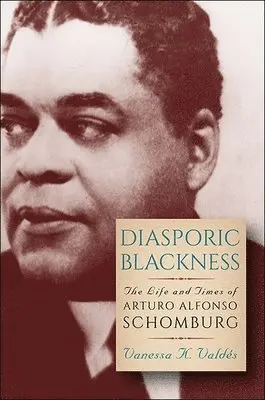
Examines the life of Arturo Alfonso Schomburg through the lens of both Blackness and latinidad.A Black Puerto Rican–born scholar, Arturo Alfonso Schomburg (1874–1938) was a well-known collector and archivist whose personal library was the basis of the Schomburg Center for Research in Black Culture at the New York Public Library. He was an autodidact who matched wits with university-educated men and women, as well as a prominent Freemason, a writer, and an institution-builder.While he spent much of his life in New York City, Schomburg was intimately involved in the cause of Cuban and Puerto Rican independence. In the aftermath of the Spanish-Cuban-American War of 1898, he would go on to cofound the Negro Society for Historical Research and lead the American Negro Academy, all the while collecting and assembling books, prints, pamphlets, articles, and other ephemera produced by Black men and women from across the Americas and Europe. His curated library collection at the New York Public Library emphasized the presence of African peoples and their descendants throughout the Americas and would serve as an indispensable resource for the luminaries of the Harlem Renaissance, including Langston Hughes and Zora Neale Hurston. By offering a sustained look at the life of one of the most important figures of early twentieth-century New York City, this first book-length examination of Schomburg's life as an Afro-Latino suggests new ways of understanding the intersections of both Blackness and latinidad.
453 kr
Skickas inom 3-6 vardagar
Examines the life of Arturo Alfonso Schomburg through the lens of both Blackness and latinidad.A Black Puerto Rican–born scholar, Arturo Alfonso Schomburg (1874–1938) was a well-known collector and archivist whose personal library was the basis of the Schomburg Center for Research in Black Culture at the New York Public Library. He was an autodidact who matched wits with university-educated men and women, as well as a prominent Freemason, a writer, and an institution-builder.While he spent much of his life in New York City, Schomburg was intimately involved in the cause of Cuban and Puerto Rican independence. In the aftermath of the Spanish-Cuban-American War of 1898, he would go on to cofound the Negro Society for Historical Research and lead the American Negro Academy, all the while collecting and assembling books, prints, pamphlets, articles, and other ephemera produced by Black men and women from across the Americas and Europe. His curated library collection at the New York Public Library emphasized the presence of African peoples and their descendants throughout the Americas and would serve as an indispensable resource for the luminaries of the Harlem Renaissance, including Langston Hughes and Zora Neale Hurston. By offering a sustained look at the life of one of the most important figures of early twentieth-century New York City, this first book-length examination of Schomburg's life as an Afro-Latino suggests new ways of understanding the intersections of both Blackness and latinidad.
1 674 kr
Skickas inom 3-6 vardagar
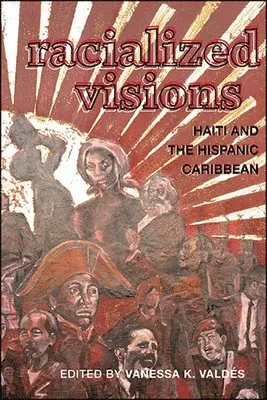
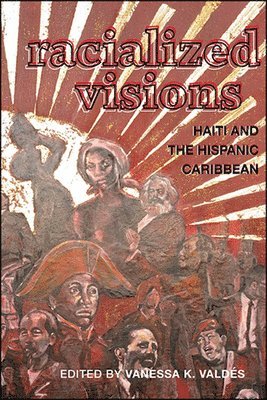
The first volume in English to explore the cultural impact of Haiti on the surrounding Spanish-speaking nations of Cuba, the Dominican Republic, and Puerto Rico.As a Francophone nation, Haiti is seldom studied in conjunction with its Spanish-speaking Caribbean neighbors. Racialized Visions challenges the notion that linguistic difference has kept the populations of these countries apart, instead highlighting ongoing exchanges between their writers, artists, and thinkers. Centering Haiti in this conversation also makes explicit the role that race-and, more specifically, anti-blackness-has played both in the region and in academic studies of it. Following the Revolution and Independence in 1804, Haiti was conflated with blackness. Spanish colonial powers used racist representations of Haiti to threaten their holdings in the Atlantic Ocean. In the years since, white elites in Cuba, the Dominican Republic, and Puerto Rico upheld Haiti as a symbol of barbarism and savagery. Racialized Visions powerfully refutes this symbolism. Across twelve essays, contributors demonstrate how cultural producers in these countries have resignified Haiti to mean liberation. An introduction and conclusion by the editor, Vanessa K. Valdés, as well as foreword by Myriam J. A. Chancy, provide valuable historical context and an overview of Afro-Latinx studies and its futures.
491 kr
Skickas inom 3-6 vardagar
The first volume in English to explore the cultural impact of Haiti on the surrounding Spanish-speaking nations of Cuba, the Dominican Republic, and Puerto Rico.As a Francophone nation, Haiti is seldom studied in conjunction with its Spanish-speaking Caribbean neighbors. Racialized Visions challenges the notion that linguistic difference has kept the populations of these countries apart, instead highlighting ongoing exchanges between their writers, artists, and thinkers. Centering Haiti in this conversation also makes explicit the role that race-and, more specifically, anti-blackness-has played both in the region and in academic studies of it. Following the Revolution and Independence in 1804, Haiti was conflated with blackness. Spanish colonial powers used racist representations of Haiti to threaten their holdings in the Atlantic Ocean. In the years since, white elites in Cuba, the Dominican Republic, and Puerto Rico upheld Haiti as a symbol of barbarism and savagery. Racialized Visions powerfully refutes this symbolism. Across twelve essays, contributors demonstrate how cultural producers in these countries have resignified Haiti to mean liberation. An introduction and conclusion by the editor, Vanessa K. Valdés, as well as foreword by Myriam J. A. Chancy, provide valuable historical context and an overview of Afro-Latinx studies and its futures.
1 674 kr
Skickas inom 3-6 vardagar
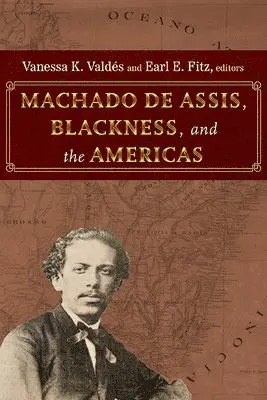
Examines the reception of Brazil's most-canonized writer in the United States to shed light on questions of Blackness and hemispheric American experience.Considered a genius in his own lifetime, Joaquim Maria Machado de Assis (1839–1908) is Brazil's most canonized writer. Yet, he remains a contested and even enigmatic figure to readers in Brazil and abroad, his relative silence on slavery leaving him vulnerable to charges of aspirations to whiteness. Machado de Assis, Blackness, and the Americas reconsiders this issue by exploring how his prose fiction has been received in the United States. In seven original essays, contributors re-examine his novels and short stories, as well as photographs of the writer, in order to better understand the strategies he employed to navigate Brazil's literary scene as a man of African descent. Framed by a contextualizing introduction and an afterword in the form of a conversation between the editors, the volume speaks to and with our own historical moment and the realities of Black lives in the Americas over the course of the last two centuries.
619 kr
Skickas inom 3-6 vardagar
Examines the reception of Brazil's most-canonized writer in the United States to shed light on questions of Blackness and hemispheric American experience.Considered a genius in his own lifetime, Joaquim Maria Machado de Assis (1839–1908) is Brazil's most canonized writer. Yet, he remains a contested and even enigmatic figure to readers in Brazil and abroad, his relative silence on slavery leaving him vulnerable to charges of aspirations to whiteness. Machado de Assis, Blackness, and the Americas reconsiders this issue by exploring how his prose fiction has been received in the United States. In seven original essays, contributors re-examine his novels and short stories, as well as photographs of the writer, in order to better understand the strategies he employed to navigate Brazil's literary scene as a man of African descent. Framed by a contextualizing introduction and an afterword in the form of a conversation between the editors, the volume speaks to and with our own historical moment and the realities of Black lives in the Americas over the course of the last two centuries.
430 kr
Skickas inom 7-10 vardagar
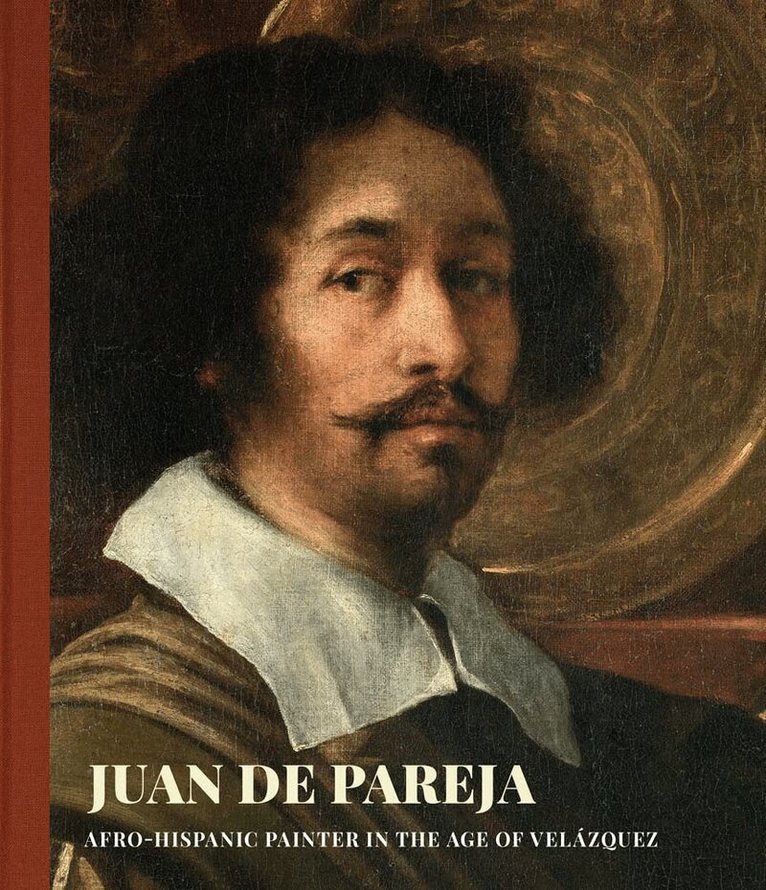
A provocative study of a freedman painter that recognizes the labor of enslaved artists and artisans in seventeenth-century SpainDiego Velázquez’s portrait of Juan de Pareja (ca. 1608–1670) has long been a landmark of European art, but this provocative study focuses on its subject: an enslaved man who went on to build his own successful career as an artist. This catalogue—the first scholarly monograph on Pareja— discusses the painter’s ties to the Madrid School of the 1660s and revises our understanding of artistic production during Spain’s Golden Age, with a focus on enslaved artists and artisans. The authors illuminate the highly skilled labor within Seville’s multiracial society; the role of Black saints and confraternities in the promotion of Catholicism among enslaved populations; and early twentieth-century scholar Arturo Schomburg’s project to recover Pareja’s legacy. The book also includes the first illustrated and annotated list of known works attributed to Pareja.Published by The Metropolitan Museum of Art/Distributed by Yale University Press Exhibition Schedule:The Metropolitan Museum of Art, New York(April 3–July 16, 2023)