
Vartan Gregorian – författare
Visar alla böcker från författaren Vartan Gregorian. Handla med fri frakt och snabb leverans.
2 produkter
2 produkter
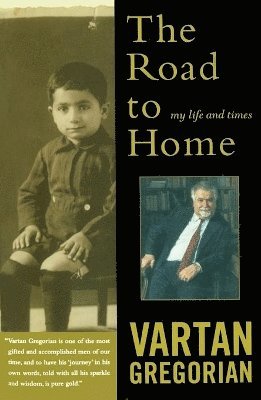
Häftad, Engelska, 2004
223 kr
Skickas inom 5-8 vardagar
In this humorous, learned, and moving memoir, Vartan Gregorian recounts his journey from an impoverished childhood as a Christian Armenian in Muslim Tabriz to cultured citizen of the world. Gregorian's odyssey begins in an obscure poor quarter of a provincial city (thought by some to be the location of the Garden of Eden). Childhood centered on his brilliant, beloved, illiterate grandmother who taught him so much, the beauty of Church, school, American movies, and the larger world he read about in his borrowed books. From there, he continued on to a Beirut lycée, Stanford University, and the presidencies of the New York Public Library, Brown University, and Carnegie Corporation. Like Jimmy Carter in An Hour Before Daylight, and in the tradition of Nabokov, Jill Ker Conway, and V. S. Naipaul, he tells us that education is an openness to everything, and describes his public and private life as one education after another. This is a love story about life.
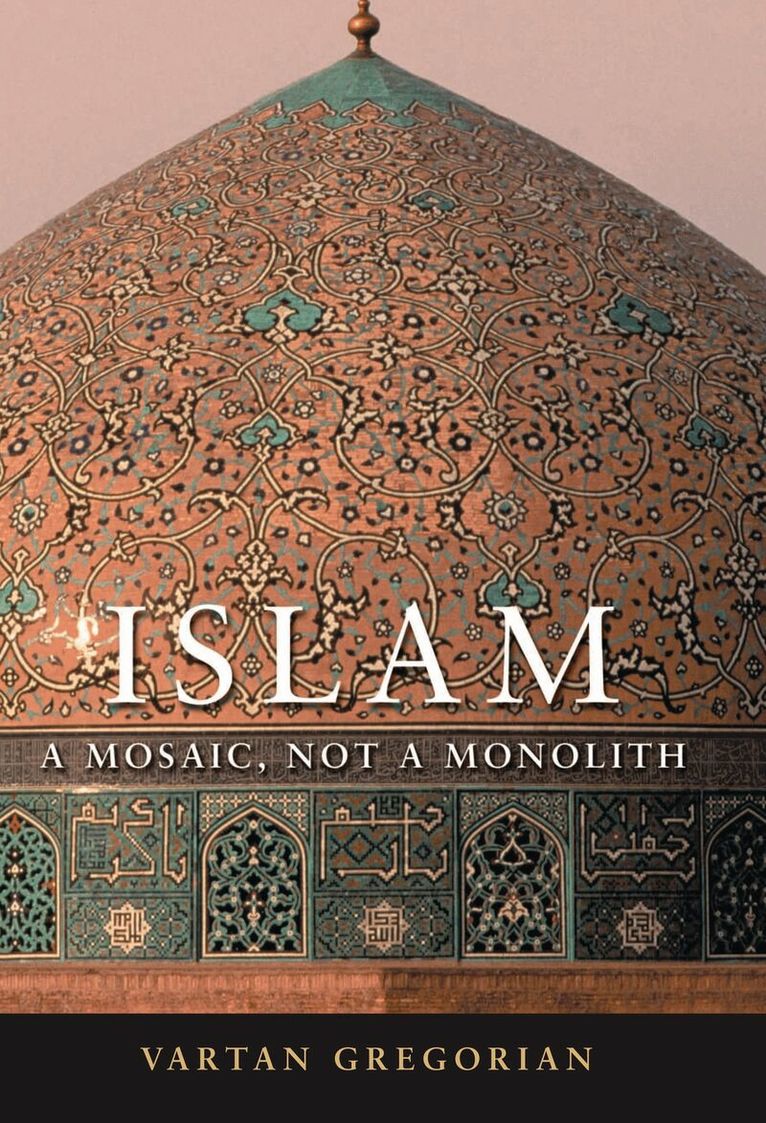
Häftad, Engelska, 2004
267 kr
Skickas inom 10-15 vardagar
After World War II, leading western powers focused their attention on fighting the ""Red Menace,"" Communism. Today, as terrorist activity is increasingly linked to militant Islamism, some politicians and scholars fear a ""Green Menace,"" a Pan-Islamic totalitarian movement fueled by monolithic religious ideology. Such fears have no foundation in history, according to Vartan Gregorian. In this succinct, powerful survey of Islam, Gregorian focuses on Muslim diversity and division, portraying the faith and its people as a mosaic, not a monolith. The book begins with an accessible overview of Islam's tenets, institutions, evolution, and historical role. Gregorian traces its origins and fundamental principles, from Muhammad's call to faith nearly 1,400 years ago to the defeat of the Ottoman Empire in World War I, and the subsequent abolition of the Caliphate. He focuses particular attention on the intense struggle between modernists and traditionalists, interaction between religion and nationalism, and key developments that have caused bitter divisions among Muslim nations and states: the partitions of Palestine, the break up and Islamization of Pakistan, the 1978 revolution in Iran, and the 1979 Soviet invasion of Afghanistan. Today Islamist views range across the entire spectra of religious and political thought, and Islamism is anything but a unified movement. While religious extremists have attempted to form a confederacy of like-minded radicals in many countries, much of the Muslim population lives in relatively modern, secular states. Gregorian urges Westerners to distinguish between activist Islamist parties, which promotesometimes violentlyIslam as an ideology in a theocratic state, and Islamic parties, whose traditional members want their secular political systems to co-exist with the moral principles of their religion. Gregorian emphasizes the importance of religion in today's world and urges states,societies, and intellectuals to intervene in order