Vasilis Avdikos - Böcker
Visar alla böcker från författaren Vasilis Avdikos. Handla med fri frakt och snabb leverans.
3 produkter
3 produkter
1 387 kr
Skickas inom 10-15 vardagar
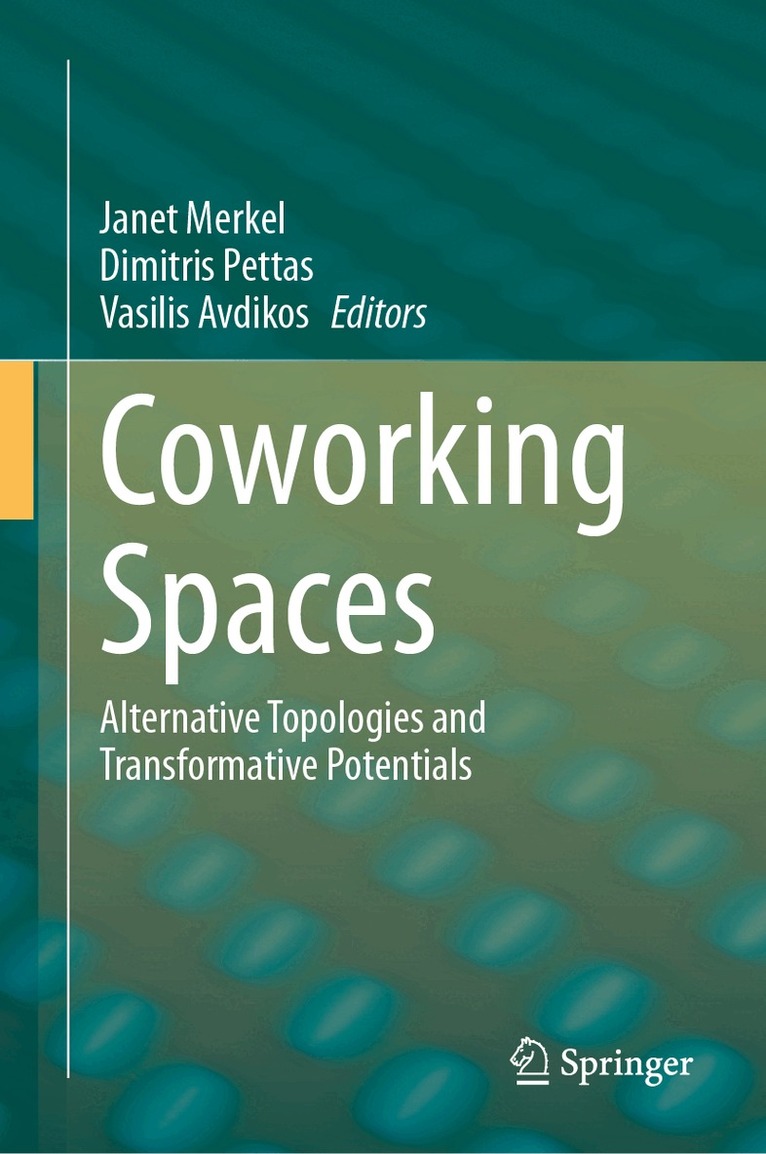
This contributed volume considers the emergence of coworking as centered in labor issues. More specifically, its chapters consider it as a coping mechanism in the worldwide rise of independent modes of work (i.e., self-employment) that leaves more and more workers exposed to precarity as they must organize and manage their own labor. Grounded in this perspective, this volume aims to understand the transformative social and political potentials emerging through coworking as a social and spatial practice. There is a distinct lack of discussion within coworking research on the emancipatory potentials of coworking—and if it is discussed, more cautionary views prevail, highlighting the ambivalence of coworking spaces both as a space of alternative economic practices and as integrated into market economies. The aims of this collection are twofold: First, it aims to make visible the plurality of existing practices around shared resources in coworking and the assemblages of human and non-human actors as agents of change associated with coworking and the re-organization of work and labor power. And second, it aims to develop a more emancipatory narrative for coworking and the role of coworking spaces for workers but also the different spatial contexts in which these spaces are situated. A narrative that does not emphasize entrepreneurship or coworking as the epitome of the ‘neoliberal entrepreneurial self’ as in the dominant interpretations in the current research, but rather one that centers coworking in the creation of meaningful, careful social relationships, supporting empathy and an ethics that recognizes mutual interdependencies and builds a foundation for social change. So, it is about alternative narratives, emancipation politics and the wider social role that coworking spaces might play in neighborhoods, cities or beyond because they are crucial contexts for the formation and maintenance of social relations. Withthis specific direction, this collection aims to bring coworking research into a fruitful dialog with other research fields-such as sociology of work, feminist perspectives on care, alternative and diverse economies, "post-capitalist" transformation, critical geography, positioning coworking within a range of progressive alternatives in the articulation of economic and social relationships.
1 387 kr
Skickas inom 7-10 vardagar
This contributed volume considers the emergence of coworking as centered in labor issues. More specifically, its chapters consider it as a coping mechanism in the worldwide rise of independent modes of work (i.e., self-employment) that leaves more and more workers exposed to precarity as they must organize and manage their own labor. Grounded in this perspective, this volume aims to understand the transformative social and political potentials emerging through coworking as a social and spatial practice. There is a distinct lack of discussion within coworking research on the emancipatory potentials of coworking—and if it is discussed, more cautionary views prevail, highlighting the ambivalence of coworking spaces both as a space of alternative economic practices and as integrated into market economies. The aims of this collection are twofold: First, it aims to make visible the plurality of existing practices around shared resources in coworking and the assemblages of human and non-human actors as agents of change associated with coworking and the re-organization of work and labor power. And second, it aims to develop a more emancipatory narrative for coworking and the role of coworking spaces for workers but also the different spatial contexts in which these spaces are situated. A narrative that does not emphasize entrepreneurship or coworking as the epitome of the ‘neoliberal entrepreneurial self’ as in the dominant interpretations in the current research, but rather one that centers coworking in the creation of meaningful, careful social relationships, supporting empathy and an ethics that recognizes mutual interdependencies and builds a foundation for social change. So, it is about alternative narratives, emancipation politics and the wider social role that coworking spaces might play in neighborhoods, cities or beyond because they are crucial contexts for the formation and maintenance of social relations. Withthis specific direction, this collection aims to bring coworking research into a fruitful dialog with other research fields-such as sociology of work, feminist perspectives on care, alternative and diverse economies, "post-capitalist" transformation, critical geography, positioning coworking within a range of progressive alternatives in the articulation of economic and social relationships.
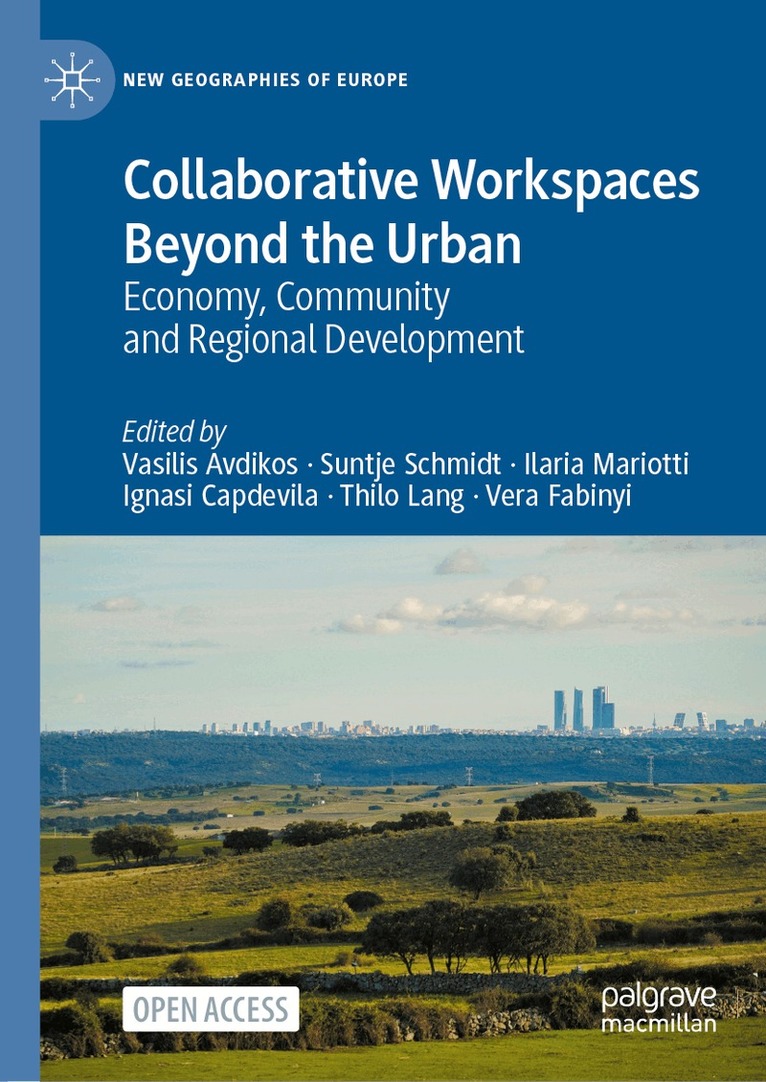
Collaborative Workspaces Beyond the Urban
Economy, Community and Regional Development
Inbunden, Engelska, 2026
535 kr
Skickas inom 10-15 vardagar
This book explores the contemporary socio-economic challenges that European non-urban areas face, illuminating how collaborative workspaces (CWS) contribute to tackling them in multiple ways. Collaborative workspaces (such as coworking spaces, fab labs, creative hubs, etc.) for freelancers, self-employed, remote workers and start-ups are increasingly becoming a subject of local and regional economic development policies as they are considered important intermediaries that help deliver entrepreneurial development and local innovation agendas. There has also been a rise in CWS in less densely populated communities in rural and peripheral regions across the European Union that face particular challenges such as brain drain, low investment levels, and low levels of entrepreneurship. These non-urban CWS differ in terms of scopes, functions and impacts compared to those in urban centers. The contributions in this volume unpack the development processes of CWS in rural, suburban, remote and peripheral areas, their wider economic, social and community impacts at the local and regional level, as well as at the level of the individual worker and the enterprise. The book brings together contributions from a broad range of scientific disciplines, including social and economic geography, economics, business studies, architecture, planning, gender studies, and management studies.