Vicken Cheterian – författare
Visar alla böcker från författaren Vicken Cheterian. Handla med fri frakt och snabb leverans.
8 produkter
8 produkter
306 kr
Skickas inom 7-10 vardagar
The Second Nagorno-Karabakh War in 2020 was a major armed conflict between the two modern, regular armies of Armenia and Azerbaijan. This open access book examines the causes, and consequences of the war Second Nagorno-Karabakh War. The first part of the book includes chapters discussing why the ceasefire regime failed after long twenty-six years, international mediation and diplomacy, the geopolitical tensions, Armenia’s failure to anticipate the coming war, and emergence of autocratic rule in Azerbaijan. The second part of the book looks at international actors, including the surprising behaviour of Russia, Turkish role and interests, and the lack of American Christian solidarity towards Armenians. The third part of the book looks at the consequences of the war, including the post-war diplomatic initiatives, the dramatic failure of the Russian peacekeeping mission leading to the ethnic cleansing of Nagorno-Karabakh, and a comparative study of Nagorno-Karabakh with the Russia-Ukraine wars. Including specialists from various disciplines and from several countries, the book sheds light on the Second Karabakh War, the future of Armenian-Azerbaijani relations and placing it in the broader international context of a new era of inter-state wars.The ebook editions of this book are available open access under a CC BY-NC-ND 4.0 licence on bloomsburycollections.com.
504 kr
Skickas inom 3-6 vardagar
901 kr
Skickas inom 10-15 vardagar
The Second Nagorno-Karabakh War in 2020 was a major armed conflict between the two modern, regular armies of Armenia and Azerbaijan. This open access book examines the causes, and consequences of the war Second Nagorno-Karabakh War. The first part of the book includes chapters discussing why the ceasefire regime failed after long twenty-six years, international mediation and diplomacy, the geopolitical tensions, Armenia’s failure to anticipate the coming war, and emergence of autocratic rule in Azerbaijan. The second part of the book looks at international actors, including the surprising behaviour of Russia, Turkish role and interests, and the lack of American Christian solidarity towards Armenians. The third part of the book looks at the consequences of the war, including the post-war diplomatic initiatives, the dramatic failure of the Russian peacekeeping mission leading to the ethnic cleansing of Nagorno-Karabakh, and a comparative study of Nagorno-Karabakh with the Russia-Ukraine wars. Including specialists from various disciplines and from several countries, the book sheds light on the Second Karabakh War, the future of Armenian-Azerbaijani relations and placing it in the broader international context of a new era of inter-state wars.The ebook editions of this book are available open access under a CC BY-NC-ND 4.0 licence on bloomsburycollections.com.
299 kr
Skickas inom 7-10 vardagar
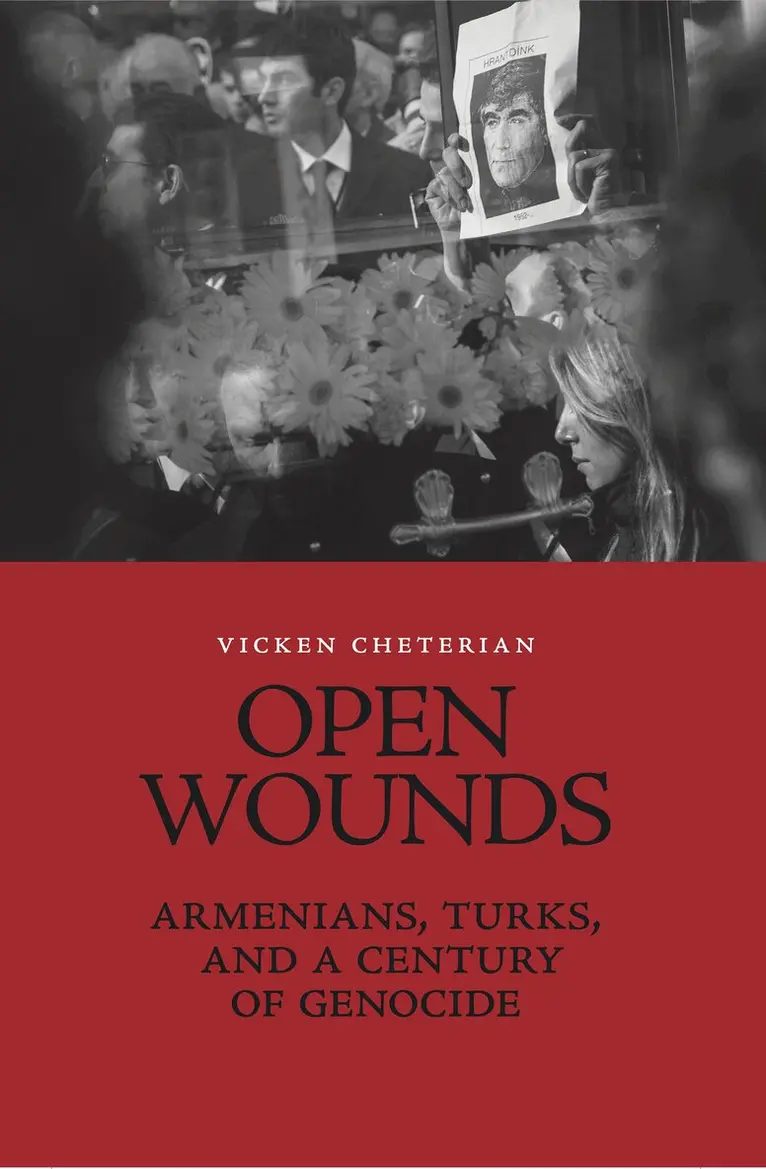
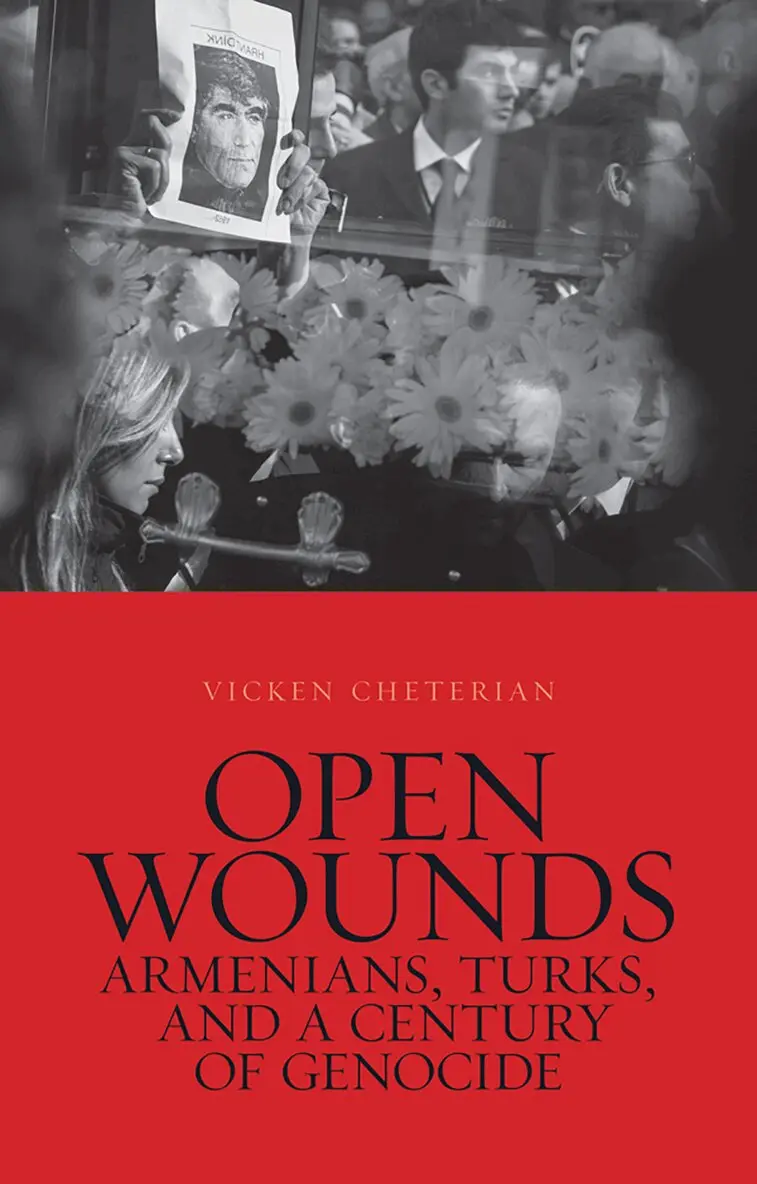
The assassination in Istanbul in 2007 of the author Hrant Dink, the high-profile advocate of Turkish-Armenian reconciliation, reignited the debate in Turkey on the annihilation of the Ottoman Armenians. Many Turks subsequently reawakened to their Armenian heritage, in the process reflecting on how their grandparents were forcibly Islamised and Turkified, and the suffering they endured to keep their stories secret. There was public debate about Armenian property confiscated by the Turkish state and books were published about the extermination of the minorities. The silence had been broken. After the First World War, Turkey forcibly erased the memory of the atrocities, and traces of Armenians, from their historic lands, to which the international community turned a blind eye. The price for this amnesia was, Cheterian argues, 'a century of genocide'.Turkish intellectuals acknowledge the price a society must pay collectively to forget such traumatic events, and that Turkey cannot solve its recurrent conflicts with its minorities - like the Kurds today - nor have an open and democratic society without addressing its original sin: the Armenian Genocide, on which the Republic was founded.
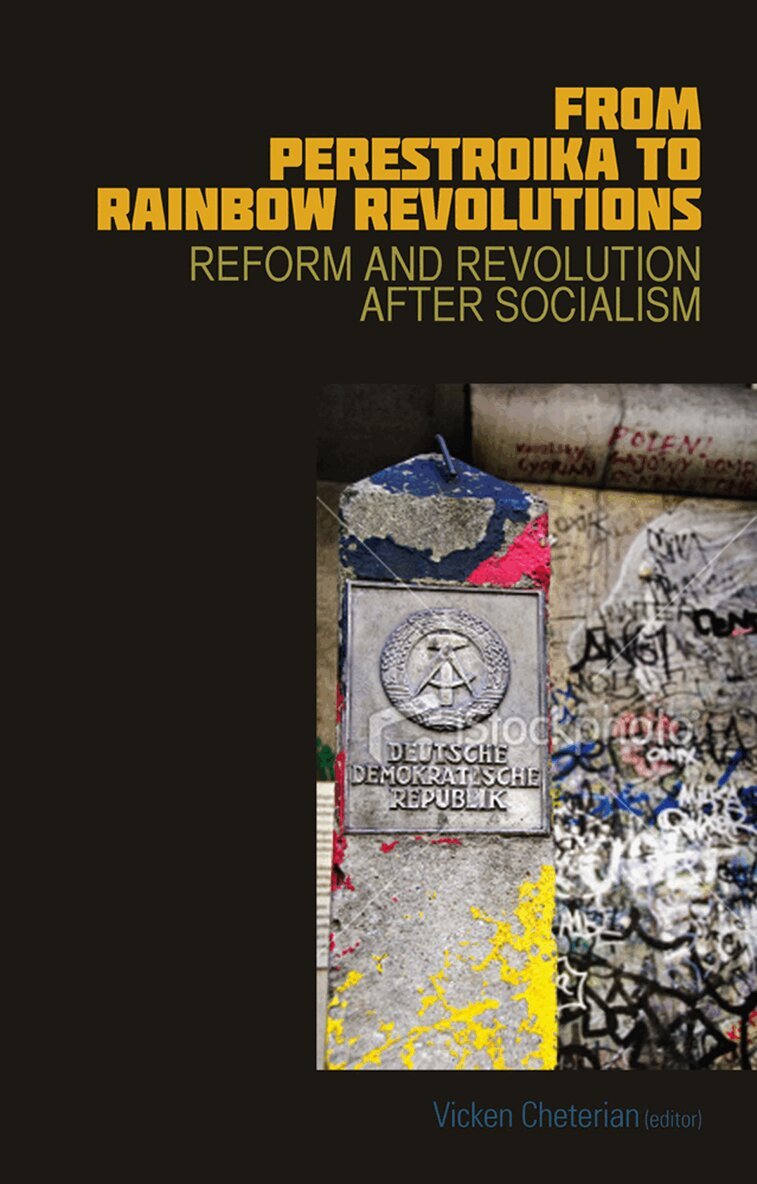
From Perestroika to Rainbow Revolutions
Reform and Revolution after Socialism
Inbunden, Engelska, 2013
591 kr
Skickas inom 7-10 vardagar
Twenty-five years after Gorbachev came to power and two decades after the collapse of the Soviet Union, the questions that were behind the reform efforts at the start of Perestroika are still relevant: how to modernise the economy, and how to recreate a basis for political legitimacy? The wave of 'Colour Revolutions' that precipitated regime change in Eastern Europe, starting in Serbia, and later in Georgia, Ukraine and Kyrgyzstan, were carried out in the name of democratic legitimacy, and in order to fight corruption. The current debate in Moscow under the presidency of Dmitry Medvedev revolves around the same idea: what is the way forward for Russia's modernisation, economically and politically? This volume brings together six experts on East Europe and the former Soviet Union to compare and evaluate the evolution of ideas behind Gorbachev's reforms, Yeltsin's transition, and the more recent wave of the Colour Revolutions. It does not propose a coherent regard to these historic events, but rather dispersed discussion from various perspectives tracing the contradictory development of ideas of reform, the transformation of the notion of revolution, on the role of civil society, and individual chapters from the four cases of Colour Revolutions. Contributors: Catherine Samary, Jean-Arnault Derens, Ghia Nodia, Dominique Arel, Anara Tabyshalieva.
461 kr
Skickas inom 11-20 vardagar
The assassination in Istanbul in 2007 of the author Hrant Dink, the high-profile advocate of Turkish-Armenian reconciliation, reignited the debate in Turkey on the annihilation of the Ottoman Armenians. Many Turks subsequently reawakened to their Armenian heritage, in the process reflecting on how their grandparents were forcibly Islamised and Turkified, and the suffering they endured to keep their stories secret. There was public debate about Armenian property confiscated by the Turkish state and books were published about the extermination of the minorities. The silence had been broken. After the First World War, Turkey forcibly erased the memory of the atrocities, and traces of Armenians, from their historic lands, to which the international community turned a blind eye. The price for this amnesia was, Cheterian argues, 'a century of genocide'.Turkish intellectuals acknowledge the price a society must pay collectively to forget such traumatic events, and that Turkey cannot solve its recurrent conflicts with its minorities - like the Kurds today - nor have an open and democratic society without addressing its original sin: the Armenian Genocide, on which the Republic was founded.
259 kr
Skickas inom 7-10 vardagar
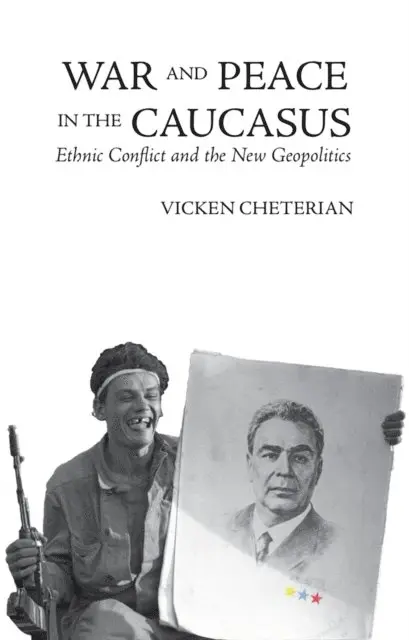
After the collapse of the Soviet Union the Caucasus was wracked by ethnic and separatist violence as the peoples of the region struggled for self-determination. Vicken Cheterian, who spent many years as a reporter and analyst covering the region's conflicts, asks why nationalism emerged as a dominant political current, and why, of the many nationalist movements that emerged, some led to violence while others did not. He explains also why minority rebellions were victorious against larger armies, in mountainous Karabakh, Abkhazia, and in the first war of Chechnya, and discusses the ongoing instability and armed resistance in the North Caucasus. He concludes his book by examining chapters the great power competition between Russia, the US, and the EU over the oil and gas resources of the Caspian region.
285 kr
Skickas inom 5-8 vardagar