Victor Burgin - Böcker
Visar alla böcker från författaren Victor Burgin. Handla med fri frakt och snabb leverans.
6 produkter
6 produkter
701 kr
Skickas inom 5-8 vardagar
701 kr
Skickas inom 5-8 vardagar
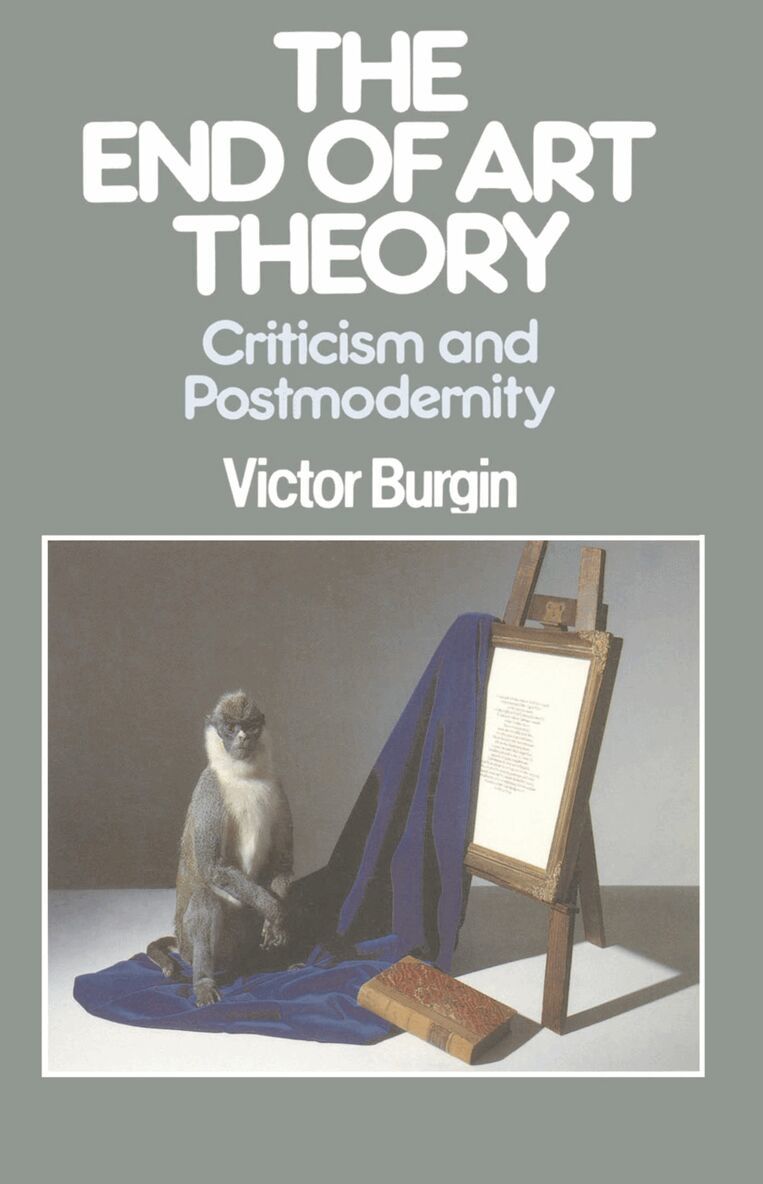
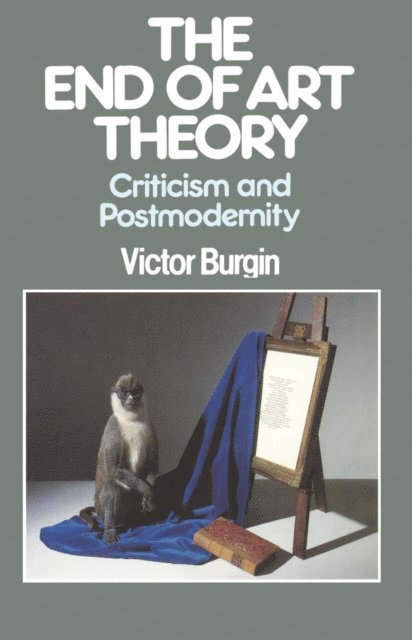
Art theory', understood as those forms of aesthetics, art history and criticism which began in the Enlightenment and culminated in 'high modernism', is now at an end. These essays, examining the interdependencies of advertising, film, painting and photography, constitute a call for a 'new art theory' - a practice of writing whose end is to contribute to a general 'theory of representations': an understanding of the modes and means of symbolic articulation of our forms of sociality and subjectivity.
282 kr
Skickas inom 7-10 vardagar
Recent discussions about the culture of images have focused on issues of identity - sexual, racial, national - and the boundaries that define subjectivity. In this context Victor Burgin adopts an original critical strategy. He understands images less in traditional terms of the specific institutions that produce them, such as cinema, photography, advertising, and television, and more as hybrid mental constructs composed of fragments derived from the heterogeneous sources that together constitute the 'media'. Through deft analyses of a photograph by Helmut Newton, Parisian cityscapes, the space of the department store, a film by Ousmane Sembene, and the writings of Henri Lefebvre, Andre Breton, and Roland Barthes, Burgin develops an incisive theory of our culture of images and spectacle. "In/Different Spaces" explores the construction of identities in the psychical space between perception and consciousness, drawing upon psychoanalytic theories to describe the constitution and maintenance of 'self' and 'us' - in imaginary spatial and temporal relations to 'other' and 'them' - through the all-important relay of images.For Burgin, the image is never a transparent representation of the world but rather a principal player on the stage of history.
329 kr
Skickas inom 7-10 vardagar
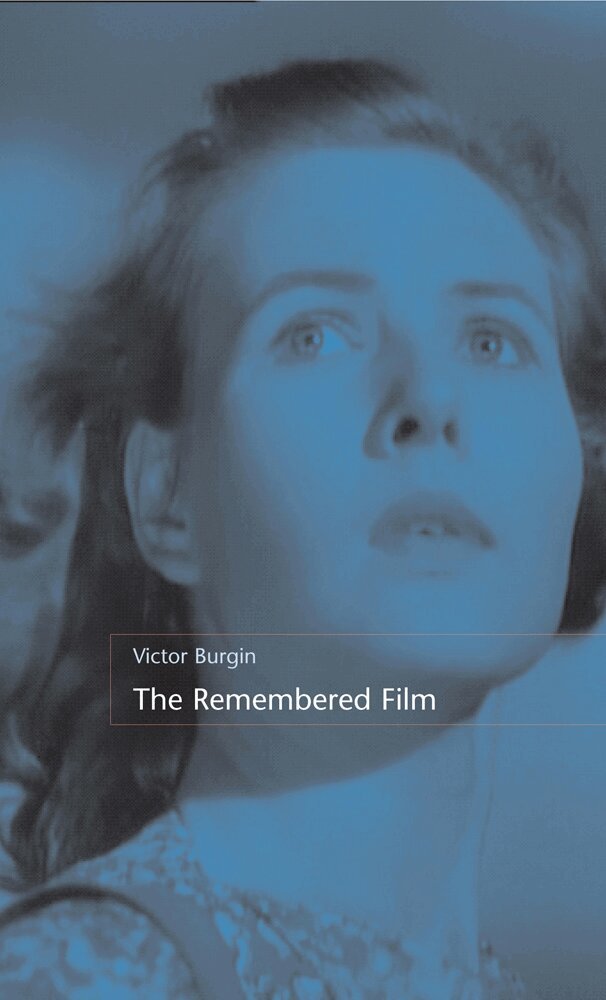
Most books about cinema, whether popular or academic, concentrate on what we might call the ‘inside’ of the film: from star performances to narrative structures. The relatively few books about the ‘outside' of films speak mainly of such aspects of production and reception as the organization of the film industry and the sociology of audiences: the Hollywood studio system, for example, or fan clubs. The Remembered Film is unique in addressing a previously overlooked aspect of cinema: the isolated fragments of films, iconic images or scenes, that fleetingly cross our perceptions and thoughts in the course of everyday life.Victor Burgin examines a kaleidescope of film fragments drawn from a variety of media, the internet, memory and fantasy. Among these are sequences of such brevity they might almost be stills. Such ‘sequence-images’, as Burgin calls them, are neither strictly ‘image’ nor ‘image sequence’ and have not been considered before by either film or photography theory. He also considers some typical individual experiences 'sampled' from mainstream cinema. He reflects on such disparate occurrences as the association in memory of fragments from otherwise unrelated films, of the relation of a recollected film image to an architectural setting, or of a feeling ‘marked’ by an image remembered from a film.The Remembered Film provides a radical new way of thinking about film outside conventional cinema, and in relation to our everyday lives. It will appeal to a wide audience interested in film and media.
310 kr
Skickas inom 7-10 vardagar
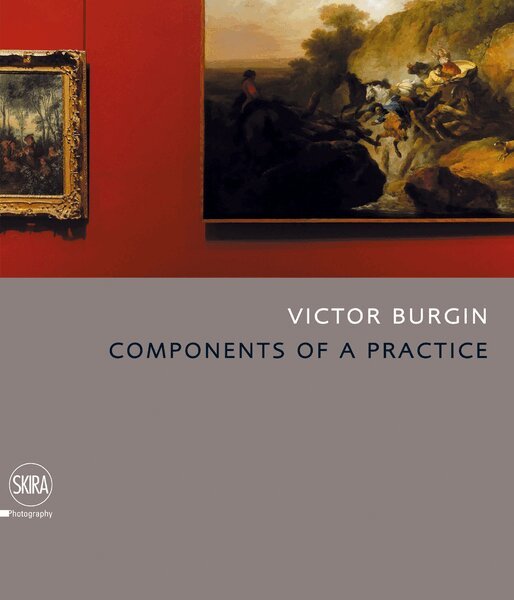
A compendium of the history of contemporary American art and a living testimony of a sincere and active protagonist. Victor Burgin, an artist and sophisticated theoretician of the image, both still and in movement, was born in Sheffield, England, in 1941. He established himself on the international art scene in the late sixties, as one of the fathers of Conceptual Art, working both with the photographic medium and with moving images in his films. His work draws its inspiration from and is influenced by great thinkers and philosophers such as Karl Marx, Sigmund Freud, Michel Foucault and Roland Barthes. Over the past 30 years, Victor Burgin has become both a highly influential artist and a renowned theorist of the still and moving image. His writings on general issues such as photographic, psychoanalytic and cultural theory are noted for their lucidity, compactness and reason. In contrast, the photographs and videos that Burgin creates as an image-maker are richly paradoxical and constitute an inquiry into the structure of meaning in contemporary society. This book is different from Victor Burgin's previous publications, which are either monographs of his visual work - with essays by other writers - or collections of his theoretical essays. Although Burgin is known equally as an artist and as a theorist there has so far been no book in which Burgin turns his critical attention to his own artistic production. The proposed monograph will fill this absence and will appeal to a wide audience interested in photography, film and media.
148 kr
Tillfälligt slut
Reduced Price!Now only € 10,00 instead of € 29,50Highly influential both as an artist and as a theoretician Victor Burgin figures amongst the most insightful thinkers on visual culture in recent times. His writings focus on the production of meanings and affects through images – at the intersections of subjective desire and sociopolitical organization – and cross a diversity of representational practices (photography, film, painting, advertising, television, the internet) and theoretical fields (semiotics, psychoanalysis, feminist theory, cultural studies). The essays in this volume provide a succinct overview of Burgin’s rich and multifaceted work during the last forty years – from its origins in debates within the Conceptual Art movement to its present concern with everyday perception in the environment of global media. The selection includes such classic essays as ‘Situational Aesthetics’ and ‘Photographic Practice and Art Theory’, together with less widely-known articles such as ‘Work and Commentary’ and the previously unpublished essays ‘Shadows, Time and Family Pictures’ and ‘Monument and Melancholia’. The essays are arranged chronologically in sections to represent four salient phases of Burgin’s preoccupations: Conceptual art and photography; A psychical realism; The city and global media; Infinite film. Each section is preceded by an exchange between Victor Burgin and the book’s editor, Alexander Streitberger, to introduce the main lines of thought. Examples from Burgin’s visual works, selected by the editor in consultation with the artist, accompany each section.