Victoria Bazin - Böcker
Visar alla böcker från författaren Victoria Bazin. Handla med fri frakt och snabb leverans.
4 produkter
4 produkter
2 490 kr
Skickas inom 10-15 vardagar
Victoria Bazin examines the poetry of Marianne Moore as it is shaped by and responsive to the experience of being a modern woman, of living in the aftermath of the First World War, of being interpellated as a modern consumer and of writing in "the age of mechanical reproduction." She argues that Moore's textual collages and syllabic sculptures are based on the cultural clutter or debris of modernity, on textual extracts and reproductions, on the phantasmagoria of city life revealing something modernism worked hard to conceal: its relation to modernity, more specifically its relation to the new emerging and expanding mass consumer culture. Drawing extensively on archival resources to trace Moore's influences and to describe her own distinctive modernist aesthetic, this book argues that it was her feminist adaptation of pragmatism that shaped her poetic response to modernity. Moore's use of the quoted fragment is conceptualised in relation not only to Walter Benjamin's philosophical history but also to William James's image of the world as a series of "partial stories." As such, this account of Marianne Moore not only contributes to a greater understanding of the poet and her work, but it also offers up a more politicized and historically nuanced understanding of poetic modernism between the wars, one that retains a sense of the formal complexities of poetic language and the poet's own ethical imperatives whilst also recognising the material impact of modernity upon the modernist poem. This book will appeal, therefore, not only to scholars already familiar with Moore's poetry but more widely to those interested in modernism and American culture between the wars.
663 kr
Skickas inom 10-15 vardagar
Victoria Bazin examines the poetry of Marianne Moore as it is shaped by and responsive to the experience of being a modern woman, of living in the aftermath of the First World War, of being interpellated as a modern consumer and of writing in "the age of mechanical reproduction." She argues that Moore's textual collages and syllabic sculptures are based on the cultural clutter or debris of modernity, on textual extracts and reproductions, on the phantasmagoria of city life revealing something modernism worked hard to conceal: its relation to modernity, more specifically its relation to the new emerging and expanding mass consumer culture. Drawing extensively on archival resources to trace Moore's influences and to describe her own distinctive modernist aesthetic, this book argues that it was her feminist adaptation of pragmatism that shaped her poetic response to modernity. Moore's use of the quoted fragment is conceptualised in relation not only to Walter Benjamin's philosophical history but also to William James's image of the world as a series of "partial stories." As such, this account of Marianne Moore not only contributes to a greater understanding of the poet and her work, but it also offers up a more politicized and historically nuanced understanding of poetic modernism between the wars, one that retains a sense of the formal complexities of poetic language and the poet's own ethical imperatives whilst also recognising the material impact of modernity upon the modernist poem. This book will appeal, therefore, not only to scholars already familiar with Moore's poetry but more widely to those interested in modernism and American culture between the wars.
1 277 kr
Kommande
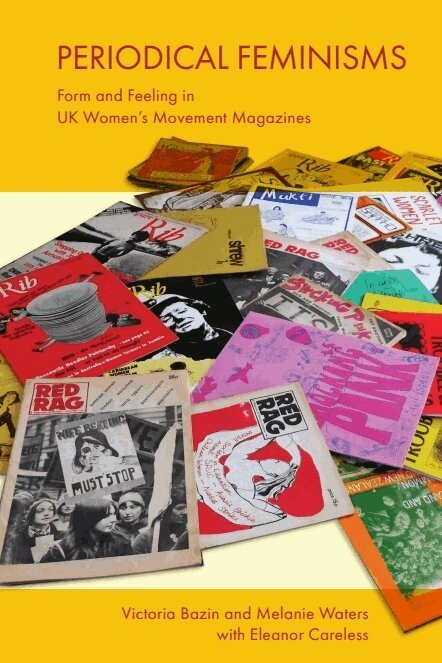
In this book, the authors bring to light an exciting range of previously unexplored material from feminist periodicals, in addition to original interviews with the women who made and read them, as they examine the dynamic relationship between feelings, politics and social change. From anger and loneliness to joy and hope, this book makes a powerful case for understanding the shared and contested feelings that have mobilised generations of women activists in the UK.
2 329 kr
Skickas inom 3-6 vardagar
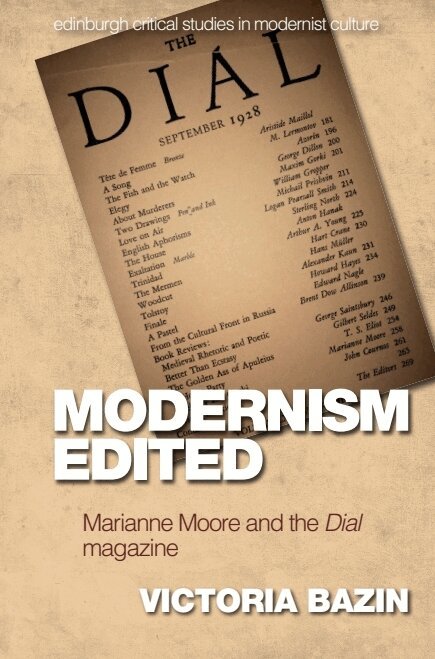
Examines Marianne Moore’s editorship of the modernist magazine, the Dial between 1925 and 1929As editor of the Dial, Moore wielded considerable cultural authority in the world of arts and letters, yet cultural histories of modernist magazines have largely overlooked her editorial influence. Modernism Edited: Marianne Moore and the Dial Magazine makes visible Moore’s contribution to the production of modernism even as it complicates the concept of editorial agency. It explores the public face of the modernist editor, the image of highbrow distinction circulated by the Dial and embodied by the figure of ‘Miss Moore’. It also examines Moore’s editorial practice as a form of modernist ‘contractility’ drawing on her own poetics to understand more fully the motives underpinning her revisions. It returns to the well-known case of Moore’s radical cuts to Hart Crane’s poem ‘The Wine Menagerie’ as well as instances of collaborative struggle with Williams Carlos Williams, Gertrude Stein, Paul Rosenfeld and D. H. Lawrence. In doing so, the book conceptualises editorial labour as a form of creative and critical social practice.Key Features:Returns to controversial case of Moore’s revisions to Hart Crane’s ‘The Wine Menagerie’Uncovers evidence that points to Moore’s revisions to the work of other well-known modernistsConceptualizes editorial agencyDevelops methodologies for critically engaging with magazine contentUncovers and analyses Moore’s advertisements for the DialProduces a sustained analysis of Moore’s editorial comments for the DialDraws on Moore’s poetics to understand her editorial revisions