Victoria Hattam - Böcker
Visar alla böcker från författaren . Handla med fri frakt och snabb leverans.
3 produkter
3 produkter
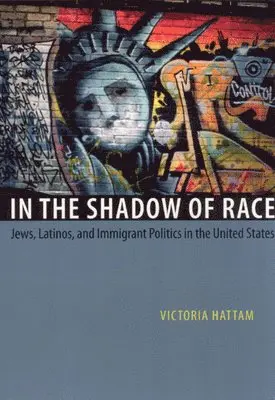
In the Shadow of Race
Jews, Latinos, and Immigrant Politics in the United States
Inbunden, Engelska, 2007
613 kr
Tillfälligt slut
Race in the United States has long been associated with heredity and inequality while ethnicity has been linked to language and culture. The "Shadow of Race" recovers the history of this entrenched distinction and the divisive politics it engenders. Victoria Hattam locates the origins of ethnicity in the New York Zionist movement of the early 1900s. In a major revision of widely held assumptions, she argues that Jewish activists identified as ethnics not as a means of assimilating and becoming white, but rather as a way of defending immigrant difference as distinct from race - rooted in culture rather than body and blood. Eventually, Hattam shows, the Immigration and Naturalization Service and the Census Bureau institutionalized this distinction by classifying Latinos as an ethnic group and not a race. But immigration and the resulting population shifts of the last half-century have created a political opening for reimagining the relationship between immigration and race. How to do so is the question at hand.In the "Shadow of Race" concludes by examining the recent New York and Los Angeles elections and the 2006 immigrant rallies across the country to assess the possibilities of forging a more robust alliance between immigrants and African Americans. Such an alliance is needed, Hattam argues, to more effectively redress the persistent inequalities in American life.
In the Shadow of Race
Jews, Latinos, and Immigrant Politics in the United States
Häftad, Engelska, 2007
260 kr
Skickas inom 7-10 vardagar
Race in the United States has long been associated with heredity and inequality while ethnicity has been linked to language and culture. "The Shadow of Race" recovers the history of this entrenched distinction and the divisive politics it engenders. Victoria Hattam locates the origins of ethnicity in the New York Zionist movement of the early 1900s. In a major revision of widely held assumptions, she argues that Jewish activists identified as ethnics not as a means of assimilating and becoming white, but rather as a way of defending immigrant difference as distinct from race - rooted in culture rather than body and blood. Eventually, Hattam shows, the Immigration and Naturalization Service and the Census Bureau institutionalized this distinction by classifying Latinos as an ethnic group and not a race. But immigration and the resulting population shifts of the last half-century have created a political opening for reimagining the relationship between immigration and race. How to do so is the question at hand.In the "Shadow of Race" concludes by examining the recent New York and Los Angeles elections and the 2006 immigrant rallies across the country to assess the possibilities of forging a more robust alliance between immigrants and African Americans. Such an alliance is needed, Hattam argues, to more effectively redress the persistent inequalities in American life.
1 009 kr
Skickas inom 7-10 vardagar
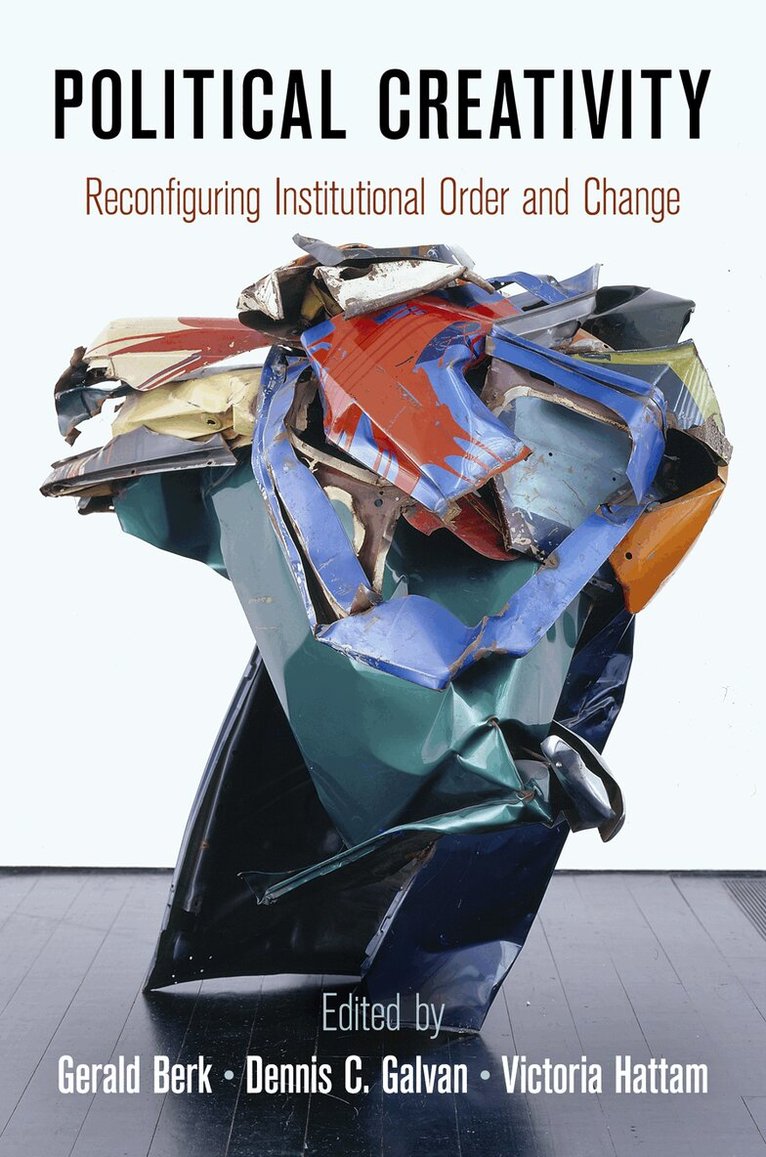
Political Creativity intervenes in the lively debate currently underway in the social sciences on institutional change. Editors Gerald Berk, Dennis C. Galvan, and Victoria Hattam, along with the contributors to the volume, show how institutions inevitably combine order and change, because formal rules and roles are always available for reconfiguration. Creative action is not the exception but the very process through which all political formations are built, promulgated and changed.Drawing on the rich cache of antidualist theoretical traditions, from poststructuralism and ecological theory to constructivism and pragmatism, a diverse group of scholars probes acts of social innovation in many locations: land boards in Botswana, Russian labor relations, international statistics, global supply chains, Islamic economics in Algeria, Islamic sects and state authority in Senegal, and civil rights reform, colonization, industrial policy, and political consulting in the United States. These political scientists reconceptualize agency as a relational process that continually reorders the nature and meaning of people and things, order as an assemblage that necessitates creative tinkering and interpretation, and change as the unruly politics of time that confounds the conventional ordering of past, present, and future. Political Creativity offers analytical tools for reimagining order and change as entangled processes.Contributors: Stephen Amberg, Chris Ansell, Gerald Berk, Kevin Bruyneel, Dennis C. Galvan, Deborah Harrold, Victoria Hattam, Yoshiko M. Herrera, Gary Herrigel, Joseph Lowndes, Ato Kwamena Onoma, Adam Sheingate, Rudra Sil, Ulrich Voskamp, Volker Wittke.