Victoria Van Orden Martínez – författare
Visar alla böcker från författaren Victoria Van Orden Martínez. Handla med fri frakt och snabb leverans.
2 produkter
2 produkter
257 kr
Kommande
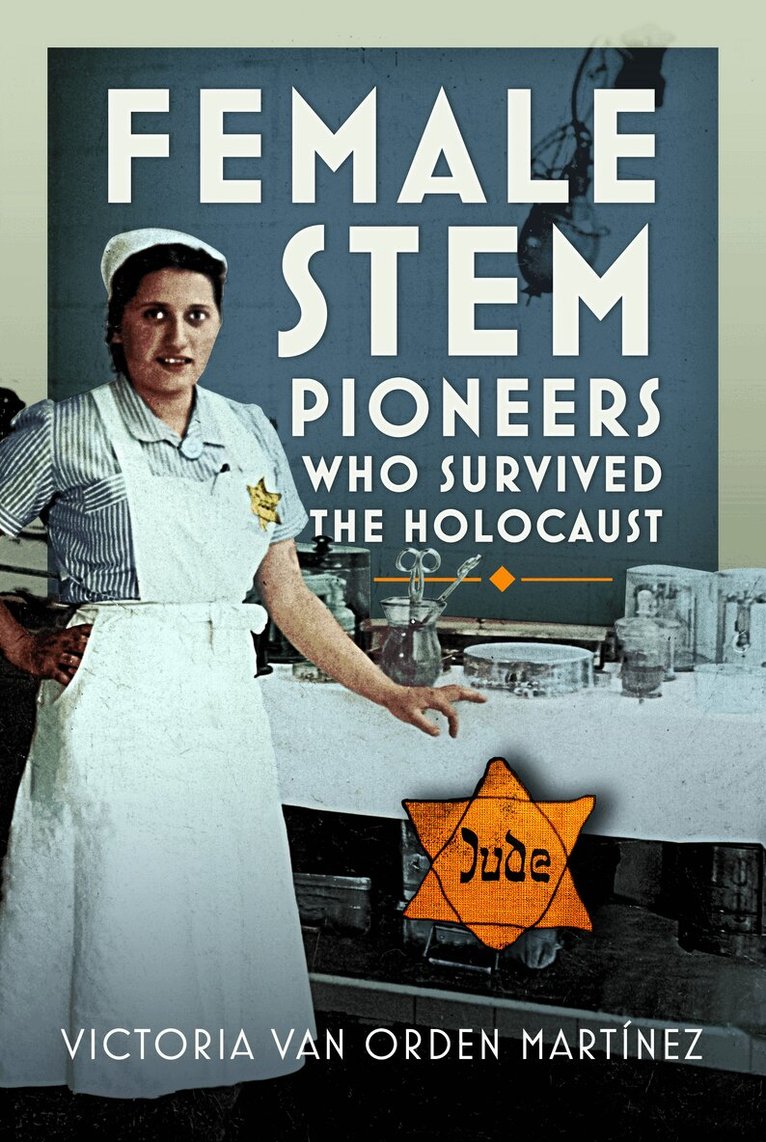
Women who pursued careers in science and medicine in the wake of the Second World War faced a multitude of obstacles due to their gender. Structural, institutional, and social barriers and attitudes kept women’s participation in science, technology, engineering, and math (STEM) low and their advancement and recognition even lower. But these were not the only obstacles faced by women who survived the Holocaust and became STEM pioneers.The book highlights not only the important contributions to STEM made by well-known scientists Nobel Laureate (1986) Rita Levi-Montalcini, internationally-renowned cancer researcher Eva Klein, and four women whose pioneering work is less well known, but also recounts the women’s individual experiences during the Second World War and the Holocaust in Germany, The Netherlands, Italy, Czechoslovakia, Hungary, and Poland, and in Nazi concentration and labor camps and hiding, as well as in the aftermath. As refugees, migrants, and eventually citizens in the United States, Canada, and Sweden, their experiences shifted from surviving the Nazis to navigating education and careers in the male-dominated professional fields of neurobiology, biochemistry, hematology, cardiology, and cancer immunology. While for these women, glass ceilings, sexism, and the other challenges they faced in their scientific careers might have seemed inconsequential compared to Nazi persecution, their stories demonstrate that their accomplishments were not achieved without difficulty and sacrifice.
History of Intellectual Culture 4/2025
Gender, Archiving, and Knowledge Production after the Holocaust. A Postwar Republic of Letters?
Häftad, Engelska, 2025
572 kr
Skickas inom 3-6 vardagar
The fourth issue of the yearbook History of Intellectual Culture (HIC) features a thematic section on the production of knowledge related to the Holocaust. The contributions focus on the circulation of knowledge via letters and other forms of written communication within and among survivor historical commissions after the Second World War with an emphasis on the interplay of gender and other differences. Although more women than men were involved in these efforts, women typically held subordinate roles to men and have largely been invisible in the historiography of these endeavors. This thematic section addresses this lacuna by exploring aspects of the “unseen labor” behind these documentation efforts that remain underexplored and marginalized in studies on the production, circulation, and history of knowledge, as well as of intellectual culture.