Vincent Crapanzano - Böcker
Visar alla böcker från författaren Vincent Crapanzano. Handla med fri frakt och snabb leverans.
9 produkter
9 produkter
249 kr
Skickas inom 7-10 vardagar
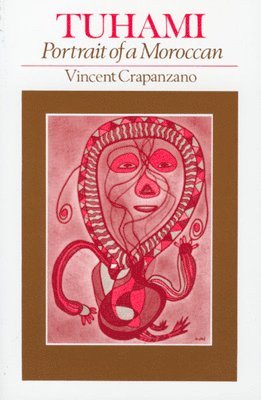
Tuhami is an illiterate Moroccan tilemaker who believes himself married to a camel-footed she-demon. A master of magic and a superb story-teller, Tuhami lives in a dank, windowless hovel near the kiln where he works. Nightly he suffers visitations from the demons and saints who haunt his life, and he seeks, with crippling ambivalence, liberation from 'A'isha Qandisha, the she-demon. In a sensitive and bold experiment in interpretive ethnography, Crapanzano presents Tuhami's bizarre account of himself and his world. In so doing, Crapanzano draws on phenomenology, psychoanalysis, and symbolism to reflect upon the nature of reality and truth and to probe the limits of anthropology itself. Tuhami has become one of the most important and widely cited representatives of a new understanding of the whole discipline of anthropology.
711 kr
Tillfälligt slut
How do people make sense of their experiences? How do they understand possibility? How do they limit possibility? These questions are central to all the human sciences. Here, Vincent Crapanzano offers a powerfully creative new way to think about human experience: the notion of imaginative horizons. For Crapanzano, imaginative horizons are the blurry boundaries that separate the here and now from what lies beyond, in time and space. These horizons, he argues, deeply influence both how we experience our lives and how we interpret those experiences, and here sets himself the task of exploring the roles that creativity and imagination play in our experience of the world.
281 kr
Skickas inom 7-10 vardagar
How do people make sense of their experiences? How do they understand possibility? How do they limit possibility? These questions are central to all the human sciences. Here, Vincent Crapanzano offers a powerfully creative new way to think about human experience: the notion of imaginative horizons. For Crapanzano, imaginative horizons are the blurry boundaries that separate the here and now from what lies beyond, in time and space. These horizons, he argues, deeply influence both how we experience our lives and how we interpret those experiences, and here sets himself the task of exploring the roles that creativity and imagination play in our experience of the world.
665 kr
Skickas inom 3-6 vardagar
The Hamadsha: A Study in Moroccan Ethnopsychiatry examines the unique religious brotherhoods of Morocco, tracing their origins to two saints from the late 17th and early 18th centuries, Sidi Ali ben Hamdush and Sidi Ahmed Dghughi. Known for their dramatic and sometimes controversial rituals, such as trance dances and acts of self-mutilation, the Hamadsha are healers who address spiritual and psychogenic ailments through symbolic and therapeutic practices. Their activities, deeply rooted in the Moroccan cult of saints, reflect a complex interplay of Islamic mysticism, local traditions, and social dynamics. Through these rituals, the Hamadsha incorporate patients into their brotherhoods, providing them with new roles and a symbolic framework to articulate and resolve personal and societal tensions.Drawing on extensive fieldwork, historical analysis, and psychoanalytic perspectives, this study explores the Hamadsha's history, their organizational structure, and their relationship with Moroccan culture and religion. It examines the saints’ tombs as focal points of veneration, the social dynamics of the brotherhoods, and their therapeutic methods, including pilgrimages and trance dances. The book situates the Hamadsha within the broader Moroccan socio-cultural landscape, revealing how their practices both reinforce and challenge societal norms. Ultimately, the work sheds light on the enduring cultural significance of the Hamadsha as curers and keepers of a distinct spiritual tradition.This title is part of UC Press's Voices Revived program, which commemorates University of California Press’s mission to seek out and cultivate the brightest minds and give them voice, reach, and impact. Drawing on a backlist dating to 1893, Voices Revived makes high-quality, peer-reviewed scholarship accessible once again using print-on-demand technology. This title was originally published in 1973.

752 kr
Skickas inom 7-10 vardagar
The Hamadsha: A Study in Moroccan Ethnopsychiatry examines the unique religious brotherhoods of Morocco, tracing their origins to two saints from the late 17th and early 18th centuries, Sidi Ali ben Hamdush and Sidi Ahmed Dghughi. Known for their dramatic and sometimes controversial rituals, such as trance dances and acts of self-mutilation, the Hamadsha are healers who address spiritual and psychogenic ailments through symbolic and therapeutic practices. Their activities, deeply rooted in the Moroccan cult of saints, reflect a complex interplay of Islamic mysticism, local traditions, and social dynamics. Through these rituals, the Hamadsha incorporate patients into their brotherhoods, providing them with new roles and a symbolic framework to articulate and resolve personal and societal tensions.Drawing on extensive fieldwork, historical analysis, and psychoanalytic perspectives, this study explores the Hamadsha's history, their organizational structure, and their relationship with Moroccan culture and religion. It examines the saints’ tombs as focal points of veneration, the social dynamics of the brotherhoods, and their therapeutic methods, including pilgrimages and trance dances. The book situates the Hamadsha within the broader Moroccan socio-cultural landscape, revealing how their practices both reinforce and challenge societal norms. Ultimately, the work sheds light on the enduring cultural significance of the Hamadsha as curers and keepers of a distinct spiritual tradition.This title is part of UC Press's Voices Revived program, which commemorates University of California Press’s mission to seek out and cultivate the brightest minds and give them voice, reach, and impact. Drawing on a backlist dating to 1893, Voices Revived makes high-quality, peer-reviewed scholarship accessible once again using print-on-demand technology. This title was originally published in 1973.
549 kr
Skickas inom 10-15 vardagar
A distinguished anthropologist and a creative force behind postmodern writing in his field, Vincent Crapanzano here focuses his considerable critical powers upon his own culture. In essays that question how the human sciences, particularly anthropology and psychoanalysis, articulate their fields of study, Crapanzano addresses nothing less than the enormous problem of defining the self in both its individual and collective projections.Treating subjects as diverse as Roman carnivals and Balinese cockfights, circumcision, dreaming, and spirit possession in Morocco, transference in psychoanalysis, self-characterization in teenage girls’ gossip, Alice in Wonderland, and Jane Austen’s Emma, dialogue models in hermeneutics, and semantic vertigo in Hamlet’s Elsinore, these essays look critically at the inner workings of interpretation in human sciences and literary study. In modern Western culture’s attempts to interpret and communicate the nature of other cultures, Crapanzano finds a crippling crisis in representation. He shows how the quest for knowledge of “exotic” and “primitive” people is often confused with an unexamined need for self-definition, and he sets forth the resulting interpretive paradoxes, particularly the suppression of any awareness of the play of power and desire in such an approach. What is missing from contemporary theories of interpretation is, in Crapanzano’s account, a crucial understanding of the role context plays in any act of communication or its representation—in interpretation itself.
194 kr
Skickas inom 10-15 vardagar
It is told that the ancestors of the Navajos journeyed through four worlds to reach the fifth, or present, one. The pressing complexities and underlying wonder of their fifth world of modern reservation life are portrayed in this classic ethnographic account by Vincent Crapanzano. As a young, inexperienced anthropologist, Crapanzano spent a summer with a Navajo man he calls Forster Bennett. In his fifties, Bennett was raised during the early reservation years, fought in the South Pacific in the Second World War, and, like many, carried a deep but not always openly expressed resentment toward whites. Crapanzano's honest and gritty account of his time with Bennett and Bennett's community reveals a stark portrait of the "flat, slow quality of reservation life," where boredom and poverty coexist with age-old sacred rituals and the varying ways that Navajos react and adjust to changes in their culture.
164 kr
Tillfälligt slut
182 kr
Tillfälligt slut