First Published in 1999. For This Land, edited and with an introduction by James Treat, brings together over thirty years of the work of Vine Deloria, Jr., regarded as one of the most important living Native American figures. For three decades, Deloria has offered substantive and persistent contributions to understanding the complexity of religion in America. In uis writings he recognizes the spiritual desperation and religious breakdown in the contemporary situation, and provides the groundwork to get people to examine what they actually believe and how they must put those beliefs into practice. The essays in this collection express Deloria's concern for the religious dimensions and implications of human existence. His writings are engaged within a theoretical system of physical, not ideological, space, and ultimately give voice to this intellectual passion by calling into question our controversial religious institutions, commitments, worldviews, freedoms and experiences. For This Land offers a distinctive approach to comprehending human existence from one of the leading critics of mainstream American thought.
We Talk, You Listen is strong, boldly unconventional medicine from Vine Deloria Jr. (1933–2005), one of the most important voices of twentieth-century Native American affairs. Here the witty and insightful Indian spokesman turns his penetrating vision toward the disintegrating core of American society. Written at a time when the traditions of the formerly omnipotent Anglo-Saxon male were crumbling under the pressures of a changing world, Deloria's book interprets racial conflict, inflation, the ecological crisis, and power groups as symptoms rather than causes of the American malaise: "The glittering generalities and mythologies of American society no longer satisfy the need and desire to belong," a theory as applicable today as it was in 1970. American Indian tribalism, according to Deloria, was positioned to act as America's salvation. Deloria proposes a uniquely Indian solution to the legacy of genocide, imperialism, capitalism, feudalism, and self-defeating liberalism: group identity and real community development, a kind of neo-tribalism. He also offers a fascinating cultural critique of the nascent "tribes" of the 1970s, indicting Chicanos, blacks, hippies, feminists, and others as misguided because they lacked comprehensive strategies and were led by stereotypes rather than an understanding of their uniqueness.
Author of more than thirty books of poetry, Western history, stories, fiction, biography, criticism, and Native studies, John G. Neihardt (1881–1973) was born in Illinois, taught for many years at the University of Missouri, and was named by act of legislature Poet Laureate of Nebraska and the Prairies. Neihardt was devoted to his ideals of art, spirit, humanity, and understanding. This volume brings together fourteen lifelong admirers, who each contribute a portrait or an appreciation of this American original. Best known for his 1932 classic Black Elk Speaks, done in collaboration with the Lakota holy man Nicholas Black Elk, Neihardt is also justly regarded as an epic poet, travel writer, newspaperman, teacher, mystic, and spokesman for the beauty of the Great Plains and the drama of ordinary and exceptional lives.
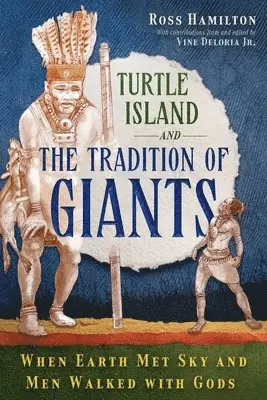
The story of giants in the Indigenous prehistory of the Americas• Covers the secret history of an ancient race of giants that inhabited the Americas long before European contact• Presents accounts of these beings from Native American sources, legends, and oral traditions, correlated with archeological reports• Examines the Smithsonian’s role in covering up records of the skeletal remains of giants in the Americas, looking particularly at John Wesley Powell and Aleš HrdličkaWriter and researcher Ross Hamilton uses Indigenous voices, beliefs, and oral traditions to reconstruct the origin and secret history of an ancient race of giants that inhabited the continent long before European contact with the Americas.Hamilton reaches deep into North American antiquity to identify a people originally from the Arctic known as the Tall Ones. These beings lived alongside the tribes of the Americas and even bred with them. As he uncovers the story, Hamilton presents the ancient Turtle Island culture of the nation of Manitouba, a once-great civilization that stretched across much of the contemporary United States and Canada and maintained an advanced system of arts and sciences before being called back to the mysterious North.Along with examining the ways in which archaeological history was suppressed by premier American institutions such as Harvard and the Smithsonian, Hamilton revisits critical primary sources, including the Lenape accounts made by early American missionary John Heckewelder. With this research and the contributions of tribal elder Vine Deloria Jr., Hamilton unpacks long-misunderstood Indigenous myths and history to reveal a time when Earth met sky and men walked with gods.
First Published in 1999. For This Land, edited and with an introduction by James Treat, brings together over thirty years of the work of Vine Deloria, Jr., regarded as one of the most important living Native American figures. For three decades, Deloria has offered substantive and persistent contributions to understanding the complexity of religion in America. In uis writings he recognizes the spiritual desperation and religious breakdown in the contemporary situation, and provides the groundwork to get people to examine what they actually believe and how they must put those beliefs into practice. The essays in this collection express Deloria's concern for the religious dimensions and implications of human existence. His writings are engaged within a theoretical system of physical, not ideological, space, and ultimately give voice to this intellectual passion by calling into question our controversial religious institutions, commitments, worldviews, freedoms and experiences. For This Land offers a distinctive approach to comprehending human existence from one of the leading critics of mainstream American thought.
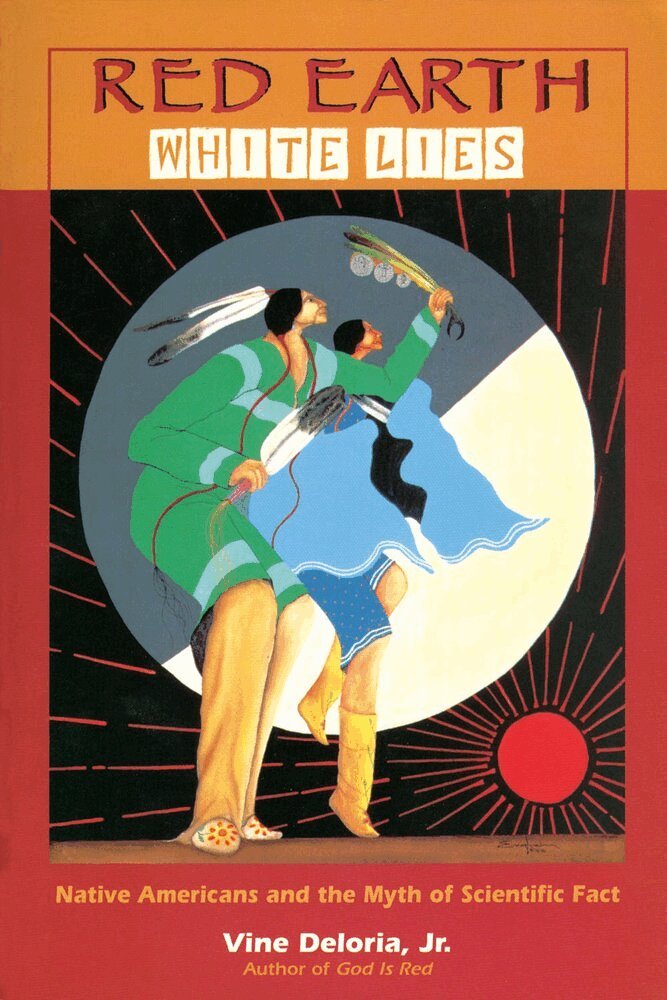
Vine Deloria, Jr., leading Native American scholar and author of the best-selling God is Red, addresses the conflict between mainstream scientific theory about our world and the ancestral worldview of Native Americans. Claiming that science has created a largely fictional scenario for American Indians in prehistoric North America, Deloria offers an alternative view of the continent's history as seen through the eyes and memories of Native Americans. Further, he warns future generations of scientists not to repeat the ethnocentric omissions and fallacies of the past by dismissing Native oral tradition as mere legends.
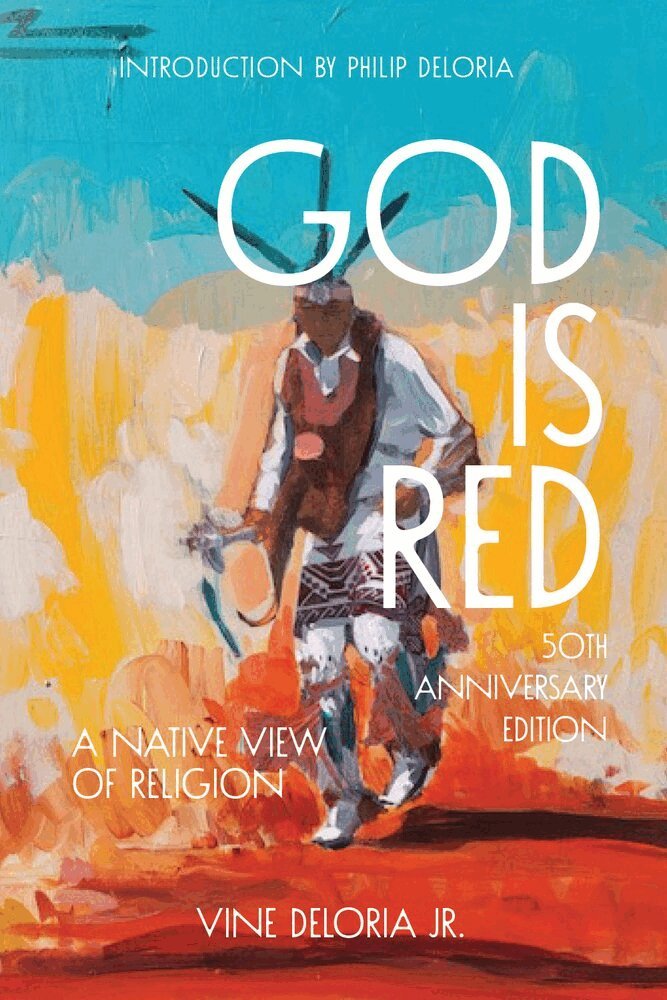
A 50th anniversary revised edition of the beloved classic, God is Red. First published in 1973, Vine Deloria, Jr.’s God Is Red remains the seminal work on Native American religious views, asking the reader to think about our species and our ultimate fate in novel ways. Celebrating five decades of publication with this new edition, Deloria’s classic work reminds us to understand “that we are a part of nature, not a transcendent species with no responsibilities to the natural world.” It is time again to listen to Vine Deloria, Jr.’s powerful voice, informing us about a spiritual life that is independent of Western religion and that reveres the interconnectedness of all living things. This new edition includes critical essays engaging with the original material by well-known Indigenous thinkers - Philip Deloria, Suzan Shown Harjo, Daniel Wildcat, and David E. Wilkins. Inside, the book covers a wide variety of topics including: the problem of creation, the origin of religion, Death, and Human personality.“God is Red should be read and re-read by Americans who want to understand why the United States keeps losing the peace, war after war.” – Leslie Marmon Silko