David E. Wilkins – författare
Visar alla böcker från författaren David E. Wilkins. Handla med fri frakt och snabb leverans.
20 produkter
20 produkter
Inbunden, Engelska, 2023
943 kr
Skickas inom 7-10 vardagar
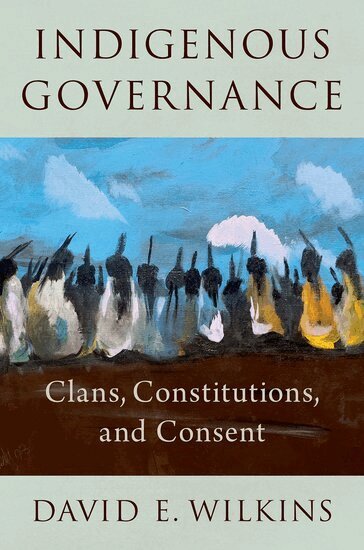
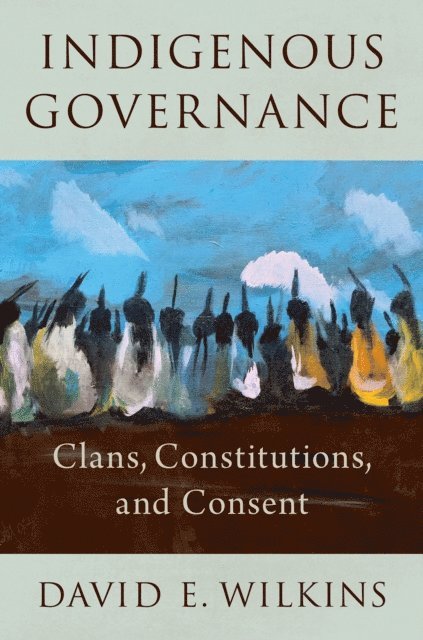
After decades of federal dominance and dependence, Native governments now command attention as they exercise greater degrees of political, economic, and cultural power. Given the weight and importance of many issues confronting Native peoples today, these governments arguably matter even more to their peoples and to the broader society than ever before. Native governments have become critically important as the chief providers of basic services and the authors of solutions to collective problems in their societies. As major actors within the realm of democratic politics, they increasingly wield their powers to educate and advocate regarding Indigenous concerns. For many communities (including non-Native neighbors) they are the largest spenders and employers. They have also become adept at negotiating intergovernmental agreements that protect their peoples and resources while strengthening their unique political status. Native peoples and governments are also navigating the devastating and lingering health and economic impact of COVID-19; the profound environmental problems that have been exacerbated by climate change; and jurisdictional conflicts with local, state, and federal actors.Indigenous Governance is a comprehensive, critical examination of Native political systems: the senior political sovereigns on the North American continent in terms of their origin, development, structures, and operation. Author David E. Wilkins provides the recognition and respect due Indigenous governments, while offering a considered critique of their shortcomings as imperfect, sovereign institutions. This appraisal will highlight their history, evolution, internal and intergovernmental issues, and diverse structures.
Häftad, Engelska, 2024
324 kr
Skickas inom 5-8 vardagar
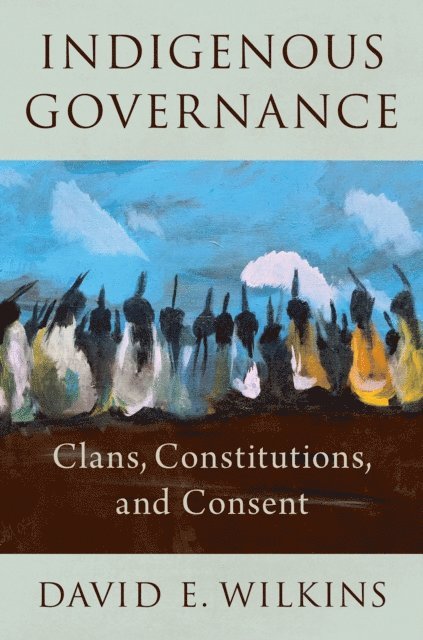
After decades of federal dominance and dependence, Native governments now command attention as they exercise greater degrees of political, economic, and cultural power. Given the weight and importance of many issues confronting Native peoples today, these governments arguably matter even more to their peoples and to the broader society than ever before. Native governments have become critically important as the chief providers of basic services and the authors of solutions to collective problems in their societies. As major actors within the realm of democratic politics, they increasingly wield their powers to educate and advocate regarding Indigenous concerns. For many communities (including non-Native neighbors) they are the largest spenders and employers. They have also become adept at negotiating intergovernmental agreements that protect their peoples and resources while strengthening their unique political status. Native peoples and governments are also navigating the devastating and lingering health and economic impact of COVID-19; the profound environmental problems that have been exacerbated by climate change; and jurisdictional conflicts with local, state, and federal actors.Indigenous Governance is a comprehensive, critical examination of Native political systems: the senior political sovereigns on the North American continent in terms of their origin, development, structures, and operation. Author David E. Wilkins provides the recognition and respect due Indigenous governments, while offering a considered critique of their shortcomings as imperfect, sovereign institutions. This appraisal will highlight their history, evolution, internal and intergovernmental issues, and diverse structures.
Inbunden, Engelska, 2018
1 440 kr
Skickas inom 5-8 vardagar
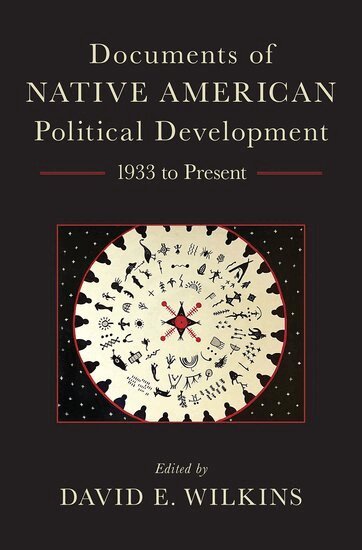
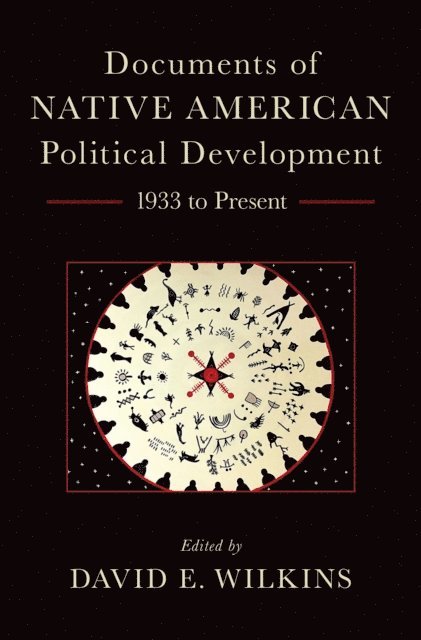
Before Europeans arrived in what is now known as the United States, over 600 diverse Native nations lived on the same land. This encroachment and subsequent settlement by Americans forcibly disrupted the lives of all indigenous peoples and brought about staggering depopulation, loss of land, and cultural, religious, and economic changes. These developments also wrought profound changes in indigenous politics and longstanding governing institutions. David E. Wilkins' two-volume work Documents of Native American Political Development traces how indigenous peoples have maintained and continued to exercise a significant measure of self-determination contrary to presumptions that such powers had been lost, surrendered, or vanquished. Volume One provided materials from the 1500s to 1933. This collection of primary source and other documents begins in 1933 and spans the subsequent eight decades. Broadly, the volume organizes this period into the following distinctive eras: indigenous political resurgence and reorganization (1934 to 1940s); indigenous termination/relocation (1940s to 1960s); indigenous self-determination (1960s to 1980s); and indigenous self-governance (1980s to present). Wilkins presents documents including the governing arrangements Native nations created and adapted that are comparable to formal constitutions; international and interest group records; statements by prominent Native and non-Native individuals; and sources featuring important innovations that display the political acumen of Native nations. The documents are arranged chronologically, and Wilkins provides concise, introductory essays to each document, placing them within the proper context. Each introduction is followed by a brief list of suggestions for further reading.This continued examination of fascinating and relatively unknown indigenous history, from a number of influential legal and political writings to the formal constitutions crafted since the American intervention of the Indian Reorganization Act of 1934, will be an invaluable resource for scholars and students of the history, law, and political development of Native peoples.
Inbunden, Engelska, 2009
1 642 kr
Skickas inom 5-8 vardagar
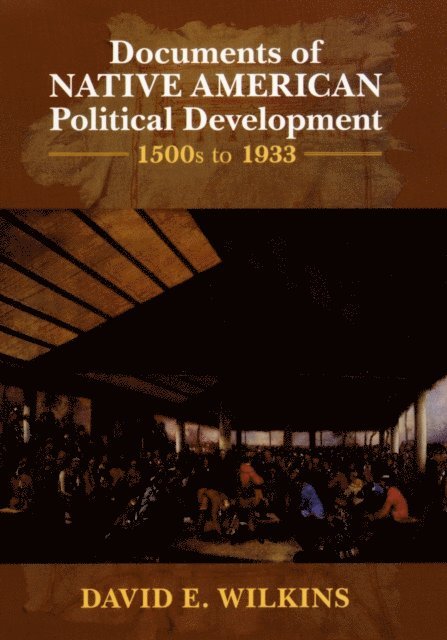
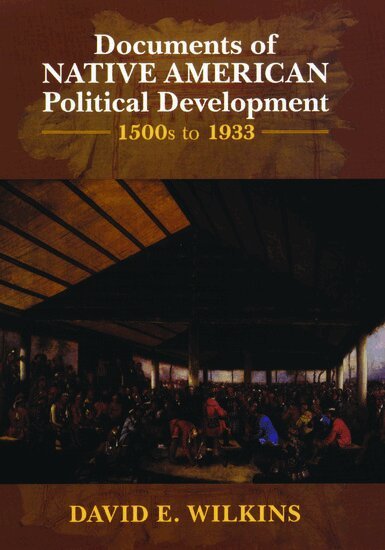
The arrival of European and Euro-American colonizers in the Americas brought not only physical attacks against Native American tribes, but also further attacks against the sovereignty of these Indian nations. Though the violent tales of the Trail of Tears, Black Hawk's War, and the Battle of Little Big Horn are taught far and wide, the political structure and development of Native American tribes, and the effect of American domination on Native American sovereignty, have been greatly neglected. This book contains a variety of primary source and other documents-traditional accounts, tribal constitutions, legal codes, business councils, rules and regulations, BIA agents reports, congressional discourse, intertribal compacts-written both by Natives from many different nations and some non-Natives, that reflect how indigenous peoples continued to exercise a significant measure of self-determination long after it was presumed to have been lost, surrendered, or vanquished. The documents are arranged chronologically, and Wilkins provides brief, introductory essays to each document, placing them within the proper context. Each introduction is followed by a brief list of suggestions for further reading. Covering a fascinating and relatively unknown period in Native American history, from the earliest examples of indigenous political writings to the formal constitutions crafted just before the American intervention of the Indian Reorganization Act of 1934, this anthology will be an invaluable resource for scholars and students of the political development of indigenous peoples the world over.
Häftad, Engelska, 2000
239 kr
Skickas inom 5-8 vardagar
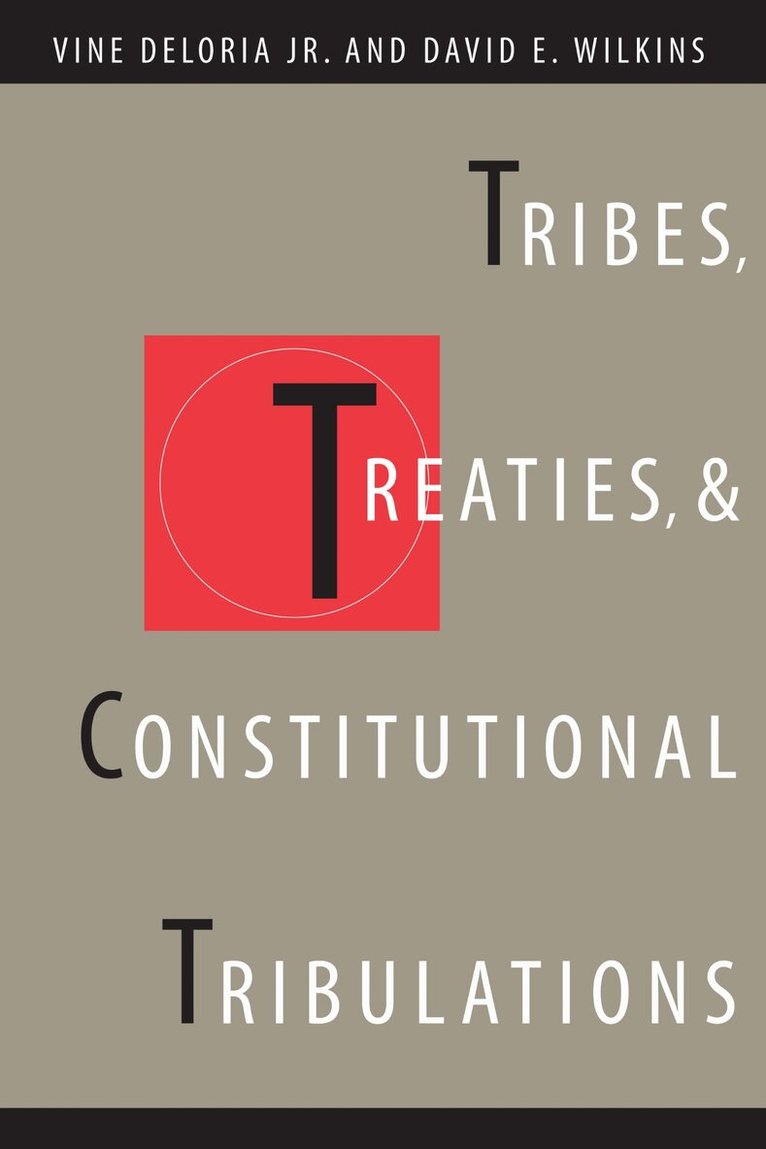
"Federal Indian law . . . is a loosely related collection of past and present acts of Congress, treaties and agreements, executive orders, administrative rulings, and judicial opinions, connected only by the fact that law in some form has been applied haphazardly to American Indians over the course of several centuries. . . . Indians in their tribal relation and Indian tribes in their relation to the federal government hang suspended in a legal wonderland."In this book, two prominent scholars of American Indian law and politics undertake a full historical examination of the relationship between Indians and the United States Constitution that explains the present state of confusion and inconsistent application in U.S. Indian law. The authors examine all sections of the Constitution that explicitly and implicitly apply to Indians and discuss how they have been interpreted and applied from the early republic up to the present. They convincingly argue that the Constitution does not provide any legal rights for American Indians and that the treaty-making process should govern relations between Indian nations and the federal government.
Häftad, Engelska, 1997
420 kr
Skickas inom 5-8 vardagar
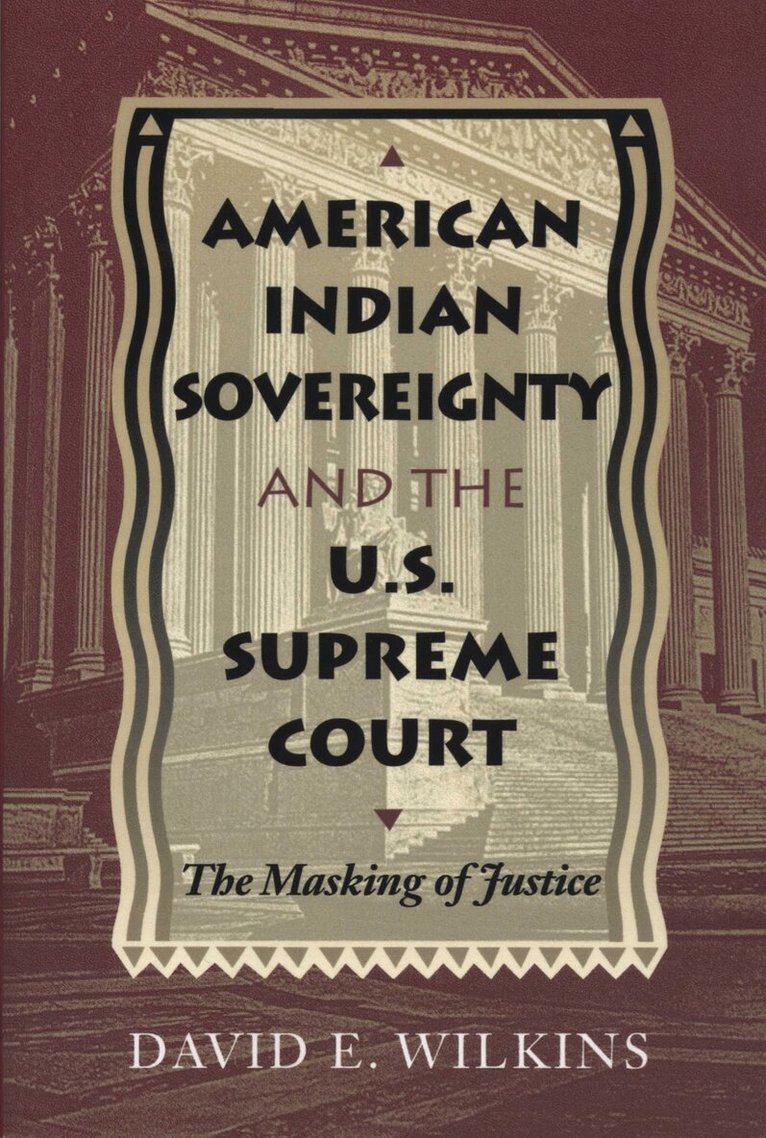
"Like the miner's canary, the Indian marks the shift from fresh air to poison gas in our political atmosphere; and our treatment of Indians, even more than our treatment of other minorities, reflects the rise and fall in our democratic faith," wrote Felix S. Cohen, an early expert in Indian legal affairs.In this book, David Wilkins charts the "fall in our democratic faith" through fifteen landmark cases in which the Supreme Court significantly curtailed Indian rights. He offers compelling evidence that Supreme Court justices selectively used precedents and facts, both historical and contemporary, to arrive at decisions that have undermined tribal sovereignty, legitimated massive tribal land losses, sanctioned the diminishment of Indian religious rights, and curtailed other rights as well.These case studies-and their implications for all minority groups-make important and troubling reading at a time when the Supreme Court is at the vortex of political and moral developments that are redefining the nature of American government, transforming the relationship between the legal and political branches, and altering the very meaning of federalism.
Inbunden, Engelska, 2017
1 693 kr
Skickas inom 3-6 vardagar
While the number of federally recognized Native nations in the United States are increasing, the population figures for existing tribal nations are declining. This depopulation is not being perpetrated by the federal government, but by Native governments that are banishing, denying, or disenrolling Native citizens at an unprecedented rate. Since the 1990s, tribal belonging has become more of a privilege than a sacred right. Political and legal dismemberment has become a national phenomenon with nearly eighty Native nations, in at least twenty states, terminating the rights of indigenous citizens.The first comprehensive examination of the origins and significance of tribal disenrollment, Dismembered examines this disturbing trend, which often leaves the disenrolled tribal members with no recourse or appeal. At the center of the issue is how Native nations are defined today and who has the fundamental rights to belong. By looking at hundreds of tribal constitutions and talking with both disenrolled members and tribal officials, the authors demonstrate the damage this practice is having across Indian Country and ways to address the problem.
Inbunden, Engelska, 2013
1 041 kr
Skickas inom 5-8 vardagar
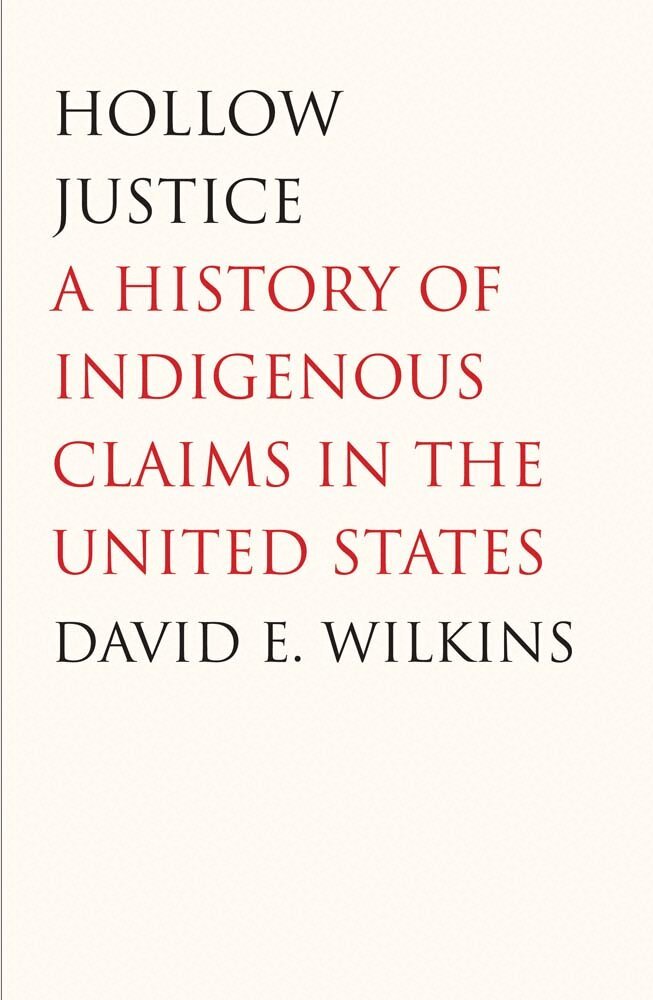
This book, the first of its kind, comprehensively explores Native American claims against the United States government over the past two centuries. Despite the federal government’s multiple attempts to redress indigenous claims, a close examination reveals that even when compensatory programs were instituted, Native peoples never attained a genuine sense of justice. David E. Wilkins addresses the important question of what one nation owes another when the balance of rights, resources, and responsibilities have been negotiated through treaties. How does the United States assure that guarantees made to tribal nations, whether through a century old treaty or a modern day compact, remain viable and lasting?
Häftad, Engelska, 2002
294 kr
Skickas inom 10-15 vardagar
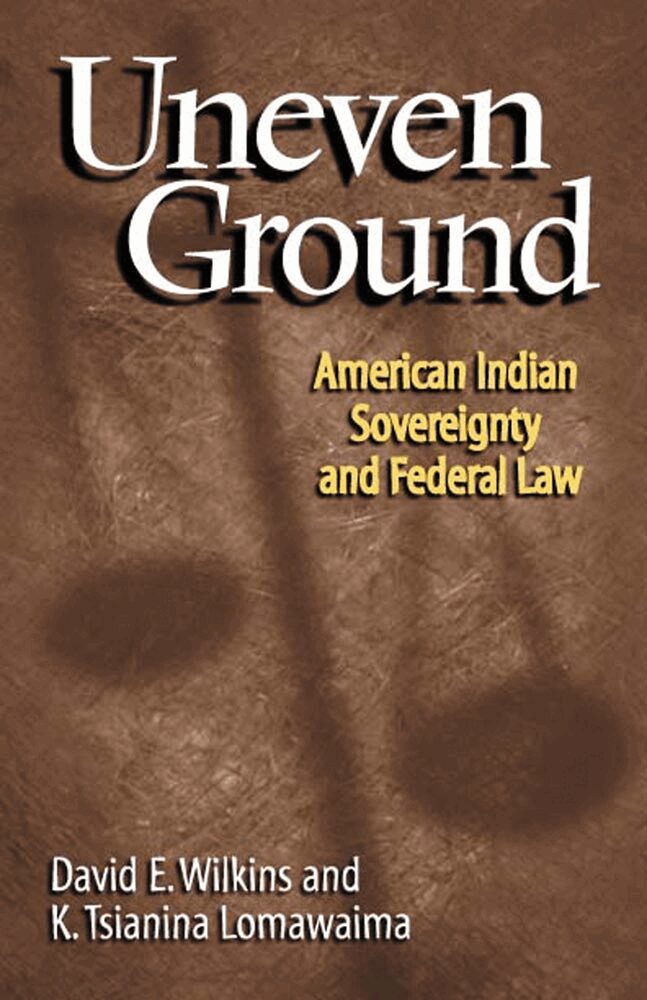
In the early 1970s, the federal government began recognizing self-determination for American Indian nations. As sovereign entities, Indian nations have been able to establish policies concerning health care, education, religious freedom, law enforcement, gaming, and taxation. Yet these gains have not gone unchallenged. Starting in the late 1980s, states have tried to regulate and profit from casino gambling on Indian lands. Treaty rights to hunt, fish, and gather remain hotly contested, and traditional religious practices have been denied protection. Tribal courts struggle with state and federal courts for jurisdiction. David E. Wilkins and K. Tsianina Lomawaima discuss how the political rights and sovereign status of Indian nations have variously been respected, ignored, terminated, and unilaterally modified by federal lawmakers as a result of the ambivalent political and legal status of tribes under western law.
Inbunden, Engelska, 2007
400 kr
Skickas inom 10-15 vardagar
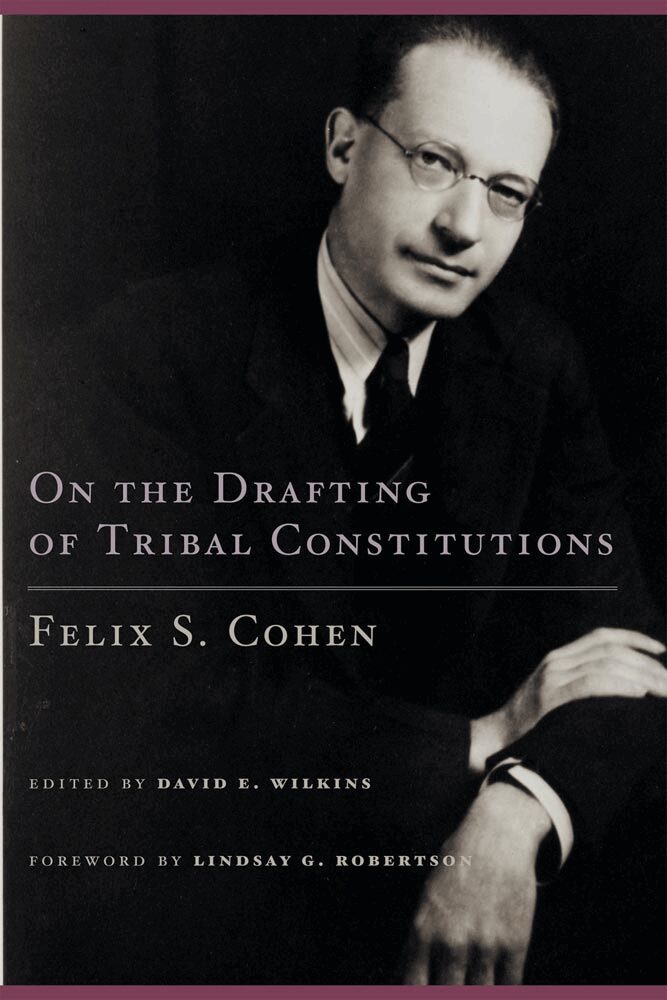
Felix Cohen (1907-1953) was a leading architect of the Indian New Deal and steadfast champion of American Indian rights. Appointed to the Department of the Interior in 1933, he helped draft the Indian Reorganization Act (1934) and chaired a committee charged with assisting tribes in organizing their governments. His ""Basic Memorandum on Drafting of Tribal Constitutions,"" submitted in November 1934, provided practical guidelines for that effort.Largely forgotten until Cohen's papers were released more than half a century later, the memorandum now receives the attention it has long deserved. David E. Wilkins presents the entire work, edited and introduced with an essay that describes its origins and places it in historical context. Cohen recommended that each tribe consider preserving ancient traditions that offered wisdom to those drafting constitutions. Strongly opposed to ""sending out canned constitutions from Washington,"" he offered ideas for incorporating Indigenous political, social, and cultural knowledge and structure into new tribal constitutions.On the Drafting of Tribal Constitutions shows that concepts of Indigenous autonomy and self-governance have been vital to Native nations throughout history. As today's tribal governments undertake reform, Cohen's memorandum again offers a wealth of insight on how best to amend previous constitutions. It also helps scholars better understand the historic policy shift brought about by the Indian Reorganization Act.
Del 1 - American Indian Law and Policy Series
On the Drafting of Tribal Constitutions
Häftad, Engelska, 2020
245 kr
Skickas inom 10-15 vardagar
Felix Cohen (1907-1953) was a leading architect of the Indian New Deal and steadfast champion of American Indian rights. Appointed to the Department of the Interior in 1933, he helped draft the Indian Reorganization Act (1934) and chaired a committee charged with assisting tribes in organizing their governments. His ""Basic Memorandum on Drafting of Tribal Constitutions,"" submitted in November 1934, provided practical guidelines for that effort.Largely forgotten until Cohen's papers were released more than half a century later, the memorandum now receives the attention it has long deserved. David E. Wilkins presents the entire work, edited and introduced with an essay that describes its origins and places it in historical context. Cohen recommended that each tribe consider preserving ancient traditions that offered wisdom to those drafting constitutions. Strongly opposed to ""sending out canned constitutions from Washington,"" he offered ideas for incorporating Indigenous political, social, and cultural knowledge and structure into new tribal constitutions.On the Drafting of Tribal Constitutions shows that concepts of Indigenous autonomy and self-governance have been vital to Native nations throughout history. As today's tribal governments undertake reform, Cohen's memorandum again offers a wealth of insight on how best to amend previous constitutions. It also helps scholars better understand the historic policy shift brought about by the Indian Reorganization Act.
Häftad, Engelska, 2013
824 kr
Skickas inom 10-15 vardagar
Native nations, like the Navajo nation, have proven to be remarkably adept at retaining and exercising ever-increasing amounts of self-determination even when faced with powerful external constraints and limited resources. Now in this fourth edition of David E. Wilkins' The Navajo Political Experience, political developments of the last decade are discussed and analyzed comprehensively, and with as much accessibility as thoroughness and detail. The Diné people and their governing leaders have recently experienced a host of events that dramatically affected the shape of the nation – a plethora of effective grassroots organizations that had a profound impact on the structure of the Navajo political system, a dramatic reduction in the size of the legislative branch from eighty-eight to twenty-four members, the introduction of institutional gambling, unresolved battles over water rights, and a tense political crisis that pitted the legislative branch against the judicial branch as the court sought to ensure that the Fundamental Law was to be adhered to by all governing bodies. These and other developments are examined in this new edition, which includes three new appendices : The Navajo Fundamental Law of 2002; The Diné Natural Resource Protection Act of 2005; and Nelson v. Shirley (2010), which add to the book's value as a classroom tool and a primary source.
Inbunden, Engelska, 2013
1 640 kr
Skickas inom 10-15 vardagar
Native nations, like the Navajo nation, have proven to be remarkably adept at retaining and exercising ever-increasing amounts of self-determination even when faced with powerful external constraints and limited resources. Now in this fourth edition of David E. Wilkins' The Navajo Political Experience, political developments of the last decade are discussed and analyzed comprehensively, and with as much accessibility as thoroughness and detail. The Diné people and their governing leaders have recently experienced a host of events that dramatically affected the shape of the nation – a plethora of effective grassroots organizations that had a profound impact on the structure of the Navajo political system, a dramatic reduction in the size of the legislative branch from eighty-eight to twenty-four members, the introduction of institutional gambling, unresolved battles over water rights, and a tense political crisis that pitted the legislative branch against the judicial branch as the court sought to ensure that the Fundamental Law was to be adhered to by all governing bodies. These and other developments are examined in this new edition, which includes three new appendices : The Navajo Fundamental Law of 2002; The Diné Natural Resource Protection Act of 2005; and Nelson v. Shirley (2010), which add to the book's value as a classroom tool and a primary source.
Inbunden, Engelska, 2017
1 368 kr
Skickas inom 10-15 vardagar
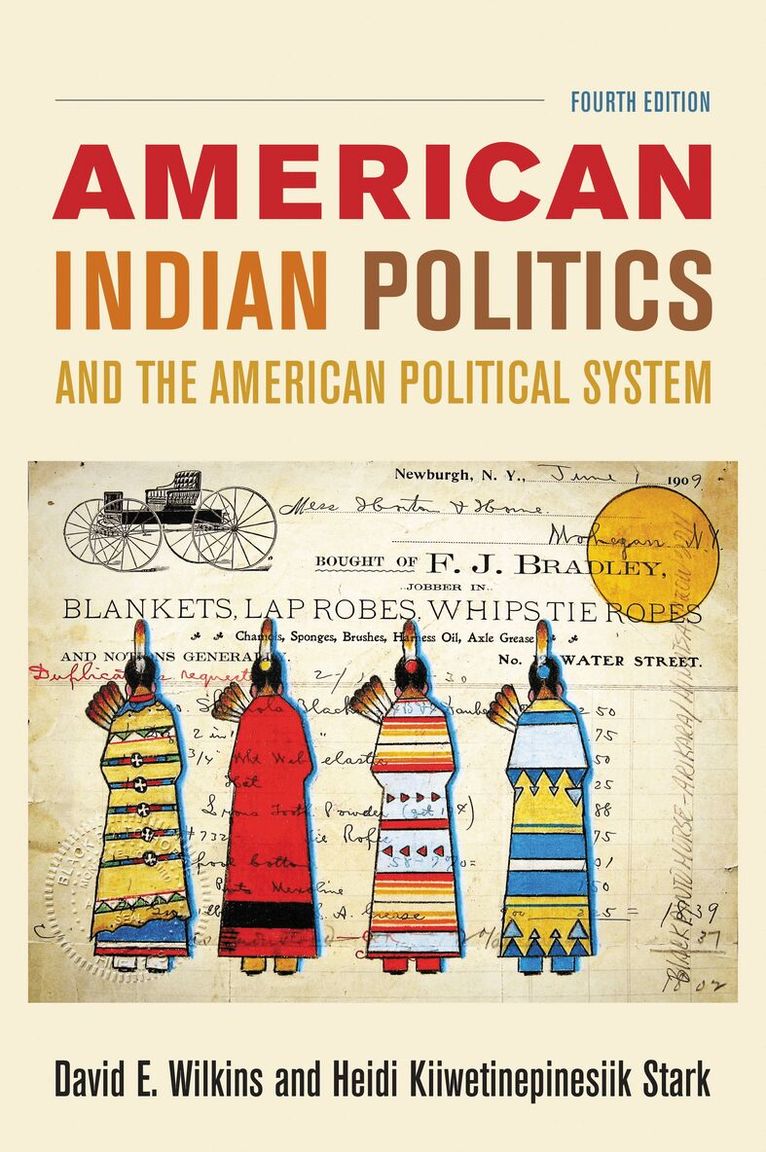
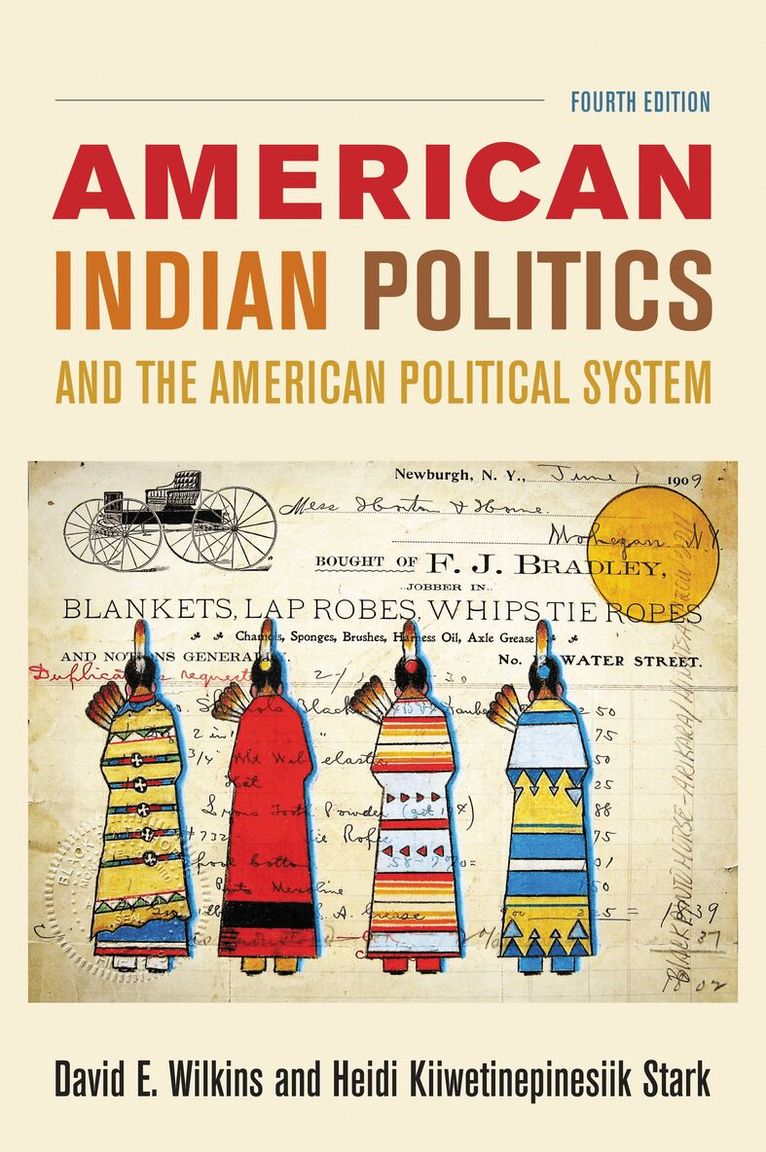
American Indian Politics and the American Political System is the most comprehensive text written from a political science perspective. It analyzes the structures and functions of indigenous governments (including Alaskan Native communities and Hawaiian Natives) and the distinctive legal and political rights these nations exercise internally. It also examines the fascinating intergovernmental relationship that exists between native nations, the states, and the federal government. In the fourth edition, Wilkins and Stark analyze the challenges facing Indigenous nations as they develop new and innovative strategies to defend and demand recognition of their national character and rights. They also seeks to address issues that continue to plague many nations, such as notions of belonging and citizenship, implementation of governing structures and processes attentive to Indigenous political and legal traditions, and the promotion and enactment of sustainable practices that support our interdependence in an increasingly globalized world.
Häftad, Engelska, 2017
824 kr
Skickas inom 10-15 vardagar
American Indian Politics and the American Political System is the most comprehensive text written from a political science perspective. It analyzes the structures and functions of indigenous governments (including Alaskan Native communities and Hawaiian Natives) and the distinctive legal and political rights these nations exercise internally. It also examines the fascinating intergovernmental relationship that exists between native nations, the states, and the federal government. In the fourth edition, Wilkins and Stark analyze the challenges facing Indigenous nations as they develop new and innovative strategies to defend and demand recognition of their national character and rights. They also seeks to address issues that continue to plague many nations, such as notions of belonging and citizenship, implementation of governing structures and processes attentive to Indigenous political and legal traditions, and the promotion and enactment of sustainable practices that support our interdependence in an increasingly globalized world.
Inbunden, Engelska, 2026
1 232 kr
Skickas inom 10-15 vardagar
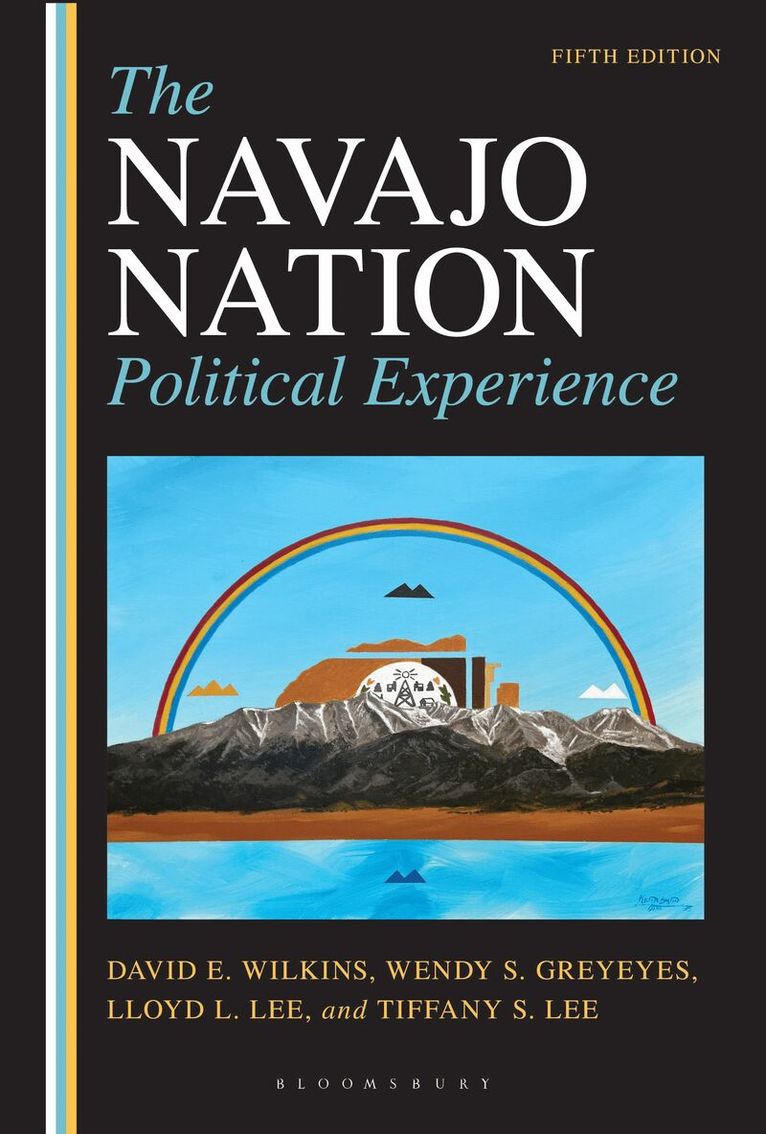
Tribal nations, like the Navajo nation, have proven to be remarkably adept at retaining and exercising ever-increasing amounts of self-determination even when faced with powerful external constraints and limited resources. Now in this fifth edition of The Navajo Nation Political Experience, the current Diné political developments of the last decade are analyzed thoroughly and accessibly against a historical backdrop. The Diné people and their leaders have recently experienced a host of events that dramatically affected the shape of the nation. David Wilkins and new co-authors Wendy Greyeyes, Lloyd Lee, and Tiffany Lee provide the only comprehensive analysis of Diné governance structures, leaders, and political participation.
Häftad, Engelska, 2026
555 kr
Skickas
Tribal nations, like the Navajo nation, have proven to be remarkably adept at retaining and exercising ever-increasing amounts of self-determination even when faced with powerful external constraints and limited resources. Now in this fifth edition of The Navajo Nation Political Experience, the current Diné political developments of the last decade are analyzed thoroughly and accessibly against a historical backdrop. The Diné people and their leaders have recently experienced a host of events that dramatically affected the shape of the nation. David Wilkins and new co-authors Wendy Greyeyes, Lloyd Lee, and Tiffany Lee provide the only comprehensive analysis of Diné governance structures, leaders, and political participation.
Häftad, Engelska, 2011
295 kr
Skickas inom 3-6 vardagar
Häftad, Engelska, 2018
336 kr
Skickas inom 3-6 vardagar
Häftad, Engelska, 2024
369 kr
Skickas inom 3-6 vardagar