Virgilio Gavicho Uarrota - Böcker
Visar alla böcker från författaren Virgilio Gavicho Uarrota. Handla med fri frakt och snabb leverans.
3 produkter
3 produkter
2 121 kr
Skickas inom 10-15 vardagar
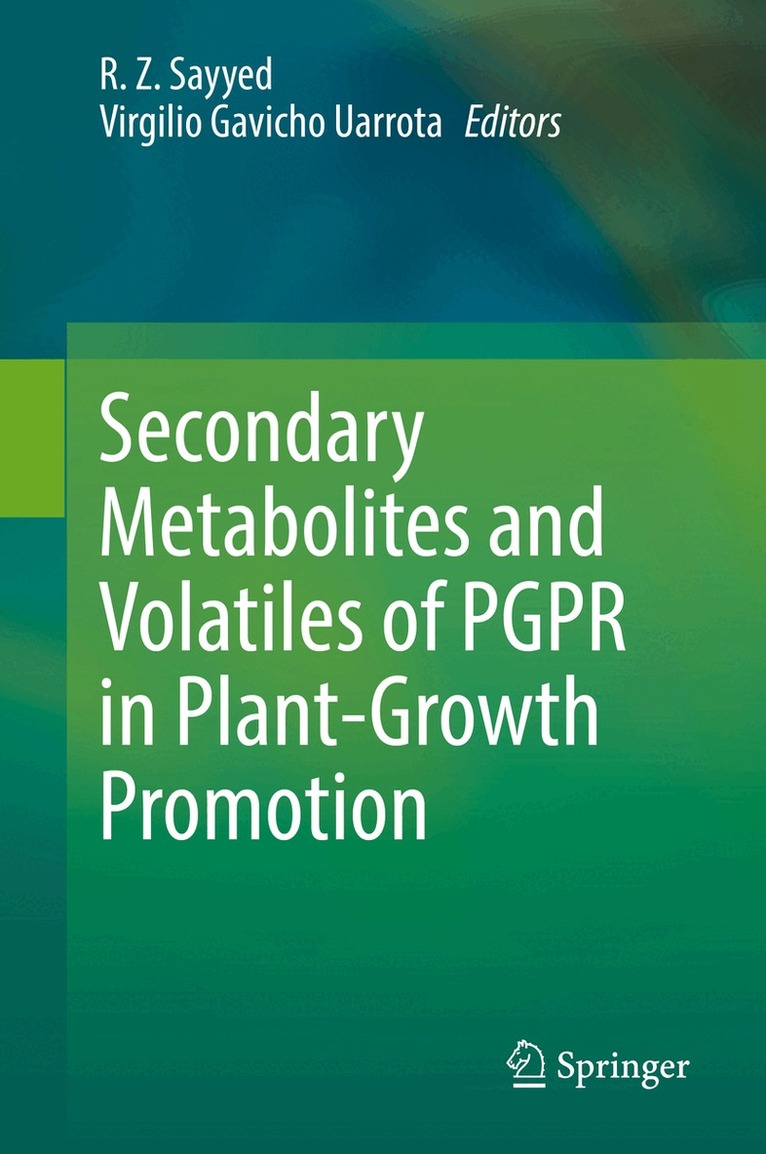
This contributed volume explores how plant growth-promoting rhizobacterias (PGPR) provide a wide range of benefits to the plant. Further, it discusses the key roles PGPR play in nutrient acquisition and assimilation, improved soil texture, secreting, and modulating extracellular molecules. The book outlines how plant secondary metabolites are natural sources of biologically active compounds used in a wide range of applications, and surveys the significant role of volatile organic compounds (VOCs) in plant communication by mediating above- and below-ground interactions between plants and the surrounding organisms.This volume compiles research from leading scientists from across the globe, linking the translation of basic knowledge to innovative applied research. The book focuses on the following three categories: 1) understanding the secondary metabolites produced by PGPR, the signaling mechanisms and how they affect plant growth, 2) the plausible role ofvolatile organic compounds produced by PGPR, their role and the signaling mechanism for plant growth promotion, and 3) Applications of VOCs and secondary metabolites of PGPR for seed germination, plant growth promotion; stress tolerance and in-plant health and immunity.
2 121 kr
Skickas inom 10-15 vardagar
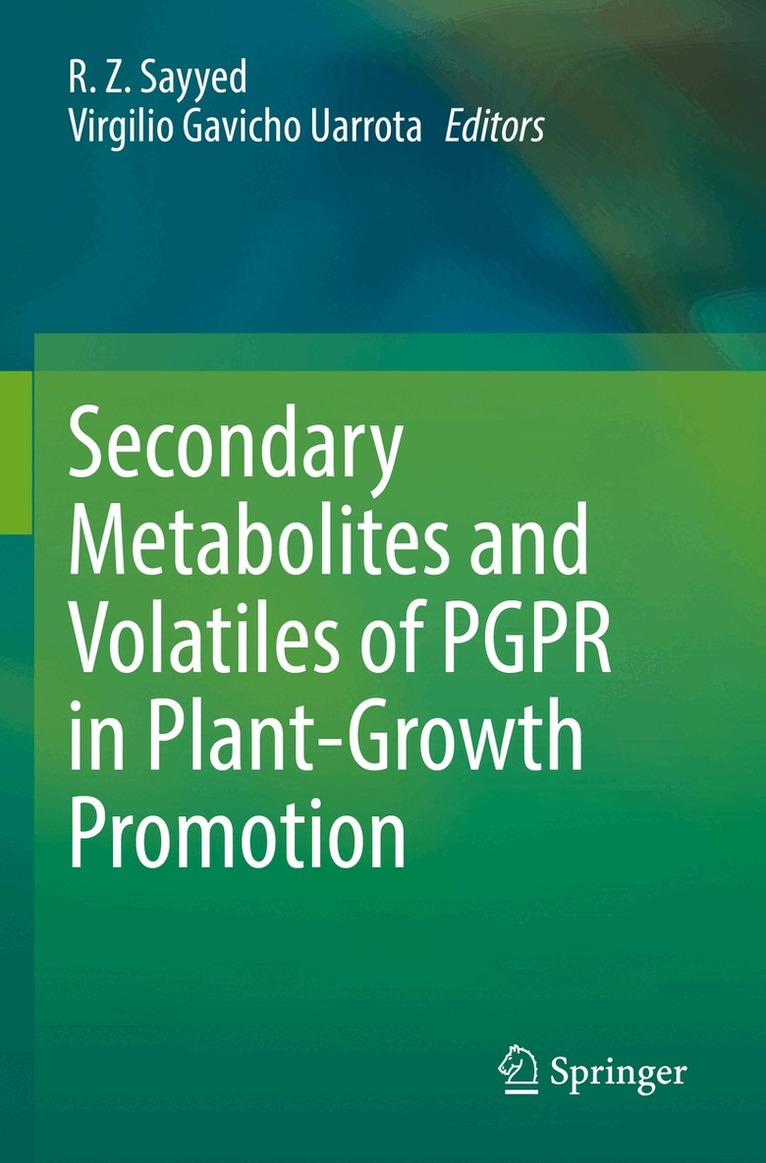
This contributed volume explores how plant growth-promoting rhizobacterias (PGPR) provide a wide range of benefits to the plant. Further, it discusses the key roles PGPR play in nutrient acquisition and assimilation, improved soil texture, secreting, and modulating extracellular molecules. The book outlines how plant secondary metabolites are natural sources of biologically active compounds used in a wide range of applications, and surveys the significant role of volatile organic compounds (VOCs) in plant communication by mediating above- and below-ground interactions between plants and the surrounding organisms.This volume compiles research from leading scientists from across the globe, linking the translation of basic knowledge to innovative applied research. The book focuses on the following three categories: 1) understanding the secondary metabolites produced by PGPR, the signaling mechanisms and how they affect plant growth, 2) the plausible role ofvolatile organic compounds produced by PGPR, their role and the signaling mechanism for plant growth promotion, and 3) Applications of VOCs and secondary metabolites of PGPR for seed germination, plant growth promotion; stress tolerance and in-plant health and immunity.
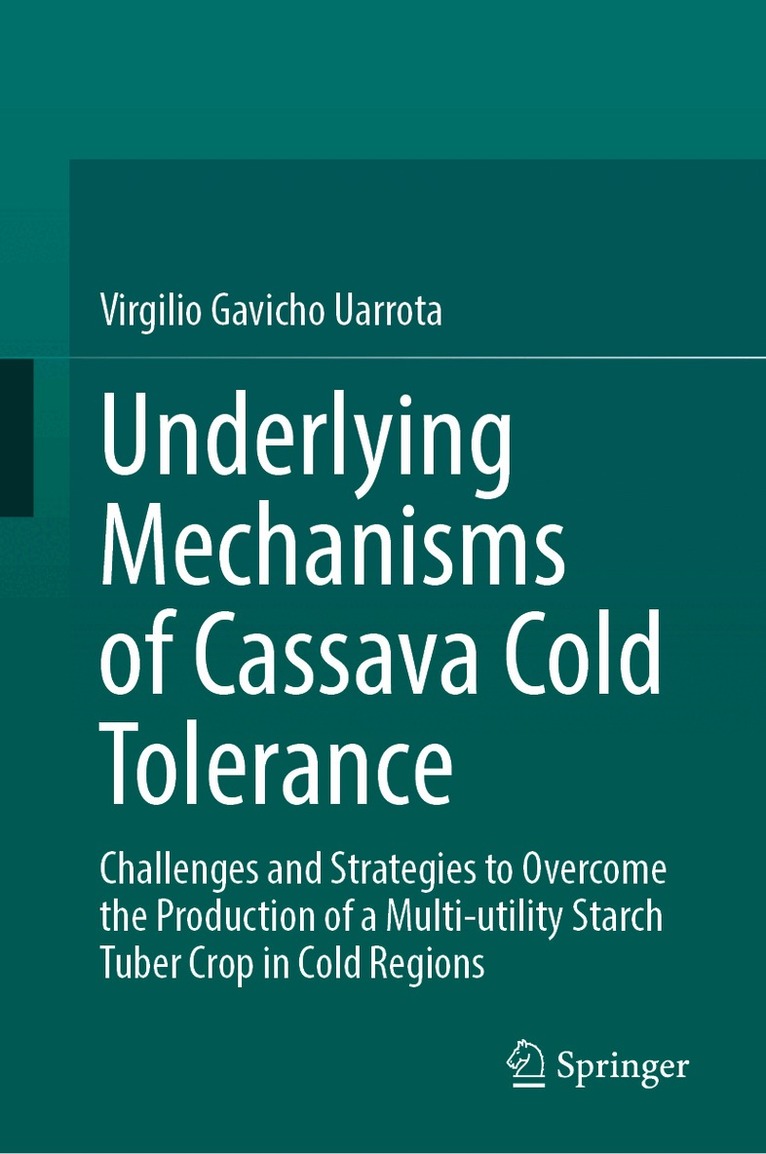
Underlying Mechanisms of Cassava Cold Tolerance
Challenges and Strategies to Overcome the Production of a Multi-utility Starch Tuber Crop in Cold Regions
Inbunden, Engelska, 2026
2 317 kr
Kommande
Cassava (Manihot esculenta Crantz) is a vital crop for millions, serving as a staple food and a key resource for industries ranging from starch production to bioethanol. Known for its adaptability to poor soils and unpredictable rainfall, cassava has earned its place as a "future crop" in the face of climate change. However, its sensitivity to cold stress has limited its potential in temperate regions, leaving a gap in understanding how this resilient plant can thrive in colder climates.This book brings together the latest research on cassava's response to cold stress, exploring its physiological, genetic, and metabolic mechanisms. Drawing on insights from agronomy and biotechnology, it examines the possibilities of developing cold-tolerant cultivars using the genetic diversity found in international germplasm banks. The authors also discuss practical strategies to scale up cassava production in new regions, offering hope for expanded cultivation and industrial use.Ideal for researchers, plant breeders, and policymakers, Underlying Mechanisms of Cassava Cold Tolerance highlights the untapped potential of this crop. By addressing one of its greatest challenges, this book opens the door to a more sustainable and food-secure future.