Examining the role of changes in print technologies and poetics in the early novelAround the same time that Aristotle's Poetics was reemerging from obscurity, Rabelais was composing his Pantagruel series, while a host of influential works in a chivalric, sentimental, or pastoral vein were being imported from Spain and Italy. From this emergent corpus, Rabelais's is the only name to have unambiguously made it into our modern canon of literary history, where he appears to stand alone as an early pioneer of the novel. The Early Novel in French: Poetics of a Genre in the Making explores the literary, cultural, and eminently material soil in which these early forms of what we would come to know as the novel originally took root, showing how they were imaginatively responding to the practices and uncertainties of the literary texts of their own era as well as to works of classical antiquity.Within the flowering of experimental fictional forms in mid-sixteenth-century France, Virginia Krause identifies historical subplots shaping the development of this genre. As rhetorical culture continued to animate fictions through an active literary tradition, print culture was changing the very fabric of books. The early novel was thus at once rhetorically fashioned and technologically manufactured. Meanwhile, the legacy of medieval romance adventure persisted, making the early novel in French both a new laboratory for Aristotelian immersion and a vehicle for a mysterious and fugitive romanesque. Krause sheds fresh light on this new and rapidly evolving genre: its lifelike personas or "person-fictions"; its material forms, from pocket-sized volumes to vast literary serials; its immersive powers; and its underappreciated role in the production of the modern author.
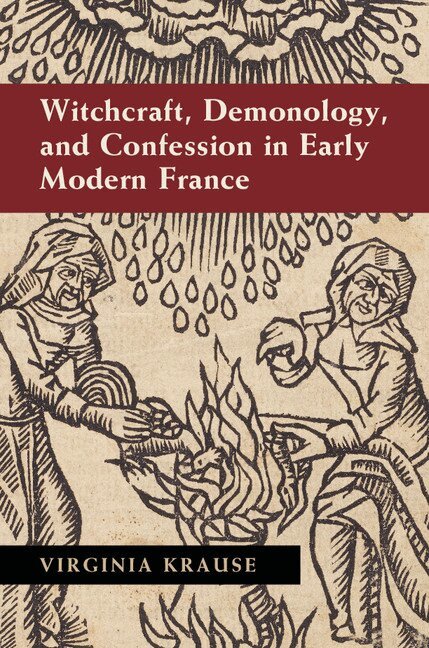
Denounced by neighbors and scrutinized by demonologists, the early modern French witch also confessed, self-identified as a witch and as the author of horrific deeds. What led her to this point? Despair, solitude, perhaps even physical pain, but most decisively, demonology's two-pronged prosecutorial and truth-seeking confessional apparatus. This book examines the systematic and well-oiled machinery that served to extract, interpret, and disseminate witches' confessions in early modern France. For the demonologist, confession was the only way to find out the truth about the clandestine activities of witches. For the witch, however, trial confessions opened new horizons of selfhood. In this book, Virginia Krause unravels the threads that wove together the demonologist's will to know and the witch's subjectivity. By examining textual and visual evidence, Krause shows how confession not only generated demonological theory but also brought forth a specific kind of self, which we now recognize as the modern subject.
Examining the role of changes in print technologies and poetics in the early novelAround the same time that Aristotle's Poetics was reemerging from obscurity, Rabelais was composing his Pantagruel series, while a host of influential works in a chivalric, sentimental, or pastoral vein were being imported from Spain and Italy. From this emergent corpus, Rabelais's is the only name to have unambiguously made it into our modern canon of literary history, where he appears to stand alone as an early pioneer of the novel. The Early Novel in French: Poetics of a Genre in the Making explores the literary, cultural, and eminently material soil in which these early forms of what we would come to know as the novel originally took root, showing how they were imaginatively responding to the practices and uncertainties of the literary texts of their own era as well as to works of classical antiquity.Within the flowering of experimental fictional forms in mid-sixteenth-century France, Virginia Krause identifies historical subplots shaping the development of this genre. As rhetorical culture continued to animate fictions through an active literary tradition, print culture was changing the very fabric of books. The early novel was thus at once rhetorically fashioned and technologically manufactured. Meanwhile, the legacy of medieval romance adventure persisted, making the early novel in French both a new laboratory for Aristotelian immersion and a vehicle for a mysterious and fugitive romanesque. Krause sheds fresh light on this new and rapidly evolving genre: its lifelike personas or "person-fictions"; its material forms, from pocket-sized volumes to vast literary serials; its immersive powers; and its underappreciated role in the production of the modern author.
Denounced by neighbors and scrutinized by demonologists, the early modern French witch also confessed, self-identified as a witch and as the author of horrific deeds. What led her to this point? Despair, solitude, perhaps even physical pain, but most decisively, demonology's two-pronged prosecutorial and truth-seeking confessional apparatus. This book examines the systematic and well-oiled machinery that served to extract, interpret, and disseminate witches' confessions in early modern France. For the demonologist, confession was the only way to find out the truth about the clandestine activities of witches. For the witch, however, trial confessions opened new horizons of selfhood. In this book, Virginia Krause unravels the threads that wove together the demonologist's will to know and the witch's subjectivity. By examining textual and visual evidence, Krause shows how confession not only generated demonological theory but also brought forth a specific kind of self, which we now recognize as the modern subject.