Vittorio Montemaggi – författare
Visar alla böcker från författaren Vittorio Montemaggi. Handla med fri frakt och snabb leverans.
6 produkter
6 produkter
Inbunden, Engelska, 2026
1 347 kr
Skickas inom 5-8 vardagar
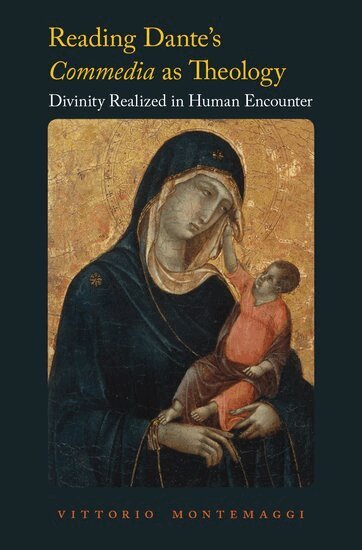
Dante's Commedia compels readers to confront the mystery of their existence, to seek understanding of their relationship to the living conscious reality from which all possible experience arises. By pursuing these lines of inquiry, says Vittorio Montemaggi, readers can reach an ultimate reality that Dante calls love. Montemaggi offers a detailed theological reading of the Commedia, examining the theme of human interaction, both as it is represented in the poem-the narrator Dante's interaction with other characters-and by the relationship between author and reader. In doing so he locates a Dante we may not be used to imagining, a man aware both of the spiritual power of his work, and of his profound, essential vulnerability and moral failing. Montemaggi shows that, for this Dante, truth emerges only through human limitation and failure, rather than in spite of it.Applying this interpretive framework to a reflection on the methodology of scholarship itself, Montemaggi offers his readers a vision of what the academy could be-not individual scholars in competition with others, but a community that seeks to foster the understanding that can arise through interaction, vulnerability, and love. His vision constitutes a benign challenge to some of the ethos and practices of the modern academy, while simultaneously reflecting on the dynamics of one of the most inspiring and influential texts ever written about the relationship between humanity and divinity.
E-bok
PDF, Engelska, 20161 474 kr
Läs direkt efter köp
Dante''s Commedia compels readers to confront the mystery of their existence, to seek understanding of their relationship to the living conscious reality from which all possible experience arises. By pursuing these lines of inquiry, says Vittorio Montemaggi, readers can reach an ultimate reality that Dante calls love.Montemaggi offers a detailed theological reading of the Commedia, examining the theme of human interaction, both as it is represented in the poem-the narrator Dante''s interaction with other characters-and by the relationship between author and reader. In doing so, he locates a Dante we may not be used to imagining, a man aware both of the spiritual power of his work, and of his profound, essential vulnerability and moral failing. Montemaggi shows that, for this Dante, truth emerges only through human limitation and failure, and not in spite of it.Applying this interpretive framework to a reflection on the methodology of scholarship itself, Montemaggi offers a vision of what the academy could be-not individual scholars in competition with others, but a community that seeks to foster the understanding that can arise through interaction, vulnerability, and love. His vision constitutes a benign challenge to some of the ethos and practices of the modern academy, while simultaneously reflecting on the dynamics of one of the most inspiring and influential texts ever written about the relationship between humanity and divinity.
E-bok
Engelska, 20161 474 kr
Läs direkt efter köp
Dante''s Commedia compels readers to confront the mystery of their existence, to seek understanding of their relationship to the living conscious reality from which all possible experience arises. By pursuing these lines of inquiry, says Vittorio Montemaggi, readers can reach an ultimate reality that Dante calls love.Montemaggi offers a detailed theological reading of the Commedia, examining the theme of human interaction, both as it is represented in the poem-the narrator Dante''s interaction with other characters-and by the relationship between author and reader. In doing so, he locates a Dante we may not be used to imagining, a man aware both of the spiritual power of his work, and of his profound, essential vulnerability and moral failing. Montemaggi shows that, for this Dante, truth emerges only through human limitation and failure, and not in spite of it.Applying this interpretive framework to a reflection on the methodology of scholarship itself, Montemaggi offers a vision of what the academy could be-not individual scholars in competition with others, but a community that seeks to foster the understanding that can arise through interaction, vulnerability, and love. His vision constitutes a benign challenge to some of the ethos and practices of the modern academy, while simultaneously reflecting on the dynamics of one of the most inspiring and influential texts ever written about the relationship between humanity and divinity.
Häftad, Engelska, 2010
458 kr
Skickas inom 5-8 vardagar
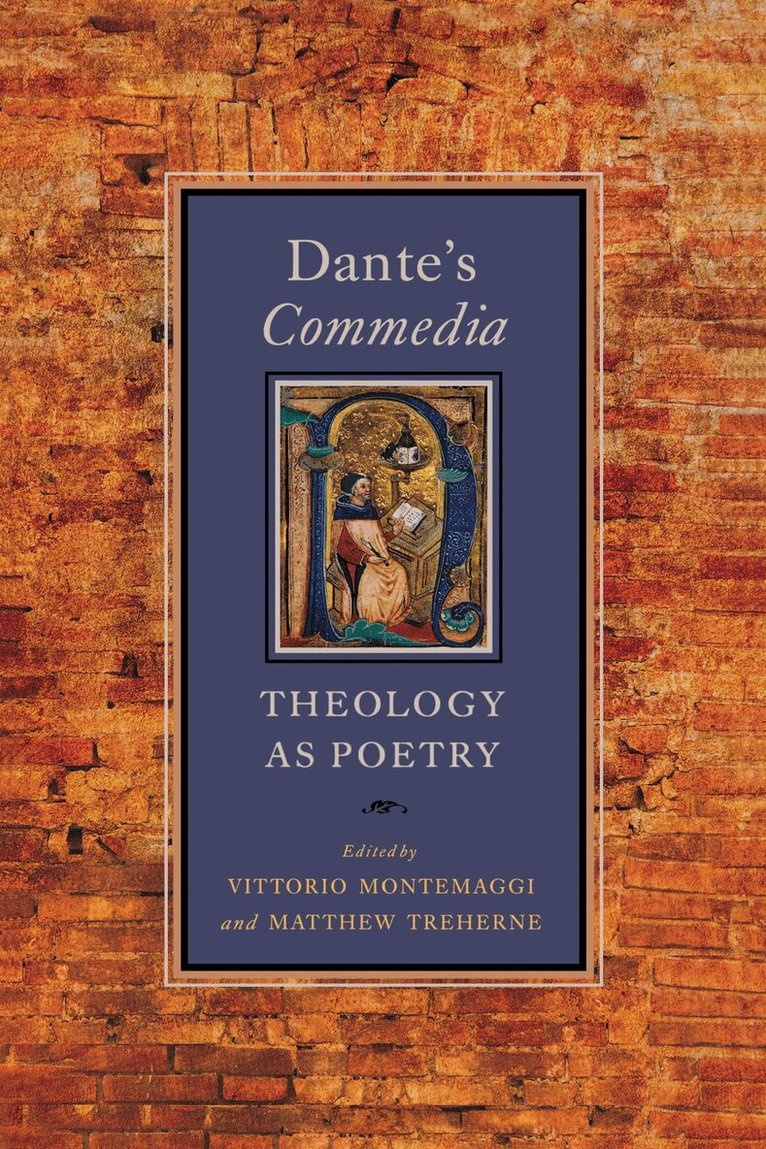
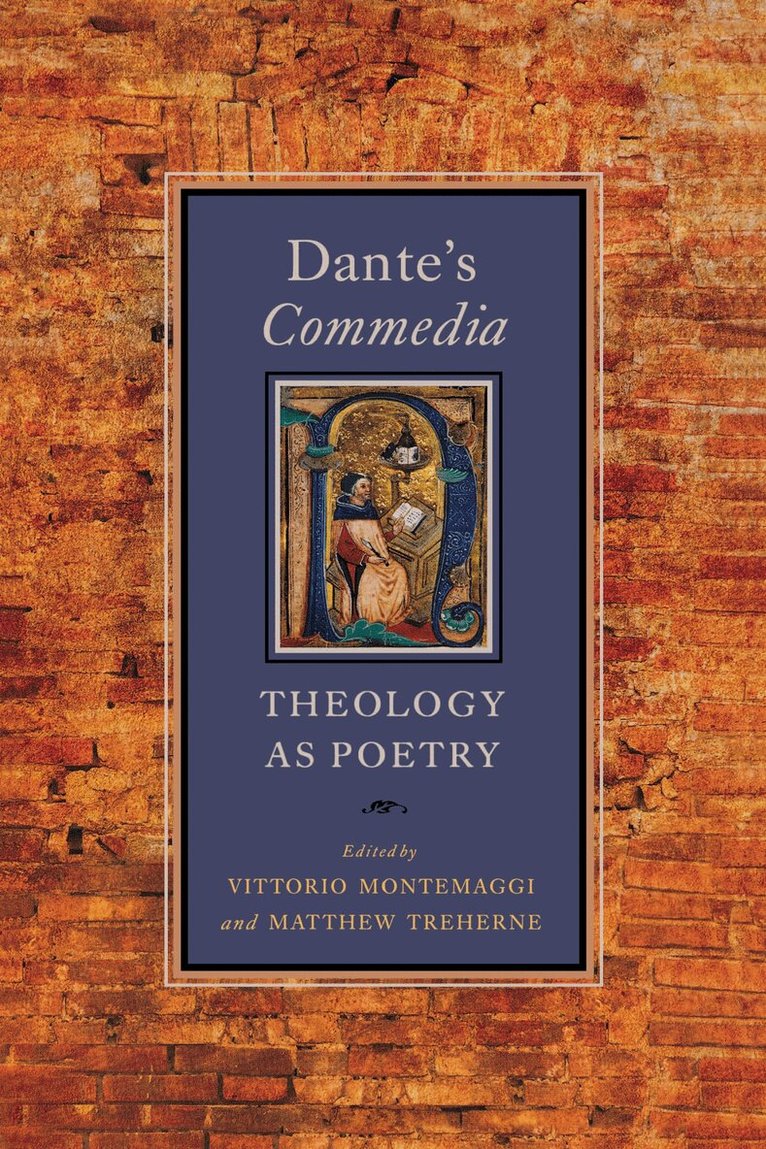
In Dante's Commedia: Theology as Poetry, an international group of theologians and Dante scholars provide a uniquely rich set of perspectives focused on the relationship between theology and poetry in the Commedia. Examining Dante's treatment of questions of language, personhood, and the body; his engagement with the theological tradition he inherited; and the implications of his work for contemporary theology, the contributors argue for the close intersection of theology and poetry in the text as well as the importance of theology for Dante studies. Through discussion of issues ranging from Dante's use of imagery of the Church to the significance of the smile for his poetic project, the essayists offer convincing evidence that his theology is not what underlies his narrative poem, nor what is contained within it: it is instead fully integrated with its poetic and narrative texture.As the essays demonstrate, the Commedia is firmly rooted in the medieval tradition of reflection on the nature of theological language, while simultaneously presenting its readers with unprecedented, sustained poetic experimentation. Understood in this way, Dante emerges as one of the most original theological voices of the Middle Ages.Contributors: Piero Boitani, Oliver Davies, Theresa Federici, David F. Ford, Peter S. Hawkins, Douglas Hedley, Robin Kirkpatrick, Christian Moevs, Vittorio Montemaggi, Paola Nasti, John Took, Matthew Treherne, and Denys Turner.
Inbunden, Engelska, 2010
1 235 kr
Skickas inom 5-8 vardagar
In Dante's Commedia: Theology as Poetry, an international group of theologians and Dante scholars provide a uniquely rich set of perspectives focused on the relationship between theology and poetry in the Commedia. Examining Dante's treatment of questions of language, personhood, and the body; his engagement with the theological tradition he inherited; and the implications of his work for contemporary theology, the contributors argue for the close intersection of theology and poetry in the text as well as the importance of theology for Dante studies. Through discussion of issues ranging from Dante's use of imagery of the Church to the significance of the smile for his poetic project, the essayists offer convincing evidence that his theology is not what underlies his narrative poem, nor what is contained within it: it is instead fully integrated with its poetic and narrative texture.As the essays demonstrate, the Commedia is firmly rooted in the medieval tradition of reflection on the nature of theological language, while simultaneously presenting its readers with unprecedented, sustained poetic experimentation. Understood in this way, Dante emerges as one of the most original theological voices of the Middle Ages.Contributors: Piero Boitani, Oliver Davies, Theresa Federici, David F. Ford, Peter S. Hawkins, Douglas Hedley, Robin Kirkpatrick, Christian Moevs, Vittorio Montemaggi, Paola Nasti, John Took, Matthew Treherne, and Denys Turner.
E-bok
Engelska, 2017560 kr
Läs direkt efter köp
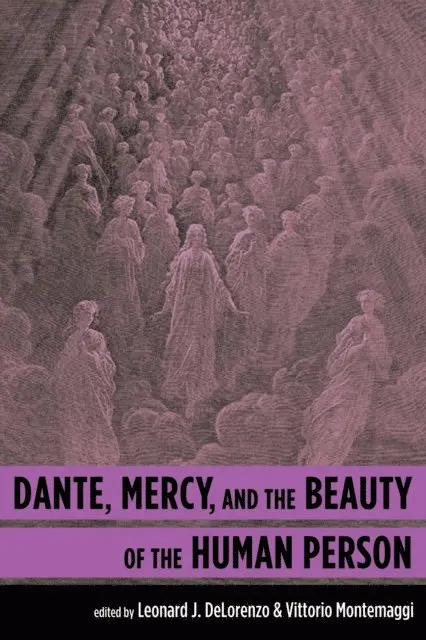
Dante, Mercy, and the Beauty of the Human Person is a pilgrimage to rediscover the spiritual and humanizing benefit of the Commedia. Treating each cantica of the poem, this volume offers profound meditations on the intertwined themes of memory, prayer, sainthood, the irony of sin, theological and literary aesthetics, and desire, all while consistently reflecting upon the key themes of mercy and beauty in the revelation of the human person within the drama of divine love.