Vladimir Gel'man - Böcker
Visar alla böcker från författaren Vladimir Gel'man. Handla med fri frakt och snabb leverans.
13 produkter
13 produkter
576 kr
Skickas inom 10-15 vardagar
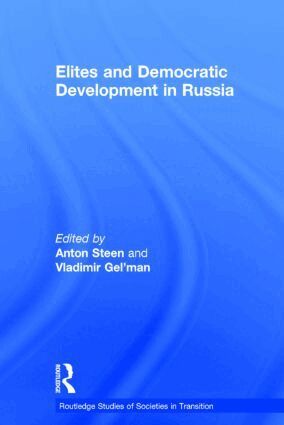
The transformation from Communist rule towards democratic development in Russia cannot be fully understood without taking the elites into full consideration. Elites and Democratic Development in Russia examines how elites support and challenge democracy and why they are crucial to Russian democracy in particular.In this innovative volume, twelve respected scholars investigate how elites have affected the transition from Communist rule towards democratic development in Russia. They discuss how the elites' degree of integration on national and regional levels may constitute the main condition for the consolidation of the emerging political regime and interpret the complex post-communist elite patterns of behaviour and attitudes into a theoretical framework of elitist democracy.This book will appeal to those interested in democratization, elites, post-Soviet Russia and post-communist studies.
360 kr
Skickas inom 7-10 vardagar
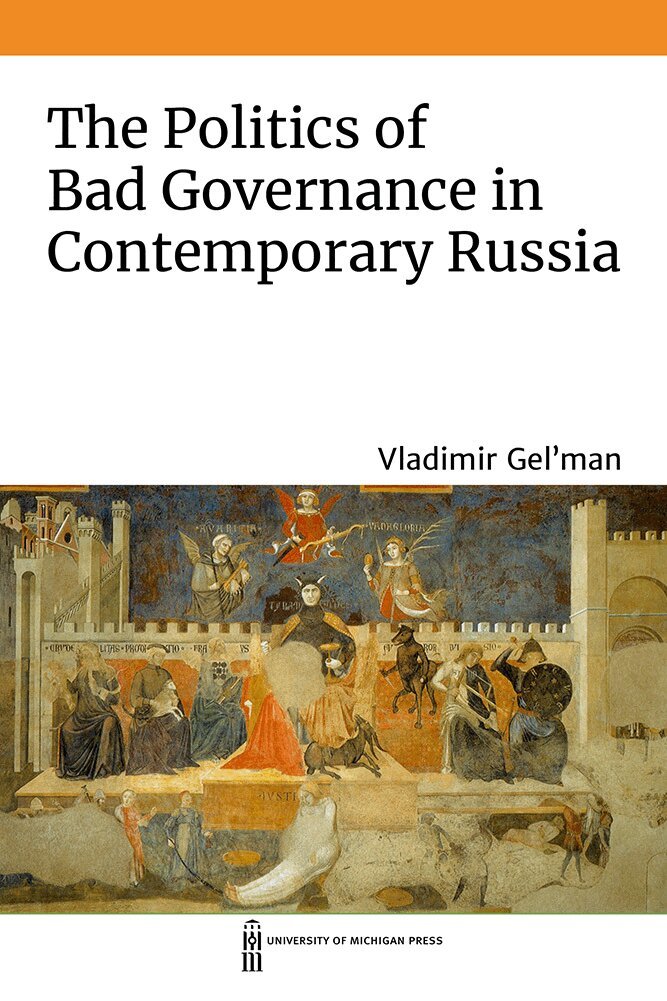
In this book, Vladimir Gel’man considers bad governance as a distinctive politico-economic order that is based on a set of formal and informal rules, norms, and practices quite different from those of good governance. Some countries are governed badly intentionally because the political leaders of these countries establish and maintain rules, norms, and practices that serve their own self-interests. Gel’man considers bad governance as a primarily agency-driven rather than structure-induced phenomenon. He addresses the issue of causes and mechanisms of bad governance in Russia and beyond from a different scholarly optics, which is based on a more general rationale of state-building, political regime dynamics, and policy-making. He argues that although these days, bad governance is almost universally perceived as an anomaly, at least in developed countries, in fact human history is largely a history of ineffective and corrupt governments, while the rule of law and decent state regulatory quality are relatively recent matters of modern history, when they emerged as side effects of state-building. Indeed, the picture is quite the opposite: bad governance is the norm, while good governance is an exception. The problem is that most rulers, especially if their time horizons are short and the external constraints on their behavior are not especially binding, tend to govern their domains in a predatory way because of the prevalence of short-term over long-term incentives. Contemporary Russia may be considered as a prime example of this phenomenon. Using an analysis of case studies of political and policy changes in Russia after the Soviet collapse, Gel’man discusses the logic of building and maintaining the politico-economic order of bad governance in Russia and paths of its possible transformation in a theoretical and comparative perspective.
936 kr
Skickas
In this book, Vladimir Gel’man considers bad governance as a distinctive politico-economic order that is based on a set of formal and informal rules, norms, and practices quite different from those of good governance. Some countries are governed badly intentionally because the political leaders of these countries establish and maintain rules, norms, and practices that serve their own self-interests. Gel’man considers bad governance as a primarily agency-driven rather than structure-induced phenomenon. He addresses the issue of causes and mechanisms of bad governance in Russia and beyond from a different scholarly optics, which is based on a more general rationale of state-building, political regime dynamics, and policy-making. He argues that although these days, bad governance is almost universally perceived as an anomaly, at least in developed countries, in fact human history is largely a history of ineffective and corrupt governments, while the rule of law and decent state regulatory quality are relatively recent matters of modern history, when they emerged as side effects of state-building. Indeed, the picture is quite the opposite: bad governance is the norm, while good governance is an exception. The problem is that most rulers, especially if their time horizons are short and the external constraints on their behavior are not especially binding, tend to govern their domains in a predatory way because of the prevalence of short-term over long-term incentives. Contemporary Russia may be considered as a prime example of this phenomenon. Using an analysis of case studies of political and policy changes in Russia after the Soviet collapse, Gel’man discusses the logic of building and maintaining the politico-economic order of bad governance in Russia and paths of its possible transformation in a theoretical and comparative perspective.
675 kr
Skickas inom 10-15 vardagar
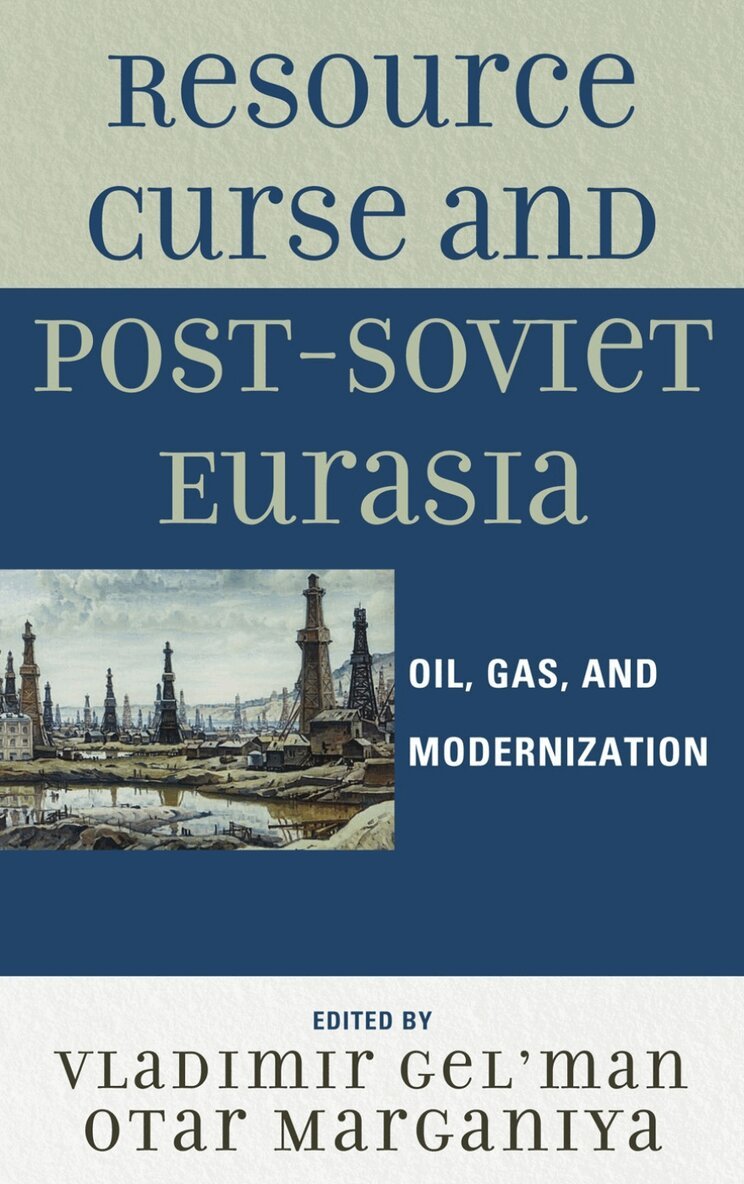
By the end of the 2000s, the term "resource curse" had become so widespread that it had turned into a kind of magic keyword, not only in the scholarly language of the social sciences, but also in the discourse of politicians, commentators and analysts all over the world-—like the term "modernization" in the early 1960s or "transition" in the early 1990s. In fact, the aggravation of many problems in the global economy and politics, against the background of the rally of oil prices in 2004–2008, became the environment for academic and public debates about the role of natural resources in general, and oil and gas in particular, in the development of various societies. The results of numerous studies do not give a clear answer to questions about the nature and mechanisms of the influence of the oil and gas abundance on the economic, political and social processes in various states and nations. However, the majority of scholars and observers agree that this influence in the most of countries is primarily negative.Resource Curse and Post-Soviet Eurasia: Oil, Gas, and Modernization is an in-depth analysis of the impact of oil and gas abundance on political, economic, and social developments of Russia and other post-Soviet states and nations (such as Kazakhstan and Azerbaijan). The chapters of the book systematically examine various effects of "resource curse" in different arenas such as state building, regime changes, rule of law, property rights, policy-making, interest representation, and international relations in theoretical, historical, and comparative perspectives. The authors analyze the role of oil and gas dependency in the evolution and subsequent collapse of the Soviet Union, authoritarian drift of post-Soviet countries, building of predatory state and pendulum-like swings of Russia from "state capture" of 1990s to "business capture" of 2000s, uneasy relationships between the state and special interest groups, and numerous problems of "geo-economics" of pipelines in post-Soviet Eurasia.
Reexamining Economic and Political Reforms in Russia, 1985–2000
Generations, Ideas, and Changes
Häftad, Engelska, 2017
612 kr
Skickas inom 10-15 vardagar
Reexamining Economic and Political Reforms in Russia, 1985–2000: Generations, Ideas, and Changes analyzes the impact of generational changes and ideational changes on major political and economic reforms conducted in Russia during the late twentieth century. This book examines how the policy agenda was shaped by the ideas of the generations’ representatives for the “sixtiers” and “seventiers.” Representatives of the generation of “sixtiers” conducted reforms from 1985 to 1991 and invested major efforts in political liberalization but did not pay enough attention to economic reforms. On the other hand, the reformers from the generation of “seventiers,” who were in charge of policy making from 1991 to 1998, were genuinely oriented toward market building but rather insensitive to the democratization of the political regime. This book explores how these differences in ideational agendas produced inconsistent and controversial outcomes from both stages of reforms.
1 703 kr
Skickas inom 10-15 vardagar
According to the Constitution of the Russian Federation, adopted in 1993, local autonomy is one of the fundamental principles of the constitutional system. The Politics of Local Government in Russia aims to provide a dedicated and comprehensive discussion of the pursuit of local self-government in contemporary Russia where "local" refers to the third tier of government beyond federal and regional governments. Some of the ablest scholars in the field focus on the existing institutional and social climate for municipal and district level government in Russia while placing recent reforms in a comparative and historical perspective.
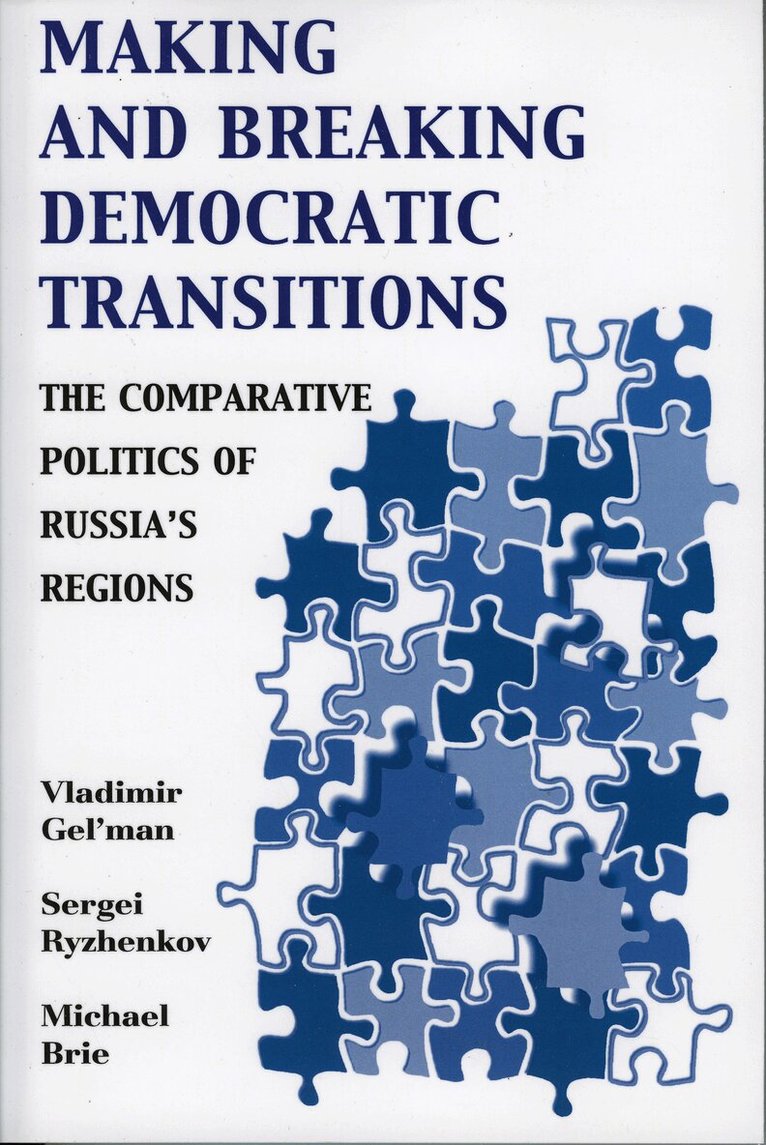
Making and Breaking Democratic Transitions
The Comparative Politics of Russia's Regions
Häftad, Engelska, 2005
789 kr
Skickas inom 5-8 vardagar
Focusing on the vastly different outcomes of post-Soviet regime transitions, this study explores why some societies have become more democratic and some have not. Based on in-depth comparative analyses, the book assesses political developments in six of Russia's regions (Saratov, Nizhnii Novgorod, Volgograd, Ryazan', Ul'yanovsk, and Tver' oblasts) since 1988. The authors consider the influence of Soviet governance systems on the emergence of cleavages and new actors in the post-Soviet period. They also analyze the impact of institutional changes on regional regimes and the success or failure of formal institutions as a framework for political competitiveness. Placing their detailed field data within the larger comparative and theoretical context of political transitions, the authors are able to explain the mixed outcomes of post-communist regime change in Russia and other post-Soviet nations. With its innovative model of path-contingent democratization and its new typology of political regimes and regime transitions, this book will be essential reading for all scholars of democracy.
576 kr
Skickas inom 10-15 vardagar
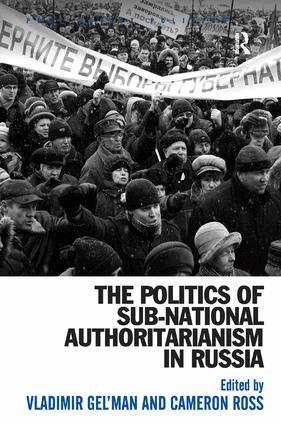
By the end of the 2000s Russia had become an increasingly authoritarian state, which was characterised by the following features: outrageously unfair and fraudulent elections, the existence of weak and impotent political parties, a heavily censored (often self-censored) media, weak rubber-stamping legislatures at the national and sub-national levels, politically subordinated courts, the arbitrary use of the economic powers of the state, and widespread corruption. However, this picture would be incomplete without taking into account the sub-national dimension of these subversive institutions and practices across the regions of the Russian Federation. After the collapse of the Soviet Union, sub-national political developments in Russia became highly diversified and the political map of Russia’s regions became multi-faceted. The period of 2000s demonstrated a drive on the part of the Kremlin to re-centralise politics and governance to the demise of newly-emerging democratic institutions at both the national and sub-national levels. Yet, federalism and regionalism remain key elements of the research agenda in Russian politics, and the overall political map of Russia’s regions is far from being monotonic. Rather, it is similar to a complex multi-piece puzzle, which can only be put together through skilful crafting. The 12 chapters in this collection are oriented towards the generation of more theoretically and empirically solid inferences and provide critical evaluations of the multiple deficiencies in Russia’s sub-national authoritarianism, including: principal-agent problems in the relations between the layers of the ’power vertical’, unresolved issues of regime legitimacy that have resulted from manipulative electoral practices, and the inefficient performance of regional and local governments. The volume brings together a team of international experts on Russian regional politics which includes top scholars from Britain, Canada, Russia and the USA.
663 kr
Skickas inom 7-10 vardagar
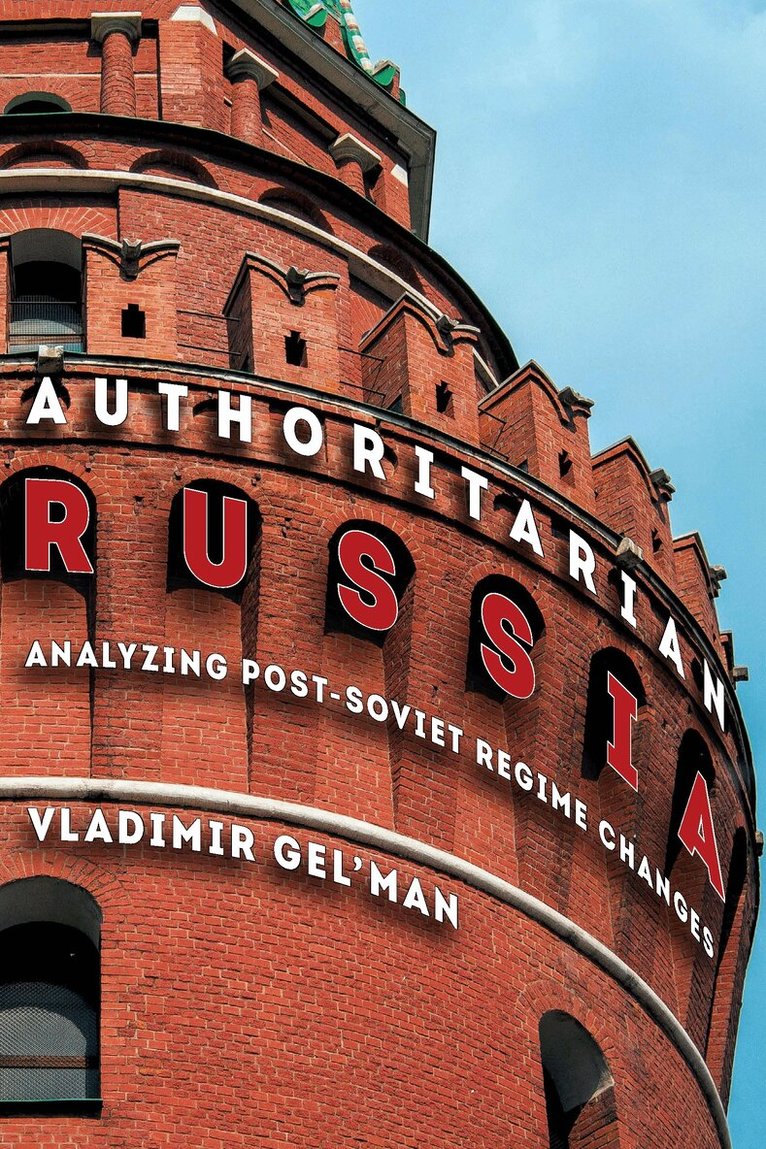
Russia today represents one of the major examples of the phenomenon of "electoral authoritarianism" which is characterized by adopting the trappings of democratic institutions (such as elections, political parties, and a legislature) and enlisting the service of the country's essentially authoritarian rulers. Why and how has the electoral authoritarian regime been consolidated in Russia? What are the mechanisms of its maintenance, and what is its likely future course? This book attempts to answer these basic questions.Vladimir Gel'man examines regime change in Russia from the collapse of the Soviet Union in 1991 to the present day, systematically presenting theoretical and comparative perspectives of the factors that affected regime changes and the authoritarian drift of the country. After the fall of the Soviet Union, Russia's national political elites aimed to achieve their goals by creating and enforcing of favorable "rules of the game" for themselves and maintaining informal winning coalitions of cliques around individual rulers. In the 1990s, these moves were only partially successful given the weakness of the Russian state and troubled post-socialist economy. In the 2000s, however, Vladimir Putin rescued the system thanks to the combination of economic growth and the revival of the state capacity he was able to implement by imposing a series of non-democratic reforms. In the 2010s, changing conditions in the country have presented new risks and challenges for the Putin regime that will play themselves out in the years to come.
671 kr
Skickas inom 10-15 vardagar
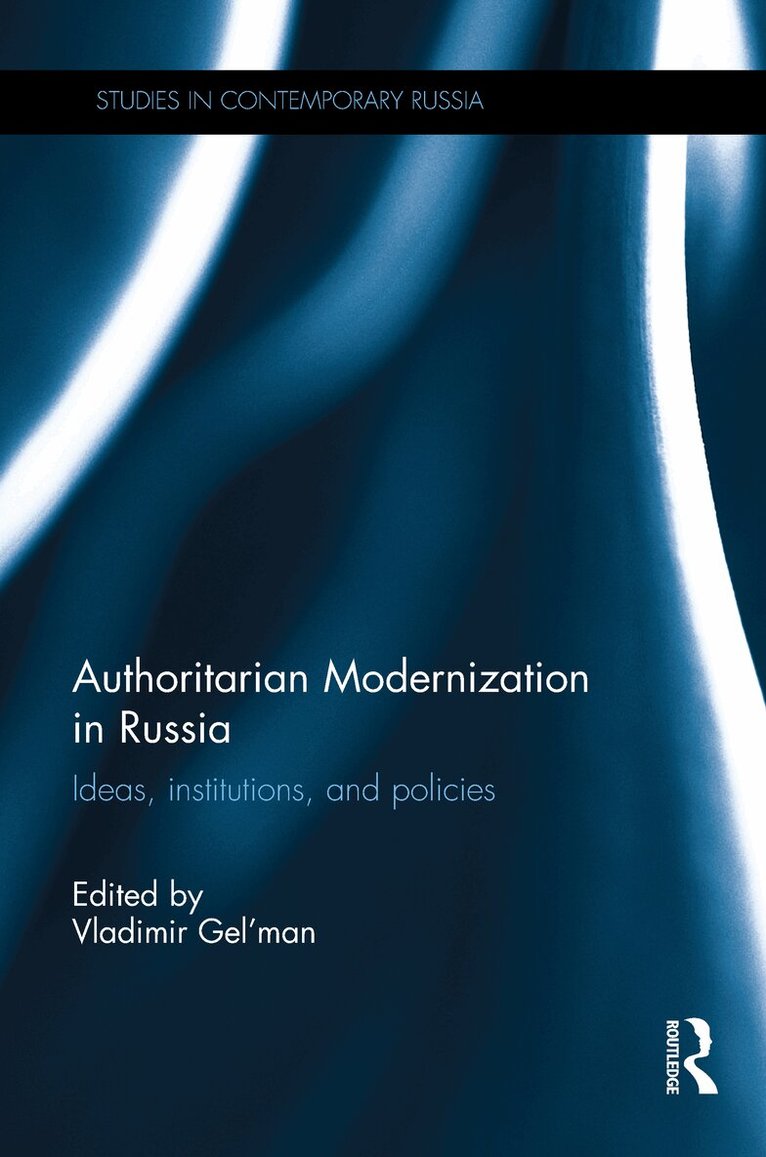
Post-Communist Russia is an instance of the phenomenon of authoritarian modernization project, which is perceived as a set of policies intended to achieve a high level of economic development, while political freedoms remain beyond the current modernization agenda or are postponed to a distant future. Why did Russia (unlike many countries of post-Communist Europe) pursue authoritarian modernization after the Soviet collapse? What is the ideational agenda behind this project and why does it dominate Russia’s post-Communist political landscape? What are the mechanisms of political governance, which maintain this project and how have they adopted and absorbed various democratic institutions and practices? Why has this project brought such diverse results in various policy arenas, and why have the consequences of certain policies become so controversial? Why, despite so many controversies, shortcomings and flaws, has this project remained attractive in the eyes of a large proportion of the Russian elite and ordinary citizens? This volume intended to place some of these questions on the research agenda and propose several answers, encouraging further discussions about the logic and mechanisms of the authoritarian modernization project in post-Communist Russia and its effects on Russia’s politics, economy, and society.
2 155 kr
Skickas inom 10-15 vardagar
Post-Communist Russia is an instance of the phenomenon of authoritarian modernization project, which is perceived as a set of policies intended to achieve a high level of economic development, while political freedoms remain beyond the current modernization agenda or are postponed to a distant future. Why did Russia (unlike many countries of post-Communist Europe) pursue authoritarian modernization after the Soviet collapse? What is the ideational agenda behind this project and why does it dominate Russia’s post-Communist political landscape? What are the mechanisms of political governance, which maintain this project and how have they adopted and absorbed various democratic institutions and practices? Why has this project brought such diverse results in various policy arenas, and why have the consequences of certain policies become so controversial? Why, despite so many controversies, shortcomings and flaws, has this project remained attractive in the eyes of a large proportion of the Russian elite and ordinary citizens? This volume intended to place some of these questions on the research agenda and propose several answers, encouraging further discussions about the logic and mechanisms of the authoritarian modernization project in post-Communist Russia and its effects on Russia’s politics, economy, and society.
687 kr
Skickas inom 7-10 vardagar
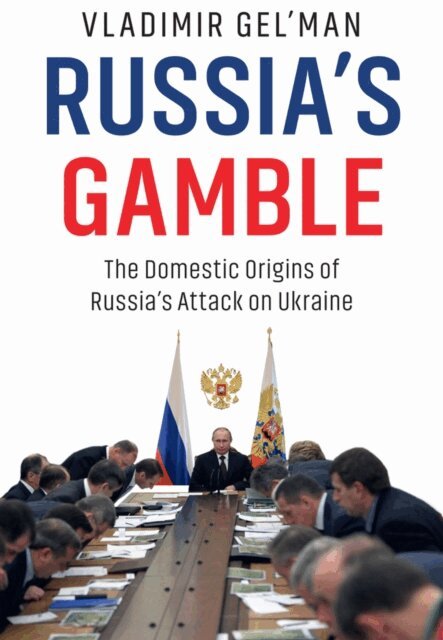
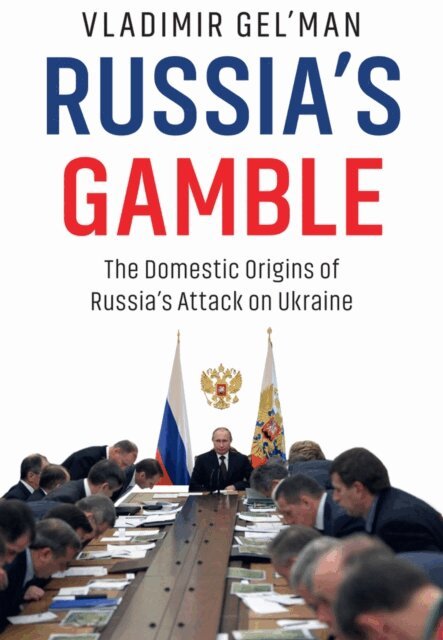
In February 2022, Russia launched a full-scale military assault on Ukraine, aimed at re-establishing Russian control over the Ukrainian state, economy and society, similar in many ways to the Soviet period. This goal, however, was not achieved, and most likely will not be achieved in the future. Rather, the Russian “special military operation” has resulted in extraordinary disasters and losses for Russia, for Ukraine, and for the entire world. This book examines the origins of the Russian assault on Ukraine and offers an explanation of why it has not achieved its aims. Why did Russian elites and leaders propose, prepare for and implement the assault on Ukraine in such a poorly prepared and heavily destructive way? In seeking to answer these questions, Gel’man focuses on Russia’s domestic agenda and its dynamics after the collapse of the Soviet Union. The personalist nature of the Russian authoritarian political regime, its vulnerability to bad governance, major misperceptions by the Russian elites and leadership, and reliance of the Kremlin upon previous experience of Russian impunity were all key factors that led to Russia’s fateful decision to attack Ukraine and have continued to shape Russia’s mistake-ridden conduct of the war since then. Gel’man also considers what lessons can be learned from Russia’s military assault for understanding the global agenda and for the study of domestic and international politics in the twenty-first century. This book, written by a leading expert on Russian politics, will be of great value to students and scholars in politics and to anyone interested in Russia and in the causes and consequences of the war against Ukraine.
244 kr
Skickas inom 7-10 vardagar
In February 2022, Russia launched a full-scale military assault on Ukraine, aimed at re-establishing Russian control over the Ukrainian state, economy and society, similar in many ways to the Soviet period. This goal, however, was not achieved, and most likely will not be achieved in the future. Rather, the Russian “special military operation” has resulted in extraordinary disasters and losses for Russia, for Ukraine, and for the entire world. This book examines the origins of the Russian assault on Ukraine and offers an explanation of why it has not achieved its aims. Why did Russian elites and leaders propose, prepare for and implement the assault on Ukraine in such a poorly prepared and heavily destructive way? In seeking to answer these questions, Gel’man focuses on Russia’s domestic agenda and its dynamics after the collapse of the Soviet Union. The personalist nature of the Russian authoritarian political regime, its vulnerability to bad governance, major misperceptions by the Russian elites and leadership, and reliance of the Kremlin upon previous experience of Russian impunity were all key factors that led to Russia’s fateful decision to attack Ukraine and have continued to shape Russia’s mistake-ridden conduct of the war since then. Gel’man also considers what lessons can be learned from Russia’s military assault for understanding the global agenda and for the study of domestic and international politics in the twenty-first century. This book, written by a leading expert on Russian politics, will be of great value to students and scholars in politics and to anyone interested in Russia and in the causes and consequences of the war against Ukraine.