W. George Lovell – författare
Visar alla böcker från författaren W. George Lovell. Handla med fri frakt och snabb leverans.
12 produkter
12 produkter
Del 5 - McGill-Queen's Iberian and Latin American Cultures Series
Death in the Snow
Pedro de Alvarado and the Illusive Conquest of Peru
Inbunden, Engelska, 2022
450 kr
Skickas inom 5-8 vardagar
Pedro de Alvarado is best known as the right-hand man of Hernando Cortés in the conquest of Mexico (1519–21) and the ruthless conqueror of Guatemala some years later. Far less known is his intent to intrude in the conquest of Peru and lay claim to Quito, a wealthy domain in the far north of the Inca Empire. To this end, Alvarado constructed a massive fleet, which sailed south from Central America to what is now Ecuador, making landfall on 25 February 1534.Engaging both the European and Indigenous contexts in which Alvarado operated, George Lovell illuminates this gap in the record, narrating a dramatic story of greed and hubris. Upon reaching Ecuador, Alvarado’s formidable entourage – some five hundred Spanish combatants and two thousand Indigenous conscripts – marched from the Pacific coast to the Andean sierra. Though Quito was his intended destination, he never made it. During a treacherous transit across the mountains, Alvarado’s party was engulfed by heavy snowfall and numbing cold, which proved the expedition’s undoing. Those who survived the ordeal discovered that other Spaniards – Diego de Almagro and Sebastián de BeLalcázar, acting in allegiance with Francisco Pizarro – had reached Quito before them, thereby claiming first right of conquest. Believing he had no option, if strife between rival sides was to be avoided, Alvarado sold his costly machinery of war – men, horses, weaponry, and ships – to those who had beaten him to the prize. All but ruined, he returned humiliated to Central America.Death in the Snow brings to light the delusions of one headstrong conquistador and mourns the loss of untold Indigenous lives, casualties of Alvarado’s lust for fame and fortune.
Del 21 - Latin American Originals
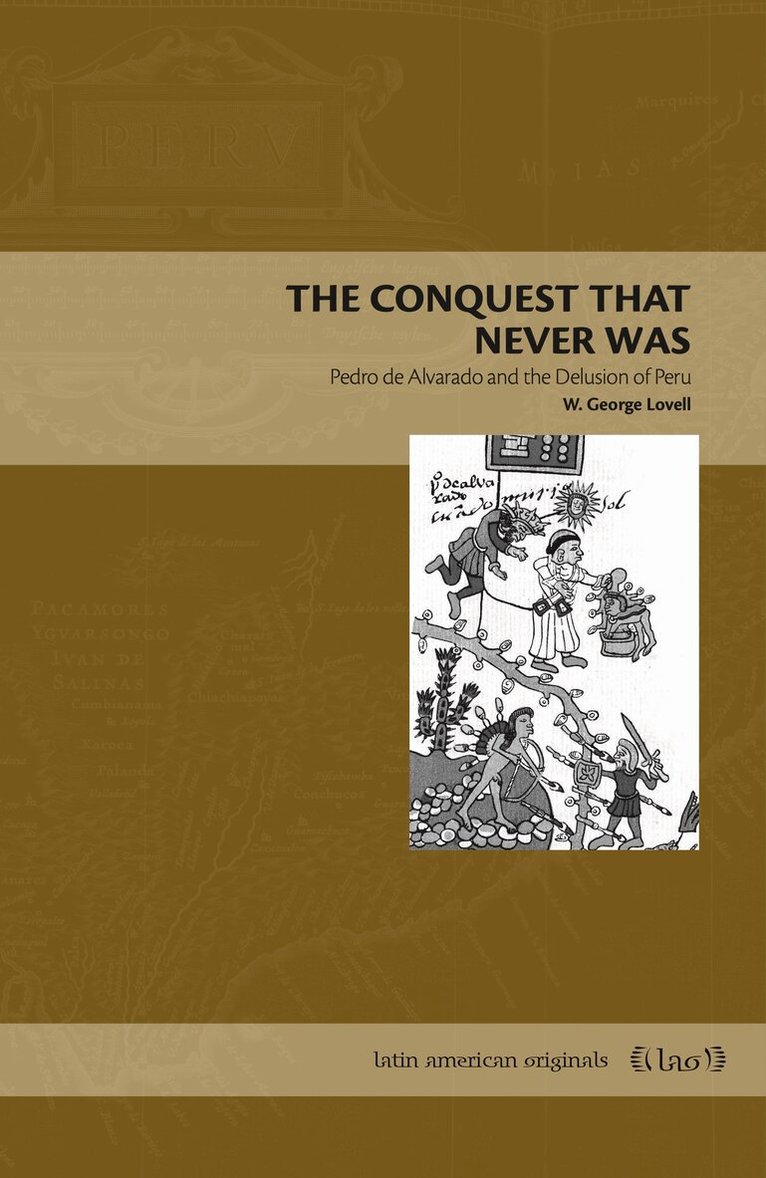
Conquest That Never Was
Pedro de Alvarado and the Delusion of Peru
Häftad, Engelska, 2026
337 kr
Kommande
The Conquest That Never Was uncovers one of the most ambitious but disastrous campaigns of the early colonial period. Pedro de Alvarado—best known as Cortés’s lieutenant in Mexico and later as the conqueror of Guatemala—sought to extend his fame and fortune by seizing Quito in the northern Inca Empire. Instead, his massive fleet and army met ruin in the high Andes, leaving Alvarado humiliated and forcing him to transfer his forces to rival conquistadors.This volume traces Alvarado’s career after Guatemala, focusing on the ill-fated expedition of 1534 as well as his unrealized license to conquer the Spice Islands, his involvement in the Spanish conquest of Ecuador, and his eventual death in battle in Mexico. Drawing on transatlantic correspondence, legal testimony, Spanish chronicles, and a Maya-authored history, Lovell reconstructs both the trajectory of Alvarado’s campaigns and the mind of a conquistador driven by greed and glory. Vivid descriptions carry readers from Guatemala’s rainforests to the snowbound passes of the Andes, revealing how fragile imperial ambitions could be in practice.By documenting Alvarado’s failed bid to contest Pizarro in Peru, The Conquest That Never Was complicates the triumphalist narrative of Spanish expansion. It illuminates the contradictions, rivalries, and violence at the heart of the colonial project, while foregrounding Indigenous labor and suffering in conquest. Designed for upper-level undergraduate and graduate courses, the book also offers scholars of Latin American history, historical geography, and the Andes a gripping case study of imperial aspiration and collapse.
Del 21 - Latin American Originals
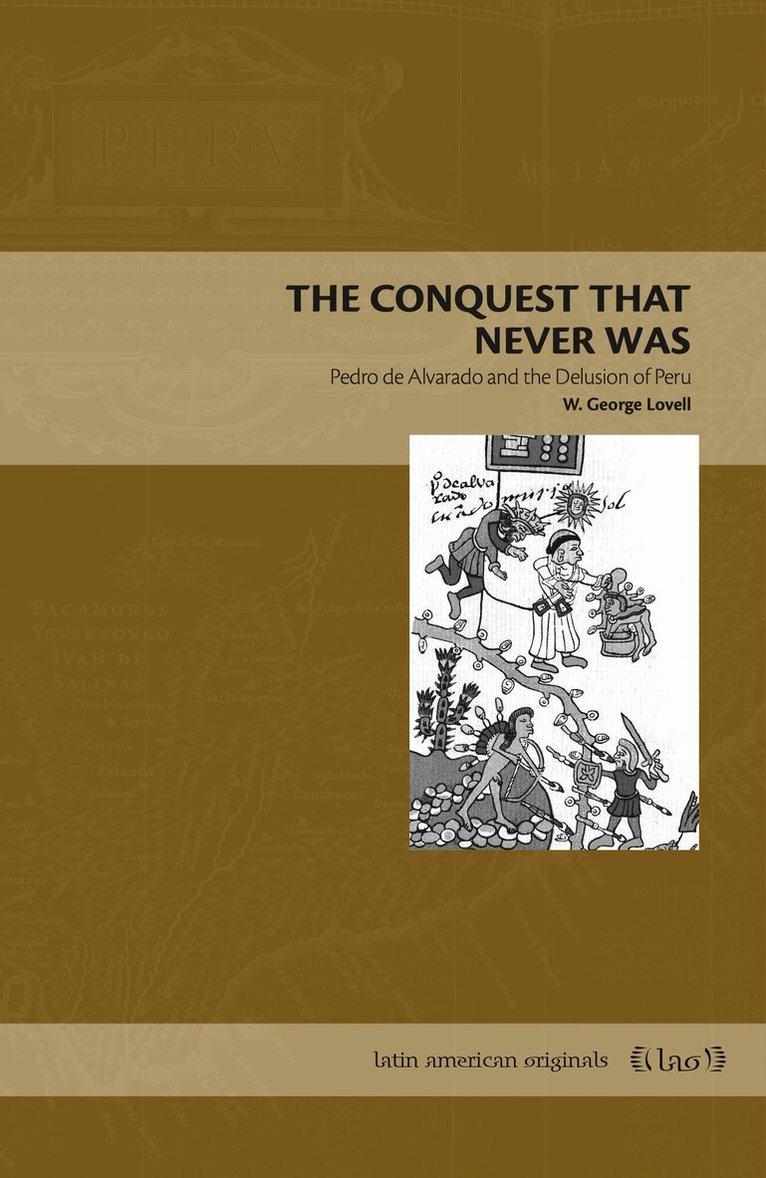
Conquest That Never Was
Pedro de Alvarado and the Delusion of Peru
Inbunden, Engelska, 2026
1 080 kr
Kommande
The Conquest That Never Was uncovers one of the most ambitious but disastrous campaigns of the early colonial period. Pedro de Alvarado—best known as Cortés’s lieutenant in Mexico and later as the conqueror of Guatemala—sought to extend his fame and fortune by seizing Quito in the northern Inca Empire. Instead, his massive fleet and army met ruin in the high Andes, leaving Alvarado humiliated and forcing him to transfer his forces to rival conquistadors.This volume traces Alvarado’s career after Guatemala, focusing on the ill-fated expedition of 1534 as well as his unrealized license to conquer the Spice Islands, his involvement in the Spanish conquest of Ecuador, and his eventual death in battle in Mexico. Drawing on transatlantic correspondence, legal testimony, Spanish chronicles, and a Maya-authored history, Lovell reconstructs both the trajectory of Alvarado’s campaigns and the mind of a conquistador driven by greed and glory. Vivid descriptions carry readers from Guatemala’s rainforests to the snowbound passes of the Andes, revealing how fragile imperial ambitions could be in practice.By documenting Alvarado’s failed bid to contest Pizarro in Peru, The Conquest That Never Was complicates the triumphalist narrative of Spanish expansion. It illuminates the contradictions, rivalries, and violence at the heart of the colonial project, while foregrounding Indigenous labor and suffering in conquest. Designed for upper-level undergraduate and graduate courses, the book also offers scholars of Latin American history, historical geography, and the Andes a gripping case study of imperial aspiration and collapse.
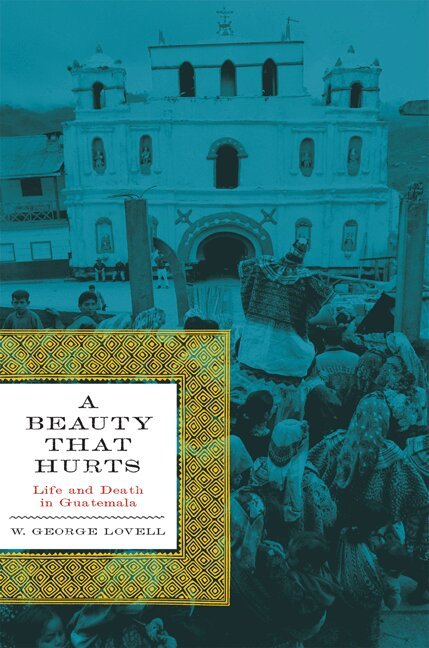
Häftad, Engelska, 2010
243 kr
Skickas
Though a 1996 peace accord brought a formal end to a conflict that had lasted for thirty-six years, Guatemala's violent past continues to scar its troubled present and seems destined to haunt its uncertain future. George Lovell brings to this revised and expanded edition of A Beauty That Hurts decades of fieldwork throughout Guatemala, as well as archival research. He locates the roots of conflict in geographies of inequality that arose during colonial times and were exacerbated by the drive to develop Guatemala's resources in the nineteenth and early twentieth centuries. The lines of confrontation were entrenched after a decade of socioeconomic reform between 1944 and 1954 saw modernizing initiatives undone by a military coup backed by U.S. interests and the CIA. A United Nations Truth Commission has established that civil war in Guatemala claimed the lives of more that 200,000 people, the vast majority of them indigenous Mayas. Lovell weaves documentation about what happened to Mayas in particular during the war years with accounts of their difficult personal situations. Meanwhile, an intransigent elite and a powerful military continue to benefit from the inequalities that triggered armed insurrection in the first place. Weak and corrupt civilian governments fail to impose the rule of law, thus ensuring that Guatemala remains an embattled country where postwar violence and drug-related crime undermine any semblance of orderly, peaceful life.
Inbunden, Engelska, 2019
2 151 kr
Skickas inom 10-15 vardagar
Research on the Central American colonial experience—long overshadowed by the scholarly focus on Mexico and Peru—has begun to blossom, greatly expanding our knowledge of land and life in the region under Spanish rule. The first bibliography of its kind, Demography and Empire offers a comprehensive survey of recent literature in Spanish and i
Häftad, Engelska, 2020
629 kr
Skickas inom 10-15 vardagar
The first bibliography of its kind, Demography and Empire offers a comprehensive survey of recent literature in Spanish and in English pertaining to the population history of colonial Central America.
Häftad, Engelska, 2001
404 kr
Skickas inom 3-6 vardagar
In the wake of European expansion, disease outbreaks in the New World caused the greatest loss of life known to history. Post-contact Native American inhabitants succumbed in staggering numbers to maladies such as smallpox, measles, influenza, and typhus, against which they had no immunity. A collection of case studies by historians, geographers, and anthropologists, ""Secret Judgments of God"" discusses how diseases with Old World origins devastated vulnerable native populations throughout Spanish America. In their preface to the paperback edition, the editors discuss the ongoing, often heated debate about contact population history.
Inbunden, Engelska, 2013
456 kr
Skickas inom 10-15 vardagar
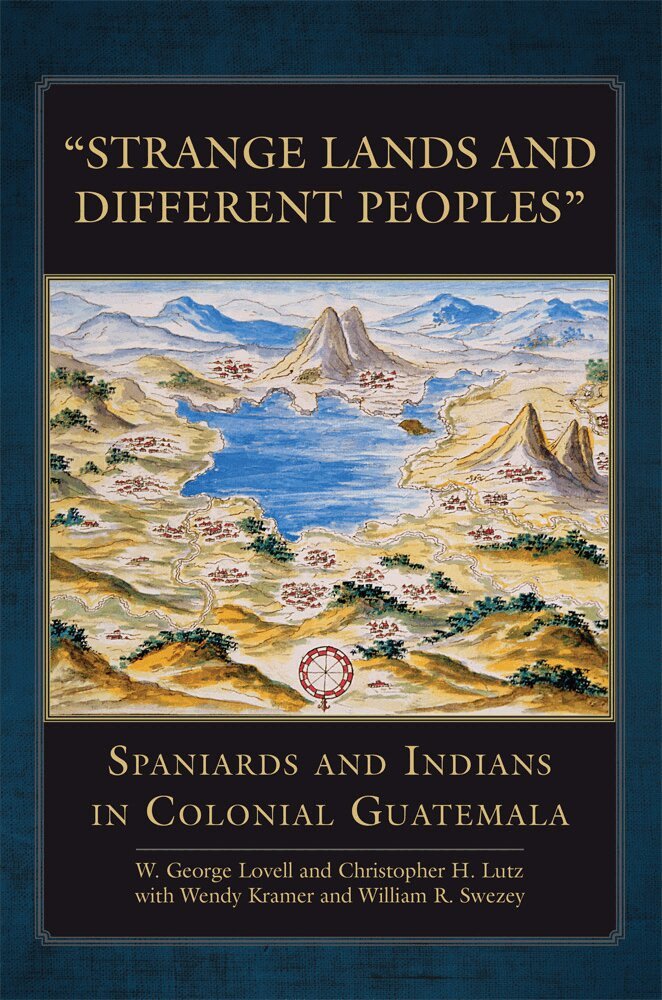
Guatemala emerged from the clash between Spanish invaders and Maya cultures that began five centuries ago. The conquest of these ""rich and strange lands,"" as Hernán Cortés called them, and their ""many different peoples"" was brutal and prolonged. ""Strange Lands and Different Peoples"" examines the myriad ramifications of Spanish intrusion, especially Maya resistance to it and the changes that took place in native life because of it. The studies assembled here, focusing on the first century of colonial rule (1524-1624), discuss issues of conquest and resistance, settlement and colonization, labor and tribute, and Maya survival in the wake of Spanish invasion. The authors reappraise the complex relationship between Spaniards and Indians, which was marked from the outset by mutual feelings of resentment and mistrust. While acknowledging the pivotal role of native agency, the authors also document the excesses of Spanish exploitation and the devastating impact of epidemic disease. Drawing on research findings in Spanish and Guatemalan archives, they offer fresh insight into the Kaqchikel Maya uprising of 1524, showing that despite strategic resistance, colonization imposed a burden on the indigenous population more onerous than previously thought. Guatemala remains a deeply divided and unjust society, a country whose current condition can be understood only in light of the colonial experiences that forged it. Affording readers a critical perspective on how Guatemala came to be, ""Strange Lands and Different Peoples"" shows the events of the past to have enduring contemporary relevance.
Inbunden, Engelska, 2020
372 kr
Skickas inom 10-15 vardagar
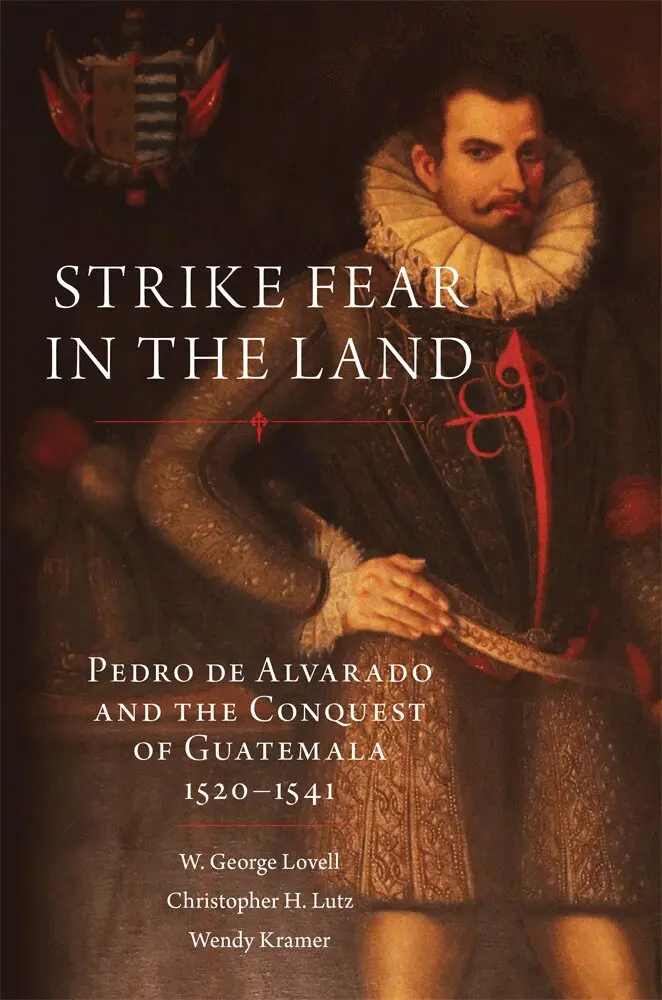
The conquest of Guatemala was brutal, prolonged and complex, fraught with intrigue and deception, and not at all clear-cut. Yet views persist of it as an armed confrontation whose stakes were evident and whose outcomes were decisive, especially in favor of the Spaniards. A critical reappraisal is long overdue, one that calls for us to reconsider events and circumstances in the light of not only new evidence but also keener awareness of indigenous roles in the drama.While acknowledging the prominent role played by Pedro de Alvarado (1485-1541), Strike Fear in the Land reexamines the conquest to give us a greater appreciation of indigenous involvement in it, and sustained opposition to it. Authors W. George Lovell, Christopher H. Lutz, and Wendy Kramer develop a fresh perspective on Alvarado as well as the alliances forged with native groups that facilitated Spanish objectives. The book reveals, for instance, that during the years most crucial to the conquest, Alvarado was absent from Guatemala more often than he was present; he relied on his brother, Jorge de Alvarado, to act in his stead. A pact with the Kaqchikel Maya was also not nearly as solid or long-lived as previously thought, as Alvarado's erstwhile allies soon turned against the Spaniards, fomenting a prolonged rebellion. Even the story of the K'iche' leader Tecún Umán, hailed in Guatemala as a national hero who fronted native resistance, undergoes significant revision.Strike Fear in the Land is an arresting saga of personalities and controversies, conveying as never before the turmoil of this pivotal period in Mesoamerican history.
Del 271 - Civilization of the American Indian Series
Strange Lands and Different Peoples
Spaniards and Indians in Colonial Guatemala
Häftad, Engelska, 2021
273 kr
Skickas inom 10-15 vardagar
Guatemala emerged from the clash between Spanish invaders and Maya cultures that began five centuries ago. The conquest of these 'rich and strange lands,' as Hernán Cortés called them, and their 'many different peoples' was brutal and prolonged. 'Strange Lands and Different Peoples' examines the myriad ramifications of Spanish intrusion, especially Maya resistance to it and the changes that took place in native life because of it. The studies assembled here, focusing on the first century of colonial rule (1524-1624), discuss issues of conquest and resistance, settlement and colonization, labor and tribute, and Maya survival in the wake of Spanish invasion. The authors reappraise the complex relationship between Spaniards and Indians, which was marked from the outset by mutual feelings of resentment and mistrust. While acknowledging the pivotal role of native agency, the authors also document the excesses of Spanish exploitation and the devastating impact of epidemic disease. Drawing on research findings in Spanish and Guatemalan archives, they offer fresh insight into the Kaqchikel Maya uprising of 1524, showing that despite strategic resistance, colonization imposed a burden on the indigenous population more onerous than previously thought. Guatemala remains a deeply divided and unjust society, a country whose current condition can be understood only in light of the colonial experiences that forged it. Affording readers a critical perspective on how Guatemala came to be, 'Strange Lands and Different Peoples' shows the events of the past to have enduring contemporary relevance.
Häftad, Engelska, 2022
245 kr
Skickas inom 10-15 vardagar
The conquest of Guatemala was brutal, prolonged and complex, fraught with intrigue and deception, and not at all clear-cut. Yet views persist of it as an armed confrontation whose stakes were evident and whose outcomes were decisive, especially in favor of the Spaniards. A critical reappraisal is long overdue, one that calls for us to reconsider events and circumstances in the light of not only new evidence but also keener awareness of indigenous roles in the drama.While acknowledging the prominent role played by Pedro de Alvarado (1485–1541), Strike Fear in the Land reexamines the conquest to give us a greater appreciation of indigenous involvement in it, and sustained opposition to it. Authors W. George Lovell, Christopher H. Lutz, and Wendy Kramer develop a fresh perspective on Alvarado as well as the alliances forged with native groups that facilitated Spanish objectives. The book reveals, for instance, that during the years most crucial to the conquest, Alvarado was absent from Guatemala more often than he was present; he relied on his brother, Jorge de Alvarado, to act in his stead. A pact with the Kaqchikel Maya was also not nearly as solid or long-lived as previously thought, as Alvarado’s erstwhile allies soon turned against the Spaniards, fomenting a prolonged rebellion. Even the story of the K’iche’ leader TecÚn UmÁn, hailed in Guatemala as a national hero who fronted native resistance, undergoes significant revision.Strike Fear in the Land is an arresting saga of personalities and controversies, conveying as never before the turmoil of this pivotal period in Mesoamerican history.
Häftad, Engelska, 2009
491 kr
Skickas inom 3-6 vardagar
This translation of Severo MartÍnez PelÁez’s La Patria del Criollo, first published in Guatemala in 1970, makes a classic, controversial work of Latin American history available to English-language readers. MartÍnez PelÁez was one of Guatemala’s foremost historians and a political activist committed to revolutionary social change. La Patria del Criollo is his scathing assessment of Guatemala’s colonial legacy. MartÍnez PelÁez argues that Guatemala remains a colonial society because the conditions that arose centuries ago when imperial Spain held sway have endured. He maintains that economic circumstances that assure prosperity for a few and deprivation for the majority were altered neither by independence in 1821 nor by liberal reform following 1871. The few in question are an elite group of criollos, people of Spanish descent born in Guatemala; the majority are predominantly Maya Indians, whose impoverishment is shared by many mixed-race Guatemalans. MartÍnez PelÁez asserts that “the coffee dictatorships were the full and radical realization of criollo notions of the patria.” This patria, or homeland, was one that criollos had wrested from Spaniards in the name of independence and taken control of based on claims of liberal reform. He contends that since labor is needed to make land productive, the exploitation of labor, particularly Indian labor, was a necessary complement to criollo appropriation. His depiction of colonial reality is bleak, and his portrayal of Spanish and criollo behavior toward Indians unrelenting in its emphasis on cruelty and oppression. MartÍnez PelÁez felt that the grim past he documented surfaces each day in an equally grim present, and that confronting the past is a necessary step in any effort to improve Guatemala’s woes. An extensive introduction situates La Patria del Criollo in historical context and relates it to contemporary issues and debates.