W. W. Sawyer – författare
Visar alla böcker från författaren W. W. Sawyer. Handla med fri frakt och snabb leverans.
6 produkter
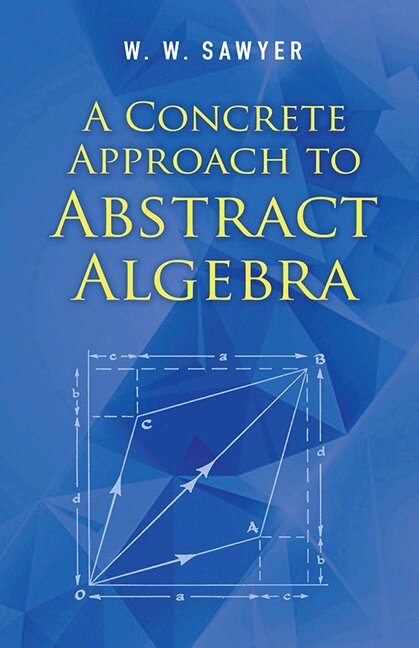
Concrete Approach to Abstract Algebra
Av W. W. Sawyer
Häftad, 2018
139 kr
Tillfälligt slut
Brief, clear, and well written, this introductory treatment bridges the gap between traditional and modern algebra. A carefully devised progression from the concrete to the abstract demystifies the subject, offering worked examples and to-the-point explanations. The text is supplemented with …
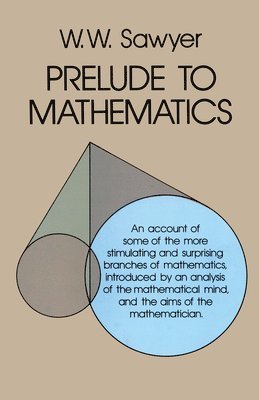
Prelude to Mathematics
Av W. W. Sawyer
Häftad, 2011
113 kr
Lägg i varukorg
"No mathematician can be a complete mathematician unless he is also something of a poet." – K. WeierstrassIn this lively and stimulating account, noted mathematician and educator W. W. Sawyer (Professor Emeritus, University of Toronto) defines mathematics as "the classification and study of all …
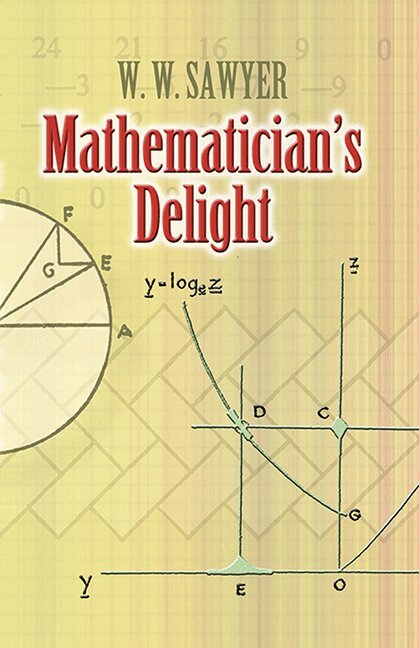
Mathematician's Delight
Av W. W. Sawyer
Häftad, 2007
127 kr
Lägg i varukorg
"Recommended with confidence" by The Times Literary Supplement, this lively survey starts with arithmetic and algebra and gradually proceeds to trigonometry and calculus. The author, who is internationally renowned for his innovative teaching methods, offers insights into the pleasures of …
An Engineering Approach to Linear Algebra
Av W. W. Sawyer
Häftad, 2009
797 kr
Lägg i varukorg
Professor Sawyer's book is based on a course given to the majority of engineering students in their first year at Toronto University. Its aim is to present the important ideas in linear algebra to students of average ability whose principal interests lie outside the field of mathematics; as such it …