Wadood Y. Hamad - Böcker
Visar alla böcker från författaren Wadood Y. Hamad. Handla med fri frakt och snabb leverans.
4 produkter
4 produkter
1 593 kr
Skickas inom 10-15 vardagar
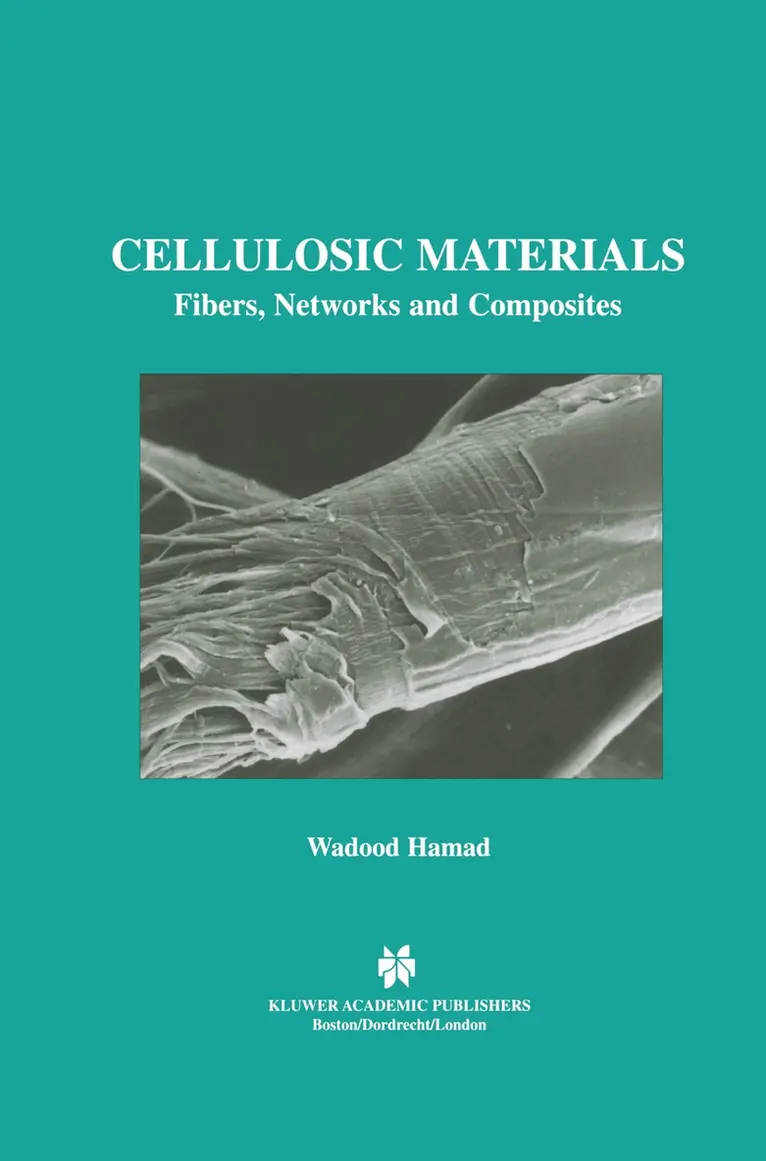
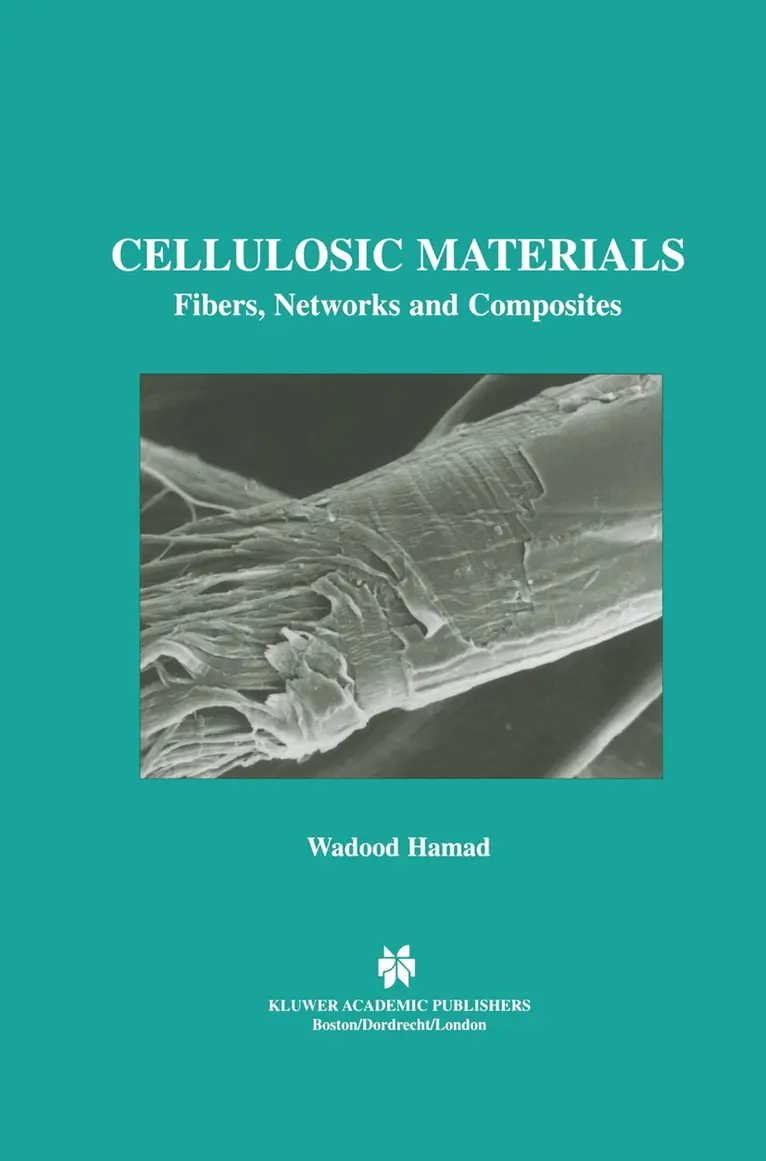
The objectives of this book are twofold: to provide a thorough examination of the materials science of cellulosic fibres with emphasis on the characterization of structure-property relations; and to advance knowledge of how to best analyze cellulosic fibrous networks and composites, and, ultimately, engineer "novel" cellulose-based systems of superior performance and functionality. The design of new materials through the study of living systems, or bio-imitation, is burgeoning to become an established field, generally referred to as biomimetics. The latter, as with materials science in general, prominently features multi-disciplinarity where new developments in mathematics, physics, chemistry and engineering continue to inspire novel areas of research and development. The book is structured in five chapters which provide a sequential treatment of the running theme: deformation mechanics and the physical, morphological and mechanical characterization of native cellulose fibers networks and composites. The heart of the book is chapter 3, "Damage Accumulation in Fibres", which treats the experimental methodology for fatigue testing of single fibers and the engendered results.In-depth examinations of the morphology, structure and chemical composition of native cellulose fibres, and the mechanics of deformation in these natural composite fibres are proffered in chapters 1 and 2, respectively. The fourth chapter, "Fractal Simulation of Crack Propagation", presents a fractal-based approach to modelling damage accumulation in materials. Fractals lend themselves well to modelling such randomly-oriented phenomena as crack propagation and fracture. The last chapter, "Fibrous Structures: Networks and Composites", comprises analytical approaches for handling networks and composites.
Bio–derived Electronic and Photonic Materials
Cellulose Nanocrystals and Beyond
Inbunden, Engelska, 2022
1 768 kr
Kommande
1 437 kr
Skickas inom 7-10 vardagar
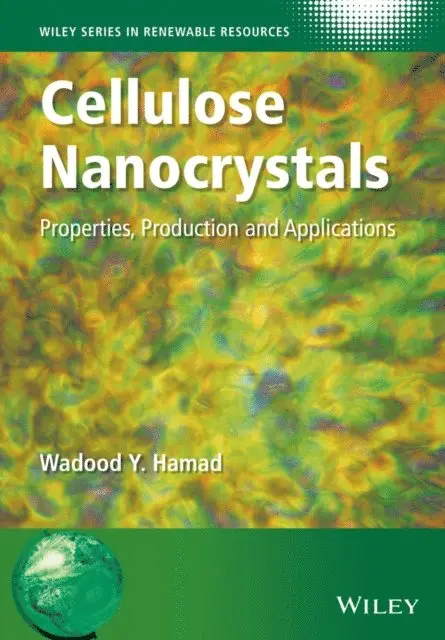
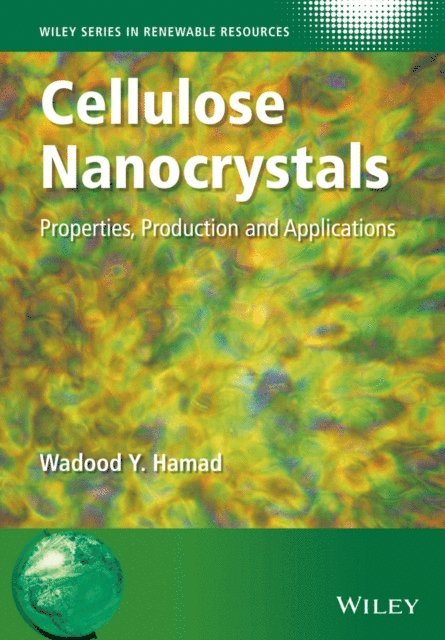
Research into cellulose nanocrystals is currently in an exponential growth phase, with research into potential applications now strengthened by recent advances in nanomanufacturing. The possibility of routine commercial production of these advanced materials is now becoming a reality.Cellulose Nanocrystals: Properties, Production and Applications provides an in-depth overview of the materials science, chemistry and physics of cellulose nanocrystals, and the technical development of advanced materials based on cellulose nanocrystals for industrial and medical applications. Topics covered include: A comprehensive treatment of the structure, morphology and synthesis of cellulose nanocrystals.The science and engineering of producing cellulose nanocrystals and the challenges involved in nanomanufacturing on a large industrial scale.Surface/interface modifications of cellulose nanocrystals for the development of novel biomaterials with attractive structural and functional properties.The scientific bases for developing cellulose-based nanomaterials with advanced functionalities for industrial/medical applications and consumer products.Discussions on the (i) reinforcing potential of cellulose nanocrystals in polymer nanocomposites, (ii) utilization of these nanocrystals as efficient templates for developing tunable photonic materials, as well as (iii) applications in sustainable electronics and biomedicine.Cellulose Nanocrystals: Properties, Production and Applications will appeal to audiences in the physical, chemical and biological sciences as well as engineering disciplines. It will be of critical interest to industrialists seeking to develop sustainable new materials for the advanced industrial economies of the 21st century, ranging from adaptive "smart" packaging materials, to new chiral, mesoporous materials for optoelectronics and photonics, to high-performance nanocomposites for structural applications.
1 593 kr
Skickas inom 10-15 vardagar
The objectives of this book are twofold: 1. To provide a thorough examination of the materials science of cellulosic fibers with emphasis on the characterization of structure-property relations, and 2. To advance knowledge of how to best analyze cellulosic fibrous networks and composites, and, ultimately, engineer "novel" cellulose-based systems of superior performance and functionality. The design of new materials through the study of living systems, or bio-imitation, is burgeoning to become an established field, generally referred to as biomimetics. The latter, as with materials science, in general, prominently features multi-disciplinarity where new developments in mathematics, physics, chemistry and engineering continue to inspire novel areas of research and development. The book is structured in five chapters which provide a sequential treatment of the running theme: deformation mechanics and the physical, morphological and mechanical characterization of native cellulose fibers networks and composites. The heart of the book is Chapter 3, Damage Accumulation in Fibers, which treats the experimental methodology for fatigue testing of single fibers and the engendered results. In-depth examinations of the morphology, structure and chemical composition of native cellulose fibers, and the mechanics of deformation in these natural composite fibers are proffered in Chapters 1 and 2, respectively. The fourth chapter, Fractal Simulation of Crack Propagation, presents a fractal-based approach to modeling damage accumulation in materials. Fractals lend themselves well to modeling such randomly-oriented phenomena as crack propagation and fracture. The last chapter, Fibrous Structures: Networks and Composites, comprises analytical approaches for handling networks and composites.