Wayne Horowitz – författare
Visar alla böcker från författaren Wayne Horowitz. Handla med fri frakt och snabb leverans.
7 produkter
Mesopotamian Cosmic Geography
Häftad, 2011
902 kr
Lägg i varukorg
In this comprehensive study, Horowitz examines all of the extant Mesopotamian texts (both Sumerian and Akkadian) relating to the ideas of the physical universe and its constituent parts (Heaven, Earth, subterranean waters, underworld). The author shows that the Mesopotamian view of the universe was …
Cuneiform in Canaan
The Next Generation
Av Wayne Horowitz, Takayoshi Oshima m. fl.
Inbunden, 2018
661 kr
Lägg i varukorg
One of the earliest surviving manifestations of the cultural heritage of the Land of Israel in ancient times is the use of the cuneiform script from the Middle Bronze Age to the Iron Age. Cuneiform in Canaan: The Next Generation presents an updated version of the original Cuneiform in Canaan volume …
Cuneiform Uranology Texts
Drawing the Constellations, Transactions, American Philosophical Society (Vol. 107, Part 2)
Av Eckart Frahm, John Steele m. fl.
Häftad, 2018
501 kr
Lägg i varukorg
Living the Lunar Calendar
Av John M. Steele, Jonathan Ben-Dov m. fl.
E-bok, 2021
126 kr
Lägg i varukorg
Lunar calendars suffer from an inherent uncertainty in the length of each month and the number of months in the year. Variable atmospheric conditions, weather and the acuity of the eye of an observer mean that the first sighting of the new moon crescent can never be known in advance. Calendars …
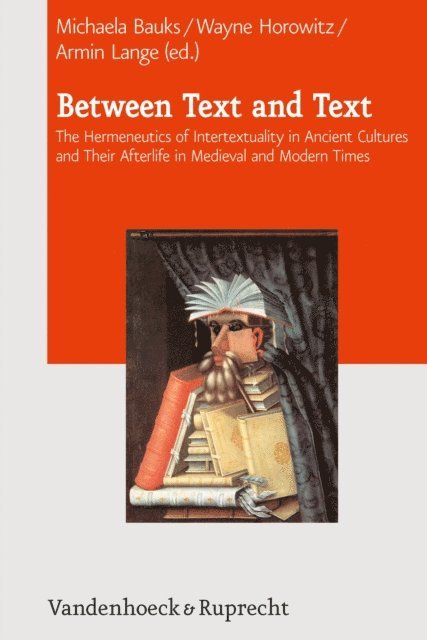
Between Text and Text
The Hermeneutics of Intertextuality in Ancient Cultures and Their Afterlife in Medieval and Modern Times
Av Michaela Bauks, Wayne Horowitz
Inbunden, 2013
2192 kr
Lägg i varukorg
This volume presents the proceedings of an international and interdisciplinary symposium on the intertextuality of ancient literature and its medieval and modern receptions. It engages with the topic of intertextuality in four regards:1. What constitutes a Text and what constitutes an Intertext: …
Between Text and Text
The Hermeneutics of Intertextuality in Ancient Cultures and Their Afterlife in Medieval and Modern Times
Av Wayne Horowitz, Michaela Bauks
E-bok, 2013
1592 kr
Lägg i varukorg
The intertextuality research of antique texts and their reception in Medieval and modern times is the subject of this volume: (1) What is a text and what is an intertext? This concerns the various different forms of text and how they present themselves in architecture, iconography, lexicography, …
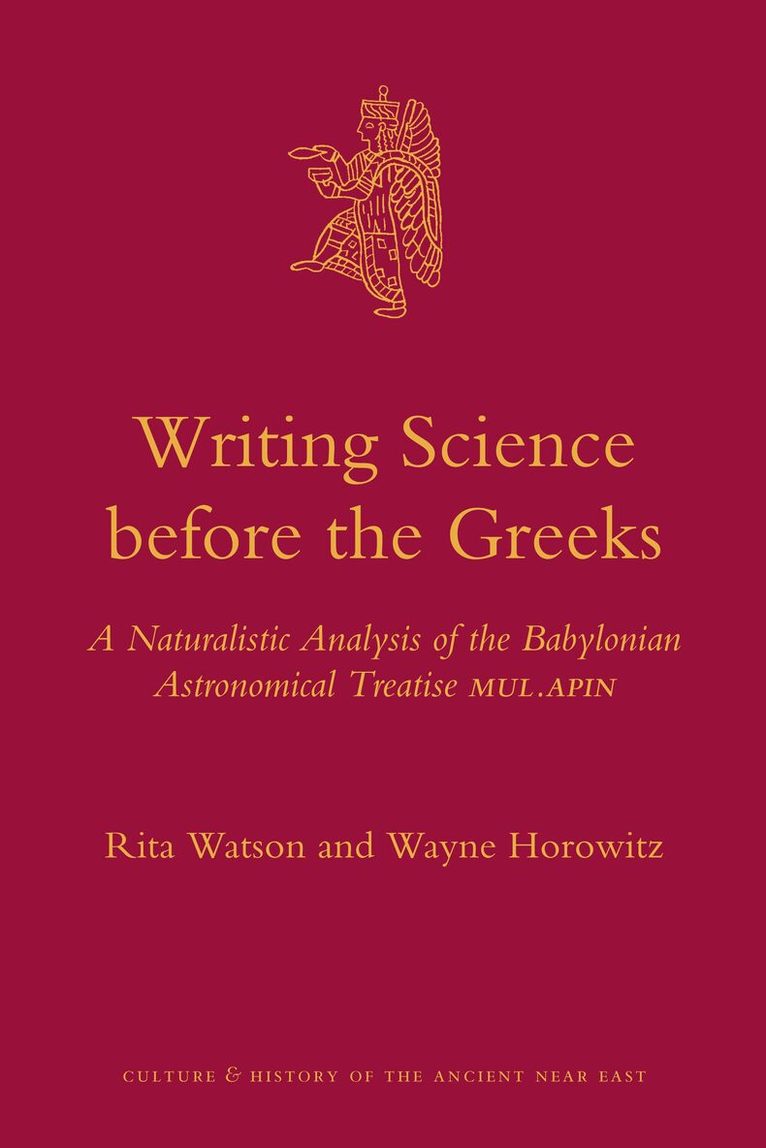
Writing Science before the Greeks
A Naturalistic Analysis of the Babylonian Astronomical Treatise MUL.APIN
Av Rita Watson, Wayne Horowitz
Inbunden, 2011
2378 kr
Lägg i varukorg
The beginnings of written science have long been associated with classical Greece. Yet in ancient Mesopotamia, highly-sophisticated scientific works in cuneiform script were in active use while Greek civilization flourished in the West. The subject of this volume is the astronomical series …