Wendy Hall – författare
Visar alla böcker från författaren Wendy Hall. Handla med fri frakt och snabb leverans.
15 produkter
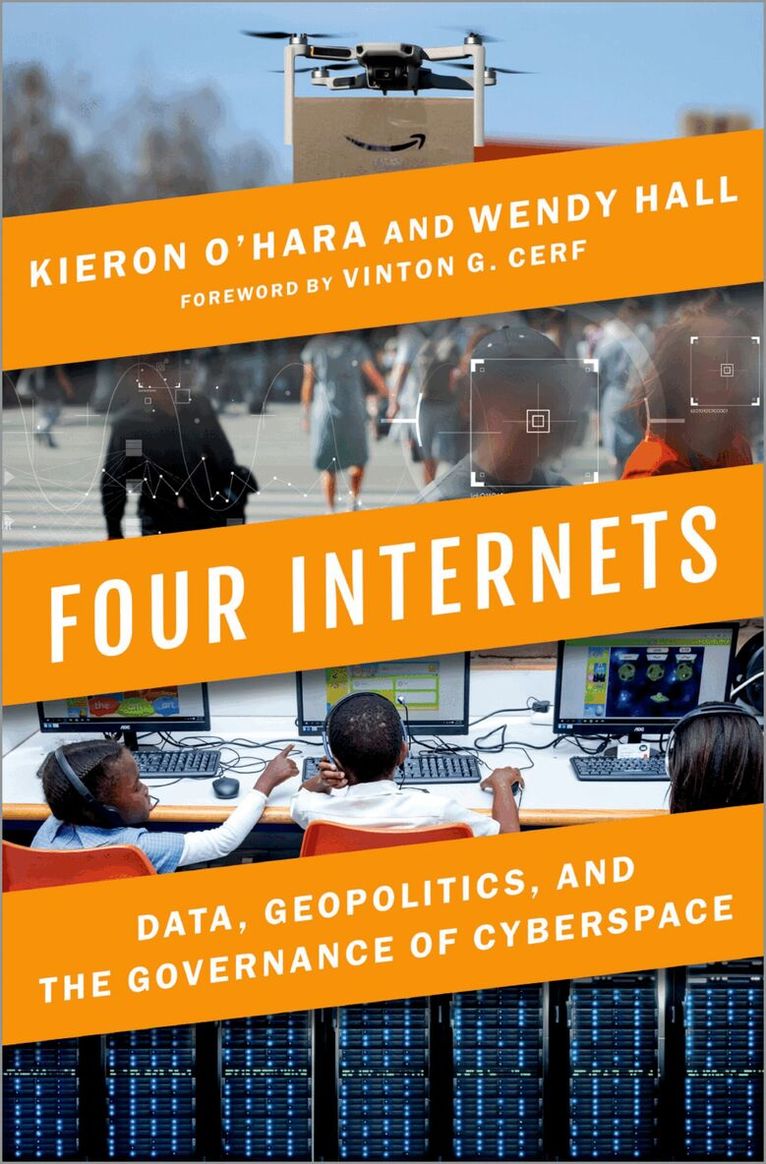
Four Internets
Data, Geopolitics, and the Governance of Cyberspace
Inbunden, 2021
400 kr
Lägg i varukorg
The Internet has become a staple of modern civilized life, now as vital a utility as electricity. But despite its growing influence, the Internet isn't as stable as it might seem; rather, it can be best thought of as a network of networks reliant on developing technical and social measures to …
Four Internets
Data, Geopolitics, and the Governance of Cyberspace
E-bok, 2021
321 kr
Lägg i varukorg
The Internet has become a staple of modern civilized life, now as vital a utility as electricity. But despite its growing influence, the Internet isn''t as stable as it might seem; rather, it can be best thought of as a network of networks reliant on developing technical and social measures to …
Four Internets
Data, Geopolitics, and the Governance of Cyberspace
E-bok, 2021
321 kr
Lägg i varukorg
The Internet has become a staple of modern civilized life, now as vital a utility as electricity. But despite its growing influence, the Internet isn''t as stable as it might seem; rather, it can be best thought of as a network of networks reliant on developing technical and social measures to …
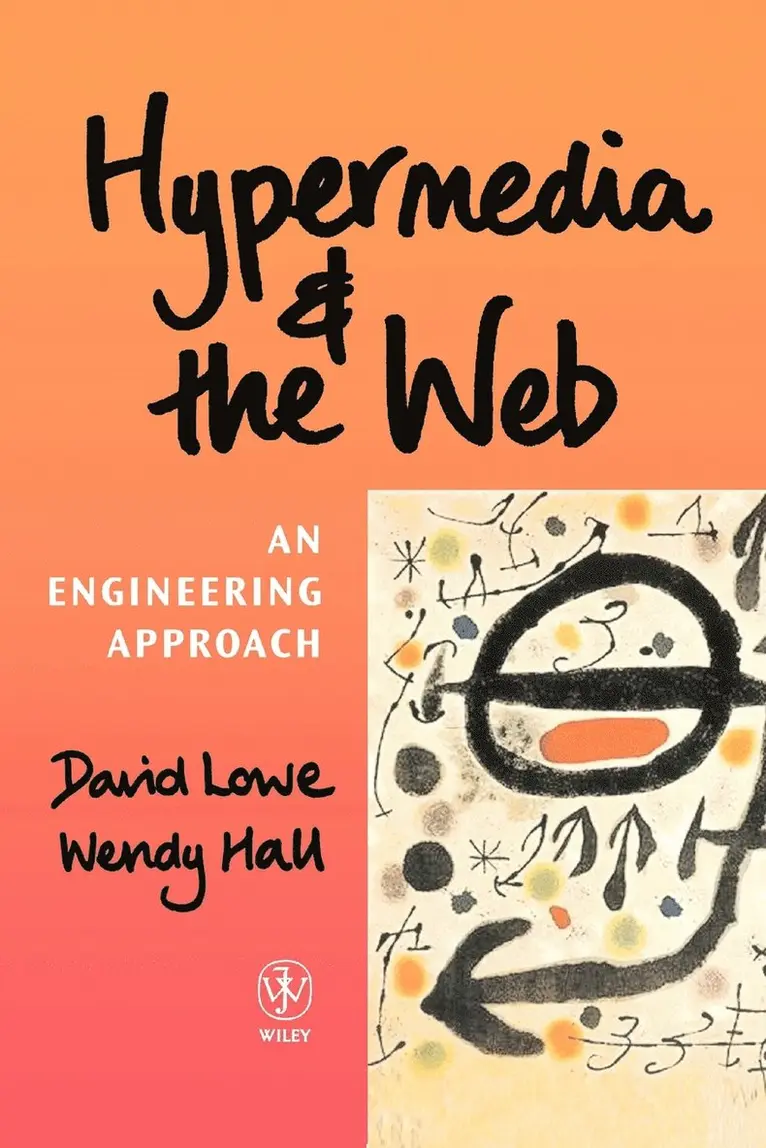
Hypermedia and the Web
An Engineering Approach
Av David Lowe, Wendy Hall
Häftad, 1999
898 kr
Lägg i varukorg
Hypermedia (often used just as Hypertext is - but in this book taken to include multimedia as well as textual online information) is a term which describes the form and structure of online information and in particular the innate characteristic of linking electronic data.The online world offered …
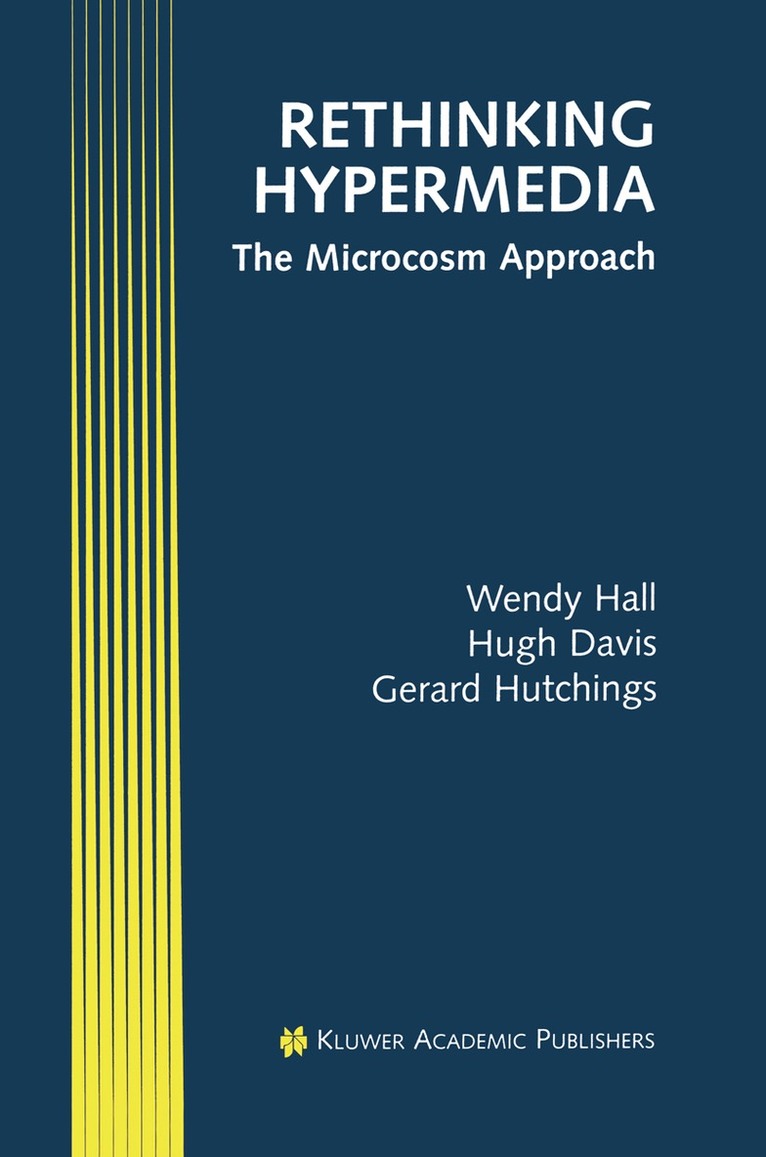
Rethinking Hypermedia
The Microcosm Approach
Av Wendy Hall, Hugh Davis m. fl.
Inbunden, 1996
1129 kr
Lägg i varukorg
Rethinking Hypermedia: The Microcosm Approach is essentially the story of the Microcosm hypermedia research and development project that started in the late 1980's and from which has emerged a philosophy that re-examines the whole concept of hypermedia and its role in the evolution of multimedia …
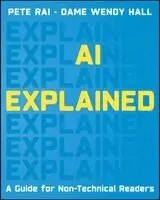
AI Explained
A Guide for Non-Technical Readers
Av Pete Rai, Wendy Hall
Häftad, 2026
248 kr
Lägg i varukorg
Understand how artificial intelligence actually works, from first principles to generative models AI Explained: A Guide for Non-Technical Readers builds understanding of artificial intelligence from first principles rather than diving in at the top. Written by experienced policy and technical …
AI Explained
A Guide for Non-Technical Readers
Av Wendy Hall, Pete Rai
E-bok, 2026
420 kr
Lägg i varukorg
Understand how artificial intelligence actually works, from first principles to generative models AI Explained: A Guide for Non-Technical Readers builds understanding of artificial intelligence from first principles rather than diving in at the top. Written by experienced policy and technical …
AI Explained
A Guide for Non-Technical Readers
Av Wendy Hall, Pete Rai
E-bok, 2026
420 kr
Lägg i varukorg
Understand how artificial intelligence actually works, from first principles to generative models AI Explained: A Guide for Non-Technical Readers builds understanding of artificial intelligence from first principles rather than diving in at the top. Written by experienced policy and technical …
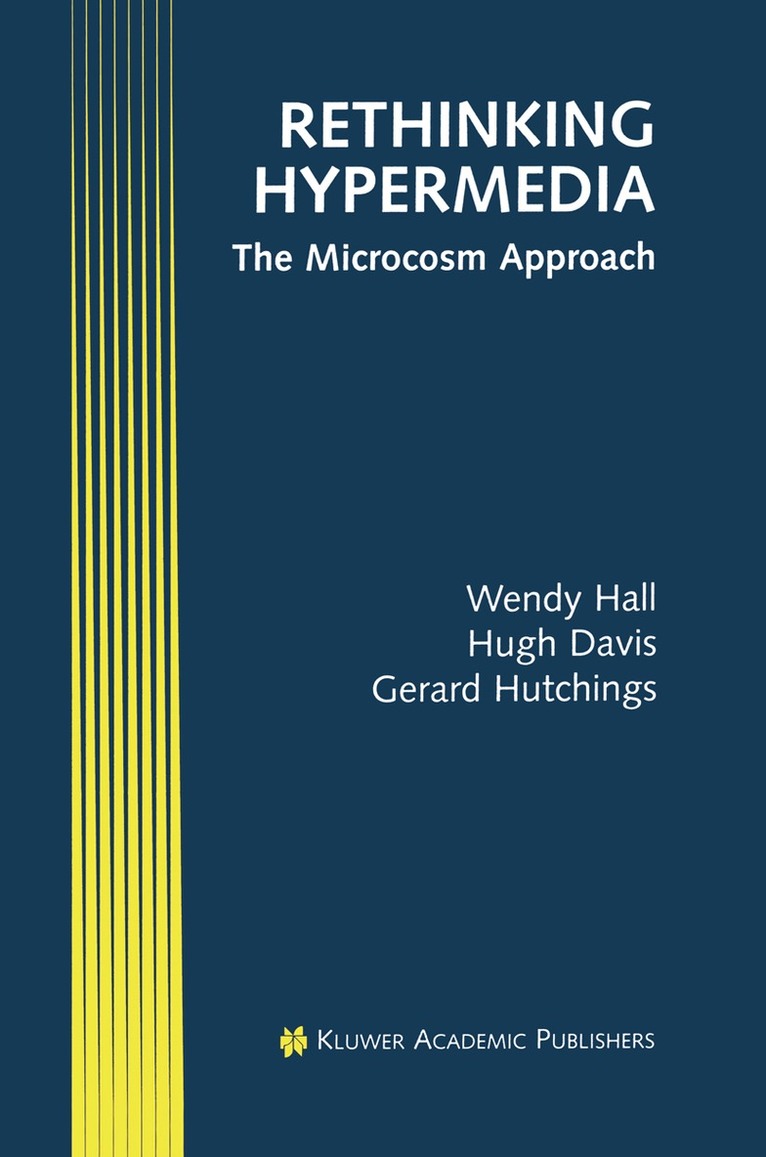
Rethinking Hypermedia
The Microcosm Approach
Av Wendy Hall, Hugh Davis m. fl.
Häftad, 2011
1129 kr
Lägg i varukorg
Rethinking Hypermedia: The Microcosm Approach is essentially the story of the Microcosm hypermedia research and development project that started in the late 1980's and from which has emerged a philosophy that re-examines the whole concept of hypermedia and its role in the evolution of multimedia …
Rethinking Hypermedia
The Microcosm Approach
Av Gerard Hutchings, Hugh Davis m. fl.
E-bok, 2012
1502 kr
Lägg i varukorg
Rethinking Hypermedia: The Microcosm Approach is essentially the story of the Microcosm hypermedia research and development project that started in the late 1980''s and from which has emerged a philosophy that re-examines the whole concept of hypermedia and its role in the evolution of multimedia …
4.4
Lessons from Years of Celibacy
Av Candalada Hopkinson, Wendy Hall
Inbunden, 2025
286 kr
Lägg i varukorg
Dyslexia in the Primary Classroom
Av Wendy Hall
Häftad, 2009
1181 kr
Lägg i varukorg
This book is an important resource for all primary trainees. It provides an explanation of what dyslexia is and how it affects a child's learning, suggests simple activities which can be used to screen children ready for referral and outlines some easy-to-follow activities addressing different …
Dyslexia in the Primary Classroom
Av Wendy Hall
E-bok, 2009
460 kr
Lägg i varukorg
This book is an important resource for all primary trainees. It provides an explanation of what dyslexia is and how it affects a child′s learning, suggests simple activities which can be used to screen children ready for referral and outlines some easy-to-follow activities addressing different …
Theory and Practice of Social Machines
Av Nigel Shadbolt, Kieron O’Hara m. fl.
Inbunden, 2019
1641 kr
Lägg i varukorg
Social machines are a type of network connected by interactive digital devices made possible by the ubiquitous adoption of technologies such as the Internet, the smartphone, social media and the read/write World Wide Web, connecting people at scale to document situations, cooperate on tasks, …
Theory and Practice of Social Machines
Av Wendy Hall, David De Roure m. fl.
E-bok, 2019
2065 kr
Lägg i varukorg
Social machines are a type of network connected by interactive digital devices made possible by the ubiquitous adoption of technologies such as the Internet, the smartphone, social media and the read/write World Wide Web, connecting people at scale to document situations, cooperate on tasks, …