Wendy L. Widder - Böcker
Visar alla böcker från författaren Wendy L. Widder. Handla med fri frakt och snabb leverans.
2 produkter
2 produkter
502 kr
Tillfälligt slut
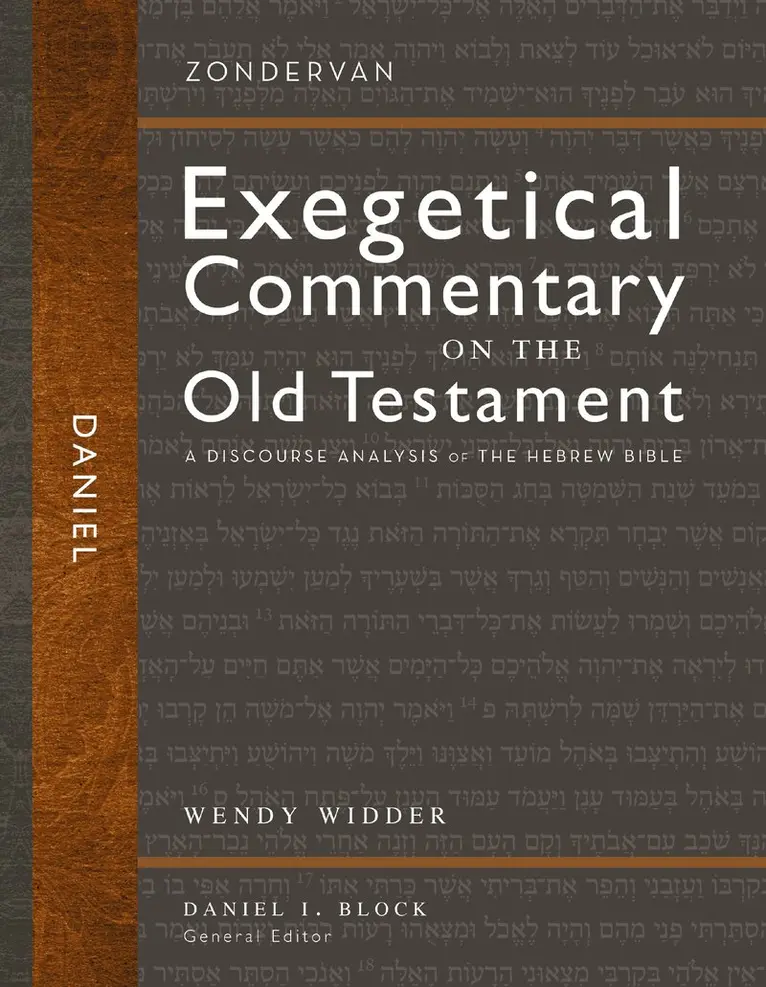
Designed for the pastor and Bible teacher, the Zondervan Exegetical Commentary on the Old Testament features today's top Old Testament scholars and brings together commentary features rarely gathered together in one volume. With careful discourse analysis and interpretation of the Hebrew text, the authors trace the flow of argument in each Old Testament book, showing that how a biblical author says something is just as important as what they say.Commentary on each passage follows a clear structure to help readers grasp the flow and meaning of the text:The Main Idea of the Passage: A one- or two-sentence summary of the key ideas the biblical author seeks to communicate.Literary Context: A brief discussion of the relationship of the specific text to the book as a whole and to its place within the broader argument.Translation and Exegetical Outline: Commentators provide their own translations of each text, formatted to highlight its discourse structure and accompanied by a coherent outline that reflects the flow and argument of the text.Structure and Literary Form: An overview of the literary structure and rhetorical style adopted by the biblical author, highlighting how these features contribute to the communication of the main idea of the passage.Explanation of the Text: A detailed commentary on the passage, paying particular attention to how the biblical authors select and arrange their materials and how they work with words, phrases, and syntax to communicate their messages.Canonical and Practical Significance: The commentary on each unit will conclude by building bridges between the world of the biblical author and other biblical authors and with reflections on the contribution made by this unit to the development of broader issues in biblical theology--particularly on how later Old Testament and New Testament authors have adapted and reused the motifs in question. The discussion also includes brief reflections on the significance of the message of the passage for readers today.The Zondervan Exegetical Commentary on the Old Testament series is the go-to resource for pastors and Bible teachers looking for deep but accessible study that equips them to connect the needs of Christians today with the biblical text.
"To Teach" in Ancient Israel
A Cognitive Linguistic Study of a Biblical Hebrew Lexical Set
Inbunden, Engelska, 2014
1 440 kr
Skickas inom 5-8 vardagar
This book employs cognitive linguistics to determine the foundational elements of the ancient Israelites’ concept of teaching as reflected in the text of the Hebrew Bible and Ben Sira. It analyzes four prominent lexemes that comprise a lexical set referring to the act of teaching: ירה-H, למד-D, ידע-H, and יסר-D. The study concludes that, in its most basic form, the concept of teaching in ancient Israel was that a teacher creates the conditions in which learning can occur. The methodology employed in this project is built on a premise of cognitive studies, namely, that because teaching is a universal human activity, there is a universal concept of teaching: one person A recognizes that another person B lacks knowledge, belief, skills, and the like (or has incomplete or distorted knowledge, etc.), and person A attempts to bring about a changed state of knowledge, belief, or skill in person B. This universal concept provides the starting place for understanding the concept of teaching that Biblical Hebrew reflects, and it also forms the conceptual base against which the individual lexemes are profiled. The study incorporates a micro-level analysis and a macro-level analysis. At the micro-level, each lexeme is examined with respect to its linguistic forms (the linguistic analysis) and the contexts in which the lexeme occurs (the conceptual analysis). The linguistic analysis considers the clausal constructions of each instantiation and determines what transitivity, ditransitivity, or intransitivity contributes to the meaning. Collocations of the lexeme, including prepositional phrases, adverbial adjuncts, and parallel verbs, are evaluated for their contribution to meaning. The conceptual analysis of each lexeme identifies the meaning potential of each word, as well as what aspect of the meaning potential each instantiation activates. The study then determines the lexeme’s prototypical meaning, which is profiled on the base of the universal concept of teaching. This step of profiling represents an important adaptation of the cognitive linguistics tool of profiling to meet the special requirements of working with ancient texts in that it profiles prototype meanings, not instantiations. In the macro-analysis, the data of all four lexemes in the lexical set are synthesized. The relationships among the lexemes are assessed in order to identify the basic level lexeme and consider whether the lexemes form a folk taxonomy. Finally, the profiles of the four prototype meanings are collated and compared in order to describe the ancient Israelite concept of teaching. The study finds that the basic level item of the lexical set is למד-D based on frequency of use and distribution. In its prototypical definition, למד-D means to intentionally put another person in a state in which s/he can acquire a skill or expertise through experience and practice. In contrast to this sustained kind of teaching, the prototypical meaning of ירה-H is situational in nature: a person of authority or expertise gives specific, situational instruction to someone who lacks knowledge about what to do. The lexemes יסר-D and ידע-H represent the most restricted and the most expansive lexemes, respectively: the prototypical meaning of יסר-D is to attempt to bring about changed behavior in another person through verbal or physical means, often to the point of causing pain; the prototypical meaning of ידע-H is that a person of authority causes another person to be in a state of knowing something from the divine realm or related to experiences with the divine realm. The study determines that while the four lexemes of the Biblical Hebrew lexical set “to teach” have significant semantic overlap, they cannot be construed in a folk taxonomy because the words are not related in a hierarchical way.