Wendy Mayer – författare
Visar alla böcker från författaren Wendy Mayer. Handla med fri frakt och snabb leverans.
22 produkter
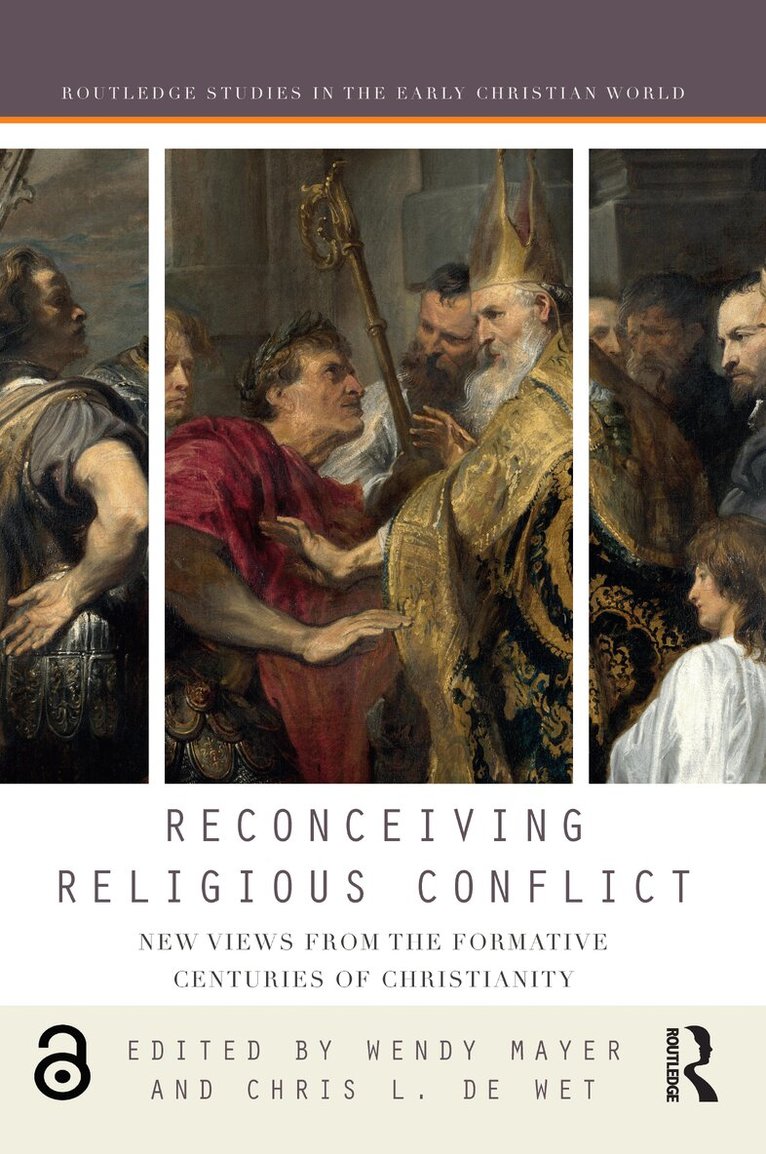
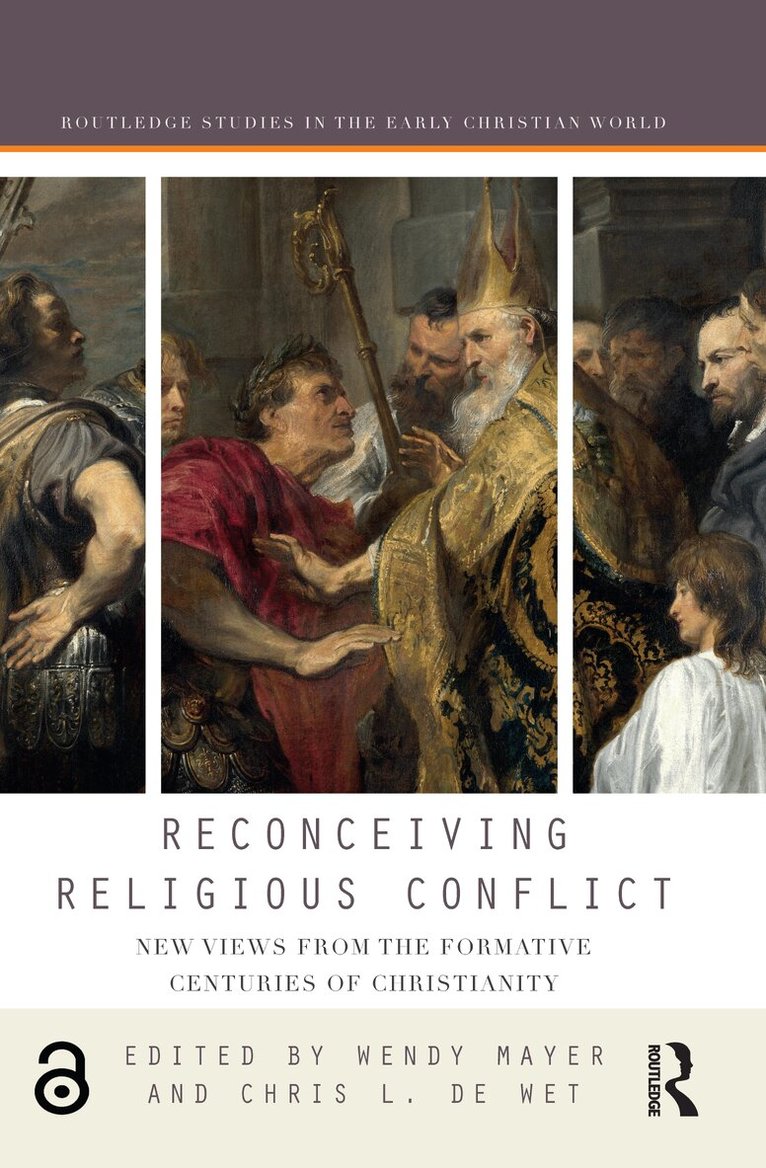
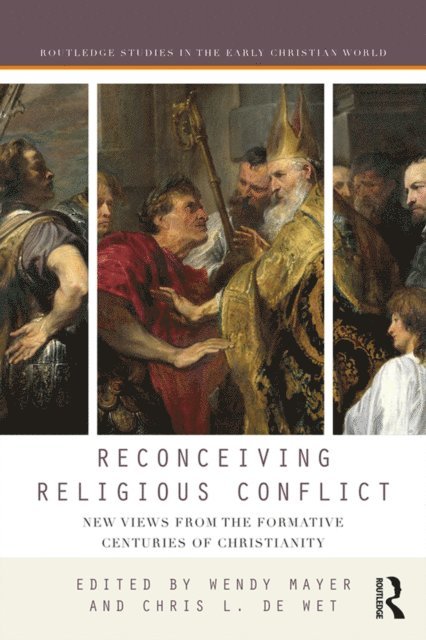
Reconceiving Religious Conflict
New Views from the Formative Centuries of Christianity
Av Wendy Mayer, Chris L. de Wet
Häftad, 2020
710 kr
Lägg i varukorg
Reconceiving Religious Conflict deconstructs instances of religious conflict within the formative centuries of Christianity, the first six centuries CE. It explores the theoretical foundations of religious conflict; the dynamics of religious conflict within the context of persecution and martyrdom; …
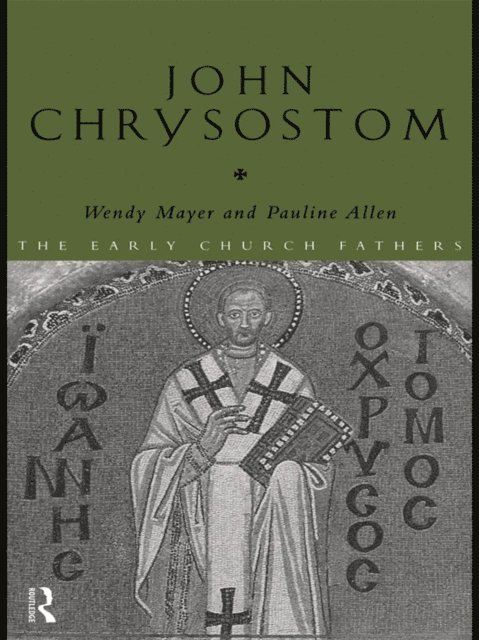
John Chrysostom
Inbunden, 1999
2682 kr
Lägg i varukorg
This book examines John Chrysostom's role as preacher and his pastoral activites as deacon, presbyter and bishop. It also provides fresh and lively translations of a key selection of sermons and letters.
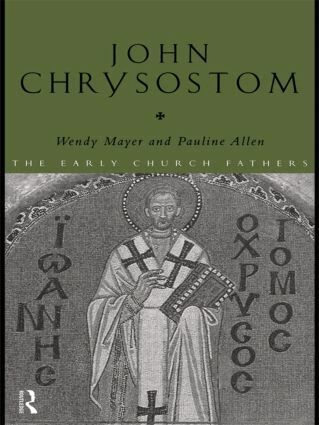
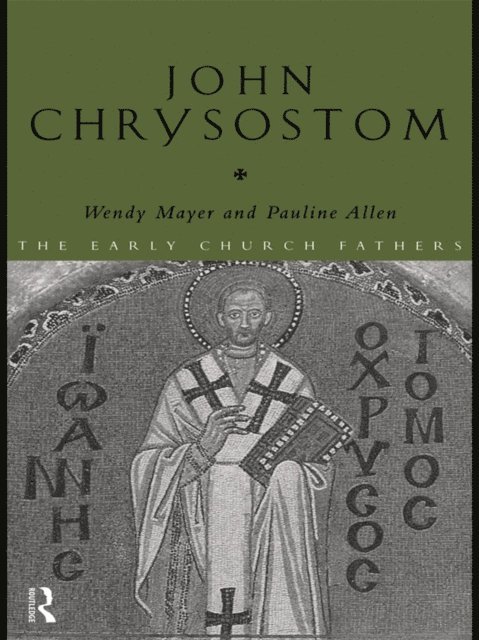
John Chrysostom
Häftad, 1999
3,0 utav 5 stjärnor. Totalt antal röster: (1)
691 kr
Lägg i varukorg
This book examines John Chrysostom's role as preacher and his pastoral activites as deacon, presbyter and bishop. It also provides fresh and lively translations of a key selection of sermons and letters.
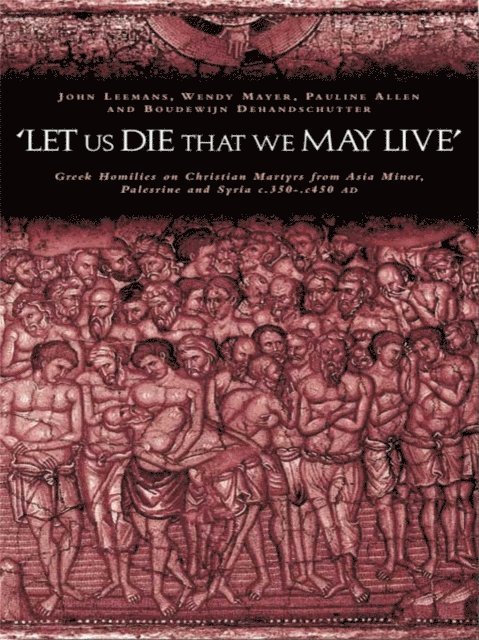
'Let us die that we may live'
Greek homilies on Christian Martyrs from Asia Minor, Palestine and Syria c.350-c.450 AD
Av Pauline Allen, Boudewijn Dehandschutter m. fl.
Inbunden, 2003
2526 kr
Lägg i varukorg
This book presents fresh, lively translations of fourteen such homilies, the majority for the first time in English. The homilies were delivered in some of the main cities of the Greek East of the later Roman Empire, by well-known figures such as Basil of Caesarea, Gregory of Nyssa and John …
'Let us die that we may live'
Greek homilies on Christian Martyrs from Asia Minor, Palestine and Syria c.350-c.450 AD
Av Pauline Allen, Boudewijn Dehandschutter m. fl.
Häftad, 2003
651 kr
Lägg i varukorg
This book presents fresh, lively translations of fourteen such homilies, the majority for the first time in English. The homilies were delivered in some of the main cities of the Greek East of the later Roman Empire, by well-known figures such as Basil of Caesarea, Gregory of Nyssa and John …
Heirs of Roman Persecution
Studies on a Christian and Para-Christian Discourse in Late Antiquity
Inbunden, 2019
2526 kr
Lägg i varukorg
The subject of this book is the discourse of persecution used by Christians in Late Antiquity (c. 300–700 CE).Through a series of detailed case studies covering the full chronological and geographical span of the period, this book investigates how the conversion of the Roman Empire to Christianity …
Heirs of Roman Persecution
Studies on a Christian and Para-Christian Discourse in Late Antiquity
Häftad, 2021
710 kr
Lägg i varukorg
The subject of this book is the discourse of persecution used by Christians in Late Antiquity (c. 300–700 CE).Through a series of detailed case studies covering the full chronological and geographical span of the period, this book investigates how the conversion of the Roman Empire to Christianity …
'Let us die that we may live'
Greek homilies on Christian Martyrs from Asia Minor, Palestine and Syria c.350-c.450 AD
Av Wendy Mayer, Johan Leemans m. fl.
E-bok, 2003
746 kr
Lägg i varukorg
This book presents fresh, lively translations of fourteen such homilies, the majority for the first time in English. The homilies were delivered in some of the main cities of the Greek East of the later Roman Empire, by well-known figures such as Basil of Caesarea, Gregory of Nyssa and John …
'Let us die that we may live'
Greek homilies on Christian Martyrs from Asia Minor, Palestine and Syria c.350-c.450 AD
Av Wendy Mayer, Johan Leemans m. fl.
E-bok, 2003
762 kr
Lägg i varukorg
This book presents fresh, lively translations of fourteen such homilies, the majority for the first time in English. The homilies were delivered in some of the main cities of the Greek East of the later Roman Empire, by well-known figures such as Basil of Caesarea, Gregory of Nyssa and John …
John Chrysostom
E-bok, 2002
717 kr
Lägg i varukorg
This book examines John Chrysostom''s role as preacher and his pastoral activites as deacon, presbyter and bishop. It also provides fresh and lively translations of a key selection of sermons and letters.
John Chrysostom
E-bok, 2002
676 kr
Lägg i varukorg
This book examines John Chrysostom''s role as preacher and his pastoral activites as deacon, presbyter and bishop. It also provides fresh and lively translations of a key selection of sermons and letters.
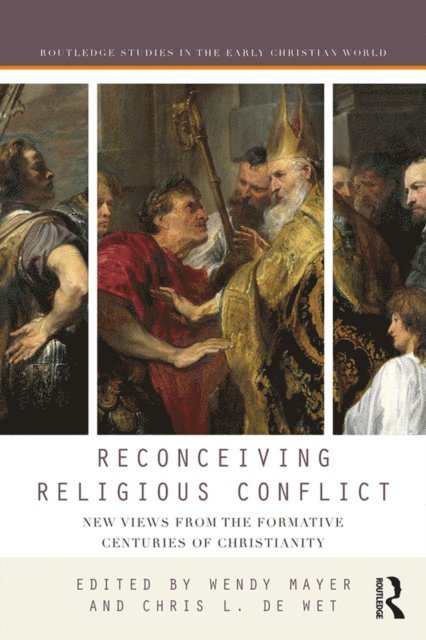
Reconceiving Religious Conflict
New Views from the Formative Centuries of Christianity
Av Wendy Mayer, Chris L. de Wet
Inbunden, 2018
2760 kr
Lägg i varukorg
Reconceiving Religious Conflict deconstructs instances of religious conflict within the formative centuries of Christianity, the first six centuries CE. It explores the theoretical foundations of religious conflict; the dynamics of religious conflict within the context of persecution and martyrdom; …
Reconceiving Religious Conflict
New Views from the Formative Centuries of Christianity
Av Chris L. de Wet, Wendy Mayer
E-bok, 2018
729 kr
Lägg i varukorg
Reconceiving Religious Conflict deconstructs instances of religious conflict within the formative centuries of Christianity, the first six centuries CE. It explores the theoretical foundations of religious conflict; the dynamics of religious conflict within the context of persecution and martyrdom; …
Reconceiving Religious Conflict
New Views from the Formative Centuries of Christianity
Av Chris L. de Wet, Wendy Mayer
E-bok, 2018
745 kr
Lägg i varukorg
Reconceiving Religious Conflict deconstructs instances of religious conflict within the formative centuries of Christianity, the first six centuries CE. It explores the theoretical foundations of religious conflict; the dynamics of religious conflict within the context of persecution and martyrdom; …
Heirs of Roman Persecution
Studies on a Christian and Para-Christian Discourse in Late Antiquity
Av Wendy Mayer, A‰ric Fournier
E-bok, 2019
745 kr
Lägg i varukorg
The subject of this book is the discourse of persecution used by Christians in Late Antiquity (c. 300–700 CE). Through a series of detailed case studies covering the full chronological and geographical span of the period, this book investigates how the conversion of the Roman Empire to Christianity …
Heirs of Roman Persecution
Studies on a Christian and Para-Christian Discourse in Late Antiquity
Av Wendy Mayer, A‰ric Fournier
E-bok, 2019
729 kr
Lägg i varukorg
The subject of this book is the discourse of persecution used by Christians in Late Antiquity (c. 300–700 CE). Through a series of detailed case studies covering the full chronological and geographical span of the period, this book investigates how the conversion of the Roman Empire to Christianity …
Feast, Fast or Famine: Food and Drink in Byzantium
Av Wendy Mayer, Silke Trzcionka
Häftad, 2005
848 kr
Lägg i varukorg
Religious Conflict from Early Christianity to the Rise of Islam
Inbunden, 2013
2141 kr
Lägg i varukorg
Conflict has been an inescapable facet of religion from its very beginnings. This volume offers insight into the mechanisms at play in the centuries from the Jesus-movement’s first attempts to define itself over and against Judaism to the beginnings of Islam. Profiling research by scholars of the …
Religious Conflict from Early Christianity to the Rise of Islam
E-bok, 2013
2168 kr
Lägg i varukorg
Conflict has been an inescapable facet of religion from its very beginnings. This volume offers insight into the mechanisms at play in the centuries from the Jesus-movement’s first attempts to define itself over and against Judaism to the beginnings of Islam. Profiling research by scholars of the …
Religious Conflict from Early Christianity to the Rise of Islam
Häftad, 2016
258 kr
Lägg i varukorg
Conflict has been an inescapable facet of religion from its very beginnings. This volume offers insight into the mechanisms at play in the centuries from the Jesus-movement’s first attempts to define itself over and against Judaism to the beginnings of Islam. Profiling research by scholars of the …
Christians Shaping Identity from the Roman Empire to Byzantium
Studies Inspired by Pauline Allen
Inbunden, 2015
3756 kr
Lägg i varukorg
The essays collected in Christians Shaping Identity celebrate Pauline Allen’s significant contribution to early Christian, late antique, and Byzantine studies, especially concerning bishops, heresy/orthodoxy and christology. Covering the period from earliest Christianity to middle Byzantium, the …