Wendy Pullan - Böcker
Visar alla böcker från författaren Wendy Pullan. Handla med fri frakt och snabb leverans.
4 produkter
4 produkter
2 103 kr
Skickas inom 10-15 vardagar
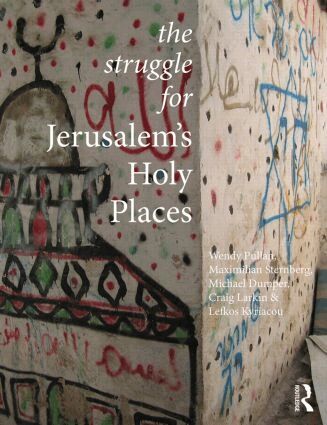
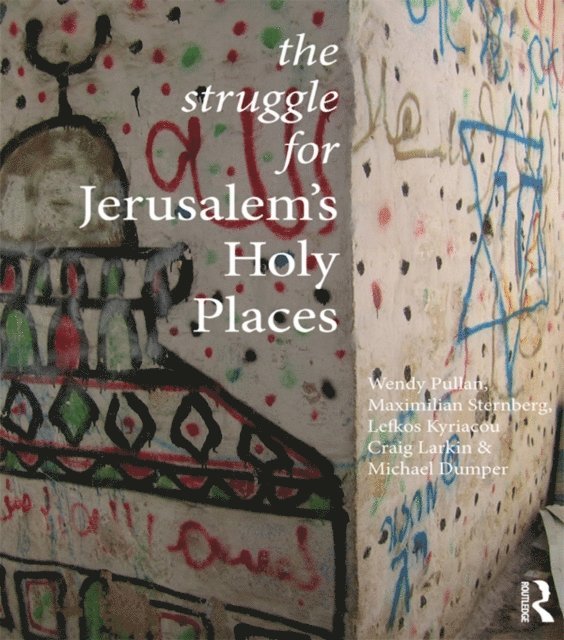
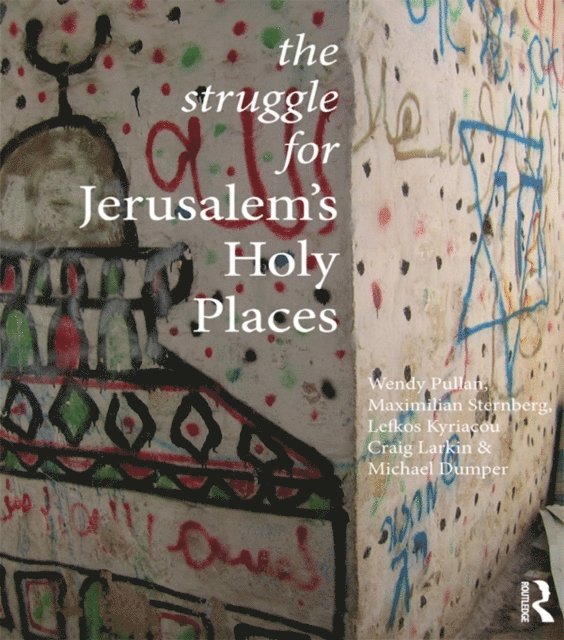
The Struggle for Jerusalem’s Holy Places investigates the role of architecture and urban identity in relation to the political economy of the city and its wider state context seen through the lens of the holy places. Reflecting the broad disciplinary backgrounds of the authors, this book provides perspectives from architecture, urbanism, and politics, and provides in-depth investigations of historical, ethnographic and policy-related case studies. The research is substantiated by fieldwork carried out in Jerusalem over the past ten years as part of the ESRC Large Grants project ‘Conflict in Cities’. By analysing new dynamics of radicalisation through land seizure, the politicisation of parklands and tourism, the strategic manipulation of archaeological and historical narratives and material culture, and through examination of general appropriation of Jerusalem’s varied rituals, memories and symbolism for factional uses, the book reveals how possibilities of co- existence are seriously threatened in Jerusalem. Shedding new light on the key role played by everyday urban life and its spatial settings for any future political agreements about the city and its religious sites, this book is a useful reference work for students and scholars of Middle East Studies, Architecture, Religion and Urban Studies.
812 kr
Skickas inom 10-15 vardagar
The Struggle for Jerusalem’s Holy Places investigates the role of architecture and urban identity in relation to the political economy of the city and its wider state context seen through the lens of the holy places. Reflecting the broad disciplinary backgrounds of the authors, this book provides perspectives from architecture, urbanism, and politics, and provides in-depth investigations of historical, ethnographic and policy-related case studies. The research is substantiated by fieldwork carried out in Jerusalem over the past ten years as part of the ESRC Large Grants project ‘Conflict in Cities’. By analysing new dynamics of radicalisation through land seizure, the politicisation of parklands and tourism, the strategic manipulation of archaeological and historical narratives and material culture, and through examination of general appropriation of Jerusalem’s varied rituals, memories and symbolism for factional uses, the book reveals how possibilities of co- existence are seriously threatened in Jerusalem. Shedding new light on the key role played by everyday urban life and its spatial settings for any future political agreements about the city and its religious sites, this book is a useful reference work for students and scholars of Middle East Studies, Architecture, Religion and Urban Studies.
826 kr
Skickas inom 10-15 vardagar
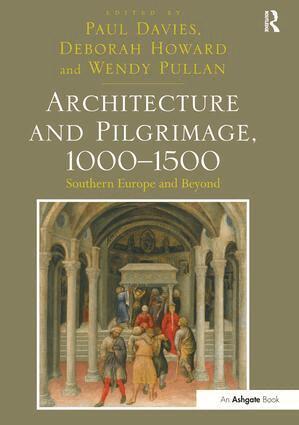
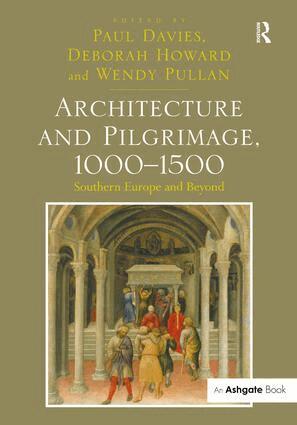
Although there is an obvious association between pilgrimage and place, relatively little research has centred directly on the role of architecture. Architecture and Pilgrimage, 1000-1500: Southern Europe and Beyond synthesizes the work of a distinguished international group of scholars. It takes a broad view of architecture, to include cities, routes, ritual topographies and human interaction with the natural environment, as well as specific buildings and shrines, and considers how these were perceived, represented and remembered. The essays explore both the ways in which the physical embodiment of pilgrimage cultures is shared, and what we can learn from the differences. The chosen period reflects the flowering of medieval and early modern pilgrimage. The perspective is that of the pilgrim journeying within - or embarking from - Southern Europe, with a particular emphasis on Italy. The book pursues the connections between pilgrimage and architecture through the investigation of such issues as theology, liturgy, patronage, miracles and healing, relics, and individual and communal memory. Moreover, it explores how pilgrimage may be regarded on various levels, from a physical journey towards a holy site to a more symbolic and internalized idea of pilgrimage of the soul.
2 306 kr
Skickas inom 10-15 vardagar
Although there is an obvious association between pilgrimage and place, relatively little research has centred directly on the role of architecture. Architecture and Pilgrimage, 1000-1500: Southern Europe and Beyond synthesizes the work of a distinguished international group of scholars. It takes a broad view of architecture, to include cities, routes, ritual topographies and human interaction with the natural environment, as well as specific buildings and shrines, and considers how these were perceived, represented and remembered. The essays explore both the ways in which the physical embodiment of pilgrimage cultures is shared, and what we can learn from the differences. The chosen period reflects the flowering of medieval and early modern pilgrimage. The perspective is that of the pilgrim journeying within - or embarking from - Southern Europe, with a particular emphasis on Italy. The book pursues the connections between pilgrimage and architecture through the investigation of such issues as theology, liturgy, patronage, miracles and healing, relics, and individual and communal memory. Moreover, it explores how pilgrimage may be regarded on various levels, from a physical journey towards a holy site to a more symbolic and internalized idea of pilgrimage of the soul.