Wesley A. Kort – författare
Visar alla böcker från författaren Wesley A. Kort. Handla med fri frakt och snabb leverans.
12 produkter
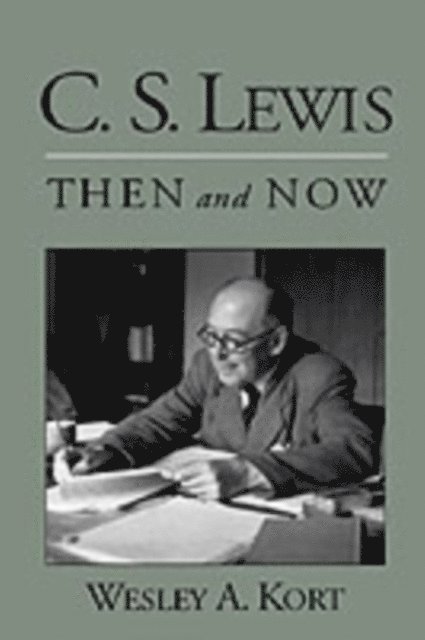
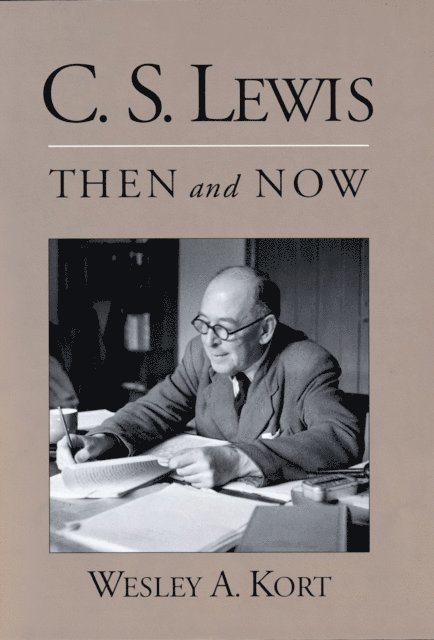
C.S. Lewis Then and Now
E-bok, 2001
413 kr
Lägg i varukorg
Clive Staples Lewis (1898-1963) was a distinguished scholar of medieval and Renaissance literature who taught at both Oxford University and Cambridge University. After his conversion to Christianity, Lewis began writing Christian apologetic works aimed at a popular audience. It is for these works …
Reading C.S. Lewis
A Commentary
Inbunden, 2015
373 kr
Lägg i varukorg
Strongly divided evaluations of C. S. Lewis's work persist today based on his perspectives and writings on religion, particularly Christianity. Those who approve tend to see his work as of value primarily because it gives his academic and cultural value to his advocacy of Christianity. Conversely, …
Reading C.S. Lewis
A Commentary
E-bok, 2015
267 kr
Lägg i varukorg
From the unbending belief in invisible powers that animates Till We Have Faces to the depiction of Aslan''s sacrifice and resurrection in The Lion, The Witch, and the Wardrobe , C. S. Lewis''s writing has sparked intense debate about the presence and function of religion in his works. Today, a …
Reading C.S. Lewis
A Commentary
E-bok, 2015
267 kr
Lägg i varukorg
From the unbending belief in invisible powers that animates Till We Have Faces to the depiction of Aslan''s sacrifice and resurrection in The Lion, The Witch, and the Wardrobe , C. S. Lewis''s writing has sparked intense debate about the presence and function of religion in his works. Today, a …
C.S. Lewis Then and Now
E-bok, 2001
464 kr
Lägg i varukorg
Clive Staples Lewis (1898-1963) was a distinguished scholar of medieval and Renaissance literature who taught at both Oxford University and Cambridge University. After his conversion to Christianity, Lewis began writing Christian apologetic works aimed at a popular audience. It is for these works …
C.S. Lewis Then and Now
Häftad, 2004
673 kr
Lägg i varukorg
Clive Staples Lewis (1898-1963) was a distinguished scholar of medieval and Renaissance literature who taught at both Oxford University and Cambridge University. After his conversion to Christianity, Lewis began writing Christian apologetic works aimed at a popular audience. It is for these works …
Bound to Differ
The Dynamics of Theological Discourses
Häftad, 1992
601 kr
Lägg i varukorg
In this analysis of theological conflict, Wesley Kort treats theologies as discourses that generate power and significance by their relations to and differences from one another. He identifies the traditional or putative claims of theological power and meaning—sources, referents, and patterns or …
Textual Intimacy
Autobiography and Religious Identities
Inbunden, 2012
901 kr
Lägg i varukorg
Given its affinity with questions of identity, autobiography offers a way into the interior space between author and reader, especially when writers define themselves in terms of religion. In his exploration of this ""textual intimacy,"" Wesley Kort begins with a theorisation of what it means to …
Textual Intimacy
Autobiography and Religious Identities
E-bok, 2012
476 kr
Lägg i varukorg
Given its affinity with questions of identity, autobiography offers a way into the interior space between author and reader, especially when writers define themselves in terms of religion. In his exploration of this "textual intimacy," Wesley Kort begins with a theorization of what it means to say …
Textuality, Culture and Scripture
A Study in Interrelations
Inbunden, 2019
1318 kr
Lägg i varukorg
"Textuality, Culture, and Scripture", a study of the necessary and close relations between the three concepts, describes the prominent role of texts and textuality in Western modernity and the exchange of textual for material understandings of culture that becomes apparent in the middle of the …
Textuality, Culture and Scripture
A Study in Interrelations
Häftad, 2021
422 kr
Lägg i varukorg
"Textuality, Culture, and Scripture", a study of the necessary and close relations between the three concepts, describes the prominent role of texts and textuality in Western modernity and the exchange of textual for material understandings of culture that becomes apparent in the middle of the …
Textual Intimacy
Autobiography and Religious Identities
Häftad, 2012
363 kr
Tillfälligt slut
Given its affinity with questions of identity, autobiography offers a way into the interior space between author and reader, especially when writers define themselves in terms of religion. In his exploration of this ""textual intimacy,"" Wesley Kort begins with a theorisation of what it means to …