Wesley C. Robertson - Böcker
Visar alla böcker från författaren Wesley C. Robertson. Handla med fri frakt och snabb leverans.
4 produkter
4 produkter
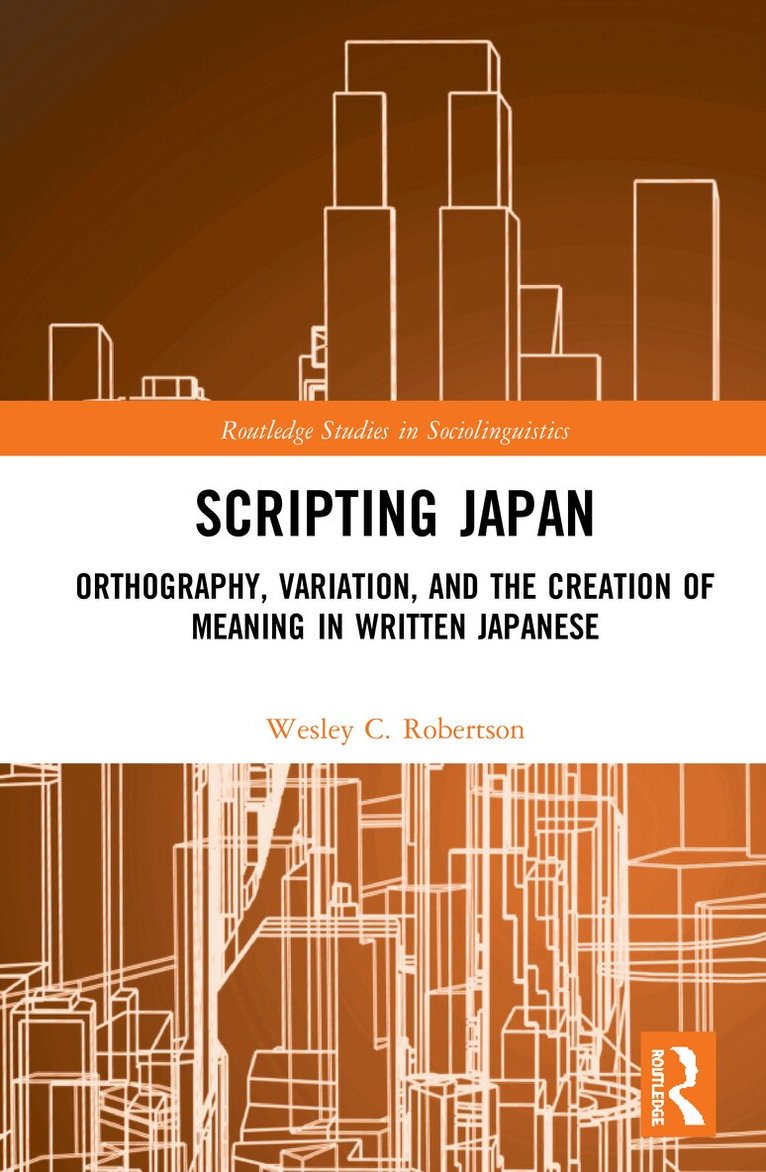
Scripting Japan
Orthography, Variation, and the Creation of Meaning in Written Japanese
Inbunden, Engelska, 2020
2 151 kr
Skickas inom 10-15 vardagar
Imagine this book was written in Comic Sans. Would this choice impact your image of me as an author, despite causing no literal change to the content within? Generally, discussions of how language variants influence interpretation of language acts/users have focused on variation in speech. But it is important to remember that specific ways of representing a language are also often perceived as linked to specific social actors. Nowhere is this fact more relevant than in written Japanese, where a complex history has created a situation where authors can represent any sentence element in three distinct scripts. This monograph provides the first investigation into the ways Japanese authors and their readers engage with this potential for script variation as a social language practice, looking at how purely script-based language choices reflect social ideologies, become linked to language users, and influence the total meaning created by language acts. Throughout the text, analysis of data from multiple studies examines how Japanese language users' experiences with the script variation all around them influence how they engage with, produce, and understand both orthographic variation and major social divides, ultimately evidencing that even the avoidance of variation can become a socially significant act in Japan.
Scripting Japan
Orthography, Variation, and the Creation of Meaning in Written Japanese
Häftad, Engelska, 2022
649 kr
Skickas inom 10-15 vardagar
Imagine this book was written in Comic Sans. Would this choice impact your image of me as an author, despite causing no literal change to the content within? Generally, discussions of how language variants influence interpretation of language acts/users have focused on variation in speech. But it is important to remember that specific ways of representing a language are also often perceived as linked to specific social actors. Nowhere is this fact more relevant than in written Japanese, where a complex history has created a situation where authors can represent any sentence element in three distinct scripts. This monograph provides the first investigation into the ways Japanese authors and their readers engage with this potential for script variation as a social language practice, looking at how purely script-based language choices reflect social ideologies, become linked to language users, and influence the total meaning created by language acts. Throughout the text, analysis of data from multiple studies examines how Japanese language users' experiences with the script variation all around them influence how they engage with, produce, and understand both orthographic variation and major social divides, ultimately evidencing that even the avoidance of variation can become a socially significant act in Japan.
820 kr
Skickas inom 7-10 vardagar
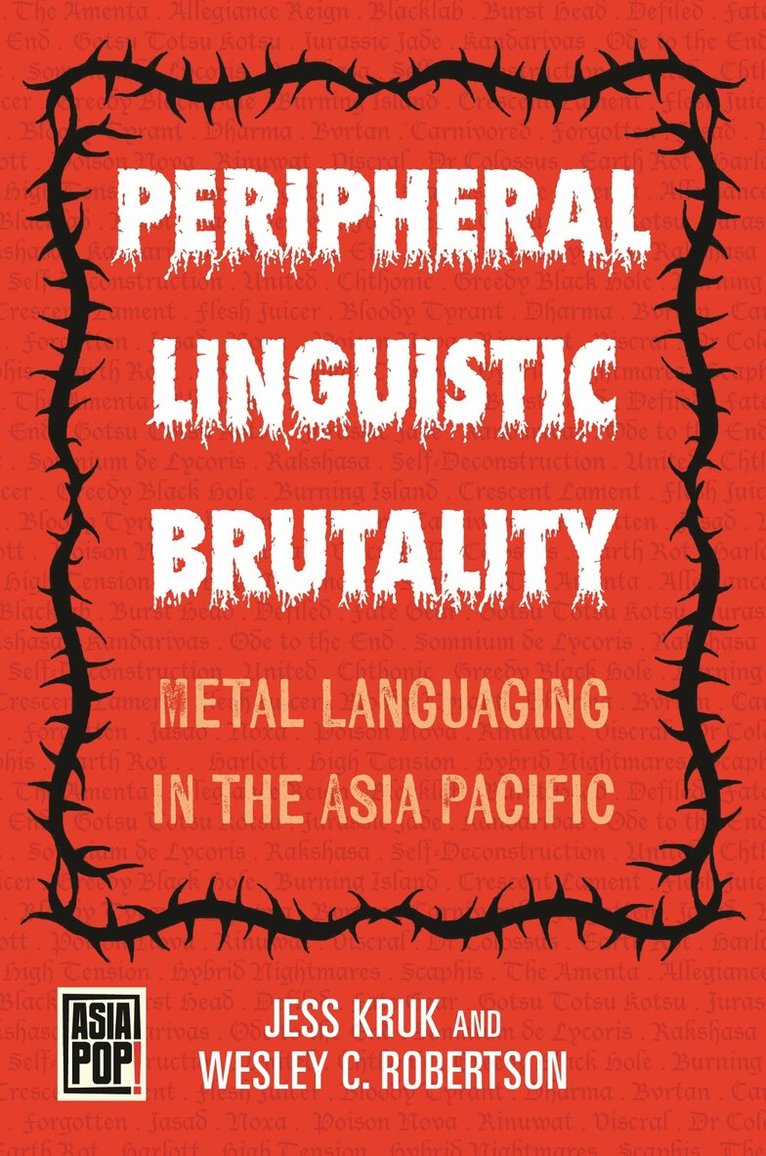
Peripheral Linguistic Brutality is a sociolinguistic investigation into the production of "metalness" through language in the Asia Pacific. Focusing on the ways local music scenes adopt, reject, and modify linguistic ideologies, Jess Kruk and Wesley Robertson (hosts of the podcast Lingua Brutallica) examine how translocal participation in metal settings shapes how and why specific language forms are used to construct "metal language." Although much research has been done on language flows and use in global subcultures, their volume intervenes in two key ways. First, most prior work has focused on hip-hop, which unlike metal has an established "origin" dialect, namely AAVE (African American Vernacular English), linked to concepts of authenticity in the scene. Secondly, writing on global language flows has centered around what happens when a language, mainly English, enters a new space or context—not on how individuals employ imported forms and reimagine already extant linguistic resources as indexes, or markers, of new identities. Through interviews with practicing metal lyricists from Australia, Indonesia, Japan, and Taiwan, Peripheral Linguistic Brutality therefore fills gaps in the knowledge of language’s role in translocal subcultures. Specifically, it sheds new light on how global subcultures spawn new local beliefs about the meaning and purpose of language forms, the sociolinguistic conflicts that can arise and influence language use when a scene enters a new locale, and metal itself as a global practice.
323 kr
Skickas inom 10-15 vardagar
Peripheral Linguistic Brutality is a sociolinguistic investigation into the production of "metalness" through language in the Asia Pacific. Focusing on the ways local music scenes adopt, reject, and modify linguistic ideologies, Jess Kruk and Wesley Robertson (hosts of the podcast Lingua Brutallica) examine how translocal participation in metal settings shapes how and why specific language forms are used to construct "metal language." Although much research has been done on language flows and use in global subcultures, their volume intervenes in two key ways. First, most prior work has focused on hip-hop, which unlike metal has an established "origin" dialect, namely AAVE (African American Vernacular English), linked to concepts of authenticity in the scene. Secondly, writing on global language flows has centered around what happens when a language, mainly English, enters a new space or context—not on how individuals employ imported forms and reimagine already extant linguistic resources as indexes, or markers, of new identities. Through interviews with practicing metal lyricists from Australia, Indonesia, Japan, and Taiwan, Peripheral Linguistic Brutality therefore fills gaps in the knowledge of language’s role in translocal subcultures. Specifically, it sheds new light on how global subcultures spawn new local beliefs about the meaning and purpose of language forms, the sociolinguistic conflicts that can arise and influence language use when a scene enters a new locale, and metal itself as a global practice.