Will Kaufman - Böcker
Visar alla böcker från författaren Will Kaufman. Handla med fri frakt och snabb leverans.
12 produkter
12 produkter
217 kr
Skickas inom 7-10 vardagar
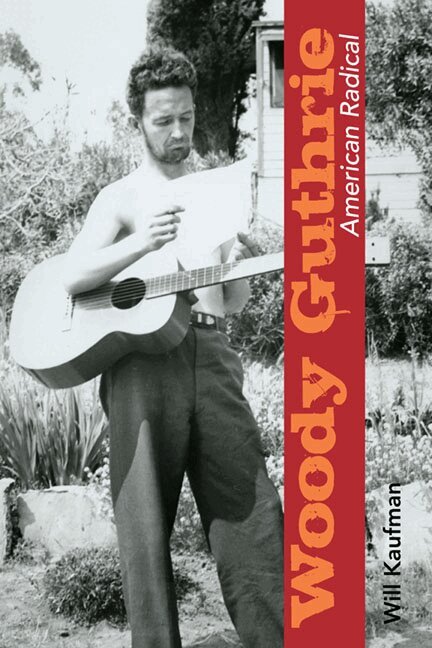
Woody Guthrie, American Radical reclaims the politically radical profile of America's greatest balladeer. Although he achieved a host of national honors and adorns U.S. postage stamps, and although his song "This Land Is Your Land" is often considered the nation's second national anthem, Woody Guthrie committed his life to the radical struggle. Will Kaufman traces Guthrie's political awakening and activism throughout the Great Depression, World War II, the Cold War, the Korean War, the Civil Rights struggle, and the poison of McCarthyism. He examines Guthrie's role in the development of a workers' culture in the context of radical activism spearheaded by the Communist Party of the USA, the Popular Front, and the Congress of Industrial Organizations. Kaufman also establishes Guthrie's significance in the perpetuation of cultural front objectives into the era of the "New Left" and beyond, particularly through his influence on the American and international protest song movement. Utilizing a wealth of previously unseen archival materials such as letters, song lyrics, essays, personal reflections, photos, and other manuscripts, Woody Guthrie, American Radical introduces a heretofore unknown Woody Guthrie: the canny political strategist, fitful thinker, and cultural front activist practically buried in the general public's romantic celebration of the "Dust Bowl Troubadour." A portion of the royalties from the sales of this book will be donated to the Woody Guthrie Foundation.
354 kr
Skickas inom 11-20 vardagar
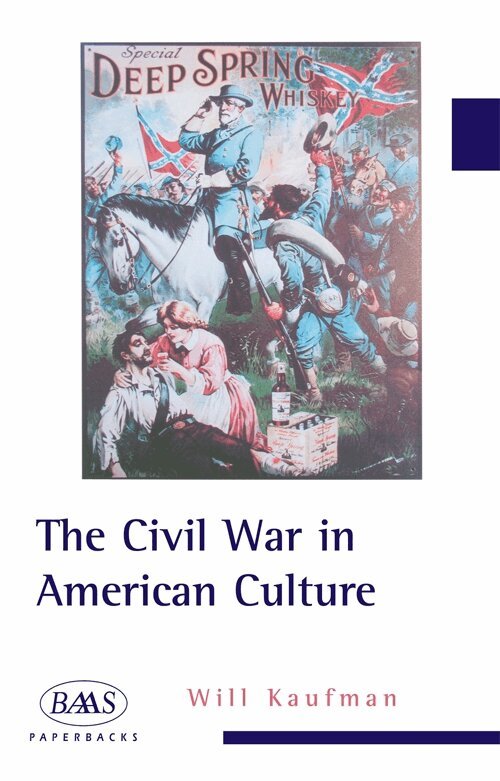
The Civil War is an event of great cultural significance, impacting upon American literature, film, music, electronic media, the marketplace and public performance. This book takes an innovative approach to this great event in American history, exploring its cultural origins and enduring cultural legacy. It focuses upon the place of the Civil War across the broad sweep of American cultural forms and practices and reveals important links between historical events and contemporary culture.The first chapter introduces a discussion of ante-bellum culture and the part cultural forces played in the sectional crisis that exploded into full-blown war in 1861. Subsequent chapters focus on particular themes, appropriations, interpretations and manifestations of the War as they have appeared in American culture. Particular topics include:• Confederate revivalism• the cultural uses of martyrdom• the centrality of race• the War’s destabilisation of gender norms• the War’s place in virtual and transnational cultureThe final chapter explores the Civil War’s alternative histories and the cultural meanings of the word ‘Appomattox’. The reader is presented with an accessible, concise discussion of the Civil War in its many cultural contexts.Key Features:* multidisciplinary study of the cultural legacy of the Civil War: in literature, film, music, computer games, the internet, role play, material culture, and civic demonstration* situates race at the heart of the discussion and challenges the culture of denial in which race and slavery are marginalised in Civil War remembrance* written in a lively narrative voice, deliberately jargon-free* offers innovative readings of well-known and unexplored cultural material
356 kr
Skickas inom 11-20 vardagar
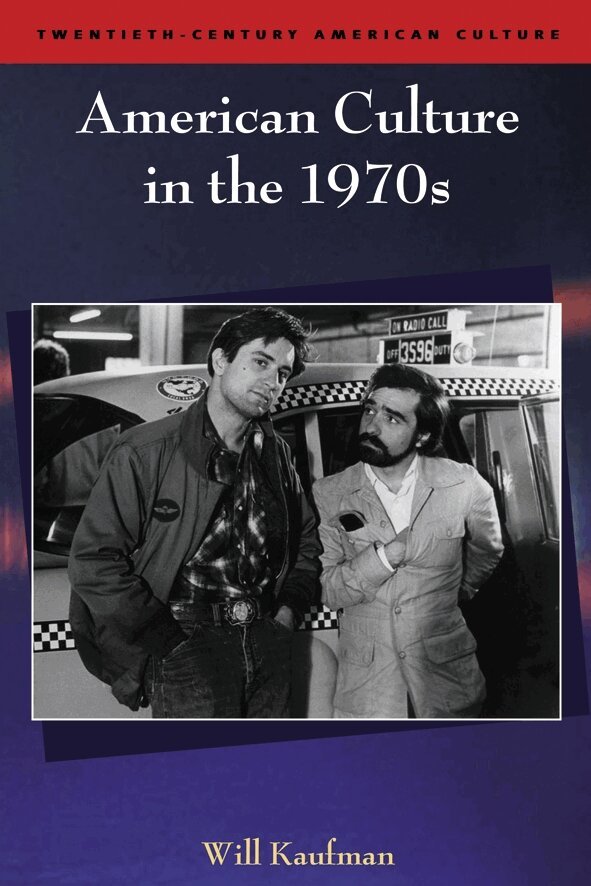
The 1970s was one of the most culturally vibrant periods in American history. This book discusses the dominant cultural forms of the 1970s - fiction and poetry; television and drama; film and visual culture; popular music and style; public space and spectacle - and the decade's most influential practitioners and texts: from Toni Morrison to All in the Family, from Diane Arbus to Bruce Springsteen, from M.A.S.H. to Taxi Driver and from disco divas to Vietnam protesters. In response to those who consider the seventies the time of disco, polyester and narcissism, this book rewrites the critical engagement with one of America's most misunderstood decades.Key Features*Focused case studies featuring key texts and influential writers, artists, directors and musicians*Chronology of 1970s American Culture*Bibliographies for each chapter and a general bibliography on 1970s Culture*14 black-and-white illustrations
942 kr
Skickas inom 10-15 vardagar
In the first edition of Transatlantic Studies, Heidi Slettedahl Macpherson and Will Kaufman argued that a new field of studies was emerging from the separate fields of insular area studies such as American Studies, European Studies, and African Studies. Now that Transatlantic Studies is a recognized area of inquiry in its own right, Macpherson and Kaufman extend their analysis of it. New Perspectives in Transatlantic Studies aims to extend the definition of Transatlantic Studies and explore the implications of such a definition by supplying a critical perspective, which links the diverse constituents of this interdisciplinary field. Therefore, it engages with issues of "the contact zone" in relation to globalization, migration, and the law; examines transatlantic artistic and cultural representation; and explores the economic, philosophic, and political implications of the transatlantic area.
305 kr
Skickas inom 10-15 vardagar
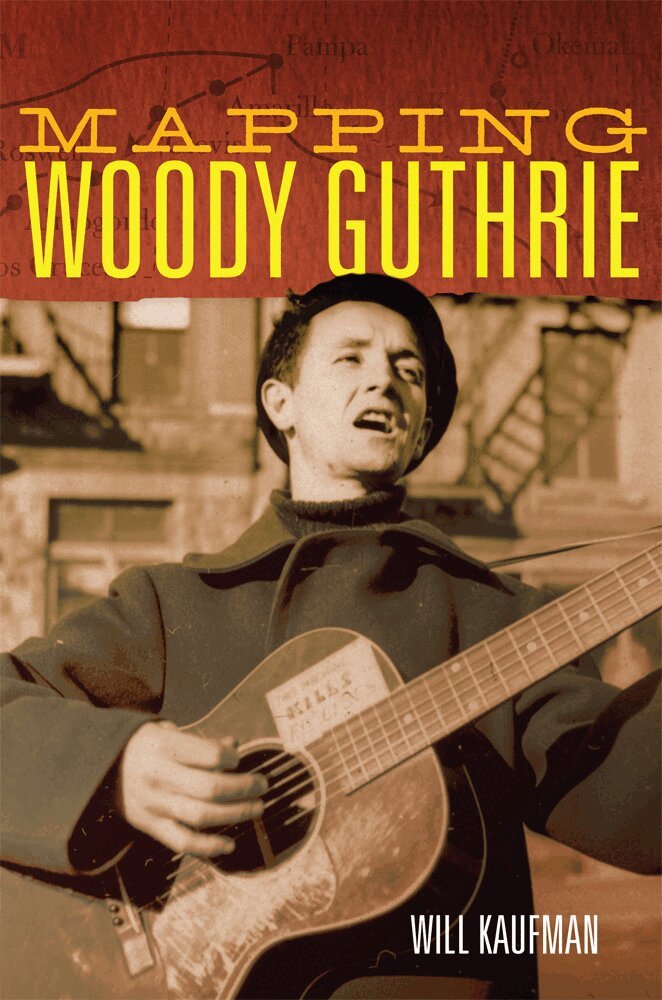
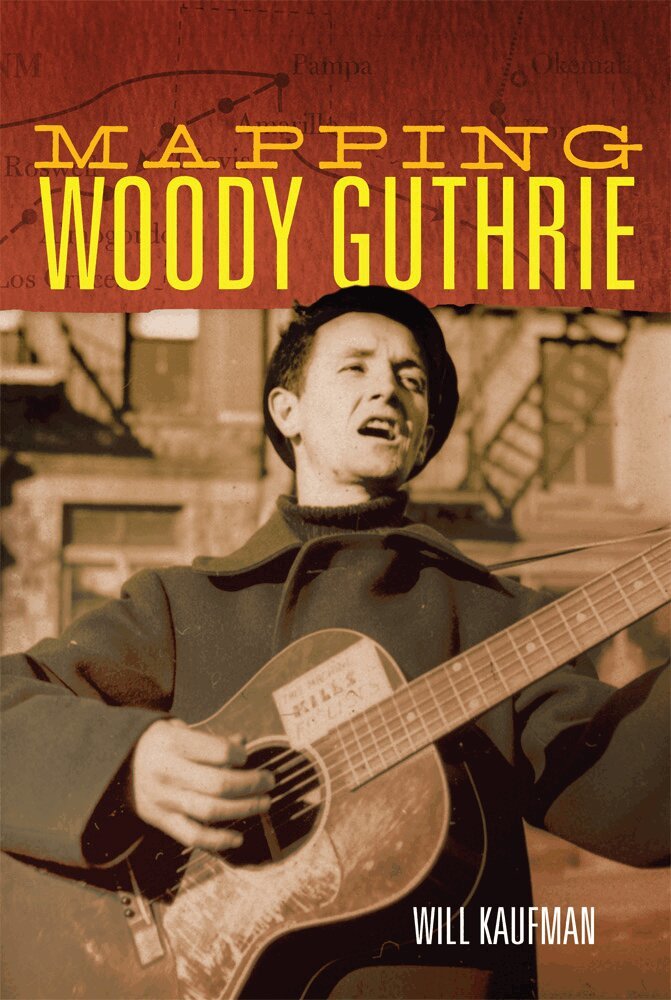
I ain't got no home, I'm just a-roamin' round,"" Woody Guthrie lamented in one of his most popular songs. A native of Oklahoma, he was still in his teens when he moved to Pampa, Texas, where he experienced the dust storms that would play such a crucial role in forming his identity and shaping his work. He later joined thousands of Americans who headed to California to escape the devastation of the Dust Bowl. There he entered the West Coast stronghold of the Popular Front, whose leftward influence on his thinking would continue after his move in 1940 to New York, where the American folk music renaissance began when Guthrie encountered Pete Seeger and Lead Belly.Guthrie kept moving throughout his life, making friends, soaking up influences, and writing about his experiences. Along the way, he produced more than 3,000 songs, as well as fiction, journalism, poetry, and visual art, that gave voice to the distressed and dispossessed. In this insightful book, Will Kaufman examines the artist's career through a unique perspective: the role of time and place in Guthrie's artistic evolution.Guthrie disdained boundaries - whether of geography, class, race, or religion. As he once claimed in his inimitable style, ""There ain't no such thing as east west north or south."" Nevertheless, places were critical to Guthrie's life, thought, and creativity. He referred to himself as a ""compass-pointer man,"" and after his sojourn in California, he headed up to the Pacific Northwest, on to New York, and crossed the Atlantic as a merchant marine.Before his death from Huntington's disease in 1967, Guthrie had one more important trip to take: to the Florida swamplands of Beluthahatchee, in the heart of the South. There he produced some of his most trenchant criticisms of Jim Crow racism - a portion of his work that scholars have tended to overlook.To map Guthrie's movements across space and time, the author draws not only on the artist's considerable recorded and published output but on a wealth of unpublished sources - including letters, essays, song lyrics, and notebooks - housed in the Woody Guthrie Archives in Tulsa, Oklahoma. This trove of primary documents deepens Kaufman's intriguing portrait of a unique American artist.
220 kr
Skickas inom 10-15 vardagar
“I ain’t got no home, I’m just a-roamin’ round,” Woody Guthrie lamented in one of his most popular songs. A native of Oklahoma, he was still in his teens when he moved to Pampa, Texas, where he experienced the dust storms that would play such a crucial role in forming his identity and shaping his work. He later joined thousands of Americans who headed to California to escape the devastation of the Dust Bowl. There he entered the West Coast stronghold of the Popular Front, whose leftward influence on his thinking would continue after his move in 1940 to New York, where the American folk music renaissance began when Guthrie encountered Pete Seeger and Lead Belly.Guthrie kept moving throughout his life, making friends, soaking up influences, and writing about his experiences. Along the way, he produced more than 3,000 songs, as well as fiction, journalism, poetry, and visual art, that gave voice to the distressed and dispossessed. In this insightful book, Will Kaufman examines the artist’s career through a unique perspective: the role of time and place in Guthrie’s artistic evolution.Guthrie disdained boundaries—whether of geography, class, race, or religion. As he once claimed in his inimitable style, “There ain’t no such thing as east west north or south.” Nevertheless, places were critical to Guthrie’s life, thought, and creativity. He referred to himself as a “compass-pointer man,” and after his sojourn in California, he headed up to the Pacific Northwest, on to New York, and crossed the Atlantic as a merchant marine.Before his death from Huntington’s disease in 1967, Guthrie had one more important trip to take: to the Florida swamplands of Beluthahatchee, in the heart of the South. There he produced some of his most trenchant criticisms of Jim Crow racism—a portion of his work that scholars have tended to overlook.To map Guthrie’s movements across space and time, the author draws not only on the artist’s considerable recorded and published output but on a wealth of unpublished sources—including letters, essays, song lyrics, and notebooks—housed in the Woody Guthrie Archives in Tulsa, Oklahoma. This trove of primary documents deepens Kaufman’s intriguing portrait of a unique American artist.
276 kr
Skickas inom 10-15 vardagar
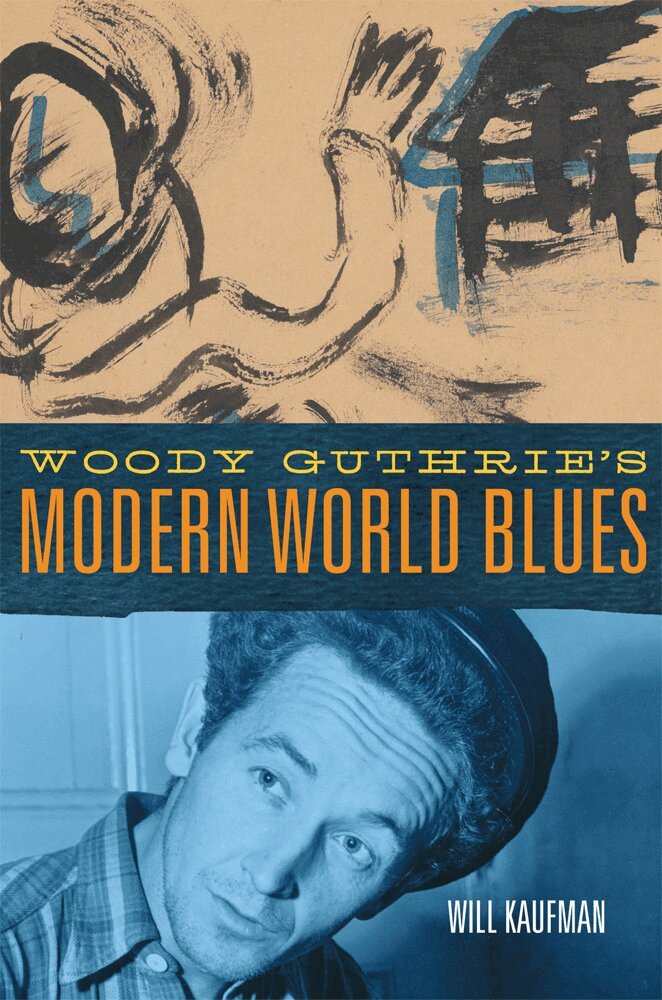
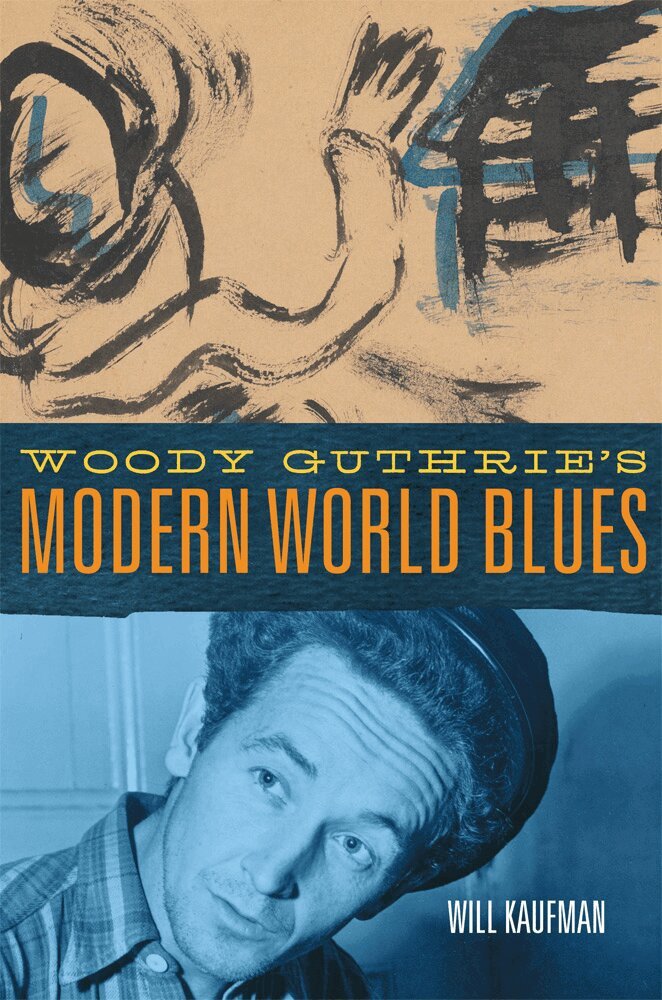
Mention Woody Guthrie, and people who know the name are likely to think of the “Okie Bard,” dust storms behind him, riding a boxcar or walking a red-dirt road, a battered guitar strapped to his back. But unlock Guthrie from the confines of rural folk and Hollywood mythology, as Will Kaufman does here, and you’ll find an abstract painter and sculptor who wrote about atomic energy and Ingrid Bergman and developed advanced theories of dialectical materialism and human engineering—in short, a folk singer who was deeply engaged with the art, ideas, and issues of his time.Guthrie may have been born in the Oklahoma hills, but his most productive years were spent in the metropolitan centers of Los Angeles and New York. Machines and their physics were among his favorite metaphors, fast cars were his passion, and airplanes and even flying saucers were his frequent subjects. His career-long immersion in radio, recording, and film inspired trenchant observations concerning mass media and communication, and he contributed to modern art as a prolific abstract painter, graphic artist, and sculptor.This book explores how, through multiple artistic forms, Guthrie thought and felt about the scientific method, atomic power, and war technology, as well as the shifting dynamics of gender and race. Drawing on previously unpublished archival sources, Kaufman brings to the fore what Guthrie’s insistently folksy popular image obscures: the essays, visual art, letters, verse, fiction, and voluminous notebook entries that reveal his profoundly modern sensibilities.Woody Guthrie emerges from these pages as a figure whose immense artistic output reflects the nation’s conflicted engagement with modernity. Capturing the breathtaking social and technological changes that took place during his extraordinarily productive career, Woody Guthrie’s Modern World Blues offers a unique and much-needed new perspective on a musical icon.
422 kr
Skickas inom 10-15 vardagar
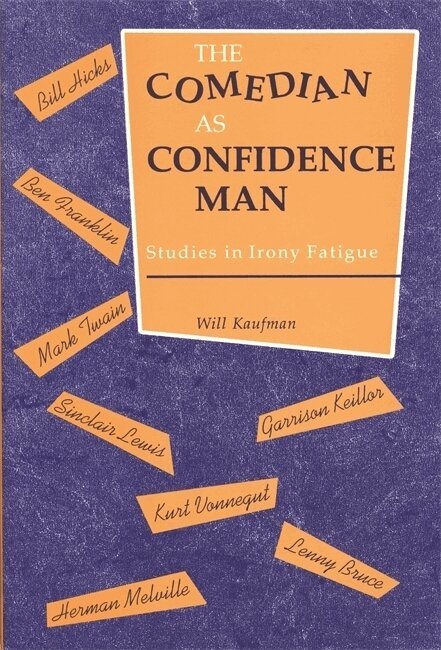
In this lively and fascinating analysis of humorists and their work, Will Kaufman breaks new ground with his irony fatigue theory. The Comedian as Confidence Man examines the humorist's internal conflict between the social critic who demands to be taken seriously and the comedian who never can be: the irony fatigue condition. Concentrating on eight American literary and performing comedians from the 18th, 19th, and 20th centuries, this study explores the irony fatigue affect that seems to pervade the work of comedians-those particular social observers who are obliged to promise, ""Only kidding, folks,"" even when they may not be; in G. B. Shaw's words, they must ""put things in such a way as to make people who would otherwise hang them believe they are joking."" If these social observers are obliged to become, in effect, confidence men, with irony as the satiric weapon that both attacks and diverts, then the implications are great for those social critics who above all wish to be heeded.
292 kr
Skickas inom 7-10 vardagar
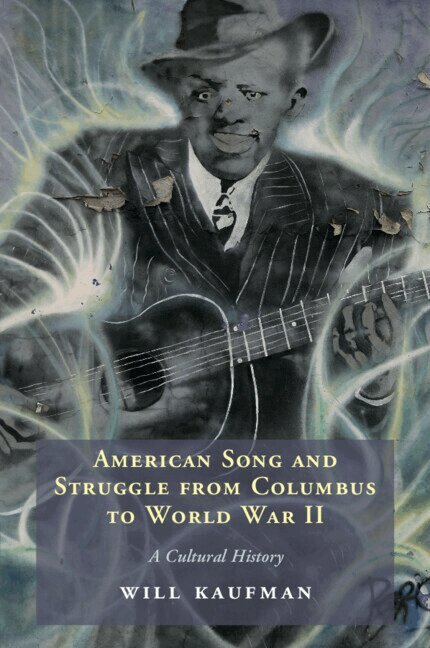
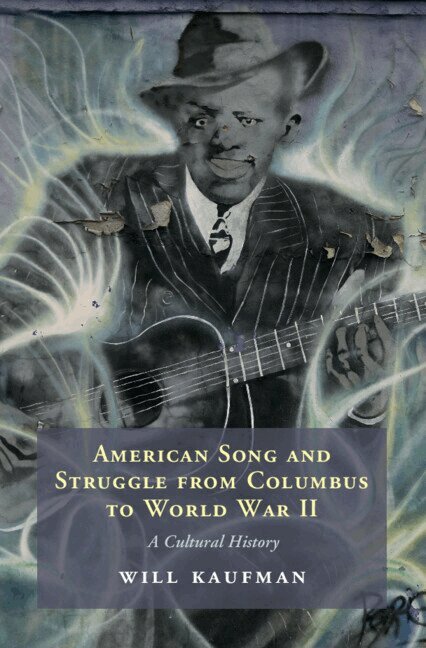
Long before anyone ever heard of 'protest music', people in America were singing about their struggles. They sang for justice and fairness, food and shelter, and equality and freedom; they sang to be acknowledged. Sometimes they also sang to oppress. This book uncovers the history of these people and their songs, from the moment Columbus made fateful landfall to the start of the Second World War, when 'protest music' emerged as an identifiable brand. Cutting across musical genres, Will Kaufman recovers the passionate voices of America itself. We encounter songs of the mainland and the conquered territories of Hawai'i, Cuba, Puerto Rico, and the Philippines; we hear Indigenous songs, immigrant songs and Klan songs, minstrel songs and symphonies, songs of the heard and the unheard, songs of the celebrated and the anonymous, of the righteous and the despicable. This magisterial book shows that all these songs are woven into the very fabric of American history.
409 kr
Skickas inom 7-10 vardagar
Long before anyone ever heard of 'protest music', people in America were singing about their struggles. They sang for justice and fairness, food and shelter, and equality and freedom; they sang to be acknowledged. Sometimes they also sang to oppress. This book uncovers the history of these people and their songs, from the moment Columbus made fateful landfall to the start of the Second World War, when 'protest music' emerged as an identifiable brand. Cutting across musical genres, Will Kaufman recovers the passionate voices of America itself. We encounter songs of the mainland and the conquered territories of Hawai'i, Cuba, Puerto Rico, and the Philippines; we hear Indigenous songs, immigrant songs and Klan songs, minstrel songs and symphonies, songs of the heard and the unheard, songs of the celebrated and the anonymous, of the righteous and the despicable. This magisterial book shows that all these songs are woven into the very fabric of American history.
2 557 kr
Skickas inom 10-15 vardagar
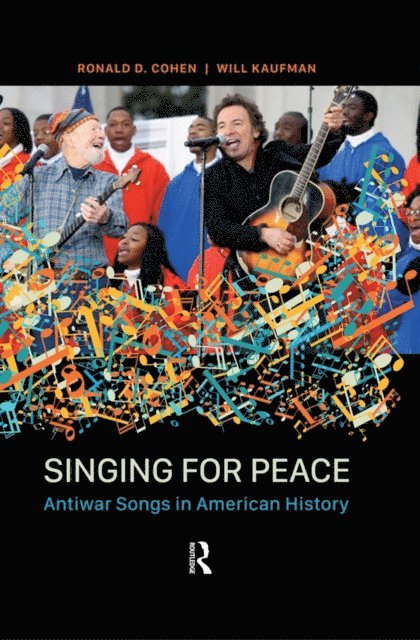
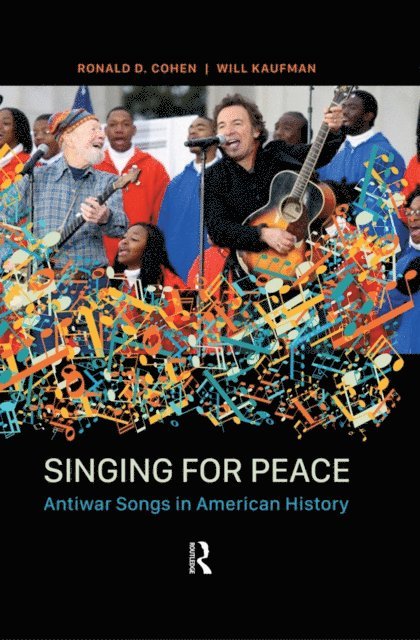
Wars have dominated the history of the United States since its founding, but there has also been a long history of antiwar activity. Peace songs have emerged out of every military conflict involving the United States. "Singing for Peace" vividly portrays this rich antiwar history, beginning in the eighteenth century and continuing into the twenty-first.Most of the twentieth-century output was dominated by folk groups and acoustic singer-songwriters. The Vietnam War saw the increased dovetailing of folk and rock music, so that rock and folk-rock took on an ever-larger share of protest activity, then punk, metal, hip-hop, and rap. The authors draw upon a wide range of primary and secondary sources, while quoting many popular and lesser-known song lyrics, and including a range of photos and illustrations. These songs have long served to both shape and reveal the feelings of citizens opposed to America s wars."
563 kr
Skickas inom 10-15 vardagar
Wars have dominated the history of the United States since its founding, but there has also been a long history of antiwar activity. Peace songs have emerged out of every military conflict involving the United States. "Singing for Peace" vividly portrays this rich antiwar history, beginning in the eighteenth century and continuing into the twenty-first.Most of the twentieth-century output was dominated by folk groups and acoustic singer-songwriters. The Vietnam War saw the increased dovetailing of folk and rock music, so that rock and folk-rock took on an ever-larger share of protest activity, then punk, metal, hip-hop, and rap. The authors draw upon a wide range of primary and secondary sources, while quoting many popular and lesser-known song lyrics, and including a range of photos and illustrations. These songs have long served to both shape and reveal the feelings of citizens opposed to America s wars."