Willard Spiegelman - Böcker
Visar alla böcker från författaren Willard Spiegelman. Handla med fri frakt och snabb leverans.
11 produkter
11 produkter
1 199 kr
Skickas inom 5-8 vardagar
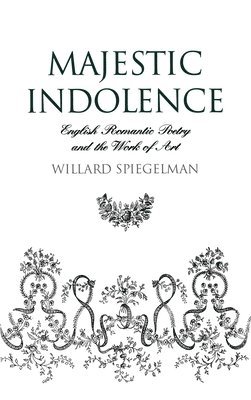
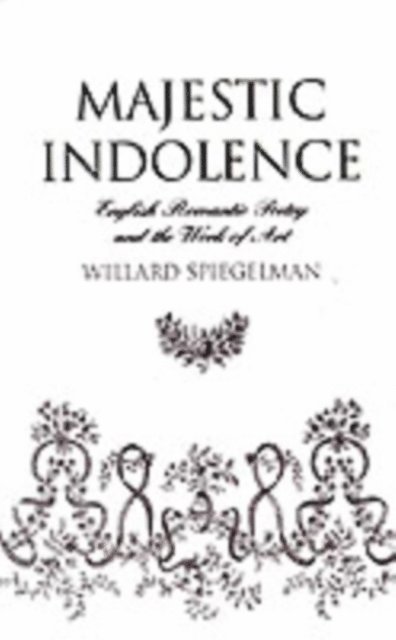
This book examines the theme of indolence in Romantic poetry and demonstrates the rich variety of experiments preformed upon it by a quartet of poets, which focuses on Wordsworth, Coleridge, Shelley and Keats.
1 340 kr
Skickas inom 5-8 vardagar
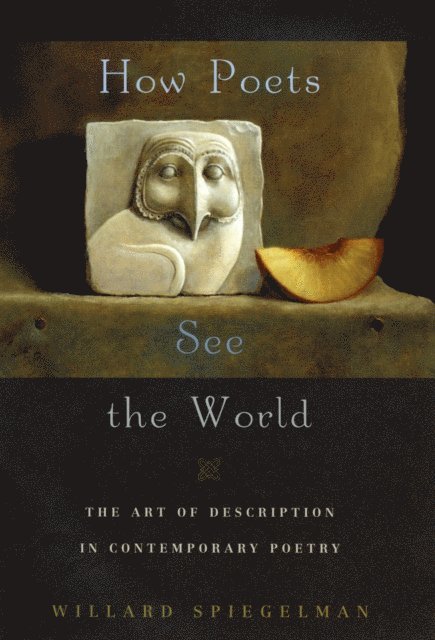
Although readers of prose fiction sometimes find descriptive passages superfluous or boring, description itself is often the most important aspect of a poem. This book examines how a variety of contemporary poets use description in their work. Description has been the great burden of poetry. How do poets see the world? How do they look at it? What do they look for? Is description an end in itself, or a means of expressing desire? Ezra Pound demanded that a poem should represent the external world as objectively and directly as possible, and William Butler Yeats, in his introduction to The Oxford Book of Modern Verse (1936), said that he and his generation were rebelling against, inter alia, "irrelevant descriptions of nature" in the work of their predecessors. The poets in this book, however, who are distinct in many ways from one another, all observe the external world of nature or the reflected world of art, and make relevant poems out of their observations.This study deals with the crisp, elegant work of Charles Tomlinson, the swirling baroque poetry of Amy Clampitt, the metaphysical meditations of Charles Wright from a position in his backyard, the weather reports and landscapes of John Ashbery, and the "new way of looking" that Jorie Graham proposes to explore in her increasingly fragmented poems. All of these poets, plus others (Gary Snyder, Theodore Weiss, Irving Feldman, Richard Howard) who are dealt with more briefly, attend to what Wallace Stevens, in a memorable phrase, calls "the way things look each day." The ordinariness of daily reality is the beginning of the poets' own idiosyncratic, indeed unique, visions and styles.
427 kr
Skickas inom 5-8 vardagar
Although readers of prose fiction sometimes find descriptive passages superfluous or boring, description itself is often the most important aspect of a poem. This book examines how a variety of contemporary poets use description in their work. Description has been the great burden of poetry. How do poets see the world? How do they look at it? What do they look for? Is description an end in itself, or a means of expressing desire? Ezra Pound demanded that a poem should represent the external world as objectively and directly as possible, and William Butler Yeats, in his introduction to The Oxford Book of Modern Verse (1936), said that he and his generation were rebelling against, inter alia, "irrelevant descriptions of nature" in the work of their predecessors. The poets in this book, however, who are distinct in many ways from one another, all observe the external world of nature or the reflected world of art, and make relevant poems out of their observations.
878 kr
Skickas inom 5-8 vardagar
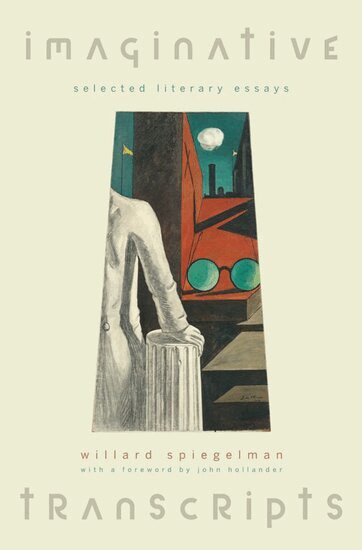
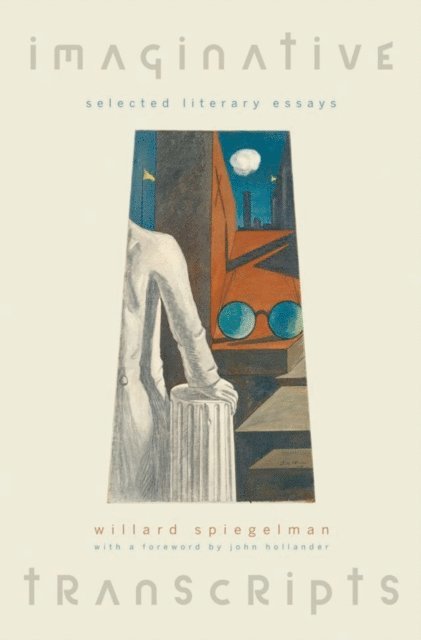
Willard Spiegelman is considered one of the finest critics of poetry writing today and this volume collects his best work on the subject, offering essays that span his entire career and chart his changing relationship to an elusive form. He takes the measure of a wide spectrum of poetry, ranging from the Romantic era to the present, through an examination of those poets whose language, formal experiments, and music have fascinated him throughout his career. With his trademark engaging and stylish prose, Spiegelman takes readers on a tour of the rich and diverse landscape of British and American poetry, as he provides nuanced, insightful readings of works by William Wordsworth, John Keats, Robert Lowell, Elizabeth Bishop, and John Ashbery, to name just a few.
331 kr
Tillfälligt slut
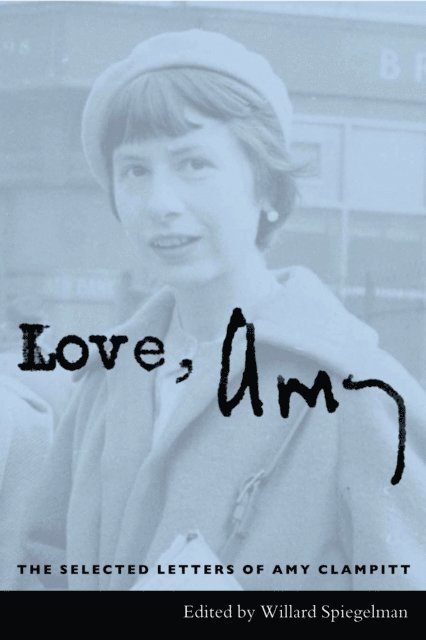
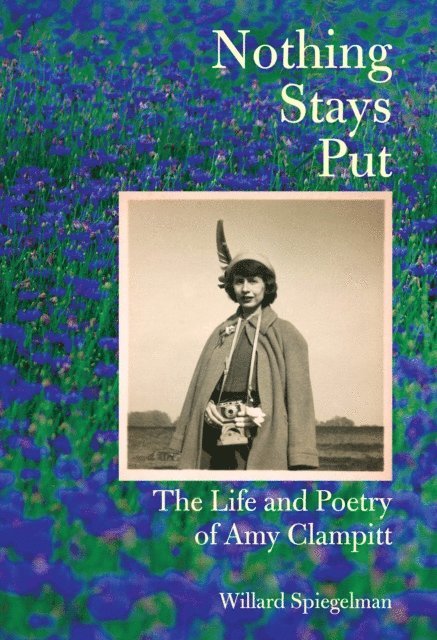
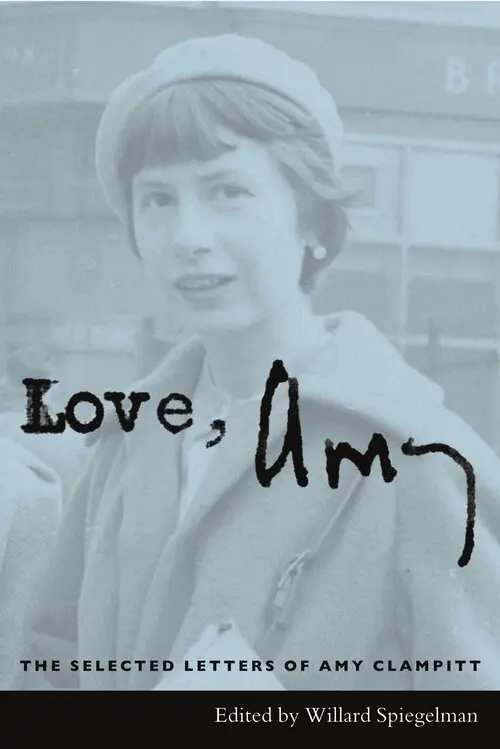
This extraordinary collection of letters sheds light on one of the most important postwar American poets and on a creative woman's life from the 1950s onward. Amy Clampitt was an American original, a literary woman from a Quaker family in rural Iowa who came to New York after college and lived in Manhattan for almost forty years before she found success (or before it found her) at the age of 63 with the publication of The Kingfisher. Her letters from 1950 until her death in 1994 are a testimony to her fiercely independent spirit and her quest for various kinds of truth-religious, spiritual, political, and artistic. Written in clear, limpid prose, Clampitt's letters illuminate the habits of imagination she would later use to such effect in her poetry. She offers, with wit and intelligence, an intimate and personal portrait of life as an independent woman recently arrived in New York City. She recounts her struggle to find a place for herself in the world of literature as well as the excitement of living in Manhattan. In other letters she describes a religious conversion (and then a gradual religious disillusionment) and her work as a political activist.Clampitt also reveals her passionate interest in and fascination with the world around her. She conveys her delight in a variety of day-to-day experiences and sights, reporting on trips to Europe, the books she has read, and her walks in nature. After struggling as a novelist, Clampitt turned to poetry in her fifties and was eventually published in the New Yorker. In the last decade of her life she appeared like a meteor on the national literary scene, lionized and honored. In letters to Helen Vendler, Mary Jo Salter, and others, she discusses her poetry as well as her surprise at her newfound success and the long overdue satisfaction she obviously felt, along with gratitude, for her recognition.
175 kr
Skickas inom 5-8 vardagar
764 kr
Skickas inom 3-6 vardagar
Wordsworth’s Heroes reframes the poet of “egotistical sublime” fame as a maker of ordinary heroism—someone who finds grandeur not at Thermopylae but in cottages, churchyards, and the habits of speech that shape moral character. Willard Spiegelman assembles a gallery of Wordsworth’s “representative men and women”—readers, children, and old men—while staging a decisive rethink of the poet’s alleged self-absorption. Anchored by a fresh account of “Character of the Happy Warrior,” the book shows how Wordsworth abstracts heroism from biography (Nelson) into a type available to “every man in arms”—and, crucially, to noncombatants in the “mild concerns of ordinary life.” Through close readings that braid rhetoric, prosody, and ethics, Spiegelman connects the Happy Warrior to the leech-gatherer of “Resolution and Independence,” to the sculptural presences of “Yew-Trees,” and to Wordsworth’s lifelong negotiation between action and contemplation (agere et pati). The result is a Wordsworth placed not at the margins as eccentric prophet but at the center of the “commonal” (to borrow Wallace Stevens), where the heroic becomes a shared vocation learned by imitation, memory, and speech.Organized with the classroom and the scholar equally in mind, Wordsworth’s Heroes pairs thematic chapters on readers, children, and elders with sustained interpretations of The Prelude, The White Doe of Rylstone, and The Excursion. Spiegelman tracks how the “divisionary” imagination of the late poems turns characters into instructive exempla, while earlier lyrics test how far happiness, suffering, and endurance can be made heroic without losing their ordinariness. Along the way, the study situates Wordsworth among ancient and modern theorists of greatness—from Theophrastus and Cicero to Emerson, Carlyle, and Stevens—showing how his poetry both absorbs and resists heroic paradigms. This is scholarly criticism with the cadence of literary advocacy: lucid, historically alert, and attentive to how diction, syntax, and stanza shape ethical vision. For readers of Romanticism, narrative, and moral philosophy, Spiegelman offers a compelling case that Wordsworth’s truest heroes are “ourselves”—not exceptions to, but exponents of, the human commonwealth.This title is part of UC Press's Voices Revived program, which commemorates University of California Press’s mission to seek out and cultivate the brightest minds and give them voice, reach, and impact. Drawing on a backlist dating to 1893, Voices Revived makes high-quality, peer-reviewed scholarship accessible once again using print-on-demand technology. This title was originally published in 1985.
882 kr
Skickas inom 7-10 vardagar
Wordsworth’s Heroes reframes the poet of “egotistical sublime” fame as a maker of ordinary heroism—someone who finds grandeur not at Thermopylae but in cottages, churchyards, and the habits of speech that shape moral character. Willard Spiegelman assembles a gallery of Wordsworth’s “representative men and women”—readers, children, and old men—while staging a decisive rethink of the poet’s alleged self-absorption. Anchored by a fresh account of “Character of the Happy Warrior,” the book shows how Wordsworth abstracts heroism from biography (Nelson) into a type available to “every man in arms”—and, crucially, to noncombatants in the “mild concerns of ordinary life.” Through close readings that braid rhetoric, prosody, and ethics, Spiegelman connects the Happy Warrior to the leech-gatherer of “Resolution and Independence,” to the sculptural presences of “Yew-Trees,” and to Wordsworth’s lifelong negotiation between action and contemplation (agere et pati). The result is a Wordsworth placed not at the margins as eccentric prophet but at the center of the “commonal” (to borrow Wallace Stevens), where the heroic becomes a shared vocation learned by imitation, memory, and speech.Organized with the classroom and the scholar equally in mind, Wordsworth’s Heroes pairs thematic chapters on readers, children, and elders with sustained interpretations of The Prelude, The White Doe of Rylstone, and The Excursion. Spiegelman tracks how the “divisionary” imagination of the late poems turns characters into instructive exempla, while earlier lyrics test how far happiness, suffering, and endurance can be made heroic without losing their ordinariness. Along the way, the study situates Wordsworth among ancient and modern theorists of greatness—from Theophrastus and Cicero to Emerson, Carlyle, and Stevens—showing how his poetry both absorbs and resists heroic paradigms. This is scholarly criticism with the cadence of literary advocacy: lucid, historically alert, and attentive to how diction, syntax, and stanza shape ethical vision. For readers of Romanticism, narrative, and moral philosophy, Spiegelman offers a compelling case that Wordsworth’s truest heroes are “ourselves”—not exceptions to, but exponents of, the human commonwealth.This title is part of UC Press's Voices Revived program, which commemorates University of California Press’s mission to seek out and cultivate the brightest minds and give them voice, reach, and impact. Drawing on a backlist dating to 1893, Voices Revived makes high-quality, peer-reviewed scholarship accessible once again using print-on-demand technology. This title was originally published in 1985.
939 kr
Skickas inom 3-6 vardagar
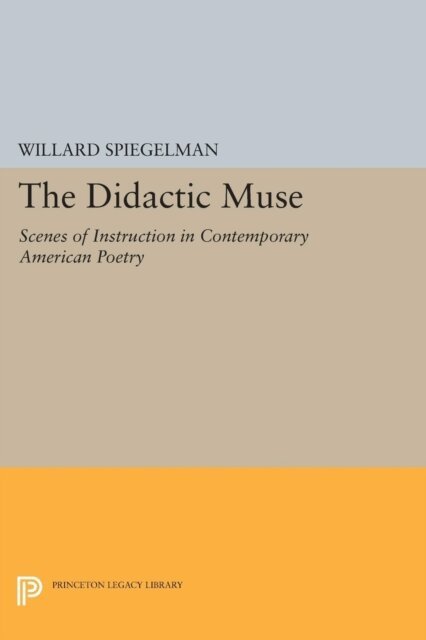
Writing with the vigor and elan that readers have come to expect from his many astute reviews and essays, Willard Spiegelman maintains that contemporary American poets have returned to the poetic aims of an earlier era: to edify, as well as to delight, and thus to serve the "didactic muse." What Spiegelman says about individual poets--such as Nemerov, Hecht, Ginsberg, Pinsky, Ammons, Rich, and Merrill, among others--is wonderfully insightful. Furthermore, his outlook on their work--the way he takes quite literally the teacherly elements of their poems--challenges long-standing conceptions both about contemporary writing and about the poetry of the Eliot-Pound-Stevens-Williams generation. Beginning the book with a meditation on W. H. Auden's legacy to American poets, Spiegelman ends with a discussion of the multiple scenes of learning in Merrill's The Changing Light at Sandover, which he identifies as not only the major epic poem of the second half of the twentieth century but also as the period's most important georgic: a textbook full of scientific, mythic, artistic, and human instruction.The Didactic Muse reminds us that poets have traditionally acknowledged their function as teachers, from Horace's advice that poetry should please and instruct to Robert Frost's aphorism that a poem "begins in delight and ends in wisdom." Whereas many of the critical remarks of the most important Romantic and modern poets suggest their desperate attempts to separate poetry from instruction, Spiegelman demonstrates that their practices often contradicted their theories. And he shows that our best contemporary poets are now embracing the older, classical paradigms. Originally published in 1989. The Princeton Legacy Library uses the latest print-on-demand technology to again make available previously out-of-print books from the distinguished backlist of Princeton University Press. These editions preserve the original texts of these important books while presenting them in durable paperback and hardcover editions. The goal of the Princeton Legacy Library is to vastly increase access to the rich scholarly heritage found in the thousands of books published by Princeton University Press since its founding in 1905.
2 201 kr
Skickas inom 3-6 vardagar
Writing with the vigor and elan that readers have come to expect from his many astute reviews and essays, Willard Spiegelman maintains that contemporary American poets have returned to the poetic aims of an earlier era: to edify, as well as to delight, and thus to serve the "didactic muse." What Spiegelman says about individual poets--such as Nemerov, Hecht, Ginsberg, Pinsky, Ammons, Rich, and Merrill, among others--is wonderfully insightful. Furthermore, his outlook on their work--the way he takes quite literally the teacherly elements of their poems--challenges long-standing conceptions both about contemporary writing and about the poetry of the Eliot-Pound-Stevens-Williams generation. Beginning the book with a meditation on W. H. Auden's legacy to American poets, Spiegelman ends with a discussion of the multiple scenes of learning in Merrill's The Changing Light at Sandover, which he identifies as not only the major epic poem of the second half of the twentieth century but also as the period's most important georgic: a textbook full of scientific, mythic, artistic, and human instruction.The Didactic Muse reminds us that poets have traditionally acknowledged their function as teachers, from Horace's advice that poetry should please and instruct to Robert Frost's aphorism that a poem "begins in delight and ends in wisdom." Whereas many of the critical remarks of the most important Romantic and modern poets suggest their desperate attempts to separate poetry from instruction, Spiegelman demonstrates that their practices often contradicted their theories. And he shows that our best contemporary poets are now embracing the older, classical paradigms. Originally published in 1989. The Princeton Legacy Library uses the latest print-on-demand technology to again make available previously out-of-print books from the distinguished backlist of Princeton University Press. These editions preserve the original texts of these important books while presenting them in durable paperback and hardcover editions. The goal of the Princeton Legacy Library is to vastly increase access to the rich scholarly heritage found in the thousands of books published by Princeton University Press since its founding in 1905.
169 kr
Skickas inom 5-8 vardagar