William A. Foley - Böcker
Visar alla böcker från författaren William A. Foley. Handla med fri frakt och snabb leverans.
5 produkter
5 produkter
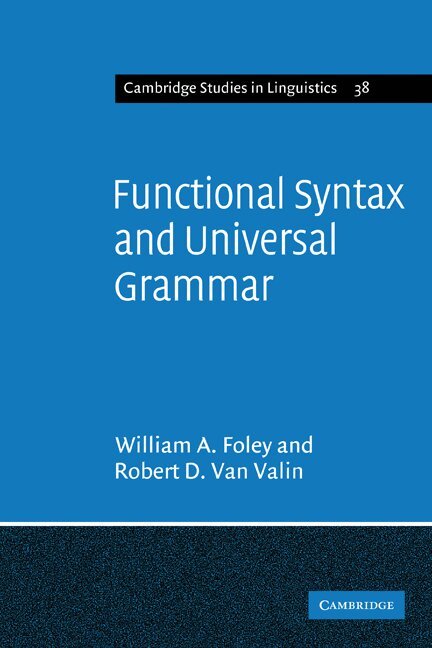
Del 38 - Cambridge Studies in Linguistics
Functional Syntax and Universal Grammar
Häftad, Engelska, 1984
577 kr
Skickas inom 7-10 vardagar
The key argument of this book, originally published in 1984, is that when human beings communicate with each other by means of a natural language they typically do not do so in simple sentences but rather in connected discourse - complex expressions made up of a number of clauses linked together in various ways. A necessary precondition for intelligible discourse is the speaker's ability to signal the temporal relations between the events that are being discussed and to refer to the participants in those events in such a way that it is clear who is being talked about. A great deal of the grammatical machinery in a language is devoted to this task, and Functional Syntax and Universal Grammar explores how different grammatical systems accomplish it. This book is an important attempt to integrate the study of linguistic form with the study of language use and meaning. It will be of particular interest to field linguists and those concerned with typology and language universals, and also to anthropologists involved in the study of language function.
747 kr
Skickas inom 7-10 vardagar
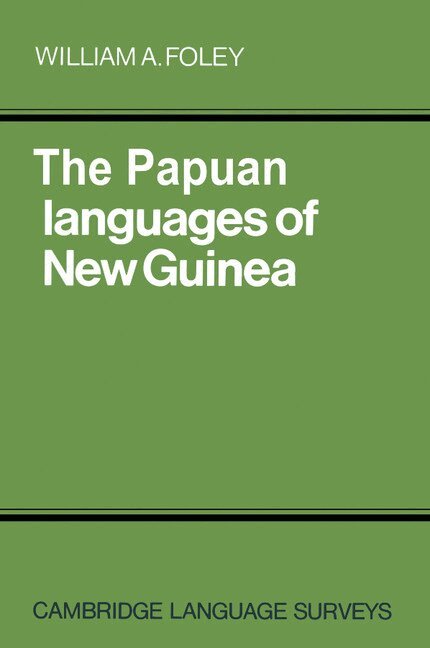
This introduction to the descriptive and historical linguistics of the Papuan languages of New Guinea provide an accessible account of one of the richest and most diverse linguistic situations in the world. The Papuan languages number over 700 (or 20 per cent of the world's total) in more than sixty language families. Less than a quarter of the individual languages have yet been adequately documented, and in this sense William Foley's book might be considered premature. However, in the search for language universals and generalisations in linguistic typology, it would be foolhardy to neglect the information that is available. In this respect alone, the present volume, systematically organised on mainly typology principles, is particularly timely and useful. In addition, the processes of linguistic diffusion are present in New Guinea to an extent probably paralleled elsewhere on the globe. The Papuan Languages of New Guinea will be of interest not only to general and comparative linguists and to typologists, but also to sociolinguists and anthropologists for the information it provides on the social dynamics of language content.
2 948 kr
Skickas inom 7-10 vardagar
No detailed description available for "The Role of Theory in Language Description".
1 618 kr
Skickas inom 5-8 vardagar
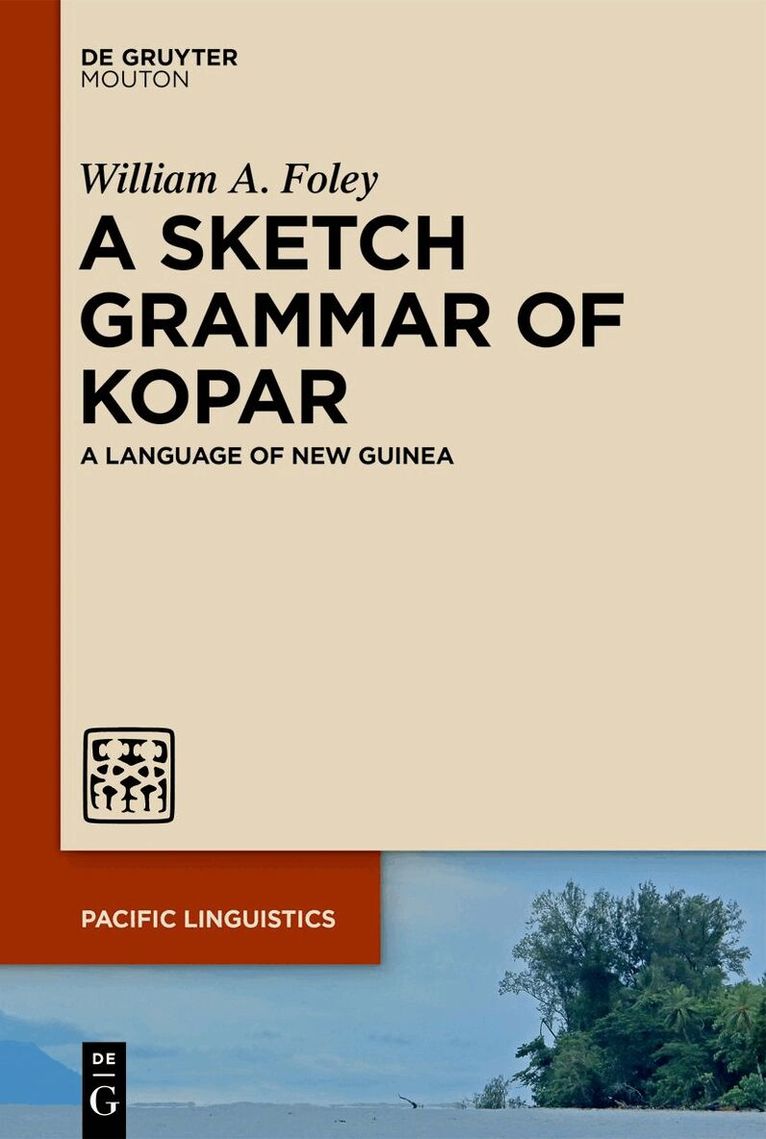
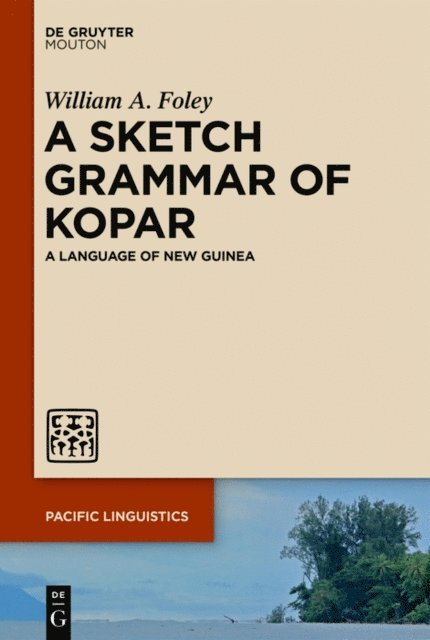
Kopar is a very moribund, close to extinct, language spoken in three villages at the mouth of the Sepik River in Papua New Guinea. This is the only description of the language available. It also discusses areas where rapid language shift is affecting the structure of Kopar. Although the period of fieldwork was necessarily short, this book provides as comprehensive a description as possible of the grammatical structure of this complex and fascinating language. It is quite thorough and detailed and goes well beyond what is normally considered a sketch grammar. It covers all the phenomena essential to description and comparison and gives clear, typologically sound definitions and explanations. The grammar is written with the research interests of language typologists and comparative grammarians foremost in mind. Typologically, Kopar can be described as a split ergative, polysynthetic language. The language lacks nominal case marking so ergativity or lack thereof is signaled by verbal agreement affixes. Tenses and moods which describe as yet unrealized events, like future and imperative, pattern accusatively for agreement affixes, while those express realized events, like past and present, pattern ergatively. In addition, the ergative case schema is overlaid by a direct-inverse inflectional schema determined by a person hierarchy, a feature Kopar shares with other languages in its Lower Sepik family. As a polysynthetic language, incorporation of sentential elements like temporals, locationals, adverbials and verbals is extensive, though noun incorporation is not. Sadly, this work is all the documentation we will likely ever have of Kopar, a language of potentially very high theoretical interest, given its rare typological profile. It will certainly be of interest to language typologists and comparative grammarians, and anyone who wants to explore the range of language variation
274 kr
Skickas inom 5-8 vardagar
Kopar is a very moribund, close to extinct, language spoken in three villages at the mouth of the Sepik River in Papua New Guinea. This is the only description of the language available. It also discusses areas where rapid language shift is affecting the structure of Kopar. Although the period of fieldwork was necessarily short, this book provides as comprehensive a description as possible of the grammatical structure of this complex and fascinating language. It is quite thorough and detailed and goes well beyond what is normally considered a sketch grammar. It covers all the phenomena essential to description and comparison and gives clear, typologically sound definitions and explanations. The grammar is written with the research interests of language typologists and comparative grammarians foremost in mind. Typologically, Kopar can be described as a split ergative, polysynthetic language. The language lacks nominal case marking so ergativity or lack thereof is signaled by verbal agreement affixes. Tenses and moods which describe as yet unrealized events, like future and imperative, pattern accusatively for agreement affixes, while those express realized events, like past and present, pattern ergatively. In addition, the ergative case schema is overlaid by a direct-inverse inflectional schema determined by a person hierarchy, a feature Kopar shares with other languages in its Lower Sepik family. As a polysynthetic language, incorporation of sentential elements like temporals, locationals, adverbials and verbals is extensive, though noun incorporation is not. Sadly, this work is all the documentation we will likely ever have of Kopar, a language of potentially very high theoretical interest, given its rare typological profile. It will certainly be of interest to language typologists and comparative grammarians, and anyone who wants to explore the range of language variation