William Bernhard – författare
Visar alla böcker från författaren William Bernhard. Handla med fri frakt och snabb leverans.
7 produkter
Legislative Style
Av William Bernhard, Tracy Sulkin
Häftad, 2018
332 kr
Lägg i varukorg
Once elected, members of Congress face difficult decisions about how to allocate their time and effort. On which issues should they focus? What is the right balance between working in one's district and on Capitol Hill? How much should they engage with the media to cultivate a national reputation? …
Legislative Style
Av Tracy Sulkin, William Bernhard
E-bok, 2018
643 kr
Lägg i varukorg
Once elected, members of Congress face difficult decisions about how to allocate their time and effort. On which issues should they focus? What is the right balance between working in one’s district and on Capitol Hill? How much should they engage with the media to cultivate a national reputation? …
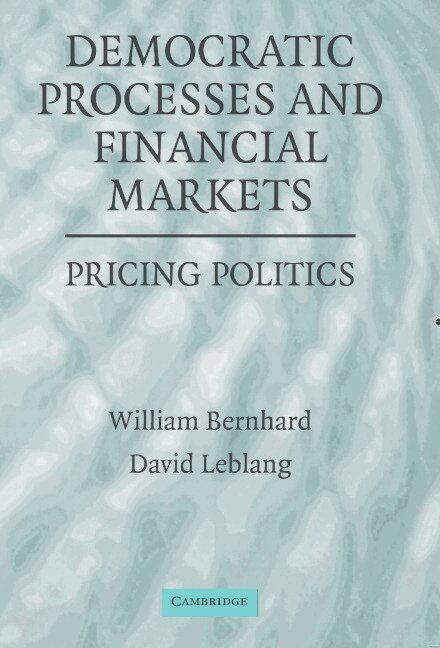
Democratic Processes and Financial Markets
Pricing Politics
Av David Leblang, William Bernhard
E-bok, 2006
457 kr
Lägg i varukorg
The authors examine the conditions under which democratic events, including elections, cabinet formations, and government dissolutions, affect asset markets. Where these events have less predictable outcomes, market returns are depressed and volatility increases. In contrast, where market actors …
Democratic Processes and Financial Markets
Pricing Politics
Av William Bernhard, David Leblang
Inbunden, 2006
1240 kr
Lägg i varukorg
The authors examine the conditions under which democratic events, including elections, cabinet formations, and government dissolutions, affect asset markets. Where these events have less predictable outcomes, market returns are depressed and volatility increases. In contrast, where market actors …
Democratic Processes and Financial Markets
Pricing Politics
Av David Leblang, William Bernhard
E-bok, 2006
457 kr
Lägg i varukorg
The authors examine the conditions under which democratic events, including elections, cabinet formations, and government dissolutions, affect asset markets. Where these events have less predictable outcomes, market returns are depressed and volatility increases. In contrast, where market actors …
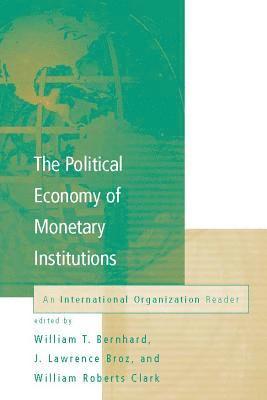
Political Economy of Monetary Institutions
An International Organization Reader
Av William Bernhard, J. Lawrence Broz m. fl.
Häftad, 2003
61 kr
Tillfälligt slut
Democratic Processes and Financial Markets
Pricing Politics
Av William Bernhard, David Leblang
Häftad, 2006
378 kr
Tillfälligt slut
The authors examine the conditions under which democratic events, including elections, cabinet formations, and government dissolutions, affect asset markets. Where these events have less predictable outcomes, market returns are depressed and volatility increases. In contrast, where market actors …