William Culbertson – författare
Visar alla böcker från författaren William Culbertson. Handla med fri frakt och snabb leverans.
11 produkter
11 produkter
Häftad, Engelska, 2021
862 kr
Skickas inom 10-15 vardagar
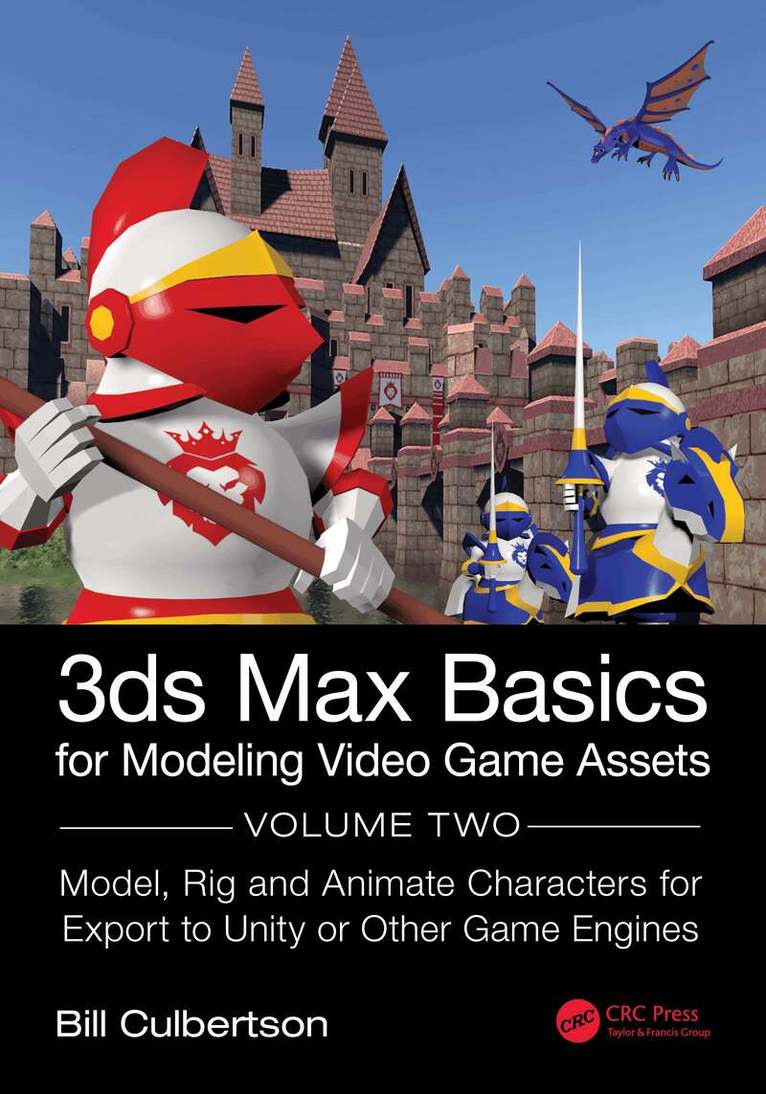
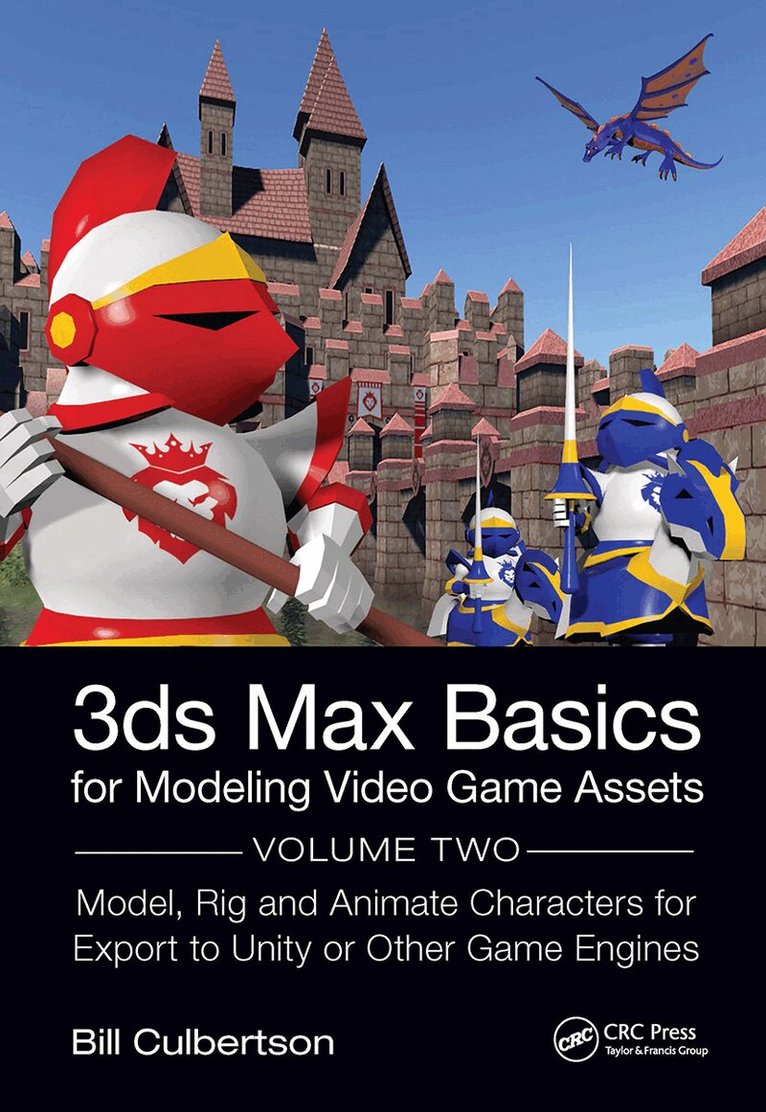
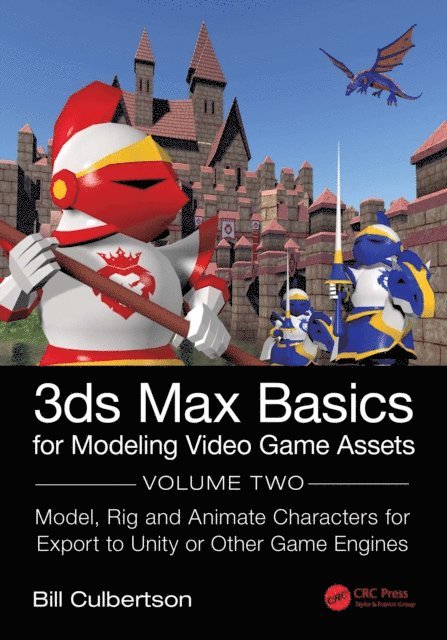
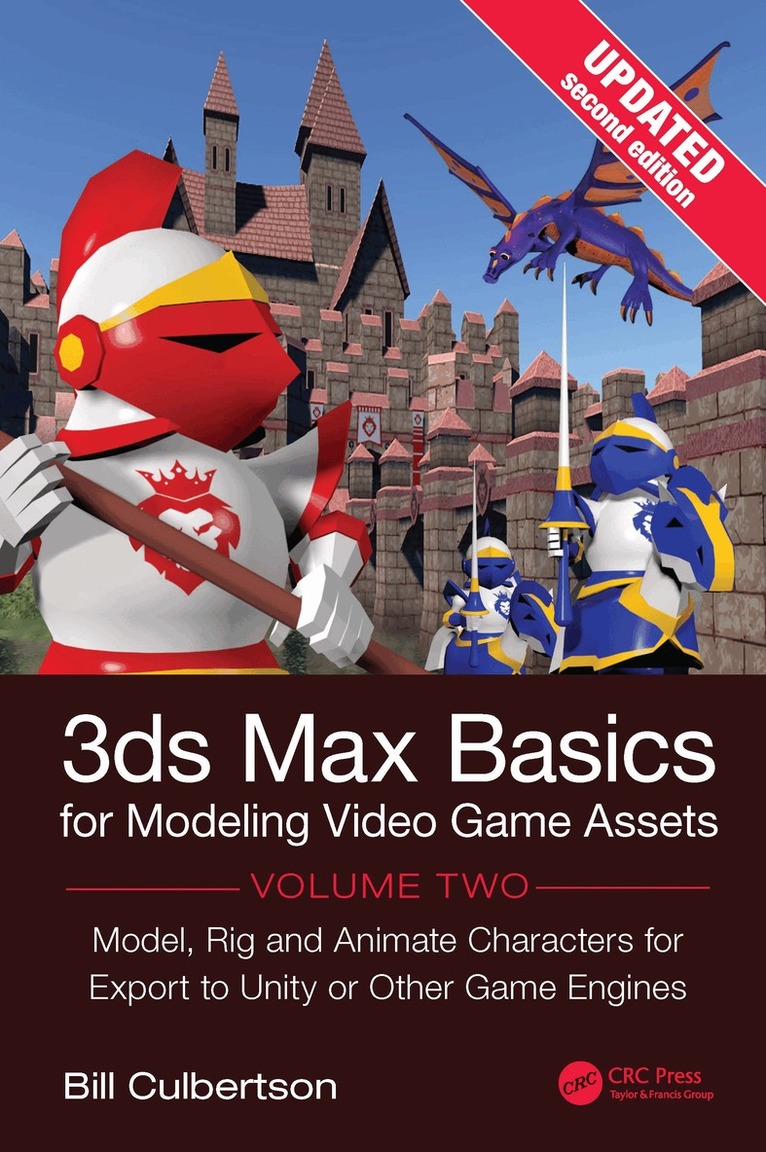
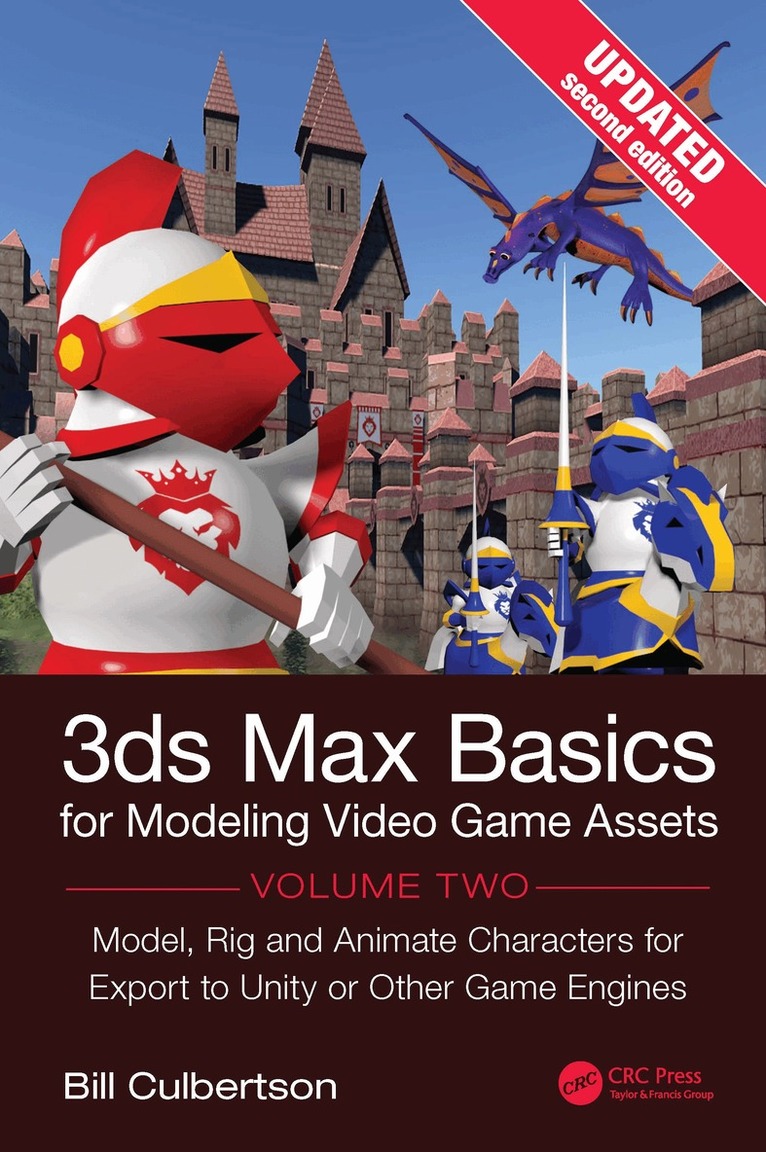
As a textbook for learning the fundamentals of modeling, rigging and animating 3D-modeled characters for use in video games, this step-by-step lesson book builds on the reader's modeling skills acquired from reading Volume I. The reader will model characters for the Castle Environment created in Volume I, which will be rigged using the Character Animation Toolkit (CAT) in 3ds Max and animated with game moves. The Skin Modifier is used for associating the meshes to the rigs and the characters are then exported to the Unity game engine and integrated into the Castle Scene with a Third Person Character camera. As the text introduces new modeling skills, it additionally calls on the reader to perform repetitive tasks, reinforcing skills learned in the process. The content is presented as if the reader is in a working video game studio, being responsible for researching asset design and providing the team with placeholder assets and final model assets that are unwrapped and custom textured using both box mapping and the 3ds Max Quick Peel tool. Although the text uses Autodesk 3ds Max for the modeling program, the principles are transferable to other major modeling programs.Key Features: The goal of this book is to teach the fundamentals of 3D modeling video game characters in a simplified, logical progression optimized for learning at a beginner level. Rigging principles (Linking, Inverse Kinematics [IK], Forward Kinematics [FK], Skin Deformation, Weighting Vertices and more) are introduced in a gradual progression to allow maximum comprehension and retention. This series of modeling exercises is the result of having successfully taught over 1000 video game students the fundamentals of 3D modeling. This complete, clearly written and concise text is written for self-paced learning, helping those instructors who might not be fully trained in 3D modeling and those interested in self-teaching. Includes instructions and project files for exporting the finished project environment into the 3D game engine, Unity. A companion site (www.3dsMaxBasics.com) includes working 3ds Max project files for chapters, notes and corrections, a 3ds Max user interface, 3ds Max shortcut keys and more.
Inbunden, Engelska, 2021
1 930 kr
Skickas inom 10-15 vardagar
As a textbook for learning the fundamentals of modeling, rigging and animating 3D-modeled characters for use in video games, this step-by-step lesson book builds on the reader's modeling skills acquired from reading Volume I. The reader will model characters for the Castle Environment created in Volume I, which will be rigged using the Character Animation Toolkit (CAT) in 3ds Max and animated with game moves. The Skin Modifier is used for associating the meshes to the rigs and the characters are then exported to the Unity game engine and integrated into the Castle Scene with a Third Person Character camera. As the text introduces new modeling skills, it additionally calls on the reader to perform repetitive tasks, reinforcing skills learned in the process. The content is presented as if the reader is in a working video game studio, being responsible for researching asset design and providing the team with placeholder assets and final model assets that are unwrapped and custom textured using both box mapping and the 3ds Max Quick Peel tool. Although the text uses Autodesk 3ds Max for the modeling program, the principles are transferable to other major modeling programs.Key Features: The goal of this book is to teach the fundamentals of 3D modeling video game characters in a simplified, logical progression optimized for learning at a beginner level. Rigging principles (Linking, Inverse Kinematics [IK], Forward Kinematics [FK], Skin Deformation, Weighting Vertices and more) are introduced in a gradual progression to allow maximum comprehension and retention. This series of modeling exercises is the result of having successfully taught over 1000 video game students the fundamentals of 3D modeling. This complete, clearly written and concise text is written for self-paced learning, helping those instructors who might not be fully trained in 3D modeling and those interested in self-teaching. Includes instructions and project files for exporting the finished project environment into the 3D game engine, Unity. A companion site (www.3dsMaxBasics.com) includes working 3ds Max project files for chapters, notes and corrections, a 3ds Max user interface, 3ds Max shortcut keys and more.
Inbunden, Engelska, 2024
2 073 kr
Skickas inom 10-15 vardagar
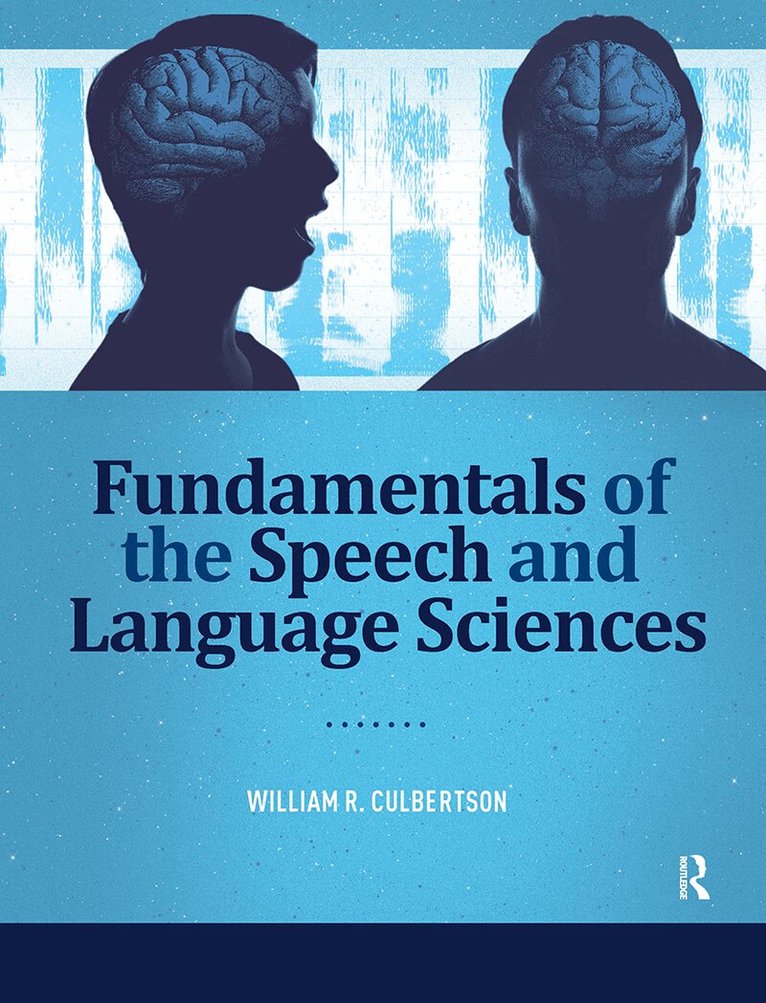
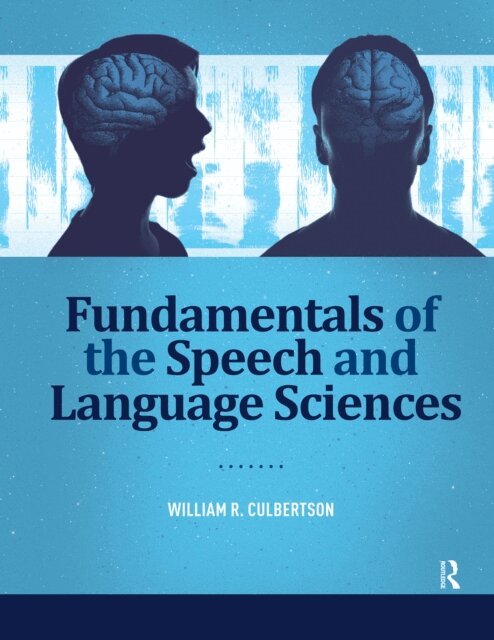
For a strong foundation upon which to build their futures, students in communication sciences and disorders programs need the best, most up-to-date information available to guide them. To this end, Fundamentals of the Speech and Language Sciences provides a thorough understanding of the core concepts in speech and language while maintaining a readable, engaging tone.Students will be exposed to the fundamentals of acoustics, respiratory science, voice production, acoustic phonetics, and sound spectrography. Language representation and motor programming as they pertain to the dynamic process of speech communication are also explored, as are the fundamentals of speech perception and instrumentation. To give students context, side bars feature the stories of seminal scientists and scholars and their contributions to the topics being discussed.This text benefits from Dr. William Culbertson’s nearly three decades of experience in teaching, as well as another decade of experience as a clinical speech-language pathologist. That experience has honed his ability to clearly communicate these crucial topics in a way that students will understand.Topics covered:The scientific method and various types of research used to study the normal aspects of human speech and hearingThe basics of physics as they pertain to energy, motion, displacement, force, and pressure and their relationship to speech productionThe process of respiration as it pertains to gas compression, speech valving, driving pressure, impedance, and flowVoice onset, modes of vocal vibration, pitch adjustment, volume and qualityThe process of dynamic interaction representation at the cortical and subcortical levels of the five basic speech processes: respiration, phonation, articulation, resonance, and prosodyUndergraduate students in communication sciences and disorders programs, as well as the related programs of music (voice), special education, and speech communication, will value Fundamentals of the Speech and Language Sciences as the formative text for their understanding of the speech and language sciences.
Häftad, Engelska, 2026
774 kr
Kommande
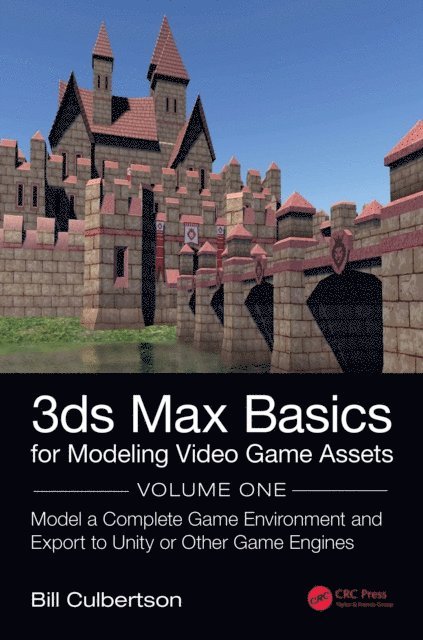
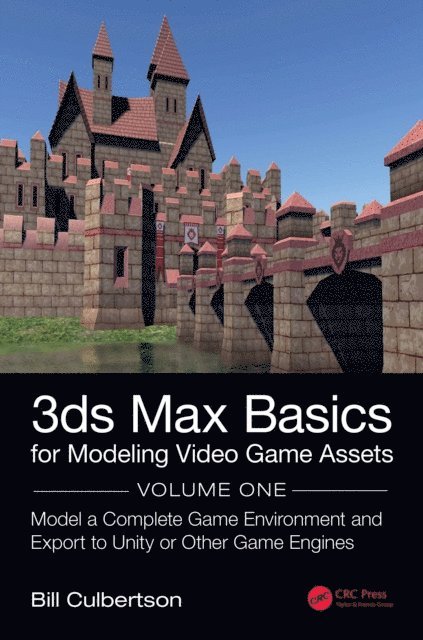
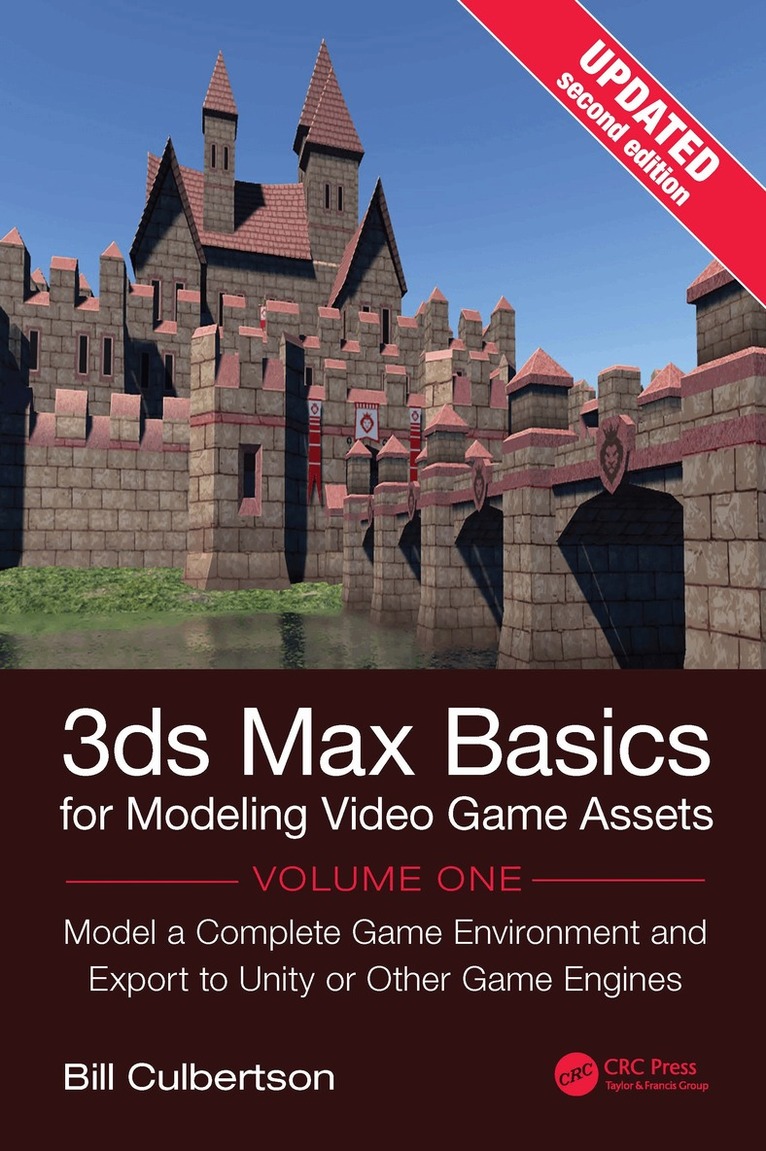
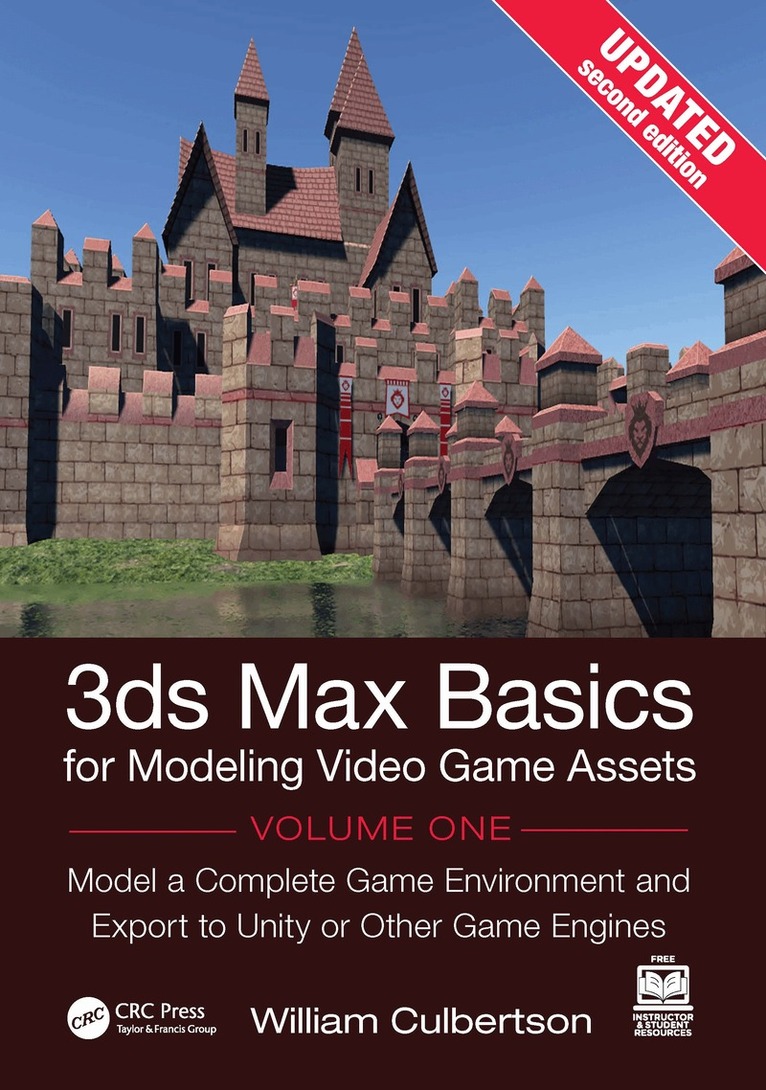
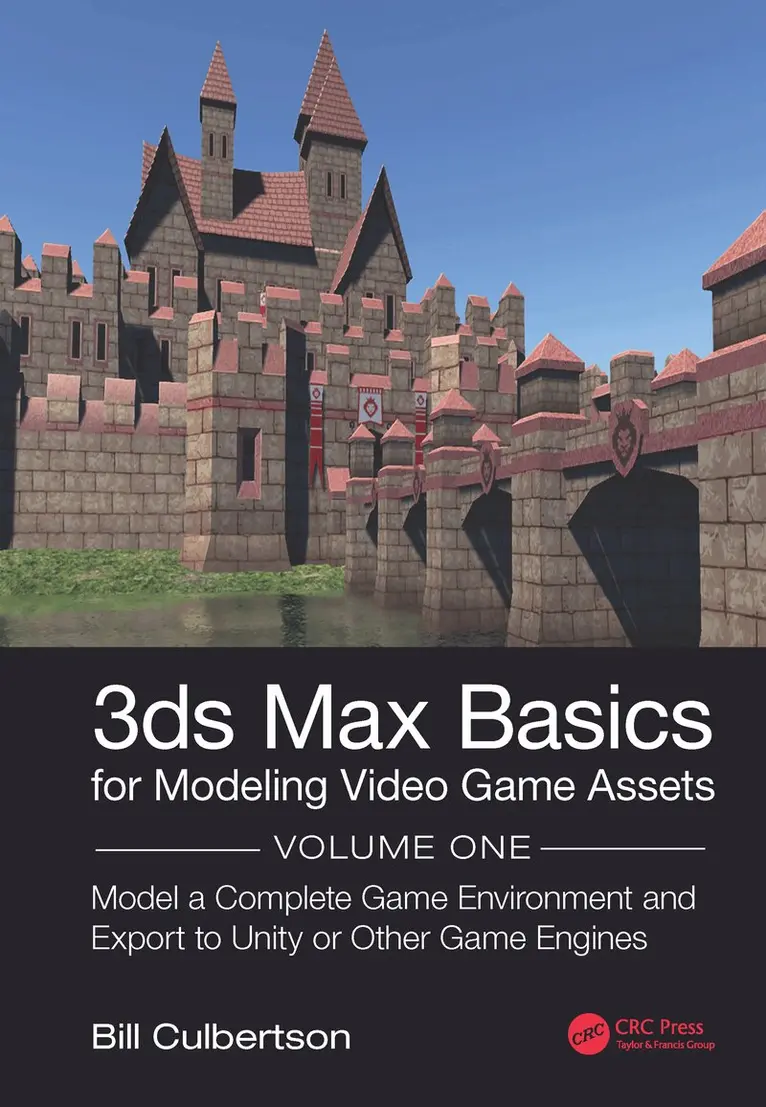
3ds Max Basics for Modeling Video Game Assets, Volume One is a project-based introduction to 3D modeling designed for students, educators, and beginners entering the world of game development. Written by veteran instructor and industry artist Bill Culbertson, the book applies real-world workflows to teach foundational skills using Autodesk 3ds Max.Through a structured, step-by-step process, readers build a modular medieval castle environment—progressing from basic forms to fully textured, export-ready game assets. Each lesson simulates a professional game studio pipeline, reinforcing key concepts while preparing students to integrate their work into the Unity game engine.The book features updated workflows and visual references, practical tips for modeling, UV mapping, and exporting, and reinforced learning through repetition and milestone-based projects. While the instruction is presented in 3ds Max, the principles and workflows are transferable to other major 3D modeling platforms.Stay current with updates, resources, and downloadable project files at 3dsMaxBasics.com—a dedicated hub for both students and instructors.Ideal for:Game design and animation coursesHigh school, college, and university programsSelf-paced learners and creative technology classroomsKey Features:A proven curriculum refined through teaching over 1,000 video game studentsClear, concise instruction designed for self-paced learningStep-by-step visuals that reinforce concepts and techniquesIncludes project files and instructions for exporting assets into UnityAppendices with additional 3ds Max tools and reference materialsThis Edition Includes:Updated workflows and visual referencesPractical tips for modeling, UV mapping, and exportingReinforced learning through repetition and milestone-based projects
Inbunden, Engelska, 2026
1 407 kr
Kommande
3ds Max Basics for Modeling Video Game Assets, Volume One is a project-based introduction to 3D modeling designed for students, educators, and beginners entering the world of game development. Written by veteran instructor and industry artist Bill Culbertson, the book applies real-world workflows to teach foundational skills using Autodesk 3ds Max.Through a structured, step-by-step process, readers build a modular medieval castle environment—progressing from basic forms to fully textured, export-ready game assets. Each lesson simulates a professional game studio pipeline, reinforcing key concepts while preparing students to integrate their work into the Unity game engine.The book features updated workflows and visual references, practical tips for modeling, UV mapping, and exporting, and reinforced learning through repetition and milestone-based projects. While the instruction is presented in 3ds Max, the principles and workflows are transferable to other major 3D modeling platforms.Stay current with updates, resources, and downloadable project files at 3dsMaxBasics.com—a dedicated hub for both students and instructors.Ideal for:Game design and animation coursesHigh school, college, and university programsSelf-paced learners and creative technology classroomsKey Features:A proven curriculum refined through teaching over 1,000 video game studentsClear, concise instruction designed for self-paced learningStep-by-step visuals that reinforce concepts and techniquesIncludes project files and instructions for exporting assets into UnityAppendices with additional 3ds Max tools and reference materialsThis Edition Includes:Updated workflows and visual referencesPractical tips for modeling, UV mapping, and exportingReinforced learning through repetition and milestone-based projects
Häftad, Engelska, 2026
780 kr
Kommande
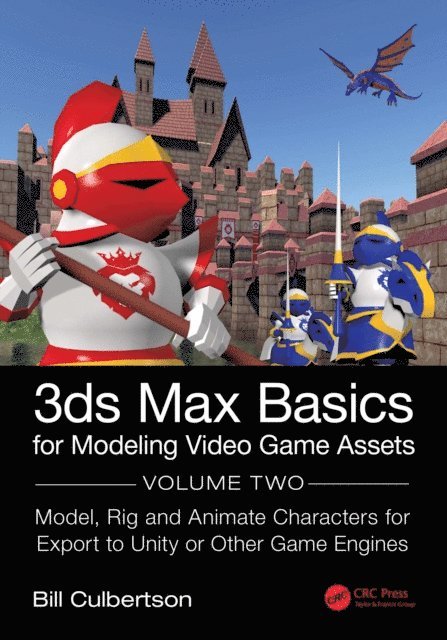
3ds Max Basics for Modeling Video Game Assets, Volume Two builds on the foundational skills introduced in Volume One, guiding readers into the creation of fully realized 3D characters for video games. Written by veteran instructor and industry artist Bill Culbertson, this volume introduces character modeling, rigging, and animation using real-world production workflows in Autodesk 3ds Max.Through a structured, step-by-step process, readers create characters designed for the medieval castle environment developed in Volume One. Characters are rigged using the Character Animation Toolkit (CAT), skinned using the Skin Modifier, and animated with essential in-game movements. The completed characters are then exported into the Unity game engine and integrated into a playable third-person environment.The book features an integrated character pipeline from modeling to in-engine implementation, reinforcing learning through repetition while simulating a professional game studio pipeline—guiding readers through asset research, placeholder development, final modeling, UV mapping, and texturing using techniques such as box mapping and Quick Peel.While instruction is presented using 3ds Max, the principles and workflows are transferable to other major 3D modeling and animation platforms. Stay current with updates, resources, and downloadable project files at 3dsMaxBasics.com—a dedicated hub for both students and instructors.Ideal for:Game design, animation, and character development coursesHigh school, college, and university programsSelf-paced learners and creative technology classroomsKey Features:Step-by-step introduction to character modeling, rigging, and animationGradual progression of rigging concepts including linking, IK, FK, skin deformation, and vertex weightingProven curriculum developed through teaching over 1,000 video game studentsIncludes project files and instructions for exporting characters into UnityThis Edition Includes:Integrated character pipeline from modeling to in-engine implementationPractical animation exercises using game-ready movement cyclesReinforced learning through repetition and milestone-based projects
Inbunden, Engelska, 2026
1 407 kr
Kommande
3ds Max Basics for Modeling Video Game Assets, Volume Two builds on the foundational skills introduced in Volume One, guiding readers into the creation of fully realized 3D characters for video games. Written by veteran instructor and industry artist Bill Culbertson, this volume introduces character modeling, rigging, and animation using real-world production workflows in Autodesk 3ds Max.Through a structured, step-by-step process, readers create characters designed for the medieval castle environment developed in Volume One. Characters are rigged using the Character Animation Toolkit (CAT), skinned using the Skin Modifier, and animated with essential in-game movements. The completed characters are then exported into the Unity game engine and integrated into a playable third-person environment.The book features an integrated character pipeline from modeling to in-engine implementation, reinforcing learning through repetition while simulating a professional game studio pipeline—guiding readers through asset research, placeholder development, final modeling, UV mapping, and texturing using techniques such as box mapping and Quick Peel.While instruction is presented using 3ds Max, the principles and workflows are transferable to other major 3D modeling and animation platforms. Stay current with updates, resources, and downloadable project files at 3dsMaxBasics.com—a dedicated hub for both students and instructors.Ideal for:Game design, animation, and character development coursesHigh school, college, and university programsSelf-paced learners and creative technology classroomsKey Features:Step-by-step introduction to character modeling, rigging, and animationGradual progression of rigging concepts including linking, IK, FK, skin deformation, and vertex weightingProven curriculum developed through teaching over 1,000 video game studentsIncludes project files and instructions for exporting characters into UnityThis Edition Includes:Integrated character pipeline from modeling to in-engine implementationPractical animation exercises using game-ready movement cyclesReinforced learning through repetition and milestone-based projects
Häftad, Engelska, 2019
905 kr
Skickas inom 10-15 vardagar
A textbook for learning 3d modeling fundamentals, this step-by-step lesson book develops the readers modeling skills through a series of modeling exercises creating modules for a medieval castle environment. As the text introduces new modeling skills it additionally calls on the reader to perform repetitive tasks, reinforcing skills learned in the process. The content is presented as if the reader is in a working video game studio, being responsible for researching asset design, providing the team with placeholder assets, and final model assets that are unwrapped and custom textured. Upon completion of the modeling projects, the modeled environment is exported to the Unity game engine for use in a real game environment, Although the text uses Autodesk 3ds Max for the modeling program, the principals are transferable to other major modeling programs.Key Features: The goal of this book is to teach the fundamentals of 3d modeling video game assets in a simplified, logical progression, optimized for learning at a beginner level. This series of modeling exercises is the result of having taught over one thousand video game students the fundamentals of 3d modeling.Often, teachers are not fully trained in teaching the concepts of 3d modeling. This text, written for self-paced learning helps those instructors. Includes instructions and project files for exporting the finished project environment into a 3d game engine, Unity. Appendices include additional 3ds Max tool instructions.A companion site includes working 3ds Max project files for Chapters, a 3ds Max user interface and 3ds Max short cut keys and more.
Inbunden, Engelska, 2019
2 144 kr
Skickas inom 10-15 vardagar
A textbook for learning 3d modeling fundamentals, this step-by-step lesson book develops the readers modeling skills through a series of modeling exercises creating modules for a medieval castle environment. As the text introduces new modeling skills it additionally calls on the reader to perform repetitive tasks, reinforcing skills learned in the process. The content is presented as if the reader is in a working video game studio, being responsible for researching asset design, providing the team with placeholder assets, and final model assets that are unwrapped and custom textured. Upon completion of the modeling projects, the modeled environment is exported to the Unity game engine for use in a real game environment, Although the text uses Autodesk 3ds Max for the modeling program, the principals are transferable to other major modeling programs.Key Features: The goal of this book is to teach the fundamentals of 3d modeling video game assets in a simplified, logical progression, optimized for learning at a beginner level. This series of modeling exercises is the result of having taught over one thousand video game students the fundamentals of 3d modeling.Often, teachers are not fully trained in teaching the concepts of 3d modeling. This text, written for self-paced learning helps those instructors. Includes instructions and project files for exporting the finished project environment into a 3d game engine, Unity. Appendices include additional 3ds Max tool instructions.A companion site includes working 3ds Max project files for Chapters, a 3ds Max user interface and 3ds Max short cut keys and more.
Häftad, Engelska, 2015
4 765 kr
Skickas inom 5-8 vardagar
Revised 1st Edition Now Available!
Häftad, Engelska, 2019
1 261 kr
Skickas inom 10-15 vardagar
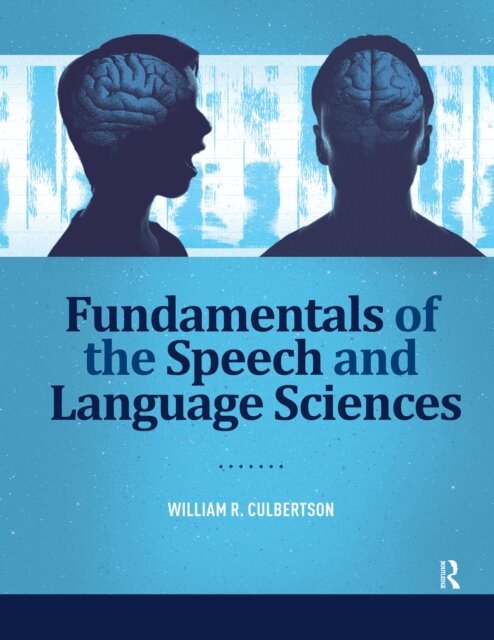
For a strong foundation upon which to build their futures, students in communication sciences and disorders programs need the best, most up-to-date information available to guide them. To this end, Fundamentals of the Speech and Language Sciences provides a thorough understanding of the core concepts in speech and language while maintaining a readable, engaging tone.Students will be exposed to the fundamentals of acoustics, respiratory science, voice production, acoustic phonetics, and sound spectrography. Language representation and motor programming as they pertain to the dynamic process of speech communication are also explored, as are the fundamentals of speech perception and instrumentation. To give students context, side bars feature the stories of seminal scientists and scholars and their contributions to the topics being discussed.This text benefits from Dr. William Culbertson’s nearly three decades of experience in teaching, as well as another decade of experience as a clinical speech-language pathologist. That experience has honed his ability to clearly communicate these crucial topics in a way that students will understand.Topics covered:The scientific method and various types of research used to study the normal aspects of human speech and hearingThe basics of physics as they pertain to energy, motion, displacement, force, and pressure and their relationship to speech productionThe process of respiration as it pertains to gas compression, speech valving, driving pressure, impedance, and flowVoice onset, modes of vocal vibration, pitch adjustment, volume and qualityThe process of dynamic interaction representation at the cortical and subcortical levels of the five basic speech processes: respiration, phonation, articulation, resonance, and prosodyUndergraduate students in communication sciences and disorders programs, as well as the related programs of music (voice), special education, and speech communication, will value Fundamentals of the Speech and Language Sciences as the formative text for their understanding of the speech and language sciences.