William E. Nelson – författare
Visar alla böcker från författaren William E. Nelson. Handla med fri frakt och snabb leverans.
32 produkter
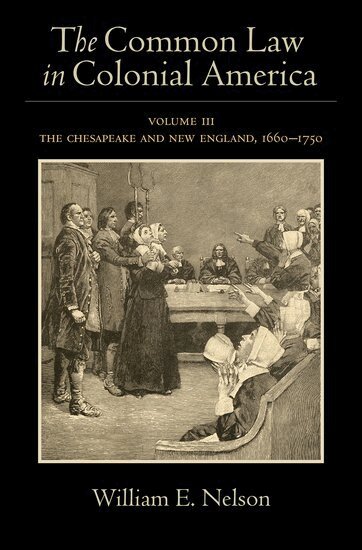
The Common Law in Colonial America
Volume III: The Chesapeake and New England, 1660-1750
Inbunden, 2016
1650 kr
Lägg i varukorg
In a projected four-volume series, The Common Law in Colonial America, William E. Nelson will show how the legal systems of Britain's thirteen North American colonies, which were initially established in response to divergent political, economic, and religious initiatives, slowly converged until it …
Common Law in Colonial America
Volume III: The Chesapeake and New England, 1660-1750
E-bok, 2016
1113 kr
Lägg i varukorg
In a projected four-volume series, The Common Law in Colonial America, William E. Nelson will show how the legal systems of Britain''s thirteen North American colonies, which were initially established in response to divergent political, economic, and religious initiatives, slowly converged until …
Common Law in Colonial America
Volume III: The Chesapeake and New England, 1660-1750
E-bok, 2016
1113 kr
Lägg i varukorg
In a projected four-volume series, The Common Law in Colonial America, William E. Nelson will show how the legal systems of Britain''s thirteen North American colonies, which were initially established in response to divergent political, economic, and religious initiatives, slowly converged until …
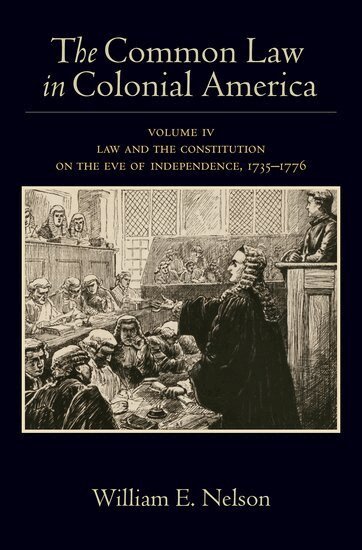
The Common Law in Colonial America
Volume IV: Law and the Constitution on the Eve of Independence, 1735-1776
Inbunden, 2018
1329 kr
Lägg i varukorg
The eminent legal historian William E. Nelson's magisterial four-volume The Common Law in Colonial America traces how the many legal orders of Britain's thirteen North American colonies gradually evolved into one American system. Initially established on divergent political, economic, and religious …
Common Law in Colonial America
Volume IV: Law and the Constitution on the Eve of Independence, 1735-1776
E-bok, 2018
911 kr
Lägg i varukorg
The eminent legal historian William E. Nelson''s magisterial four-volume The Common Law in Colonial America traces how the many legal orders of Britain''s thirteen North American colonies gradually evolved into one American system. Initially established on divergent political, economic, and …
Common Law in Colonial America
Volume IV: Law and the Constitution on the Eve of Independence, 1735-1776
E-bok, 2018
911 kr
Lägg i varukorg
The eminent legal historian William E. Nelson''s magisterial four-volume The Common Law in Colonial America traces how the many legal orders of Britain''s thirteen North American colonies gradually evolved into one American system. Initially established on divergent political, economic, and …
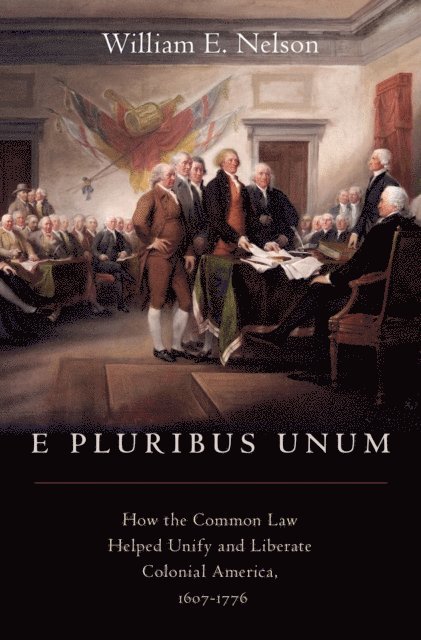
E Pluribus Unum
How the Common Law Helped Unify and Liberate Colonial America, 1607-1776
Inbunden, 2019
543 kr
Lägg i varukorg
The colonies that comprised pre-revolutionary America had thirteen legal systems and governments. Given their diversity, how did they evolve into a single nation? In E Pluribus Unum, the eminent legal historian William E. Nelson explains how this diverse array of legal orders gradually converged …
E Pluribus Unum
How the Common Law Helped Unify and Liberate Colonial America, 1607-1776
E-bok, 2019
453 kr
Lägg i varukorg
The colonies that comprised pre-revolutionary America had thirteen legal systems and governments. Given their diversity, how did they evolve into a single nation? In E Pluribus Unum , the eminent legal historian William E. Nelson explains how this diverse array of legal orders gradually converged …
E Pluribus Unum
How the Common Law Helped Unify and Liberate Colonial America, 1607-1776
E-bok, 2019
453 kr
Lägg i varukorg
The colonies that comprised pre-revolutionary America had thirteen legal systems and governments. Given their diversity, how did they evolve into a single nation? In E Pluribus Unum , the eminent legal historian William E. Nelson explains how this diverse array of legal orders gradually converged …
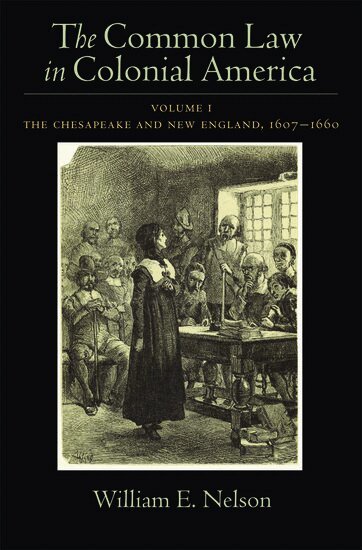
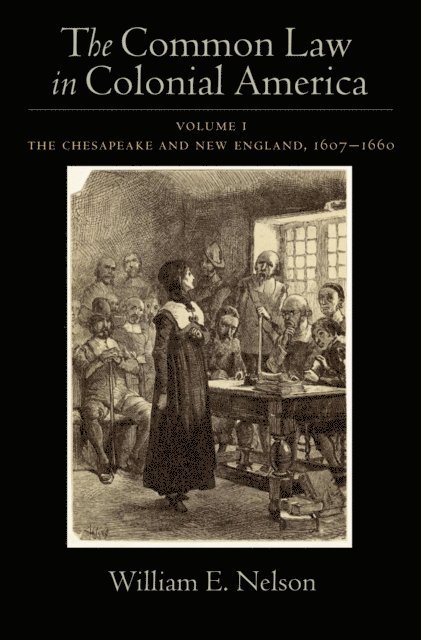
The Common Law of Colonial America
Volume I: The Chesapeake and New England 1607-1660
Inbunden, 2008
978 kr
Lägg i varukorg
William E. Nelson here proposes a new beginning in the study of colonial legal history. Examining all archival legal material for the period 1607-1776 and synthesizing existing scholarship in a four-volume series, The Common Law in Colonial America shows how the legal systems of Britain's thirteen …
A Concise History of American Law
Inbunden, 2026
2063 kr
Lägg i varukorg
A Concise History of American Law traces the development of the US legal order from the colonial era to the twenty-first century. Emphasizing the essential role of the common law--derived from judicial precedent, rather than legislation--eminent legal historian William E. Nelson examines the …
A Concise History of American Law
Häftad, 2026
257 kr
Lägg i varukorg
A Concise History of American Law traces the development of the US legal order from the colonial era to the twenty-first century. Emphasizing the essential role of the common law--derived from judicial precedent, rather than legislation--eminent legal historian William E. Nelson examines the …
Concise History of American Law
E-bok, 2026
238 kr
Lägg i varukorg
A Concise History of American Law traces the development of the US legal order from the colonial era to the twenty-first century. Emphasizing the essential role of the common law--derived from judicial precedent, rather than legislation--eminent legal historian William E. Nelson examines the …
Concise History of American Law
E-bok, 2026
238 kr
Lägg i varukorg
A Concise History of American Law traces the development of the US legal order from the colonial era to the twenty-first century. Emphasizing the essential role of the common law--derived from judicial precedent, rather than legislation--eminent legal historian William E. Nelson examines the …
Common Law in Colonial America
Volume I: The Chesapeake and New England 1607-1660
E-bok, 2008
491 kr
Lägg i varukorg
Drawing on groundbreaking and overwhelmingly extensive research into local court records, The Common Law in Colonial America proposes a "new beginning" in the study of colonial legal history, as it charts the course of the common law in Early America, to reveal how the models of law that emerged …
Common Law in Colonial America
Volume I: The Chesapeake and New England 1607-1660
E-bok, 2008
680 kr
Lägg i varukorg
Drawing on groundbreaking and overwhelmingly extensive research into local court records, The Common Law in Colonial America proposes a "new beginning" in the study of colonial legal history, as it charts the course of the common law in Early America, to reveal how the models of law that emerged …
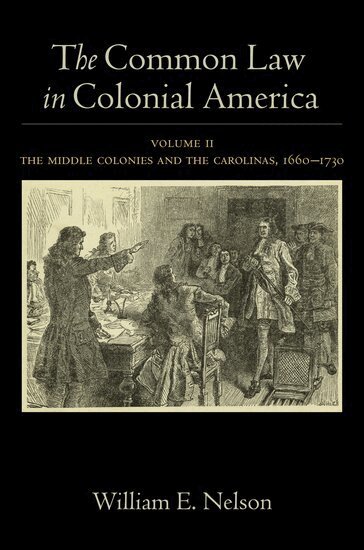
The Common Law in Colonial America
Volume II: The Middle Colonies and the Carolinas, 1660-1730
Inbunden, 2013
1526 kr
Lägg i varukorg
William E. Nelson's first volume of the four-volume The Common Law of Colonial America (2008) established a new benchmark for study of colonial era legal history. Drawing from both a rich archival base and existing scholarship on the topic, the first volume demonstrated how the legal systems of …
Common Law in Colonial America
Volume II: The Middle Colonies and the Carolinas, 1660-1730
E-bok, 2012
573 kr
Lägg i varukorg
William E. Nelson''s first volume of the four-volume The Common Law of Colonial America (2008) established a new benchmark for study of colonial era legal history. Drawing from both a rich archival base and existing scholarship on the topic, the first volume demonstrated how the legal systems of …
Fourteenth Amendment
From Political Principle to Judicial Doctrine
Häftad, 1998
332 kr
Lägg i varukorg
In a remarkably fresh and historically grounded reinterpretation of the American Constitution, William Nelson argues that the fourteenth amendment was written to affirm the general public’s long-standing rhetorical commitment to the principles of equality and individual rights on the one hand, and …
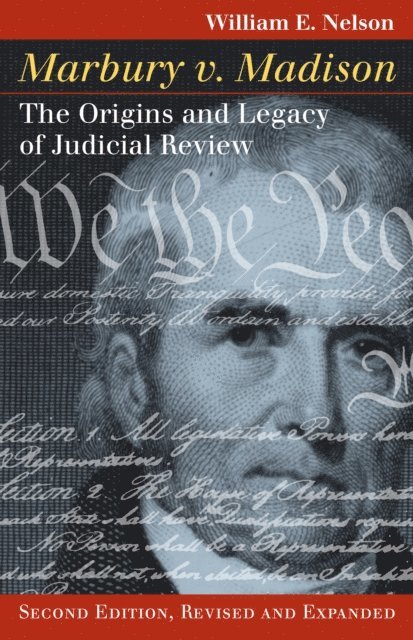
Marbury V. Madison
The Origins and Legacy of Judicial Review
Häftad, 2018
343 kr
Lägg i varukorg
On the surface, the case itself seems a minor one at best. William Marbury, a last-minute judicial appointee of outgoing Federalist president John Adams, demanded redress from the Supreme Court when his commission was not delivered. But Chief Justice John Marshall could clearly see the danger his …
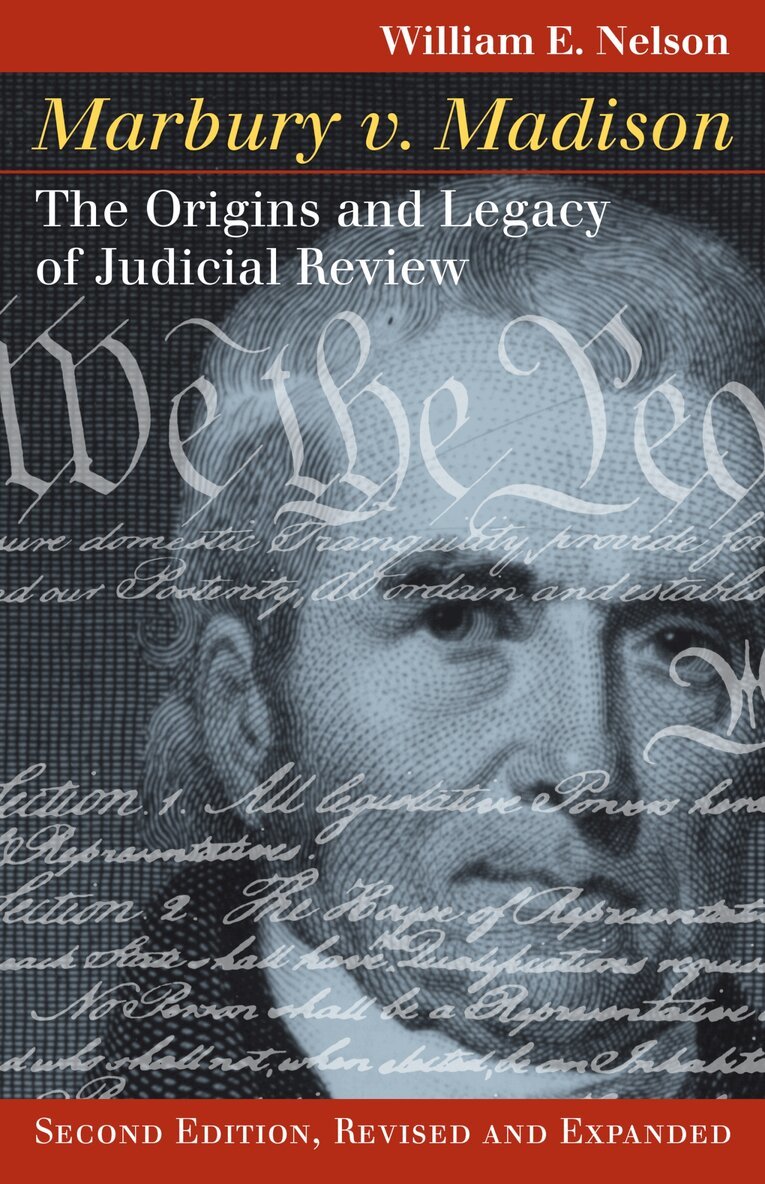
Marbury v. Madison
The Origins and Legacy of Judicial Review
E-bok, 2018
402 kr
Lägg i varukorg
On the surface, the case itself seems a minor one at best. William Marbury, a last-minute judicial appointee of outgoing Federalist president John Adams, demanded redress from the Supreme Court when his commission was not delivered. But Chief Justice John Marshall could clearly see the danger his …
Marbury V. Madison
The Origins and Legacy of Judicial Review, Second Edition, Revised and Expanded
Inbunden, 2018
751 kr
Lägg i varukorg
On the surface, the case itself seems a minor one at best. William Marbury, a last-minute judicial appointee of outgoing Federalist president John Adams, demanded redress from the Supreme Court when his commission was not delivered. But Chief Justice John Marshall could clearly see the danger his …
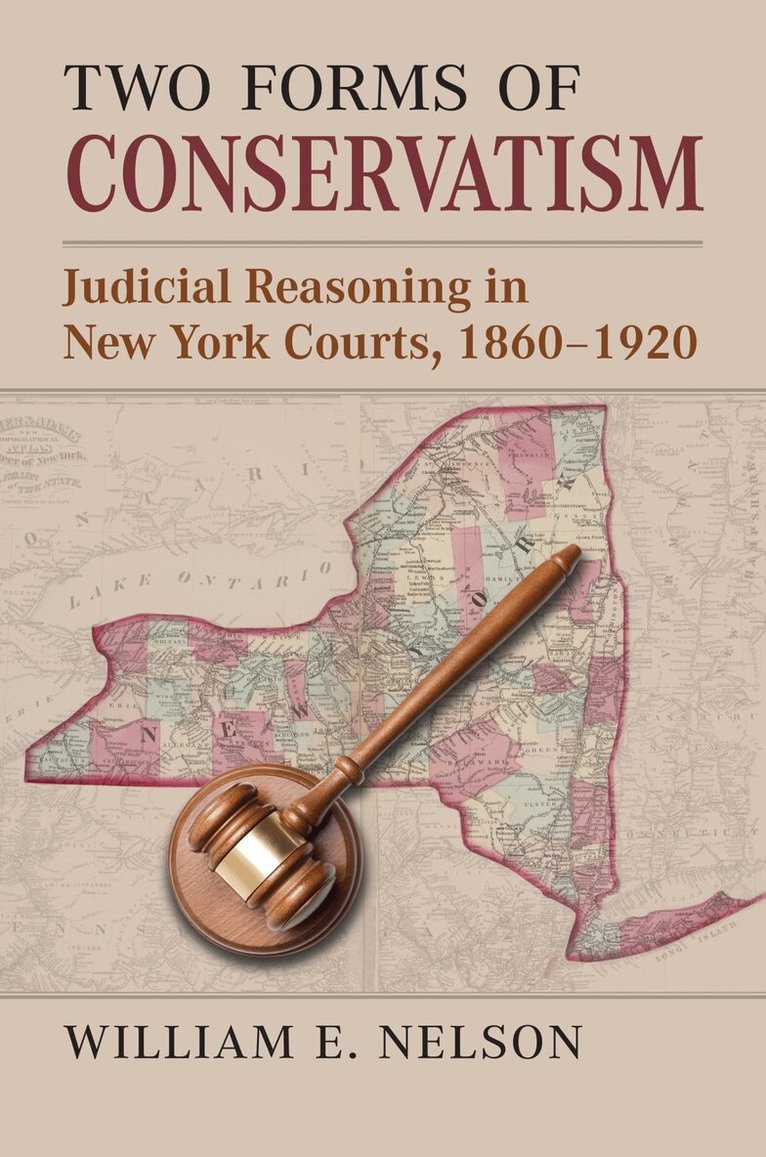
Two Forms of Conservatism
Judicial Reasoning in New York Courts, 1860-1920
Inbunden, 2024
460 kr
Lägg i varukorg
The period between 1860 and 1920—inclusive of the Gilded Age and much of the Lochner era in legal history—is typically regarded as the heyday of conservative jurisprudence. According to this received wisdom, conservative judges and much of the legal profession were on the side of big business and …
Two Forms of Conservatism
Judicial Reasoning in New York Courts, 1860-1920
E-bok, 2024
303 kr
Lägg i varukorg
The period between 1860 and 1920—inclusive of the Gilded Age and much of the Lochner era in legal history—is typically regarded as the heyday of conservative jurisprudence. According to this received wisdom, conservative judges and much of the legal profession were on the side of big business and …
Legalist Reformation
Law, Politics, and Ideology in New York, 1920-1980
Häftad, 2003
489 kr
Lägg i varukorg
Based on a detailed examination of New York case law, this pathbreaking book shows how law, politics, and ideology in the state changed in tandem between 1920 and 1980. Early twentieth-century New York was the scene of intense struggle between white, Anglo-Saxon, Protestant upper and middle classes …
Legalist Reformation
Law, Politics, and Ideology in New York, 1920-1980
E-bok, 2003
410 kr
Lägg i varukorg
Based on a detailed examination of New York case law, this pathbreaking book shows how law, politics, and ideology in the state changed in tandem between 1920 and 1980. Early twentieth-century New York was the scene of intense struggle between white, Anglo-Saxon, Protestant upper and middle classes …
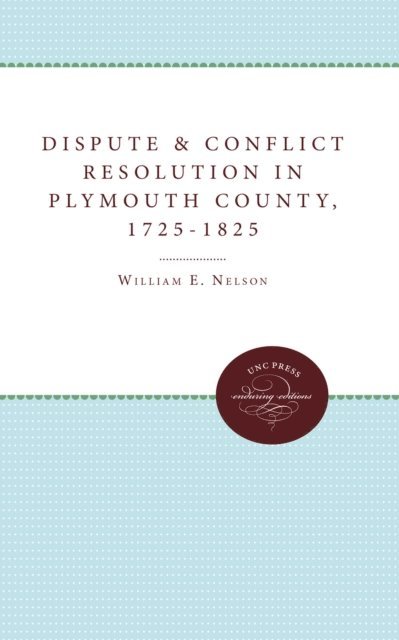
Dispute and Conflict Resolution in Plymouth County, Massachusetts, 1725-1825
Häftad, 2011
591 kr
Lägg i varukorg
Nelson identifies three principal institutions involved in conflict resolution: the twon meeting, the church congregation, and the courts of law. He subsequently determines the type of cases over which each institution had jurisdiction and studies the procedures by which each functioned. He …
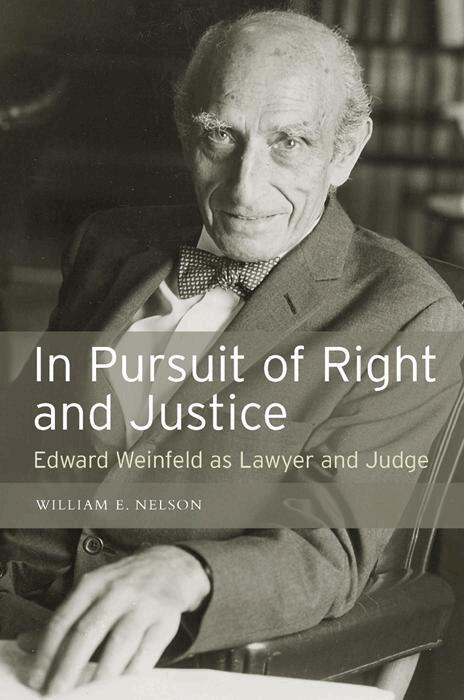
In Pursuit of Right and Justice
Edward Weinfeld As Lawyer and Judge
Inbunden, 2004
1301 kr
Lägg i varukorg
In Pursuit of Right and Justice chronicles the life of the United States District Court's Judge Edward Weinfeld, from his humble Lower East Side origins to his distinction as one of the nation's most respected federal judges. Judge Edward Weinfeld's personal growth and socio-economic mobility …
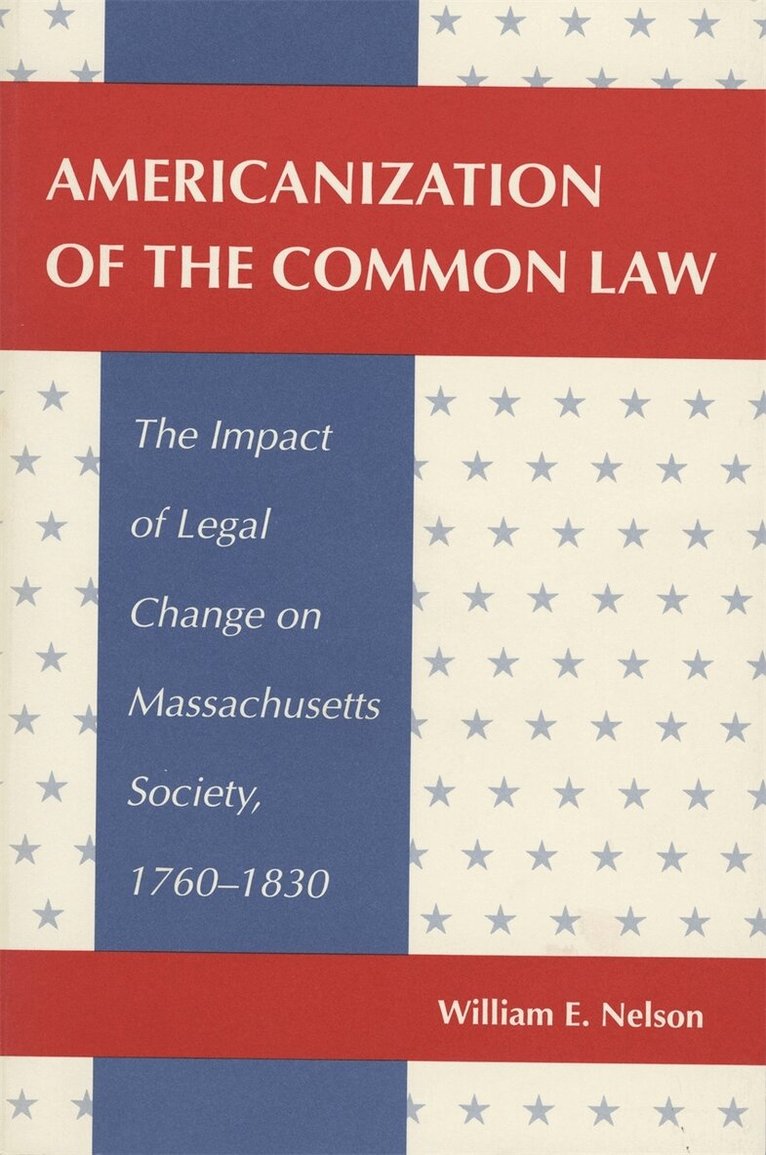
Americanization of the Common Law
The Impact of Legal Change on Massachusetts Society, 1760-1830
Häftad, 1994
544 kr
Lägg i varukorg
Americanization of the Common Law remains one of the standard works on the transformation of law in America from the late colonial period to the end of the early republic. In a straightforward manner, William E. Nelson analyzes the profound ideological movement that grew out of the American …
Dispute and Conflict Resolution in Plymouth County, Massachusetts, 1725-1825
E-bok, 2017
410 kr
Lägg i varukorg
Nelson identifies three principal institutions involved in conflict resolution: the twon meeting, the church congregation, and the courts of law. He subsequently determines the type of cases over which each institution had jurisdiction and studies the procedures by which each functioned. He …