
Legalist Reformation
Law, Politics, and Ideology in New York, 1920-1980
479 kr
Beställningsvara. Skickas inom 10-15 vardagar. Fri frakt över 249 kr.
Fler format och utgåvor
Beskrivning
Based on a detailed examination of New York case law, this pathbreaking book shows how law, politics, and ideology in the state changed in tandem between 1920 and 1980. Early twentieth-century New York was the scene of intense struggle between white, Anglo-Saxon, Protestant upper and middle classes located primarily in the upstate region and the impoverished, mainly Jewish and Roman Catholic, immigrant underclass centered in New York City. Beginning in the 1920s, however, judges such as Benjamin N. Cardozo, Henry J. Friendly, Learned Hand, and Harlan Fiske Stone used law to facilitate the entry of the underclass into the economic and social mainstream and to promote tolerance among all New Yorkers. Ultimately, says William Nelson, a new legal ideology was created. By the late 1930s, New Yorkers had begun to reconceptualize social conflict not along class lines but in terms of the power of majorities and the rights of minorities. In the process, they constructed a new approach to law and politics. Though doctrinal change began to slow by the 1960s, the main ambitions of the legalist reformation--liberty, equality, human dignity, and entrepreneurial opportunity--remain the aspirations of nearly all Americans, and of much of the rest of the world, today. |Based on a detailed examination of New York case law, this book shows how law, politics, and ideology in the state changed in tandem between 1920 and 1980, as state court judges used law to facilitate the entry of the underclass into the economic and social mainstream and to promote tolerance.
Produktinformation
Utforska kategorier
Mer om författaren
Hoppa över listan
Du kanske också är intresserad av

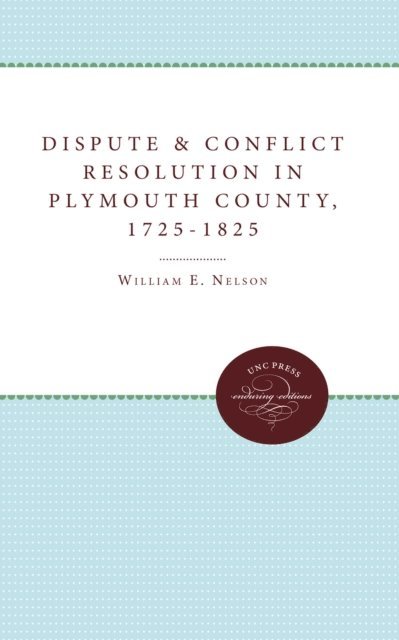
Dispute and Conflict Resolution in Plymouth County, Massachusetts, 1725-1825
William E. Nelson
E-bok
2017402 kr
- Nyhet