William Emerton Heitland – författare
Visar alla böcker från författaren William Emerton Heitland. Handla med fri frakt och snabb leverans.
20 produkter
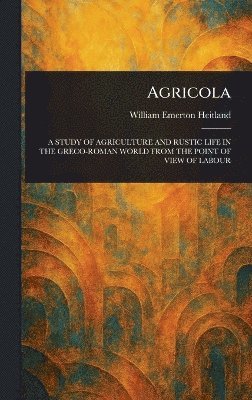
Agricola
A Study of Agriculture and Rustic Life in the Greco-Roman World from the Point of View of Labour
Av William Emerton Heitland, Unknown
Inbunden, 1970
1151 kr
Lägg i varukorg
Pharsalia. Edited With English Notes by C.E. Haskins. With an Introd. by W.E. Heitland
Av 39-65 Lucan, Charles Homer Haskins m. fl.
Inbunden, 2022
499 kr
Lägg i varukorg
Pharsalia. Edited With English Notes by C.E. Haskins. With an Introd. by W.E. Heitland
Av 39-65 Lucan, Charles Homer Haskins m. fl.
Häftad, 2022
382 kr
Lägg i varukorg
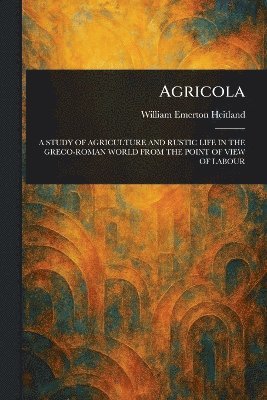
Agricola; a Study of Agriculture and Rustic Life in the Greco-Roman World From the Point of View of Labour
Inbunden, 2022
484 kr
Lägg i varukorg
Agricola; a Study of Agriculture and Rustic Life in the Greco-Roman World From the Point of View of Labour
Häftad, 2022
367 kr
Lägg i varukorg
M. Annaei Lucani Pharsalia
Av William Emerton Heitland, Charles Edmund Haskins m. fl.
Inbunden, 2022
484 kr
Lägg i varukorg
M. Annaei Lucani Pharsalia
Av William Emerton Heitland, Charles Edmund Haskins m. fl.
Häftad, 2022
367 kr
Lägg i varukorg
Pro C. Rabirio [Perduellionis Reo] Oratio Ad Quirites
Av Marcus Tullius Cicero, William Emerton Heitland
Inbunden, 2022
382 kr
Lägg i varukorg
Pro C. Rabirio [Perduellionis Reo] Oratio Ad Quirites
Av Marcus Tullius Cicero, William Emerton Heitland
Häftad, 2022
220 kr
Lägg i varukorg
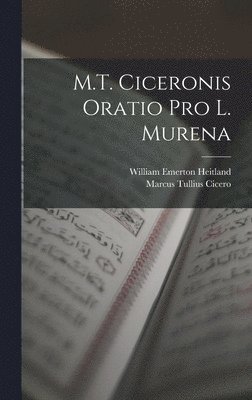
M.T. Ciceronis Oratio Pro L. Murena
Av Marcus Tullius Cicero, William Emerton Heitland
Inbunden, 2022
367 kr
Lägg i varukorg
M.T. Ciceronis Oratio Pro L. Murena
Av Marcus Tullius Cicero, William Emerton Heitland
Häftad, 2022
205 kr
Lägg i varukorg
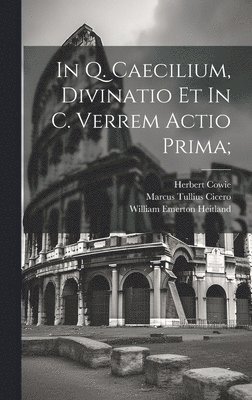
In Q. Caecilium, Divinatio et In C. Verrem actio prima;
Av Marcus Tullius Cicero, William Emerton Heitland m. fl.
Inbunden, 2023
367 kr
Lägg i varukorg
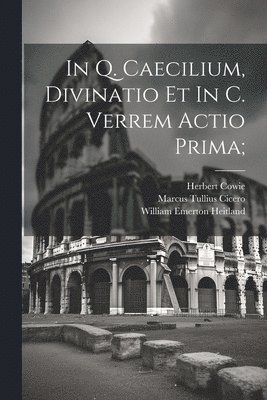
In Q. Caecilium, Divinatio et In C. Verrem actio prima;
Av Marcus Tullius Cicero, William Emerton Heitland m. fl.
Häftad, 2023
205 kr
Lägg i varukorg
Agricola
A STUDY OF AGRICULTURE AND RUSTIC LIFE IN THE GRECO-ROMAN WORLD FROM THE POINT OF VIEW OF LABOUR (Cram Edition)
Häftad, 2026
529 kr
Lägg i varukorg
After Many Years
A Tale of Experiences and Impressions Gathered in the Course of an Obscure Life
Häftad, 2015
468 kr
Lägg i varukorg
Originally published in 1926, this book is a fascinating account of life in England from the mid-nineteenth century to the early 1920s as experienced by the classicist and academic W. E. Heitland. Much of the text focuses on Heitland's time in Cambridge, first as an undergraduate and later as an …
Agricola
A Study of Agriculture and Rustic Life in the Greco-Roman World from the Point of View of Labour
Häftad, 2011
720 kr
Lägg i varukorg
William Emerton Heitland (1847-1935) was a Cambridge classicist, who was described as having 'a passionate desire to attain the truth'. His most distinguished work, Agricola, published in 1921, is a detailed study of agricultural labour in classical times. He makes use of a wide range of sources, …

![Marcus Tullius Cicero, William Emerton Heitland - Pro C. Rabirio [Perduellionis Reo] Oratio Ad Quirites, Inbunden. Tillgänglighet: Lägg i varukorg](https://image.bokus.com/images2/9781017644074_766)
![Marcus Tullius Cicero, William Emerton Heitland - Pro C. Rabirio [Perduellionis Reo] Oratio Ad Quirites, Häftad. Tillgänglighet: Lägg i varukorg](https://image.bokus.com/images2/9781017649239_766)