171 kr
Marcus Tullius Cicero – författare
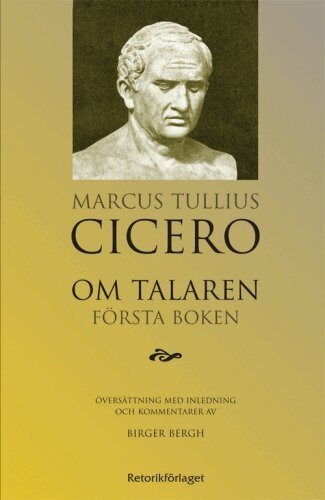
- Häftad, Svenska, 2008"Min ståndpunkt är att vältaligheten måste vara grundad i en teoretisk skolning av gedignaste art [...] Vältalighet är grundad i summan av alla de färdigheter, av vilka framgång redan i en enda är något storslaget. Låt oss uppmuntra våra barn och alla andra, vilkas goda rykte och anseende ligger oss om hjärtat, att skaffa en riktig förståelse av saken i hela dess vidd" Om talaren beskrivs som Ciceros centrala skrift om retoriken och som en av de tre grundpelarna för retorikämnet, bredvid Aristoteles och Quintilianus. Verkets tre böcker framstår som den romerska litteraturens mognaste och mest djuplodande och synpunktsrika verk om talekonstens teori och praktik. Om Talaren finns härmed i ny originalöversättning av Birger Bergh. med inledning och kommentarer av översättaren.
- Häftad, Svenska, 2021
216 kr
Skickas
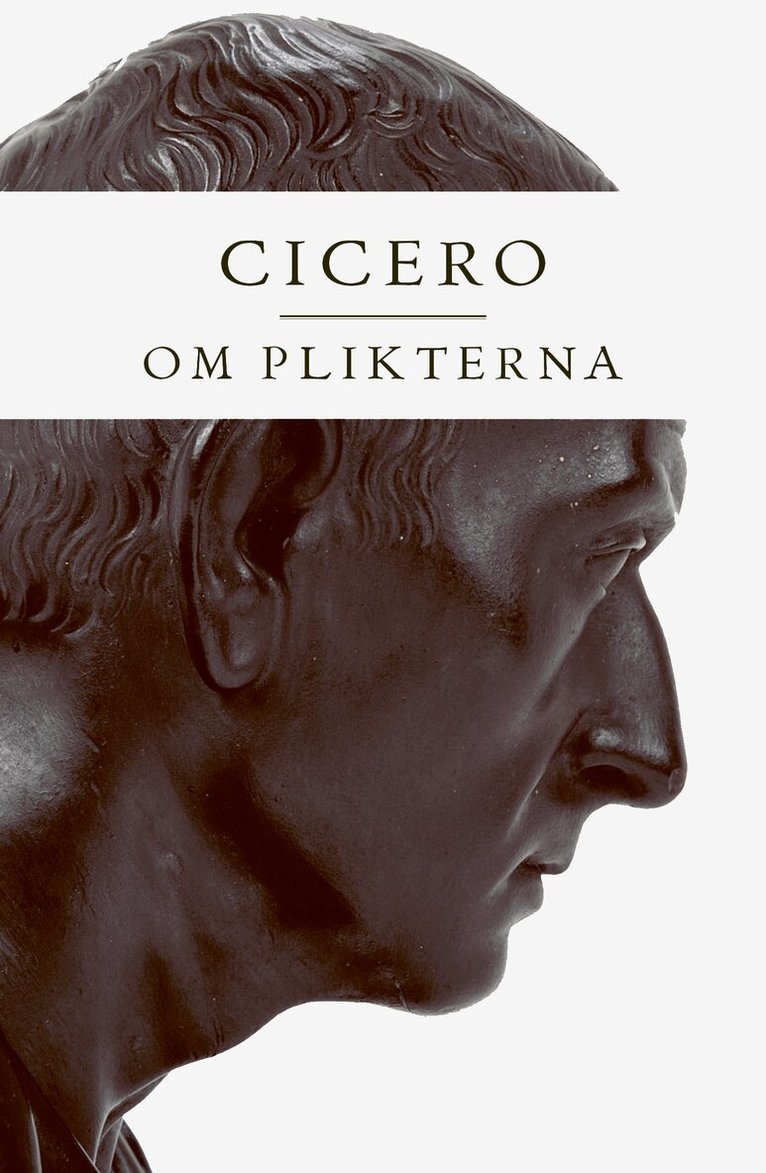
Retorikern, advokaten och politikern Marcus Tullius Cicero, som blev mördad på order av triumviren Marcus Antonius år 43 före Kristus, är för eftervärlden mest känd för sina tal och brev. Talen har uppfattats som ett mönster av kraftfull framställningskonst och breven låter oss komma personen Cicero inpå livet på ett sätt som saknar motstycke i den bevarade antika litteraturen. Men Cicero skrev också mycket annat, inte minst filosofiska dialoger. Han gjorde inte anspråk på att vara filosof utan uppfattade sig själv som en sorts popularisator på området – han ville helt enkelt förmedla den grekiska filosofin till en romersk läsekrets. Men detta innebär inte att dialogerna ifråga saknar filosofisk relevans eller kulturhistoriskt intresse. "Om plikterna", som skrevs mot slutet av Ciceros liv, är ett försök att belysa moraliska grundprinciper såväl som konkreta moraliska dilemman. Vilka krav ställer de fyra kardinaldygerna, visheten, rättvisan, tapperheten och måttfullheten, på oss som individer och medborgare? Hur gör vi en rimlig avvägning mellan vårt nödvändiga egenintresse och vårt lika nödvändiga samhällsansvar? Hur bör vi bete oss mot våra släktingar, våra grannar och våra vänner? Vid just vänskapen fäster Cicero särskilt stor vikt. Vänskap var ofta strategisk i den romerska tillvaron, men för Cicero handlar vänskap i hög grad också om genuin uppskattning bortom alla strategiska överväganden. Det är i sådana resonemang som "Om plikterna" överskrider sitt ursprungliga kulturella sammanhang och placerar sig mitt i vårt. Boken är försedd med en orienterande inledning om Cicero och hans tid av översättaren Magnus Wistrand, professor emeritus i latin vid Göteborgs universitet, och en efterskrift om dialogens filosofiska och kulturella inflytande på eftervärlden av Bo Lindberg, professor emeritus i idé- och lärdomshistoria vid Göteborgs universitet. - Inbunden, Svenska, 2024
224 kr
Skickas
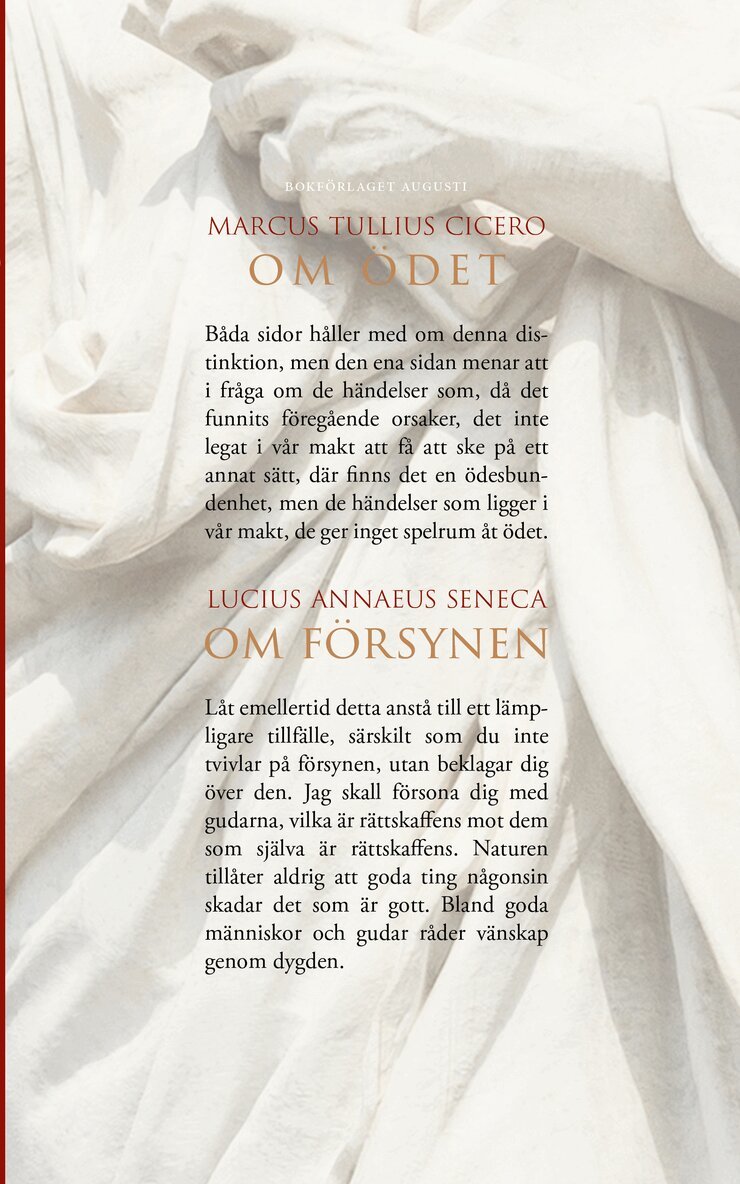
Denna bok rymmer två antika dialoger. Den första är Ciceros Om ödet i vilken Cicero diskuterar ödet som begrepp och för fram tanken att också den fria viljan är en aspekt av ödet. I princip avfärdar Cicero ställningstagandet att världen är deterministiskt inordnad. Människan kan själv verka för att bli framgångsrik. Om allt vore förutbestämt skulle något sådant inte vara möjligt.
Den andra är Senecas Om försynen i vilken denne argumenterar för att inget ont händer den som är god. Man måste bara förstå vad ond egentligen innebär. Seneca som var stoiker menar att man aldrig får ge efter för motgångar utan att man måste fortsätta kämpa och på så sätt kontrollera sitt öde. Den vise förstår hur ödet yttrar sig och har därför inget att frukta.
De båda texterna kan därför med fördel ställas emot varandra. De speglar två angrepp på samma filosofiska problem. I samtalen möts vi av ett förhållandevis modernt synsätt på den fria viljan. Med en närmast vetenskaplig metod granskar Cicero kritiskt de utsagor som han diskuterar och bemöter argument från andra tänkare, som Demokritos, Herakleitos, Empedokles och Aristoteles.
Ciceros De fato skrevs under våren år 44 f.Kr., strax efter mordet på Julius Caesar. Senecas De providentia tros ha nedtecknats år 64 e.Kr., något knappt år innan hans bortgång. Med inledning och noter av översättaren Lars Nyberg.
- Häftad, Svenska, 2009
193 kr
Skickas
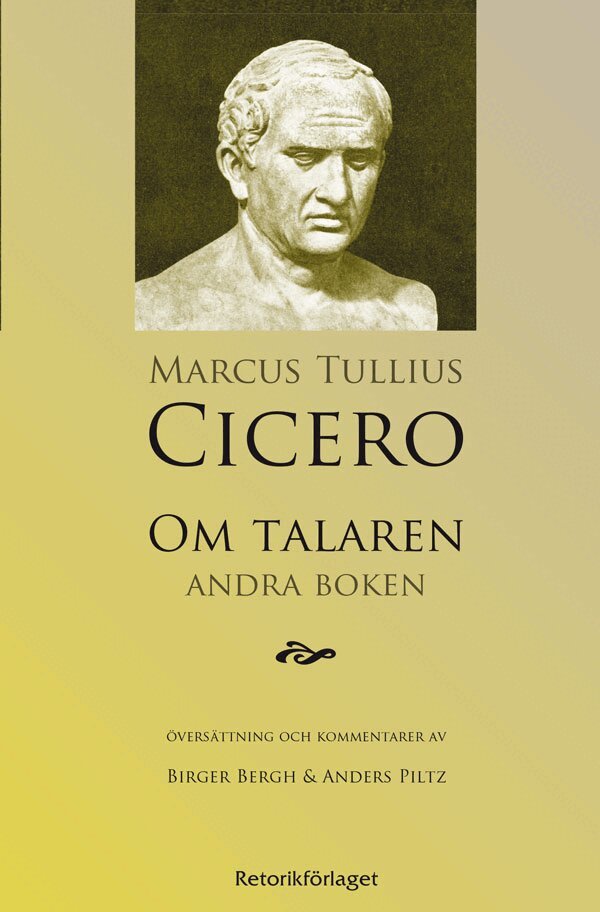
"Min ståndpunkt är att vältaligheten måste vara grundad i en teoretisk skolning av gedignaste art [...] Vältalighet är grundad i summan av alla de färdigheter, av vilka framgång redan i en enda är något storslaget. Låt oss uppmuntra våra barn och alla andra, vilkas goda rykte och anseende ligger oss om hjärtat, att skaffa en riktig förståelse av saken i hela dess vidd" Om talaren beskrivs som Ciceros centrala skrift om retoriken och som en av de tre grundpelarna för retorikämnet, bredvid Aristoteles och Quintilianus. Verkets tre böcker framstår som den romerska litteraturens mognaste och mest djuplodande och synpunktsrika verk om talekonstens teori och praktik. Om Talaren, bok II, finns härmed i ny originalöversättning av Birger Bergh och Anders Piltz med kommentarer av översättarna. - Häftad, Svenska, 2023
243 kr
Skickas
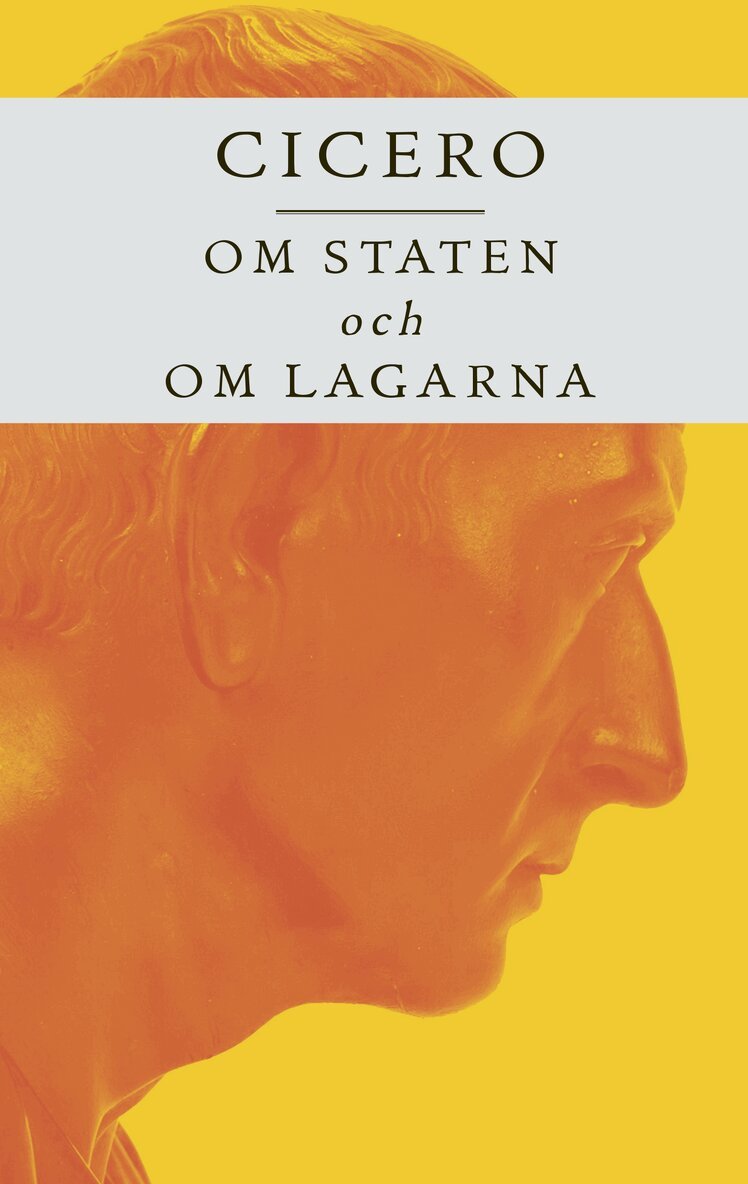
Retorikern, advokaten och politikern Marcus Tullius Cicero, som blev mördad på order av triumviren Marcus Antonius år 43 före Kristus, är för eftervärlden mest känd för sina tal och brev. Talen har uppfattats som ett mönster av kraftfull framställningskonst och breven låter oss komma personen Cicero inpå livet på ett sätt som saknar motstycke i den bevarade antika litteraturen. Men Cicero skrev också mycket annat, inte minst filosofiska dialoger. Han gjorde inte anspråk på att vara filosof utan uppfattade sig själv som en sorts popularisator på området – han ville helt enkelt förmedla den grekiska filosofin till en romersk läsekrets. Men detta innebär inte att dialogerna ifråga saknar filosofisk relevans eller kulturhistoriskt intresse. "Om staten" och "Om lagarna" är Ciceros första betydande filosofiska dialoger och hans mest originella bidrag till filosofin. Båda dialogerna behandlar centrala ämnen inom politisk filosofi, som styrelseskickets utformning och lagarnas grundvalar. Den inflytelserika naturrättstanken får en tidig formulering här. Cicero lutar sig i sina resonemang mot både Platon och stoisk filosofi, men har samtidigt en tydlig förankring i en romersk politisk ordning och tradition som ger hans perspektiv en annan konkretion än de grekiska föregångarnas. Cicero är alltid praktiskt – och ibland också dagspolitiskt – inriktad. Denna utgåva av de båda dialogerna innehåller även ett antal fristående fragment från dem, ingen av dialogerna har nämligen bevarats i fullständig form. Magnus Wistrand, professor emeritus vid Göteborgs universitet, svarar för översättningen och en orienterande inledning. Han har för Daidalos räkning tidigare översatt Ciceros "Om plikterna" samt Senecas "Om livets korthet" och "Breven till Lucilius". Den tyske filosofen Otfried Höffe belyser i sitt efterord till volymen Ciceros filosofiska betydelse. - Häftad, Svenska, 2009
193 kr
Skickas
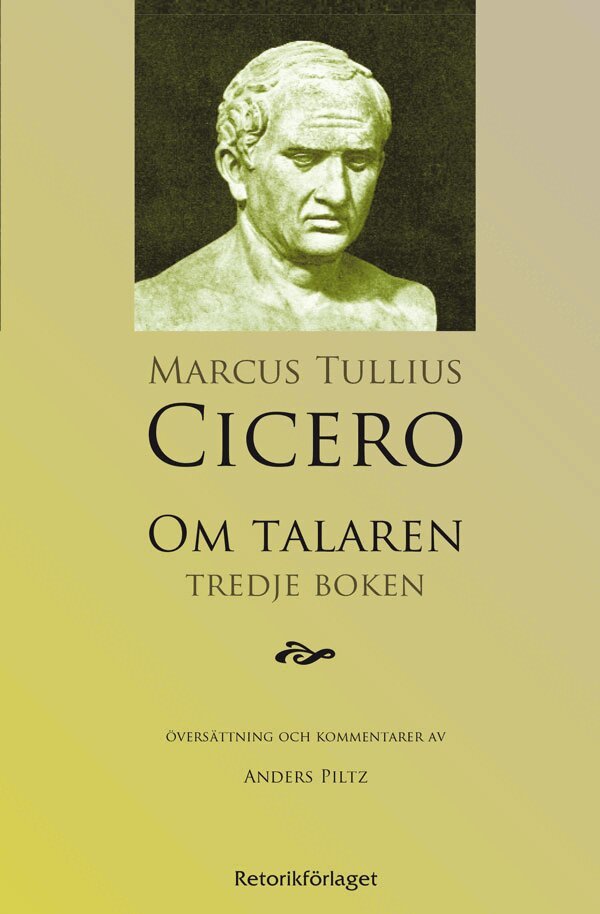
"Min ståndpunkt är att vältaligheten måste vara grundad i en teoretisk skolning av gedignaste art [...] Vältalighet är grundad i summan av alla de färdigheter, av vilka framgång redan i en enda är något storslaget. Låt oss uppmuntra våra barn och alla andra, vilkas goda rykte och anseende ligger oss om hjärtat, att skaffa en riktig förståelse av saken i hela dess vidd" Om talaren beskrivs som Ciceros centrala skrift om retoriken och som en av de tre grundpelarna för retorikämnet, bredvid Aristoteles och Quintilianus. Verkets tre böcker framstår som den romerska litteraturens mognaste och mest djuplodande och synpunktsrika verk om talekonstens teori och praktik. Om Talaren, bok III, finns härmed i ny originalöversättning av Anders Piltz med kommentarer av översättaren. - Inbunden, Svenska, 2025
242 kr
Skickas
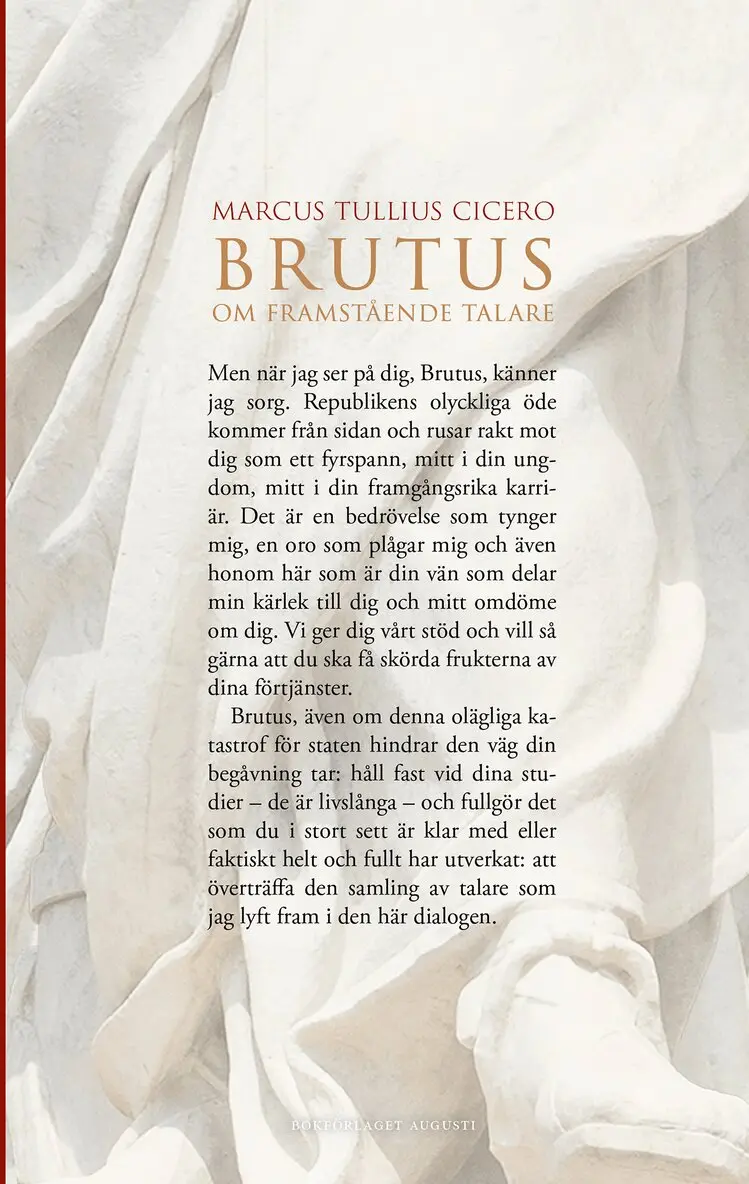
Marcus Tullius Ciceros verk Brutus, också känt under titeln De claris oratoribus, är en framställning i dialogform av talarkonsten i Rom. Cicero själv har huvudrollen i berättelsen som byggs upp kring Marcus Junius Brutus (den mest namnkunnige av de blivande Caesarmördarna) och Titus Pomponius Atticus (en nära vän till Cicero, från Athen) vilka när de råkar på Cicero ber honom berätta om den romerska historiens främsta oratorer. Cicero ger sig i kast med uppgiften och börjar med en introduktion till den grekiska retorikens olika skolor. Peisistratos, Solon och Perikles är några av de oratorer som tas upp.
Därefter tar sig Cicero an den romerska republikens långa rad av mästerliga talare med namn som Curius Dentatus, Popilius, Cato d.ä. och Julius Caesar. Dialogen Brutus tros ha författats omkring år 46 f.Kr., knappt två år före mordet på Caesar, på Idus Martiae (15 mars) år 44, högst sannolikt med syftet att lyfta fram Ciceros egen talekonst. Texten kan också ses som en hyllning till den vid det här laget dödsdömda republiken.
Översättning, inledning och noter av Martina Björk, fil. dr. i latin. Det är första gången som verket översatts till modern svenska.
- Häftad, Engelska, 2008
429 kr
Skickas inom 5-8 vardagar
As consul in 63 BC Cicero faced a conspiracy to overthrow the Roman state launched by the frustrated consular candidate Lucius Sergius Catilina. Cicero's handling of this crisis would shape foreverafter the way he defined himself and his statesmanship. The four speeches he delivered during the crisis show him at the height of his oratorical powers and political influence. Divided between deliberative speeches given in the senate (1 and 4) and informational speeches delivered before the general public (2 and 3), the Catilinarians illustrate Cicero's adroit handling of several distinct types of rhetoric. Beginning in antiquity, this corpus served as a basic text for generations of students but fell into neglect during the past half-century. This edition, which is aimed primarily at advanced undergraduates and graduate students, takes account of recently discovered papyrus evidence, recent studies of Cicero's language, style and rhetorical techniques, and the relevant historical background. - Häftad, Engelska
151 kr
Skickas inom 3-6 vardagar
- Inbunden, Engelska, 2022
218 kr
Skickas inom 5-8 vardagar
An engaging new translation of a timeless masterpiece about coping with the death of a loved oneIn 45 BCE, the Roman statesman Cicero fell to pieces when his beloved daughter, Tullia, died from complications of childbirth. But from the depths of despair, Cicero fought his way back. In an effort to cope with his loss, he wrote a consolation speech—not for others, as had always been done, but for himself. And it worked. Cicero’s Consolation was something new in literature, equal parts philosophy and motivational speech. Drawing on the full range of Greek philosophy and Roman history, Cicero convinced himself that death and loss are part of life, and that if others have survived them, we can, too; resilience, endurance, and fortitude are the way forward.Lost in antiquity, Cicero’s Consolation was recreated in the Renaissance from hints in Cicero’s other writings and the Greek and Latin consolatory tradition. The resulting masterpiece—translated here for the first time in 250 years—is infused throughout with Cicero’s thought and spirit.Complete with the original Latin on facing pages and an inviting introduction, Michael Fontaine’s engaging translation makes this searching exploration of grief available to readers once again. - E-bokEngelska, 2016
17 kr
Läs direkt efter köp
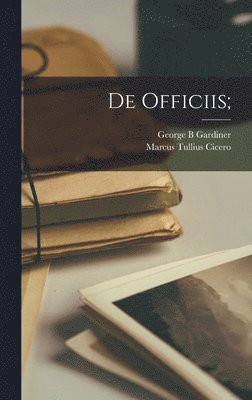
In the de Officiis we have, save for the latter Philippics, the great orator''s last contribution to literature. The last, sad, troubled years of his busy life could not be given to his profession; and he turned his never-resting thoughts to the second love of his student days and made Greek philosophy a possibility for Roman readers. The senate had been abolished; the courts had been closed. His occupation was gone; but Cicero could not surrender himself to idleness. In those days of distraction (46-43 b.c.) he produced for publication almost as much as in all his years of active life.The liberators had been able to remove the tyrant, but they could not restore the republic. Cicero''s own life was in danger from the fury of mad Antony and he left Rome about the end of March, 44 b.c. He dared not even stop permanently in any one of his various country estates, but, wretched, wandered from one of his villas to another nearly all the summer and autumn through. He would not suffer himself to become a prey to his overwhelming sorrow at the death of the republic and the final crushing of the hopes that had risen with Caesar''s downfall, but worked at the highest tension on his philosophical studies.The Romans were not philosophical. In 161 b.c. the senate passed a decree excluding all philosophers and teachers of rhetoric from the city. They had no taste for philosophical speculation, in which the Greeks were the world''s masters. They were intensely, narrowly practical. And Cicero was thoroughly [x] Roman. As a student in a Greek university he had had to study philosophy. His mind was broad enough and his soul great enough to give him a joy in following after the mighty masters, Socrates, Plato, Zeno, Cleanthes, Aristotle, Theophrastus, and the rest. But he pursued his study of it, like a Roman, from a "practical" motive—to promote thereby his power as an orator and to augment his success and happiness in life. - Inbunden, Engelska, 2026
221 kr
Skickas inom 5-8 vardagar
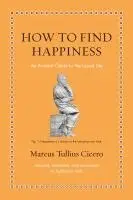
Does happiness come from the pursuit of pleasure or moral virtue? A vivid new translation of Cicero’s exploration of a timeless question“Of course, we all want to be happy.” So wrote the Roman statesman, orator, and philosopher Marcus Tullius Cicero. He and his fellow Greek and Roman philosophers agreed that the secret to happiness—or what they called the “good life”—is pursuing the “greatest good.” The only problem is that they couldn’t agree on what the greatest good is. Cicero addressed this dilemma by composing a set of dialogues, On the Greatest Good and Evil (De finibus bonorum et malorum), in which he pitted advocates of different philosophical approaches to happiness against one another. Notably, these include the Epicureans (who believe that the greatest good is pleasure) and the Stoics (according to whom it is moral virtue). Rather than choosing sides, Cicero considers the pros and cons of the different philosophies, ultimately leaving it to his readers to make up their own minds. In How to Find Happiness, Katharina Volk offers a vivid new translation of selections from Cicero’s work, complete with an introduction and the original Latin text on facing pages. The result is a lively and engaging debate that invites each of us to discover our own path to happiness. - Häftad, Engelska, 2009
130 kr
Skickas inom 5-8 vardagar
- Inbunden, Engelska, 2013
166 kr
Skickas inom 5-8 vardagar
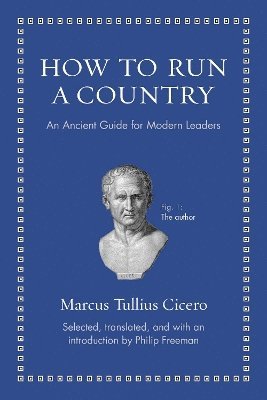
Marcus Cicero, Rome's greatest statesman and orator, was elected to the Roman Republic's highest office at a time when his beloved country was threatened by power-hungry politicians, dire economic troubles, foreign turmoil, and political parties that refused to work together. Sound familiar? Cicero's letters, speeches, and other writings are filled with timeless wisdom and practical insight about how to solve these and other problems of leadership and politics. How to Run a Country collects the best of these writings to provide an entertaining, common sense guide for modern leaders and citizens. This brief book, a sequel to How to Win an Election, gathers Cicero's most perceptive thoughts on topics such as leadership, corruption, the balance of power, taxes, war, immigration, and the importance of compromise. These writings have influenced great leaders--including America's Founding Fathers--for two thousand years, and they are just as instructive today as when they were first written.Organized by topic and featuring lively new translations, the book also includes an introduction, headnotes, a glossary, suggestions for further reading, and an appendix containing the original Latin texts. The result is an enlightening introduction to some of the most enduring political wisdom of all time. - Inbunden, Engelska, 2018
218 kr
Skickas inom 5-8 vardagar
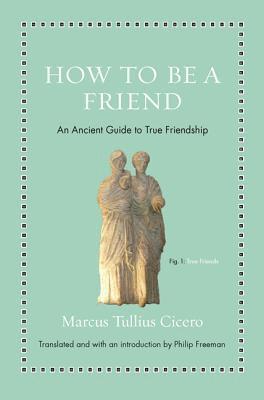
A splendid new translation of one of the greatest books on friendship ever writtenIn a world where social media, online relationships, and relentless self-absorption threaten the very idea of deep and lasting friendships, the search for true friends is more important than ever. In this short book, which is one of the greatest ever written on the subject, the famous Roman politician and philosopher Cicero offers a compelling guide to finding, keeping, and appreciating friends. With wit and wisdom, Cicero shows us not only how to build friendships but also why they must be a key part of our lives. For, as Cicero says, life without friends is not worth living.Filled with timeless advice and insights, Cicero’s heartfelt and moving classic—written in 44 BC and originally titled De Amicitia—has inspired readers for more than two thousand years, from St. Augustine and Dante to Thomas Jefferson and John Adams. Presented here in a lively new translation with the original Latin on facing pages and an inviting introduction, How to Be a Friend explores how to choose the right friends, how to avoid the pitfalls of friendship, and how to live with friends in good times and bad. Cicero also praises what he sees as the deepest kind of friendship—one in which two people find in each other “another self” or a kindred soul.An honest and eloquent guide to finding and treasuring true friends, How to Be a Friend speaks as powerfully today as when it was first written. - Häftad, Engelska, 2023
187 kr
Skickas inom 5-8 vardagar
- Inbunden, Engelska, 2021
166 kr
Skickas inom 5-8 vardagar
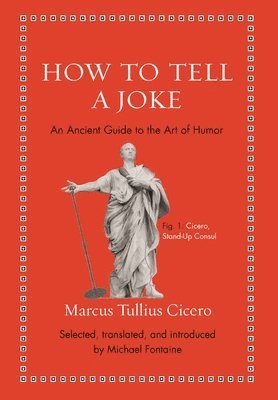
Timeless advice about how to use humor to win over any audienceCan jokes win a hostile room, a hopeless argument, or even an election? You bet they can, according to Cicero, and he knew what he was talking about. One of Rome’s greatest politicians, speakers, and lawyers, Cicero was also reputedly one of antiquity’s funniest people. After he was elected commander-in-chief and head of state, his enemies even started calling him “the stand-up Consul.” How to Tell a Joke provides a lively new translation of Cicero’s essential writing on humor alongside that of the later Roman orator and educator Quintilian. The result is a timeless practical guide to how a well-timed joke can win over any audience.As powerful as jokes can be, they are also hugely risky. The line between a witty joke and an offensive one isn’t always clear. Cross it and you’ll look like a clown, or worse. Here, Cicero and Quintilian explore every aspect of telling jokes—while avoiding costly mistakes. Presenting the sections on humor in Cicero’s On the Ideal Orator and Quintilian’s The Education of the Orator, complete with an enlightening introduction and the original Latin on facing pages, How to Tell a Joke examines the risks and rewards of humor and analyzes basic types that readers can use to write their own jokes.Filled with insight, wit, and examples, including more than a few lawyer jokes, How to Tell a Joke will appeal to anyone interested in humor or the art of public speaking. - Inbunden, Engelska, 1939
741 kr
Skickas inom 7-10 vardagar
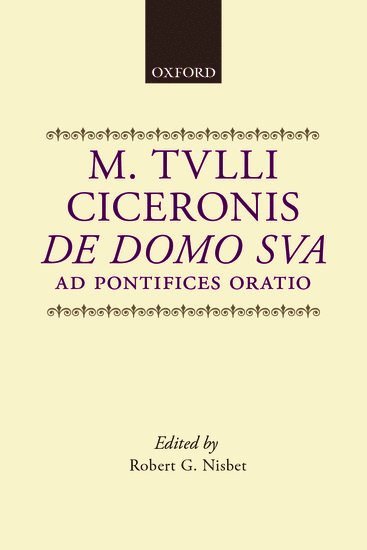
A scholarly edition of a work by Cicero. The edition presents an authoritative text, together with an introduction, commentary notes, and scholarly apparatus. - Häftad, Engelska, 2006
1 069 kr
Skickas inom 5-8 vardagar
A new translation of, and commentary on, Cicero's defence of Publius Sestius against a charge of public violence. Pro Sestio is arguably the most important of Cicero's political speeches that survive from the nearly two decades separating the Speeches against Catiline and the Second Philippic. Its account of recent history provides any student of Rome with a fascinating way into the period; its depiction of public meetings, demonstrations, and violence are highly pertinent to the current debate on the place of 'the crowd in Rome in the late Republic'; the speech is also among the best introductions we have to traditional Republican values and ethics in action. - Häftad, Engelska, 2002
385 kr
Skickas inom 5-8 vardagar
The third and fourth books of Cicero's "Tusculan Disputations" deal with the nature and management of human emotion: first grief, then the emotions in general. Cicero presents the insights of Greek philosophers on the subject, reporting the views of Epicurians and Peripatetics and giving a detailed account of the Stoic position, which he himself favours for it's close reasoning and moral earnestness. He describes the Stoic's analysis of grief, their classification of emotions by genus and species, their lists of oddly named character flaws, and by the philosophical debate that develops over the utility of anger in politics and war. - E-bokPDF, Engelska, 2001
442 kr
Läs direkt efter köp
This 2001 translation makes one of the most important texts in ancient philosophy available to modern readers. Cicero is increasingly being appreciated as an intelligent and well-educated amateur philosopher, and in this work he presents the major ethical theories of his time in a way designed to get the reader philosophically engaged in the important debates. Raphael Woolf''s translation does justice to Cicero''s argumentative vigour as well as to the philosophical ideas involved, while Julia Annas''s introduction and notes provide a clear and accessible explanation of the philosophical context of the work. This edition will appeal to all readers interested in this central text in ancient philosophy and the history of ethics. - Häftad, Engelska, 2003
622 kr
Skickas inom 5-8 vardagar
Book 1 of De Natura Deorum exhibits in a nutshell Cicero's philosophical method, with the prior part stating the case for Epicurean theology, the latter (rather longer) part refuting it. Thus the reader observes Cicero at work in both constructive and skeptical modes as well as his art of characterizing speakers. Prefaced to the Book is Cicero's most elaborate justification of his philosophical writing. The Book thus makes an ideal starting point for the study of Cicero's philosophica or indeed of any philosophical writing in Latin, since it delineates the problems such a project raised in the minds of Roman readers and shows how Cicero thought they could be met. There is also a systematic and detailed doxography of ancient views about the deity, an important document in itself, presented from an Epicurean perspective. The volume's Introduction situates this text within Cicero's intellectual development and ancient reflection about the gods. - Häftad, Engelska, 1980
469 kr
Skickas
Professor Shackleton Bailey is renowned for his major scholarly editions of Cicero's letters already published by Cambridge University Press. This selection from the complete correspondence is designed specifically for students at universities and in the upper forms at schools, and offers them a representative introduction to one of the most varied and most important literary correspondences in any language. In choosing letters for inclusion the editor concentrates on Cicero as a man and writer and on his relationship with his contemporaries, but he has also included letters which deal with people and events of special significance in the turbulent political history of the period. The edition includes an introduction, the text of the letters with critical notes, and a commentary which gives help with linguistic problems as well as elucidating the historical and social background. - Del 28 - Cambridge Classical Texts and Commentaries
Cicero: Cato Maior de Senectute
Inbunden, Engelska, 19882 142 kr
Skickas inom 5-8 vardagar
This is a complete critical edition of Cicero's Cato Maior de Senectute (On Old Age) with an introduction and commentary. The text is based on a fresh examination of the manuscript tradition while the introduction aims to place the work in the context of Cicero's writings on old age in the ancient world. The Roman and Ciceronian qualities of the work are emphasized, rather than the search for lost sources that occupied scholars in the past. Matters of text, language, and content are all considered equally in the commentary. - Häftad, Engelska, 1991
381 kr
Skickas inom 5-8 vardagar
De Officiis (On Duties) was Cicero's last philosophical work. In it he made use of Greek thought to formulate the political and ethical values of Roman Republican society as he saw them, revealing incidentally a great deal about actual practice. Writing at a time of political crisis after the assassination of Julius Caesar in 44BC, when it was not clear how much of the old Republican order would survive, Cicero here handed on the insights of an elder statesman, adept at political theory and practice, to his son, and through him, to the younger generation in general. De Officiis has often been treated merely as a key to the lost Greek works that Cicero used. This volume aims to render De Officiis, which was such an important influence on later masterpieces of Western political thought, more intelligible by explaining its relation to its own time and place. A wholly new translation is accompanied by a lucid introduction and all the standard features of Cambridge Texts in the History of Political Thought, including a chronology, select bibliography, and notes on the vocabulary and significant individuals mentioned in the text. - Häftad, Engelska, 1995
434 kr
Skickas inom 5-8 vardagar
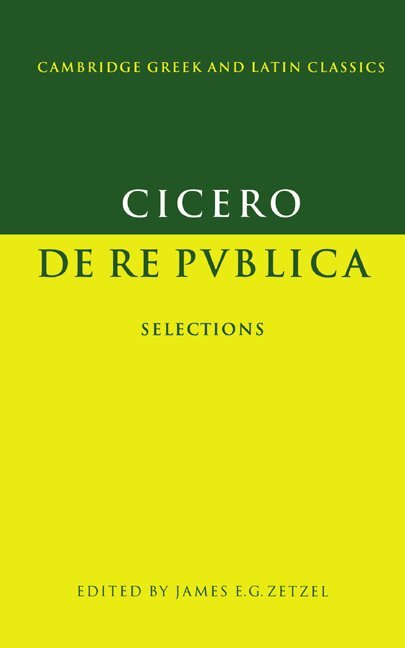
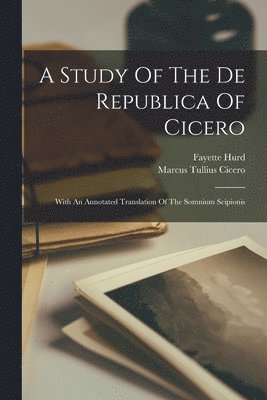
Cicero's De re publica contains the fullest ancient account of the theory of the mixed constitution and the oldest extant narrative of early Roman history; it concludes with the Dream of Scipio, one of the most influential ancient visions of the afterlife. The argument of the dialogue concerns the relationship between political theory and practice, and between social institutions and the individual citizen. This edition of most of the surviving portions of De re publica is the most detailed commentary ever to appear in English. It explains Cicero's philosophical argument and its relationship to his account of early Rome, and thoroughly elucidates the language and style of the treatise. The introduction offers a new and provocative interpretation of Cicero's dialogue as a work both of literature and of political philosophy. - Häftad, Engelska, 2003
469 kr
Skickas inom 5-8 vardagar
This edition is the first since J. D. Denniston's of 1926 to present the Latin text of and a commentary on the First and Second Philippics, two of the most polished orations in the Ciceronian corpus. These speeches, which were composed less than six months after the murder of Julius Caesar in March 44 BC, offer a scathing account of the early years and the rise to power of Mark Antony, Caesar's chief lieutenant. The period covered by these speeches (roughly 63-44 BC) is an important one because the Roman state was in transition from Republic to Empire. The Second Philippic not only gives us Cicero's assessment of his own political career and place in Roman history from a perspective late in life, but it also provides a vivid eyewitness account of how the dominance first of Julius Caesar and later of Mark Antony was shifting the locus of power from the Senate and Roman aristocracy to a single dynast. - Del 30 - Cambridge Classical Texts and Commentaries
Cicero: Pro P. Sulla oratio
Inbunden, Engelska, 19961 863 kr
Skickas inom 5-8 vardagar
In 62 BC, the year after his suppression of Catiline, Cicero delivered Pro Sulla, a successful defence of P. Cornelius Sulla, the nephew of the dictator, on a charge of participation in the Catilinarian conspiracy. This edition, which contains a new text together with introduction, commentary and appendices, is the first full-scale scholarly treatment of the speech. The text takes account of Gulielmius' reports of the missing portion of the Erfurtensis manuscript, recovered by Dr Berry and published as a preliminary to this edition in 1989; a complete collation is provided of this and the other principal manuscripts. The introduction includes a reassessment of Sulla's guilt and Cicero's undertaking of the case, and also considers issues such as the prose rhythm of the speech and its publication. The commentary discusses history, text and syntax as well as rhetoric and style. - Inbunden, Engelska, 2011
2 444 kr
Skickas inom 3-6 vardagar
Cicero's De Oratore is one of the masterpieces of Latin prose. A literary dialogue in the Greek tradition, it was written in 55 BCE in the midst of political turmoil at Rome, but reports a discussion 'concerning the (ideal) orator' that supposedly took place in 90 BCE, just before an earlier crisis. Cicero features eminent orators and statesmen of the past as participants in this discussion, presenting competing views on many topics. This edition of Book III is the first since 1893 to provide a Latin text and full introduction and commentary in English. It is intended to help advanced students and others interested in Roman literature to comprehend the grammar and appreciate the stylistic nuances of Cicero's Latin, to trace the historical, literary, and theoretical background of the topics addressed, and to interpret Book III in relation to the rest of De Oratore and to Cicero's other works. - Häftad, Engelska, 2011
574 kr
Skickas inom 5-8 vardagar
Cicero's De Oratore is one of the masterpieces of Latin prose. A literary dialogue in the Greek tradition, it was written in 55 BCE in the midst of political turmoil at Rome, but reports a discussion 'concerning the (ideal) orator' that supposedly took place in 90 BCE, just before an earlier crisis. Cicero features eminent orators and statesmen of the past as participants in this discussion, presenting competing views on many topics. This edition of Book III is the first since 1893 to provide a Latin text and full introduction and commentary in English. It is intended to help advanced students and others interested in Roman literature to comprehend the grammar and appreciate the stylistic nuances of Cicero's Latin, to trace the historical, literary, and theoretical background of the topics addressed, and to interpret Book III in relation to the rest of De Oratore and to Cicero's other works.