Michael Fontaine - Böcker
Visar alla böcker från författaren Michael Fontaine. Handla med fri frakt och snabb leverans.
15 produkter
15 produkter
738 kr
Skickas inom 5-8 vardagar
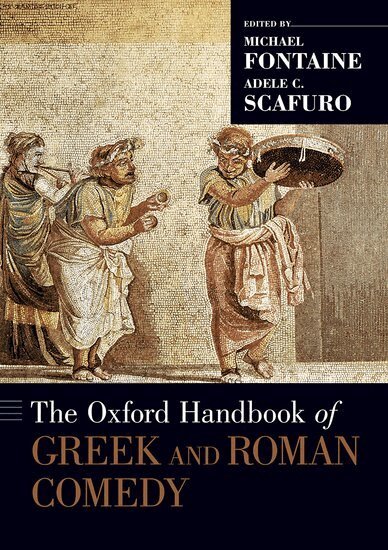
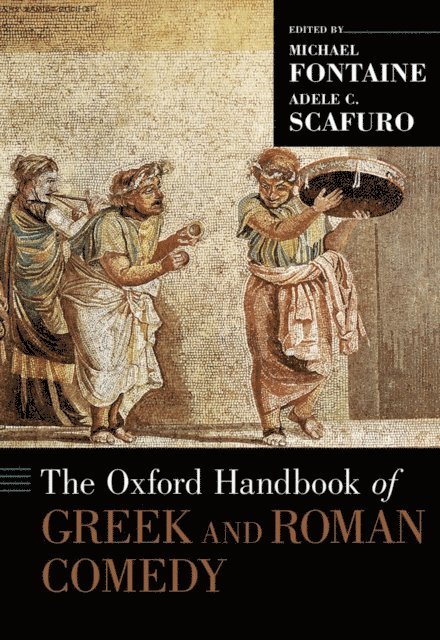
In recent decades literary approaches to drama have multiplied: new historical, intertextual, political, performative and metatheatrical, socio-linguistic, gender-driven, transgenre-driven. New information has been amassed, sometimes by re-examination of extant literary texts and material artifacts, at other times from new discoveries from the fields of archaeology, epigraphy, art history, and literary studies. The Oxford Handbook of Greek and Roman Comedy marks the first comprehensive introduction to and reference work for the unified study of ancient comedy. From the birth of comedy in Greece to its end in Rome, from the Hellenistic diffusion of performances after the death of Menander to its artistic, scholarly, and literary receptions in the later Roman Empire, no topic is neglected. 41 essays spread across Greek Comedy, Roman Comedy, and the transmission and reception of Ancient comedy by an international team of experts offer cutting-edge guides through the immense terrain of the field, while an expert introduction surveys the major trends and shifts in scholarly study of comedy from the 1960s to today. The Handbook includes two detailed appendices that provide invaluable research tools for both scholars and students. The result offers Hellenists an excellent overview of the earliest reception and creative reuse of Greek New Comedy, Latinists a broad perspective of the evolution of Roman Comedy, and scholars and students of classics an excellent resource and tipping point for future interdisciplinary research.
1 500 kr
Skickas inom 5-8 vardagar
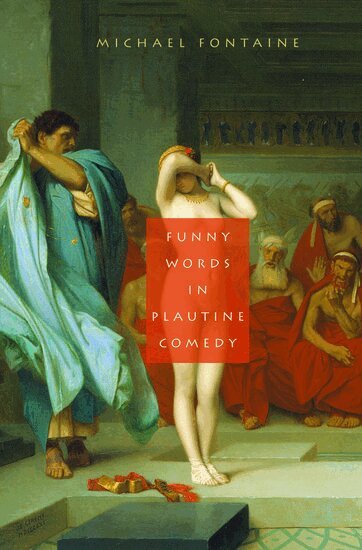
Plautus, Rome's earliest extant poet, was acclaimed by ancient critics above all for his mastery of language and his felicitous jokes; and yet in modern times relatively little attention has been devoted to elucidating these elements fully. In Funny Words in Plautine Comedy, Michael Fontaine reassesses some of the premises and nature of Plautus' comedies. Mixing textual and literary criticism, Fontaine argues that many of Plautus' jokes and puns were misunderstood already in antiquity, and that with them the names and identities of some familiar characters were misconceived. Central to his study are issues of Plautine language, style, psychology, coherence of characterization, and irony. By examining the comedian's tendency to make up and misuse words, Fontaine sheds new light on the close connection between Greek and Roman comedy. Considerable attention is also paid to Plautus' audience and to the visual elements in his plays. The result is a reappraisal that will challenge many received views of Plautus, positioning him as a poet writing in the Hellenistic tradition for a knowledgeable and sophisticated audience. All quotations from Latin, Greek, and other foreign languages are translated. Extensive indices, including a "pundex," facilitate ease of reference among the many jokes and plays on words discussed in the text.
2 923 kr
Skickas inom 5-8 vardagar
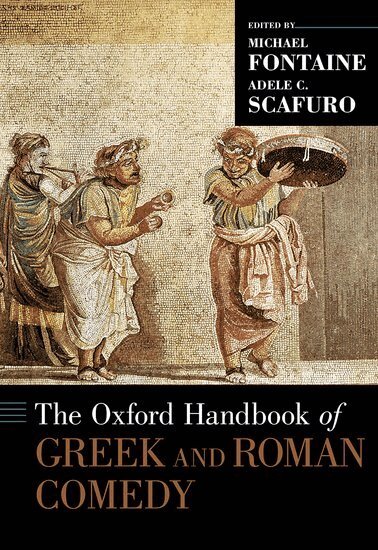
In recent decades literary approaches to drama have multiplied: new historical, intertextual, political, performative and metatheatrical, socio-linguistic, gender-driven, transgenre-driven. New information has been amassed, sometimes by re-examination of extant literary texts and material artifacts, at other times from new discoveries from the fields of archaeology, epigraphy, art history, and literary studies. The Oxford Handbook of Greek and Roman Comedy marks the first comprehensive introduction to and reference work for the unified study of ancient comedy. From the birth of comedy in Greece to its end in Rome, from the Hellenistic diffusion of performances after the death of Menander to its artistic, scholarly, and literary receptions in the later Roman Empire, no topic is neglected. 41 essays spread across Greek Comedy, Roman Comedy, and the transmission and reception of Ancient comedy by an international team of experts offer cutting-edge guides through the immense terrain of the field, while an expert introduction surveys the major trends and shifts in scholarly study of comedy from the 1960s to today. The Handbook includes two detailed appendices that provide invaluable research tools for both scholars and students. The result offers Hellenists an excellent overview of the earliest reception and creative reuse of Greek New Comedy, Latinists a broad perspective of the evolution of Roman Comedy, and scholars and students of classics an excellent resource and tipping point for future interdisciplinary research.
140 kr
Skickas inom 7-10 vardagar
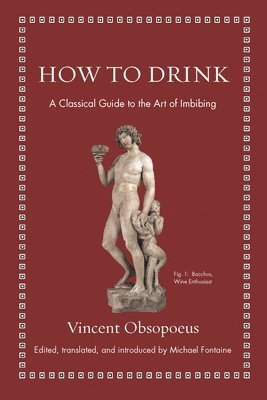
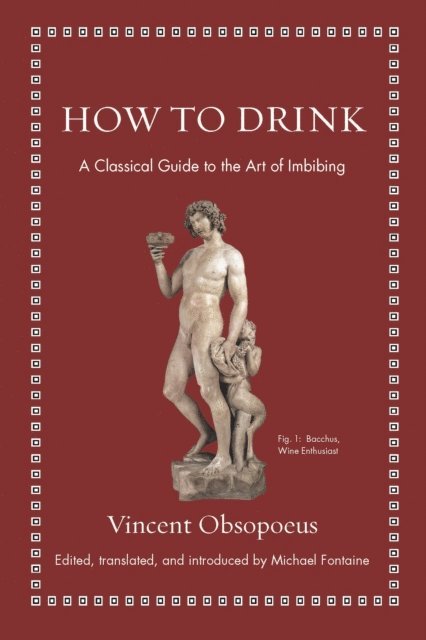
A spirited new translation of a forgotten classic, shot through with timeless wisdom Is there an art to drinking alcohol? Can drinking ever be a virtue? The Renaissance humanist and neoclassical poet Vincent Obsopoeus (ca. 1498–1539) thought so. In the winelands of sixteenth-century Germany, he witnessed the birth of a poisonous new culture of bingeing, hazing, peer pressure, and competitive drinking. Alarmed, and inspired by the Roman poet Ovid's Art of Love, he wrote The Art of Drinking (De Arte Bibendi) (1536), a how-to manual for drinking with pleasure and discrimination. In How to Drink, Michael Fontaine offers the first proper English translation of Obsopoeus's text, rendering his poetry into spirited, contemporary prose and uncorking a forgotten classic that will appeal to drinkers of all kinds and (legal) ages.Arguing that moderation, not abstinence, is the key to lasting sobriety, and that drinking can be a virtue if it is done with rules and limits, Obsopoeus teaches us how to manage our drinking, how to win friends at social gatherings, and how to give a proper toast. But he also says that drinking to excess on occasion is okay—and he even tells us how to win drinking games, citing extensive personal experience.Complete with the original Latin on facing pages, this sparkling work is as intoxicating today as when it was first published.
156 kr
Skickas inom 7-10 vardagar
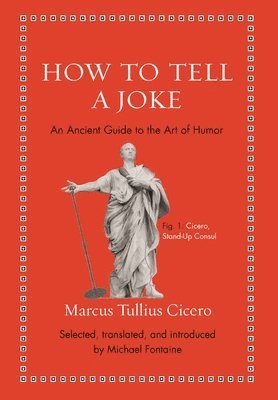
Timeless advice about how to use humor to win over any audienceCan jokes win a hostile room, a hopeless argument, or even an election? You bet they can, according to Cicero, and he knew what he was talking about. One of Rome’s greatest politicians, speakers, and lawyers, Cicero was also reputedly one of antiquity’s funniest people. After he was elected commander-in-chief and head of state, his enemies even started calling him “the stand-up Consul.” How to Tell a Joke provides a lively new translation of Cicero’s essential writing on humor alongside that of the later Roman orator and educator Quintilian. The result is a timeless practical guide to how a well-timed joke can win over any audience.As powerful as jokes can be, they are also hugely risky. The line between a witty joke and an offensive one isn’t always clear. Cross it and you’ll look like a clown, or worse. Here, Cicero and Quintilian explore every aspect of telling jokes—while avoiding costly mistakes. Presenting the sections on humor in Cicero’s On the Ideal Orator and Quintilian’s The Education of the Orator, complete with an enlightening introduction and the original Latin on facing pages, How to Tell a Joke examines the risks and rewards of humor and analyzes basic types that readers can use to write their own jokes.Filled with insight, wit, and examples, including more than a few lawyer jokes, How to Tell a Joke will appeal to anyone interested in humor or the art of public speaking.
156 kr
Skickas inom 7-10 vardagar
A modern translation of the ancient Roman poet Ovid’s Remedies for Love—a witty and irreverent work about how to fall out of loveBreakups are the worst. On one scale devised by psychiatrists, only a spouse’s death was ranked as more stressful than a marital split. Is there any treatment for a breakup? The ancient Roman poet Ovid thought so. Having become famous for teaching the art of seduction in The Art of Love, he then wrote Remedies for Love (Remedia Amoris), which presents thirty-eight frank and witty strategies for coping with unrequited love, falling out of love, ending a relationship, and healing a broken heart. How to Get Over a Breakup presents an unabashedly modern prose translation of Ovid’s lighthearted and provocative work, complete with a lively introduction and the original Latin on facing pages.Ovid’s advice—which he illustrates with ingenious interpretations of classical mythology—ranges from the practical, psychologically astute, and profound to the ironic, deliberately offensive, and bizarre. Some advice is conventional—such as staying busy, not spending time alone, and avoiding places associated with an ex. Some is off-color, such as having sex until you’re sick of it. And some is simply and delightfully weird—such as becoming a lawyer and not eating arugula.Whether his advice is good or bad, entertaining or outrageous, How to Get Over a Breakup reveals an Ovid who sounds startlingly modern.
156 kr
Skickas inom 7-10 vardagar
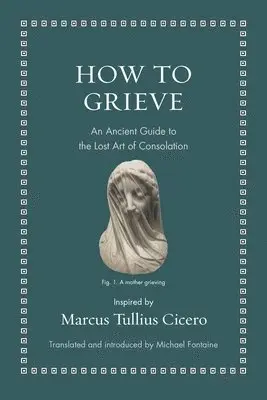
An engaging new translation of a timeless masterpiece about coping with the death of a loved oneIn 45 BCE, the Roman statesman Cicero fell to pieces when his beloved daughter, Tullia, died from complications of childbirth. But from the depths of despair, Cicero fought his way back. In an effort to cope with his loss, he wrote a consolation speech—not for others, as had always been done, but for himself. And it worked. Cicero’s Consolation was something new in literature, equal parts philosophy and motivational speech. Drawing on the full range of Greek philosophy and Roman history, Cicero convinced himself that death and loss are part of life, and that if others have survived them, we can, too; resilience, endurance, and fortitude are the way forward.Lost in antiquity, Cicero’s Consolation was recreated in the Renaissance from hints in Cicero’s other writings and the Greek and Latin consolatory tradition. The resulting masterpiece—translated here for the first time in 250 years—is infused throughout with Cicero’s thought and spirit.Complete with the original Latin on facing pages and an inviting introduction, Michael Fontaine’s engaging translation makes this searching exploration of grief available to readers once again.
148 kr
Skickas inom 7-10 vardagar
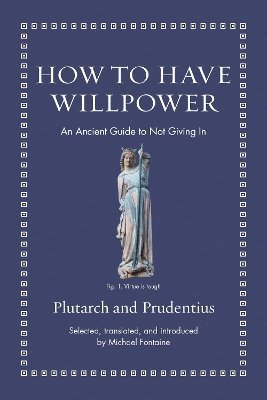
Lively new translations of two classical works that offer wise advice about how to resist temptationHow to Have Willpower brings together two profound ancient meditations on how to overcome pressures that encourage us to act against our own best interests—Plutarch’s essay On Dysopia or How to Resist Pressure and Prudentius’s poetic allegory Psychomachia or How to Slay Your Demons. Challenging the idea that humans are helpless victims of vice, these works—introduced and presented in vivid, accessible new prose translations by Michael Fontaine, with the original Latin and Greek texts on facing pages—emphasize the power of personal choice and the possibility of personal growth, as they offer insights and practical advice about resisting temptation.In the spirit of the best ancient self-help writing, Plutarch, a pagan Greek philosopher and historian, offers a set of practical recommendations and steps we can take to resist pressure and to stop saying “yes” against our better judgment. And in a delightfully different work, Prudentius, a Latin Christian poet, dramatizes the necessity to actively fight temptation through the story of an epic battle within the human soul between fierce warrior women representing our virtues and vices.Plutarch and Prudentius insist that we allow pressure or temptations to get the best of us. But they also agree that we can do something about it. And their wisdom can help.
190 kr
Kommande
A vivid and timely new translation of Plato’s Apology, in which Socrates defends his pursuit of truth, no matter the consequencesFree speech is back at the center of political and cultural debate, amid intense arguments over censorship on campus, in government, and in everyday life. How to Speak Freely offers a timeless and essential exploration of free speech through a lively new translation of Plato’s Apology, perhaps the most famous and important work on the subject in all of Western history. In it, Plato recounts the trial of Socrates in 399 BCE—one of the most powerful defenses of freedom of thought and speech ever written.In Plato’s Apology, Socrates embodies the archetype of a person who thinks independently: a figure of conviction who pursued curiosity honestly, became convinced of unpopular truths, spoke candidly about them, and refused to grovel, pander, or recant—even to save his life. By insisting on his freedom and accepting the consequences, Socrates became the most famous martyr to free inquiry in history—and raised enduring questions about the value, dangers, and limits of free speech in a democracy.How to Speak Freely supplements Plato’s Apology with a delightful fable on free speech told from a different angle. In the short dialogue The Gods in Council, Lucian (c. 125–180 CE) satirizes the concept of “platforming,” showing how free speech ideals are truly tested only when they’re truly applied.Featuring an enlightening introduction and the original Greek on facing pages, How to Speak Freely is a powerful and thought-provoking examination of the rewards and risks of speaking one’s mind.
698 kr
Skickas inom 10-15 vardagar
Knowledge and Communities is the first book dedicated to a major new knowledge management topic. "Communities of Practice" are cross-organizational groups of people sharing knowledge, solving common problems, and exchanging insights and frustrations. Knowledge and Communities, a collection of authoritative articles, describes the dynamics of these groups and explains how they enable organizational knowledge to be creating, shared, and applied.The book teaches how organizations can empower both traditional and on-line communities and make them a cornerstone of a general knowledge management strategy. Readers will learn how communities can help unify an organization and its external stakeholders, such as customers and suppliers, and how they can critically support an e-commerce strategy. Knowledge and Communities will help readers understand a primary vehicle for building an organization's social capital and competitive advantage.
2 772 kr
Skickas inom 10-15 vardagar
Knowledge and Communities is the first book dedicated to a major new knowledge management topic. "Communities of Practice" are cross-organizational groups of people sharing knowledge, solving common problems, and exchanging insights and frustrations. Knowledge and Communities, a collection of authoritative articles, describes the dynamics of these groups and explains how they enable organizational knowledge to be creating, shared, and applied. The book teaches how organizations can empower both traditional and on-line communities and make them a cornerstone of a general knowledge management strategy. Readers will learn how communities can help unify an organization and its external stakeholders, such as customers and suppliers, and how they can critically support an e-commerce strategy. Knowledge and Communities will help readers understand a primary vehicle for building an organization's social capital and competitive advantage.
266 kr
Skickas inom 5-8 vardagar
181 kr
Skickas inom 5-8 vardagar
Tawsi Melek Meets the Dragon Prince
A Tale of Possession by a Gay Disco Fantasy
Häftad, Engelska, 2024
118 kr
Skickas
224 kr
Skickas inom 5-8 vardagar