
William F Buckingham – författare
Visar alla böcker från författaren William F Buckingham. Handla med fri frakt och snabb leverans.
11 produkter
11 produkter
131 kr
Tillfälligt slut
The battle of Arnhem was a major turning point in World War II. It was a gamble by Montgomery, using three airborne divisions, to capture a series of bridges across the wide rivers which separated a powerful army from the plains of northern Germany.
483 kr
Tillfälligt slut
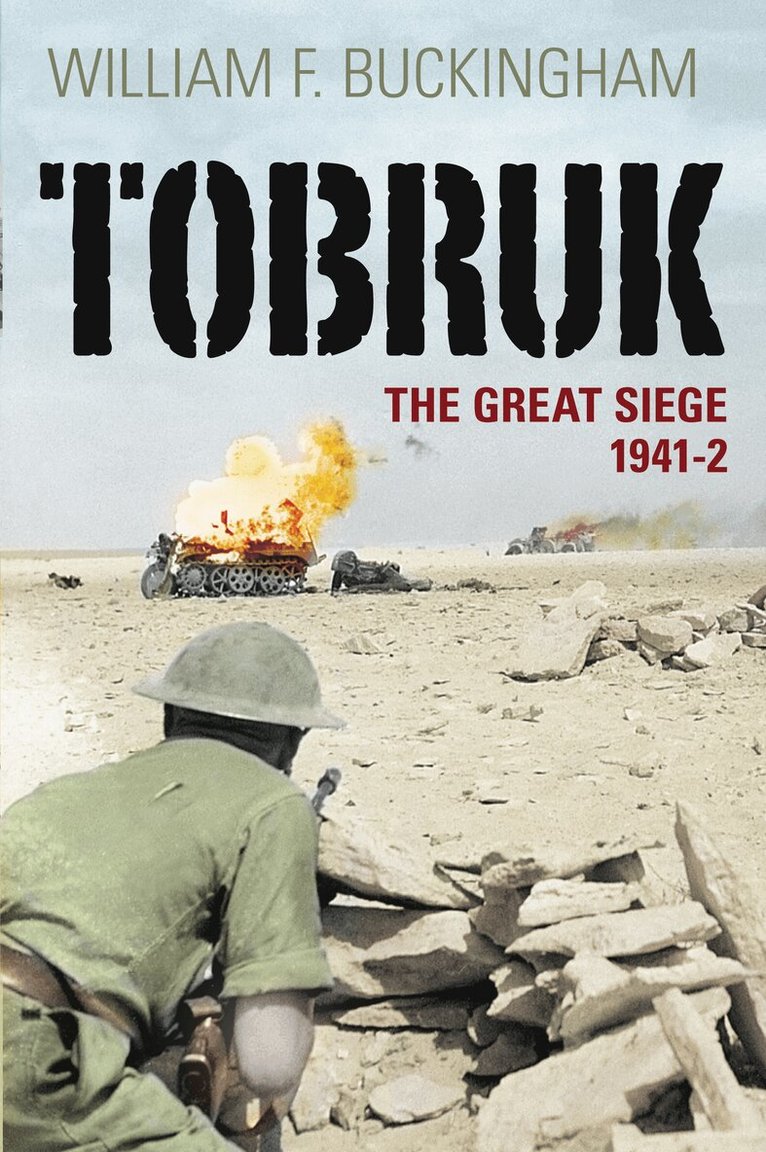
The siege of Tobruk was the longest in British military history. The coastal fortress and deep-water port was of crucial importance to the battle for North Africa, and the key that would unlock the way to Egypt and the Suez Canal. For almost a year the isolated garrison held out against all attempts to take it, and in the process Tobruk assumed a propaganda role that outweighed its great strategic value, becoming a potent symbol of resistance when the war was going badly for the British. Goebbels referred to the garrison as 'rats,' and they proudly adopted the insult as a title, and became the 'Rats of Tobruk.' When it finally fell to German tanks on 21 June 1942 with the loss of 25,000 men, Churchill said it was 'one of the heaviest blows I can recall during the war'.William F. Buckingham's startling account, drawing extensively on official records and first-hand accounts from both sides, is a comprehensive history of this epic struggle, and essential reading for anyone with an interest in the Western Desert Campaign.
125 kr
Tillfälligt slut
The untold story of the birth of the Paras.
185 kr
Skickas inom 11-20 vardagar
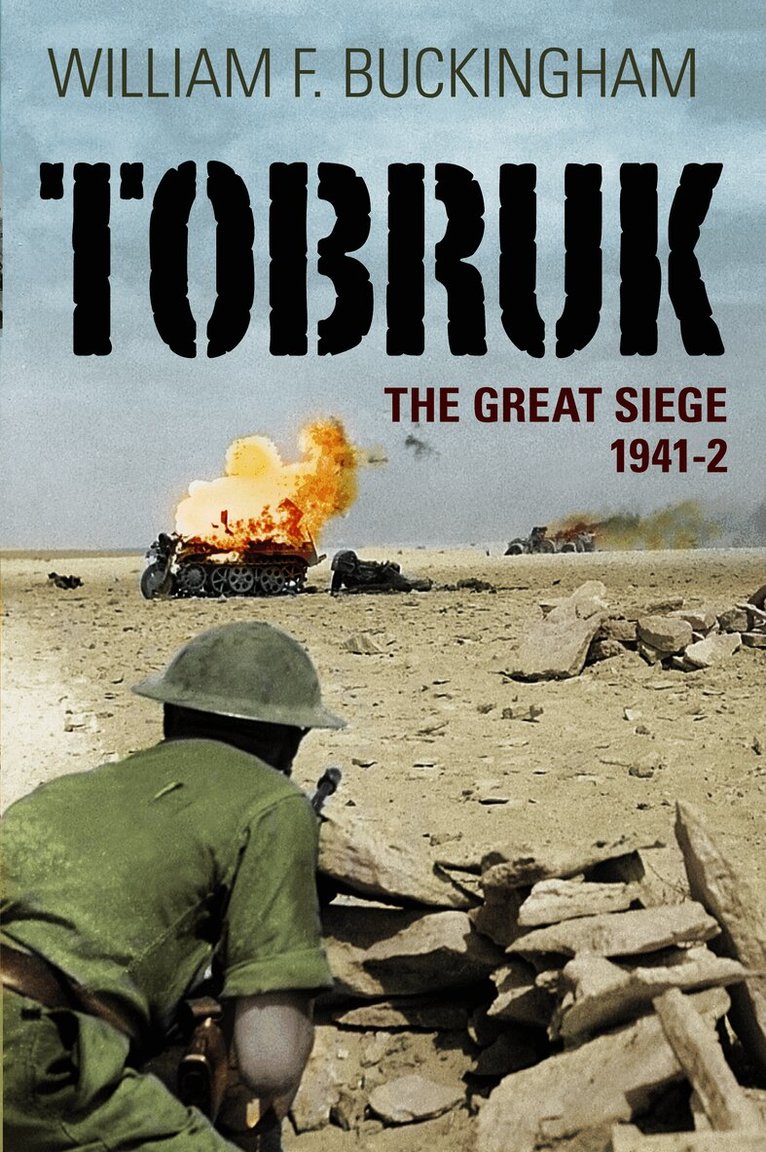
The siege of Tobruk was the longest in British military history. The coastal fortress and deep-water port was of crucial importance to the battle for North Africa, and the key that would unlock the way to Egypt and the Suez Canal. For almost a year the isolated garrison held out against all attempts to take it, and in the process Tobruk assumed a propaganda role that outweighed its great strategic value, becoming a potent symbol of resistance when the war was going badly for the British. Goebbels referred to the garrison as 'rats,' and they proudly adopted the insult as a title, and became the 'Rats of Tobruk.' When it finally fell to German tanks on 21 June 1942 with the loss of 25,000 men, Churchill said it was 'one of the heaviest blows I can recall during the war'.William F. Buckingham's startling account, drawing extensively on official records and first-hand accounts from both sides, is a comprehensive history of this epic struggle, and essential reading for anyone with an interest in the Western Desert Campaign.
215 kr
Tillfälligt slut
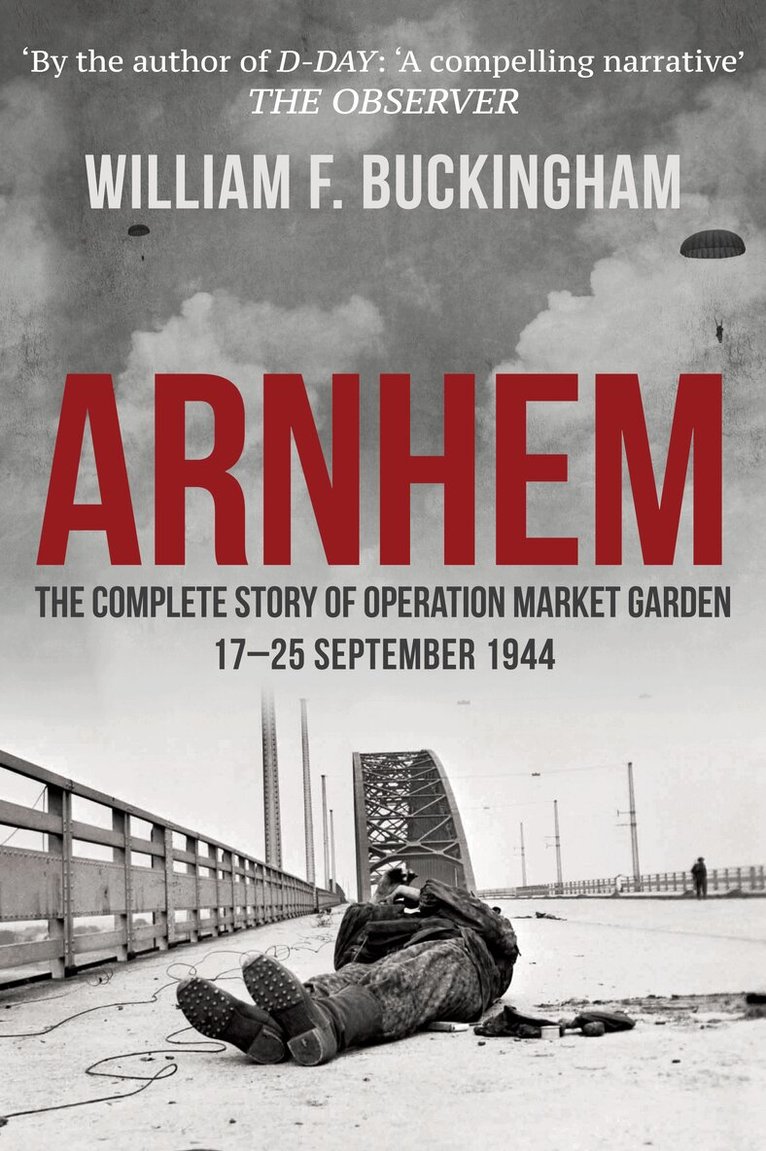
On the afternoon of Sunday 17 September British tanks advanced into Holland in concert with 1,534 transport aircraft and 491 gliders. Their objective was a series of bridges across the Rhine, possession of which would allow the Allies to advance into Germany. In the event the operation was dogged by bad weather, flawed planning, tardiness and overconfidence, and ended with the Arnhem crossing still in German hands despite an epic nine-day battle that cost the British 1st Airborne Division over two-thirds of its men killed, wounded or captured. Here is what happened, hour by desperate hour.
213 kr
Skickas inom 11-20 vardagar
Fought on the heights above the garrison town of the same name on the River Meuse, 140 miles east of Paris, the Battle of Verdun lasted for ten months, between February and December 1916, double the length of the Battle of the Somme and over three times the length of the Battle of Passchendaele. Conceived by the Germans as a means of destroying the French army through attrition rather than breakthrough and encirclement, the battle cost 300,000 lives.Massed artillery was employed on a hitherto unprecedented scale; the initial bombardment lasted for nine hours and saw 80,000 shells fall on the French trench line, while on the ground the initial attack saw the combat debut of storm-troop tactics and the man-pack flamethrower. As the battle raged the combatants endured heat and thirst akin to desert conditions together with bottomless mud as bad as at Passchendaele. In addition, fixed defences like the forts of Douaumont and Vaux sparked hellish underground fighting in subterranean pitch darkness that occurred nowhere else on the Western Front.The result was almost 200 square kilometres of ground that had been blasted, ploughed and poisoned into a wasteland by explosives and gas, so much so that the post-war French authorities were unable to return it to its former agricultural use and simply left it to the elements.
162 kr
Skickas inom 11-20 vardagar
Fought on the heights above the garrison town of the same name on the River Meuse, 140 miles east of Paris, the Battle of Verdun lasted for ten months, between February and December 1916, double the length of the Battle of the Somme and over three times the length of the Battle of Passchendaele. Conceived by the Germans as a means of destroying the French army through attrition rather than breakthrough and encirclement, the battle cost 300,000 lives.Massed artillery was employed on a hitherto unprecedented scale; the initial bombardment lasted for nine hours and saw 80,000 shells fall on the French trench line, while on the ground the initial attack saw the combat debut of storm-troop tactics and the man-pack flamethrower. As the battle raged the combatants endured heat and thirst akin to desert conditions together with bottomless mud as bad as at Passchendaele. In addition, fixed defences like the forts of Douaumont and Vaux sparked hellish underground fighting in subterranean pitch darkness that occurred nowhere else on the Western Front.The result was almost 200 square kilometres of ground that had been blasted, ploughed and poisoned into a wasteland by explosives and gas, so much so that the post-war French authorities were unable to return it to its former agricultural use and simply left it to the elements.
111 kr
Tillfälligt slut
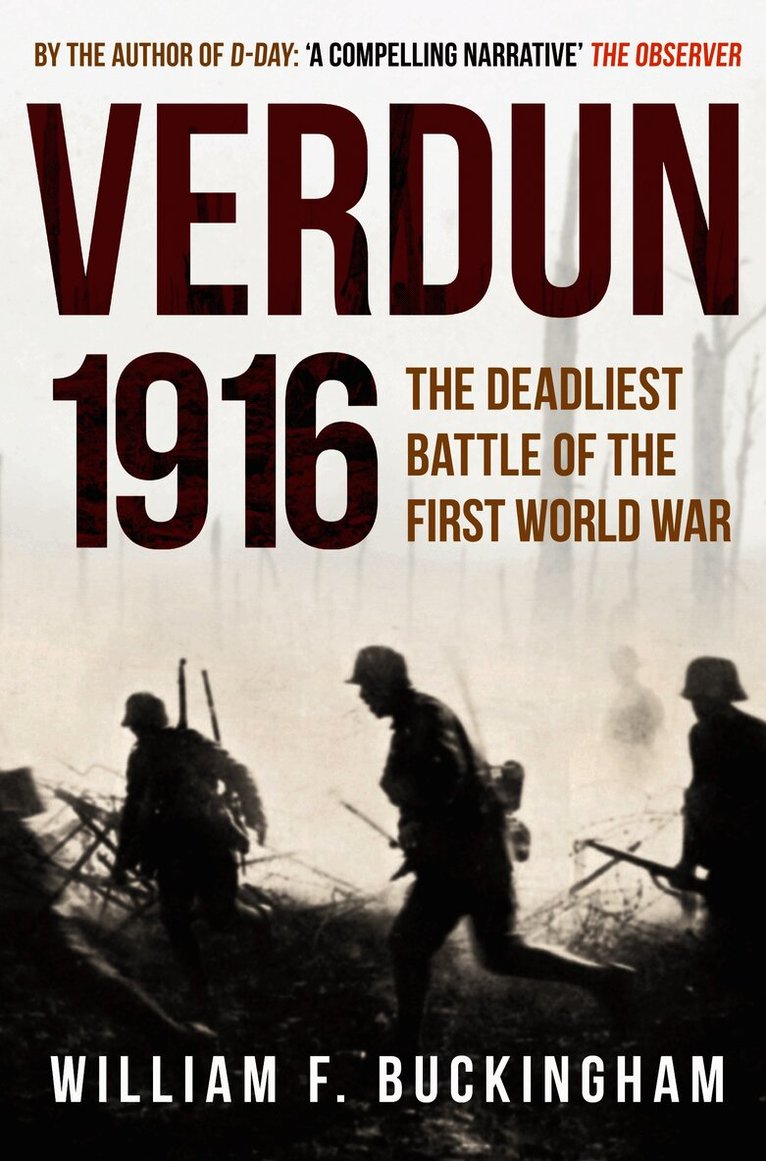
Fought on the heights above the garrison town of the same name on the River Meuse, 140 miles east of Paris, the Battle of Verdun lasted for ten months, between February and December 1916, double the length of the Battle of the Somme and over three times the length of the Battle of Passchendaele. Conceived by the Germans as a means of destroying the French army through attrition rather than breakthrough and encirclement, the battle cost 300,000 lives.Massed artillery was employed on a hitherto unprecedented scale; the initial bombardment lasted for nine hours and saw 80,000 shells fall on the French trench line, while on the ground the initial attack saw the combat debut of storm-troop tactics and the man-pack flamethrower. As the battle raged the combatants endured heat and thirst akin to desert conditions together with bottomless mud as bad as at Passchendaele. In addition, fixed defences like the forts of Douaumont and Vaux sparked hellish underground fighting in subterranean pitch darkness that occurred nowhere else on the Western Front.The result was almost 200 square kilometres of ground that had been blasted, ploughed and poisoned into a wasteland by explosives and gas, so much so that the post-war French authorities were unable to return it to its former agricultural use and simply left it to the elements.
357 kr
Skickas
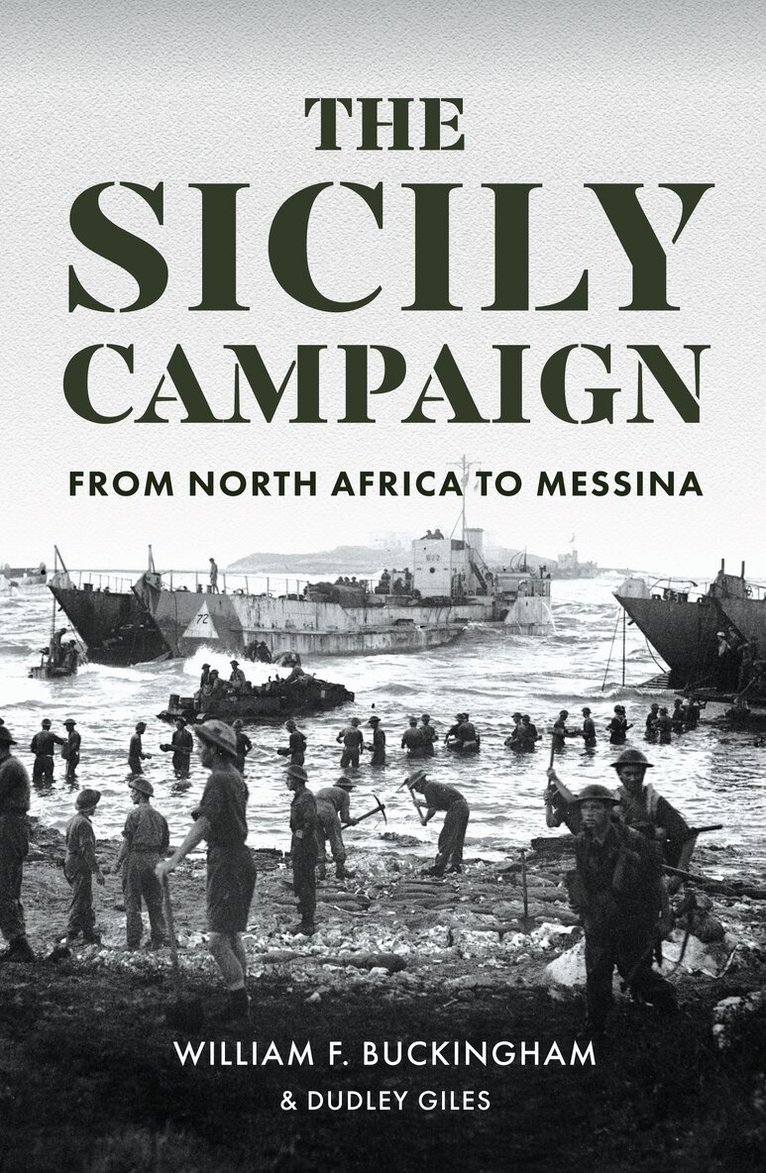
The Allied effort to secure the Italian island of Sicily followed hard on the heels of the North African Campaign, when an Anglo-American force had finally hemmed the Axis forces into Tunisia where they were obliged to surrender on 13 May 1943, over a quarter of a million troops going into captivity. Now, intending to open the sea lanes across the Mediterranean for the first time since 1940 and knock Italy out of the war, the Allies invaded Sicily on the night of 9-10 July 1943. After just eight weeks of planning and preparation, sea and airborne landings were made on the southern and south-eastern areas of the island. The campaign that followed included a further British airborne landing in mid-July before Axis forces were obliged to withdraw across the Straits of Messina to the Italian mainland, leaving Sicily in Allied hands. The six weeks of fighting cost the Allied forces almost 20,000 men killed, wounded and missing, while their opponents lost around 100,000, with a further 123,000 prisoners, mostly Italian.The Sicily Campaign was the first occasion that Allied forces successfully took the fight onto the home territory of an Axis power, and it provided the springboard for the Allied return to continental Europe for the first time since Dunkirk via the invasion of the Italian mainland. It marked the beginning of formal Anglo-US co-operation, which was to be vital to the success of the subsequent campaign in North-West Europe.
330 kr
Skickas inom 3-6 vardagar
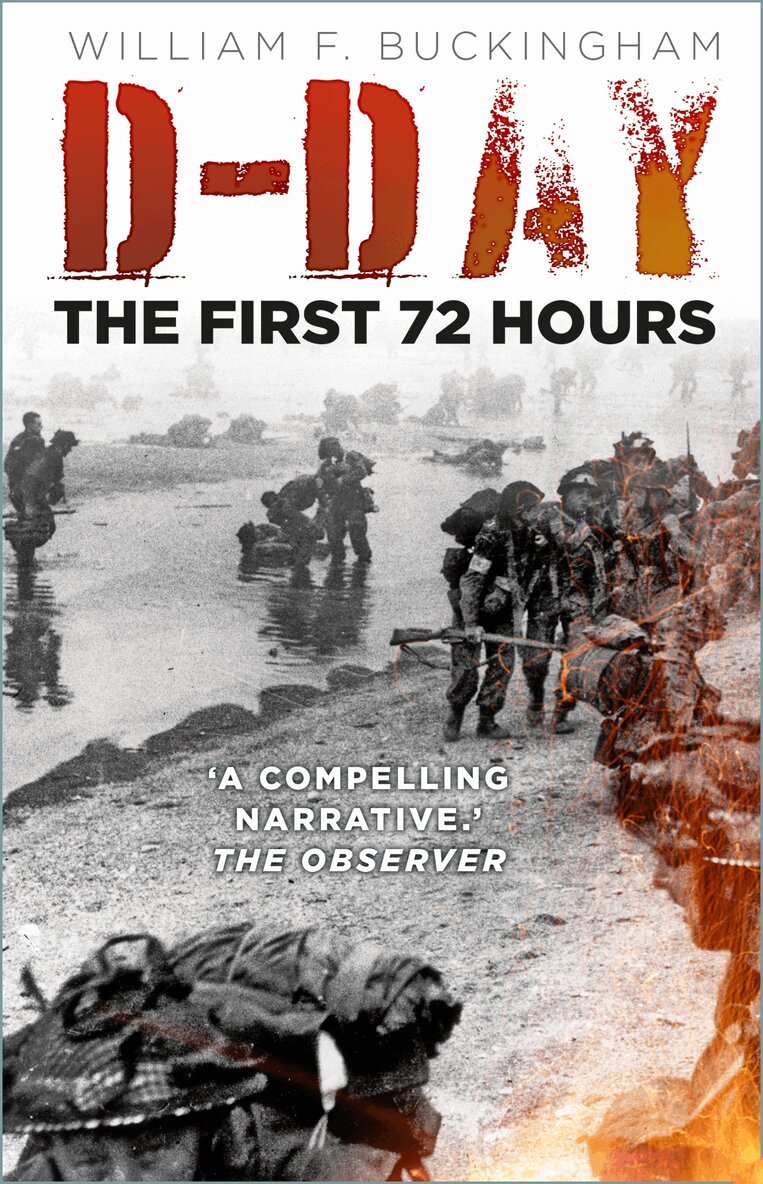
The Allied invasion of occupied France began by delivering three airborne and six infantry divisions onto a 60-mile stretch of the Normandy coast. Accomplishing this involved over 1,200 transport aircraft, 450 gliders, 325 assorted warships and more than 4,000 landing vessels. The first 72 hours of the D-Day invasion were pivotal – from the initial airborne landings in the early hours of Tuesday 6 June 1944 we follow the Allied attackers and their German opponents hour-by-hour as they fought until fresh units began to take over from Thursday 8 June 1944.William F. Buckingham’s astounding history finally lays to rest the myths surrounding the Normandy invasion. He contradicts the popular perception that the American OMAHA landing force suffered disproportionately. In fact, the fighting on the British and Canadian beaches (GOLD, SWORD and JUNO) was no less intense, and the cost was much closer to that of OMAHA than is commonly thought. The reality of D-Day was that a devastating number of men from all sides of the Allied forces who landed on the beaches that day would never set foot on their native soil again.
318 kr
Skickas inom 11-20 vardagar
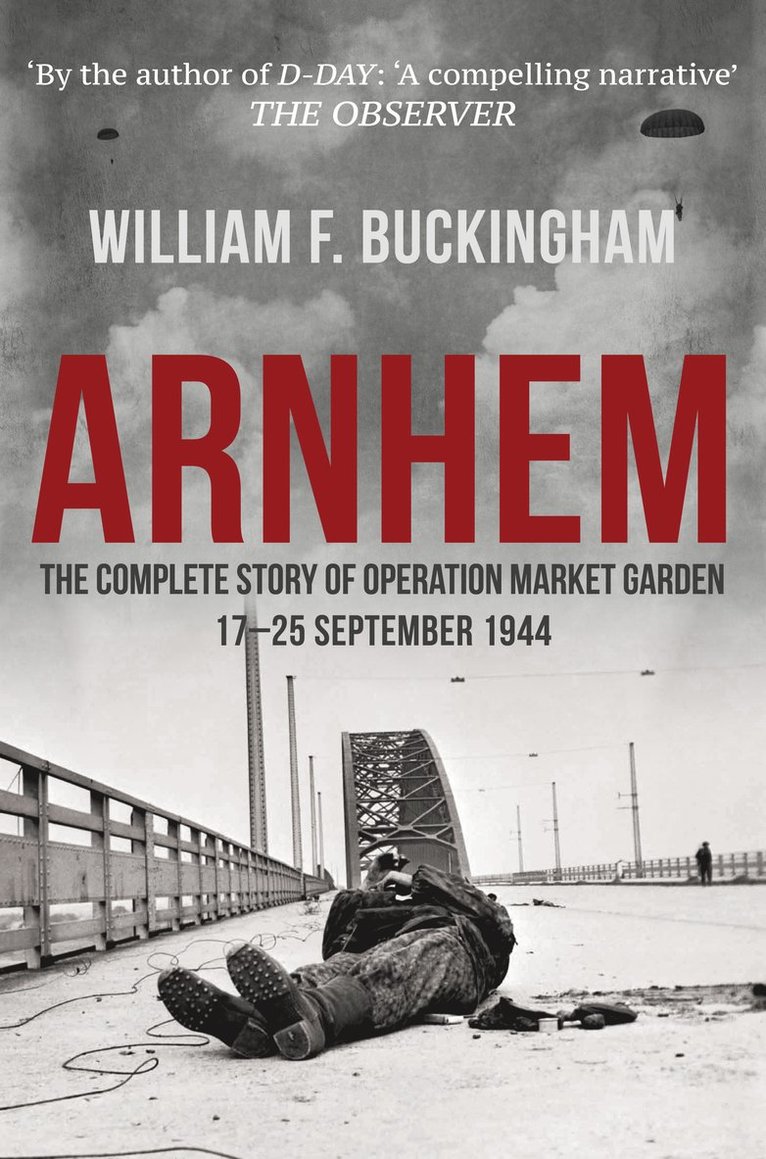
On 21 August 1944 German Army Group B was destroyed in Normandy and Allied troops began pressing east from the beachhead they had occupied since the D-Day landings. Within days British troops had liberated Brussels and reached the Dutch border. Encouraged by seeming total German collapse, the Allies gambled their overstretched resources on a high-risk strategy aimed at opening the way into Germany itself – crossing the Rhine.On the afternoon of Sunday 17 September British tanks advanced into Holland in concert with 1,534 transport aircraft and 491 gliders. Their objective was a series of bridges across the Rhine, possession of which would allow the Allies to advance into Germany. In the event the operation was dogged by bad weather, flawed planning, tardiness and overconfidence, and ended with the Arnhem crossing still in German hands despite an epic nine-day battle that cost the British 1st Airborne Division over two-thirds of its men killed, wounded or captured.Arnhem: The Complete Story combines analysis and new research by a leading authority on Operation MARKET GARDEN with the words of the men who were there, and provides the most comprehensive account of the battle to date, day by day, hour by desperate hour.