William F. Woods - Böcker
Visar alla böcker från författaren William F. Woods. Handla med fri frakt och snabb leverans.
4 produkter
4 produkter
377 kr
Skickas inom 5-8 vardagar
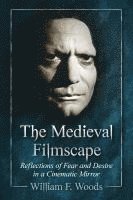
This book is an attempt at defining the genre of medieval film by describing its features and analyzing its effects and their significance, there being few works presently available that work toward such definition. There are three parts: the introduction enters the medieval film world, describing its typical features and showing how they create a convincing sense of its time; three short chapters discuss authenticity, simplicity and spectacle--the roots of film medievalism; and six longer chapters comment on individual films. Works are discussed that extend the reach of the genre, such as Dreyer's La Passion de Jeanne d'Arc with its emotional range, or Bergman's Seventh Seal, which creates a universal symbolism. The author describes what goes into a medieval film and how it affects its audience, while offering suggestions about why its themes are meaningful to us.
1 137 kr
Skickas inom 7-10 vardagar
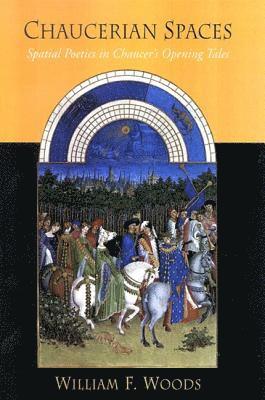
Examines affect and the significance of space and place in the first six Canterbury Tales.Chaucerian Spaces explores the affect and the significance of space and place in the first six tales in Chaucer's Canterbury Tales. Relatively little has been written about space in the Canterbury Tales, yet the rewards for attending to this aspect of Chaucer's aesthetic are considerable. Space indicates the potential for characteristic action, development, and a more profound expression of being. In these tales, characters inhabit a landscape and places within it that express their inner life. Emelye in her garden, Palamon and Arcite in the grove-all occupy spaces or places that manifest social destiny and individual intention. Space and subjectivity change as territories give way to households, and the horizons of consciousness shrink to the core of human intent. Most striking is the transformation of women in place. Emelye, Alysoun, even Custance and the Wife of Bath, dwell in places that express their social and economic potential. They are in place, but place is also in them: they merge in metaphor with the places that express them, bringing the reader closer to the sensible, reflective experience of the medieval subject.
440 kr
Tillfälligt slut
Examines affect and the significance of space and place in the first six Canterbury Tales.Chaucerian Spaces explores the affect and the significance of space and place in the first six tales in Chaucer's Canterbury Tales. Relatively little has been written about space in the Canterbury Tales, yet the rewards for attending to this aspect of Chaucer's aesthetic are considerable. Space indicates the potential for characteristic action, development, and a more profound expression of being. In these tales, characters inhabit a landscape and places within it that express their inner life. Emelye in her garden, Palamon and Arcite in the grove-all occupy spaces or places that manifest social destiny and individual intention. Space and subjectivity change as territories give way to households, and the horizons of consciousness shrink to the core of human intent. Most striking is the transformation of women in place. Emelye, Alysoun, even Custance and the Wife of Bath, dwell in places that express their social and economic potential. They are in place, but place is also in them: they merge in metaphor with the places that express them, bringing the reader closer to the sensible, reflective experience of the medieval subject.
854 kr
Skickas inom 5-8 vardagar
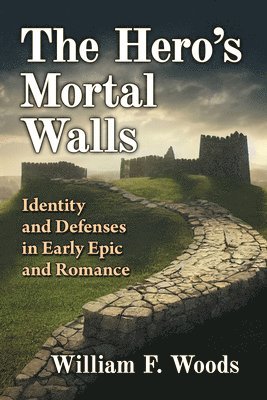
The heroes of early narrative are the faces of an older world. In constant retellings, their stories hold the memory like members of an extended family. Gilgamesh, Odysseus, Beowulf, Gawain, Roland, Yvain, Genji--in their colorful, often exaggerated ways, they show how the people of their own time and place liked to know themselves. The heroes embody their identity and reflect their culture.Because their world was difficult and dangerous, every hero needed defensive strengths. This book analyzes seven iconic heroes and compares each champion to a walled town or castle, hardened against an outer threat. These defenses are the mortal walls of their identity--their strengths against the world, as well as their dealings within it--and are exemplified in their actions as warriors, distinct rhetoric, complex relationships with women, and devotion to the divine. By delving into some of early narrative's most renowned heroes, the book reveals the pieces of their inner selves that even they cannot keep outside the walls but must finally accept with firm humility.