William H. Read – författare
Visar alla böcker från författaren William H. Read. Handla med fri frakt och snabb leverans.
5 produkter
Telecommunications
Law, Regulation, and Policy
Av Walter Sapronov, William H. Read
E-bok, 1998
617 kr
Lägg i varukorg
This is a research and reference guide to the telecommunications industry in the United States, providing an account of legislative and policy changes up until the publication of the work. Contributions by scholars in telecommunications law and policy survey the post-1996 legislative field.
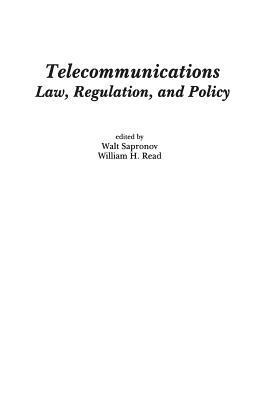
Telecommunications
Law, Regulation, and Policy
Av Walter Sapronov, Walter H. Read m. fl.
Inbunden, 1998
981 kr
Lägg i varukorg
This is a research and reference guide to the telecommunications industry in the United States, providing an account of legislative and policy changes up until the publication of the work. Contributions by scholars in telecommunications law and policy survey the post-1996 legislative field, giving …
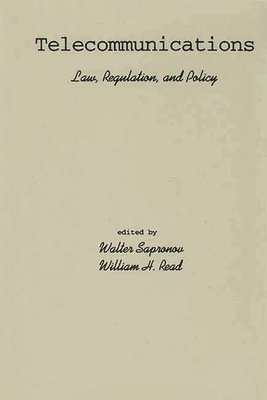
Telecommunications
Law, Regulation, and Policy
Av Walter Sapronov, William H. Read
Häftad, 1998
565 kr
Lägg i varukorg
This is a research and reference guide to the telecommunications industry in the United States, providing an account of legislative and policy changes up until the publication of the work. Contributions by scholars in telecommunications law and policy survey the post-1996 legislative field, giving …
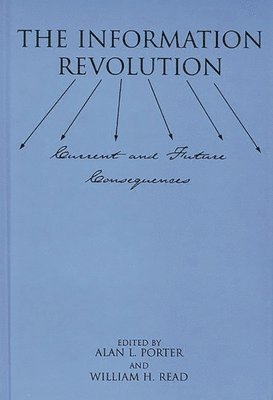
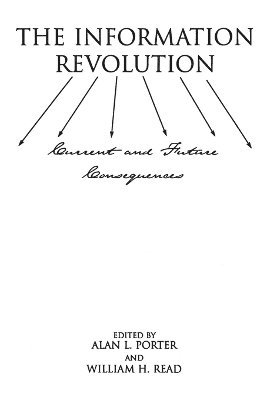
Information Revolution
Current and Future Consequences
Av Alan Porter, William H. Read m. fl.
Inbunden, 1998
1099 kr
Lägg i varukorg
This is a review of the current and future consequences of the information revolution. It draws on an international authorship, as well as members of the Georgia Faculty Program on the Information Revolution. Porter and Read look at the implications of the revolution in five areas of human …
Information Revolution
Current and Future Consequences
Av Alan Porter, William H. Read m. fl.
Häftad, 1998
808 kr
Lägg i varukorg
This is a review of the current and future consequences of the information revolution. It draws on an international authorship, as well as members of the Georgia Faculty Program on the Information Revolution. Porter and Read look at the implications of the revolution in five areas of human …