William I Hitchcock – författare
Visar alla böcker från författaren William I Hitchcock. Handla med fri frakt och snabb leverans.
17 produkter
Bitter Road to Freedom
The Human Cost of Allied Victory in World War II Europe
Häftad, 2009
335 kr
Lägg i varukorg
The Bitter Road to Freedom is a powerful, deeply moving account of an earth-shattering year in the history of the U.S. and Europe. Americans are justly proud of the role their country played in liberating Europe from Nazi tyranny. For many years, we have celebrated the courage of Allied soldiers, …
The Human Rights Revolution
An International History
Av Akira Iriye, Petra Goedde m. fl.
Inbunden, 2012
1843 kr
Lägg i varukorg
The third volume for the OUP/National History Center series, Reinterpreting History, this book offers a critical look at the political movement encompassed by human rights, a term rarely used before the 1940s. An agenda for human rights, with particular attention to international justice in the …
The Human Rights Revolution
An International History
Av Akira Iriye, Petra Goedde m. fl.
Häftad, 2012
616 kr
Lägg i varukorg
The third volume for the OUP/National History Center series, Reinterpreting History, this book offers a critical look at the political movement encompassed by human rights, a term rarely used before the 1940s. An agenda for human rights, with particular attention to international justice in the …
Science as Writing
Av David Locke, William I. Hitchcock
Inbunden, 1992
966 kr
Lägg i varukorg
For many years it has been assumed that a great gulf exists between science and the humanities, that the writings of science are simply the record of things scientists do and find and are devoid of literary features. Recently this assumption has been challenged by those who regard science and …
From War to Peace
Altered Strategic Landscapes in the Twentieth Century
Av Paul Kennedy, William I. Hitchcock
Inbunden, 2000
921 kr
Lägg i varukorg
In this timely collection, a dozen leading scholars of international affairs consider the twentieth century’s recurring failure to construct a stable and peaceful international order in the wake of war. Why has peace been so hard to build? The authors reflect on the difficulties faced by …
Struggle for Europe
The Turbulent History of a Divided Continent 1945 to the Present
E-bok, 2008
73 kr
Lägg i varukorg
From the ashes of World War II to the conflict over Iraq, William Hitchcock examines the miraculous transformation of Europe from a deeply fractured land to a continent striving for stability, tolerance, democracy, and prosperity. Exploring the role of Cold War politics in Europe’s peace settlement …
The Struggle for Europe: The Turbulent History of a Divided Continent 1945 to the Present
Häftad, 2004
315 kr
Lägg i varukorg
Shaper Nations
Strategies for a Changing World
Av William I. Hitchcock, Melvyn P. Leffler m. fl.
Inbunden, 2016
430 kr
Lägg i varukorg
Shaper Nations provides illuminating perspectives on the national strategies of eight emerging and established countries that are shaping global politics at the beginning of the twenty-first century. The volume’s authors offer a unique viewpoint: they live and work primarily in the country about …
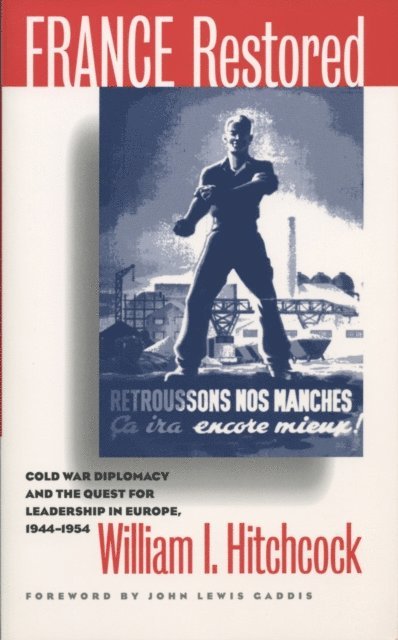
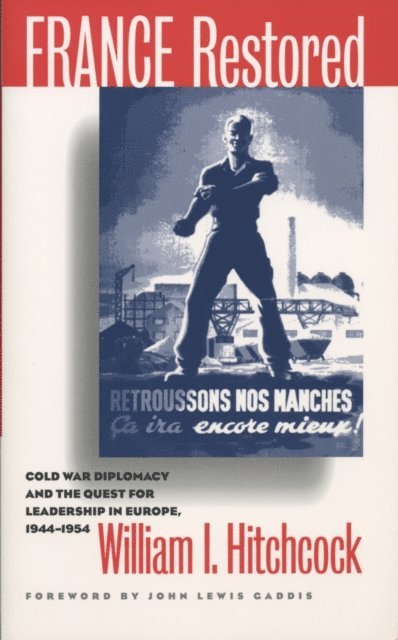
France Restored
Cold War Diplomacy and the Quest for Leadership in Europe, 1944-1954
Häftad, 1998
516 kr
Lägg i varukorg
Historians of the Cold War, argues the author of this book, have too often overlooked the part that European nations played in shaping the post-World War II international system. In particular, he contends that France has been given short shrift. Drawing on a wide array of evidence from French, …
France Restored
Cold War Diplomacy and the Quest for Leadership in Europe, 1944-1954
E-bok, 2000
410 kr
Lägg i varukorg
Historians of the Cold War, argues William Hitchcock, have too often overlooked the part that European nations played in shaping the post–World War II international system. In particular, France, a country beset by economic difficulties and political instability in the aftermath of the war, has …
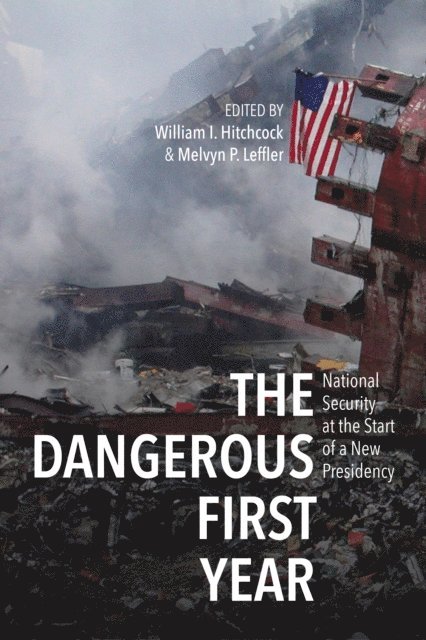
Dangerous First Year
National Security at the Start of a New Presidency
Av Melvyn P. Leffler, William I. Hitchcock
E-bok, 2016
86 kr
Lägg i varukorg
"You’ve got to give it all you can that first year.... You’ve got just one year when they treat you right, and before they start worrying about themselves.... So, you’ve got one year."--Lyndon B. Johnson, January 1965 In an increasingly polarized political environment, the first year of the new …
Bitter Road to Freedom
A New History of the Liberation of Europe
E-bok, 2008
213 kr
Lägg i varukorg
The Bitter Road to Freedom is a powerful, deeply moving account of an earth-shattering year in the history of the U.S. and Europe. Americans are justly proud of the role their country played in liberating Europe from Nazi tyranny. For many years, we have celebrated the courage of Allied soldiers, …
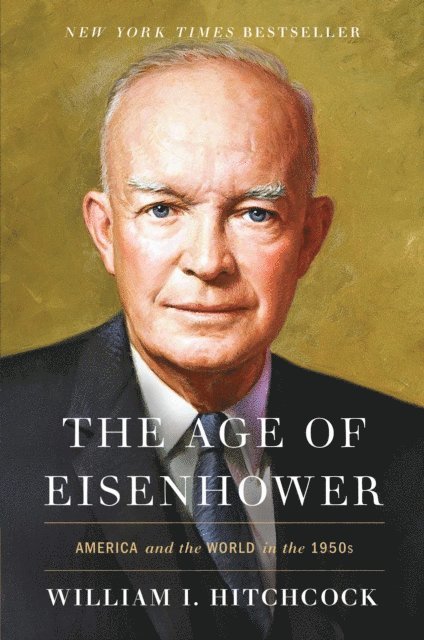
Age of Eisenhower
America and the World in the 1950s
E-bok, 2018
226 kr
Lägg i varukorg
A New York Times bestseller, this is the “outstanding” ( The Atlantic ), insightful, and authoritative account of Dwight Eisenhower’s presidency. Drawing on newly declassified documents and thousands of pages of unpublished material, The Age of Eisenhower tells the story of a masterful president …
Shadow Over the World
Franklin D. Roosevelt, the Rise of Fascism, and the Making of America's World War II
Inbunden, 2026
403 kr
Lägg i varukorg
From New York Times bestselling author William I. Hitchcock, a riveting, revelatory portrait of Franklin Delano Roosevelt in the lead-up to World War II, tracing his—and America’s—awakening to the threat of fascism.How did FDR and the American public respond to the rise of dictators across Europe …
Shadow Over the World
Franklin D. Roosevelt, the Rise of Fascism, and the Making of America's World War II
E-bok, 2026
222 kr
Lägg i varukorg
From New York Times bestselling author William I. Hitchcock, a riveting, revelatory portrait of Franklin Delano Roosevelt in the lead-up to World War II, tracing hisand America'sawakening to the threat of fascism.How did FDR and the American public respond to the rise of dictators across Europe and …
France Restored
Cold War Diplomacy and the Quest for Leadership in Europe, 1944-1954
E-bok, 2000
410 kr
Lägg i varukorg
Historians of the Cold War, argues William Hitchcock, have too often overlooked the part that European nations played in shaping the post–World War II international system. In particular, France, a country beset by economic difficulties and political instability in the aftermath of the war, has …