William Levine – författare
Visar alla böcker från författaren William Levine. Handla med fri frakt och snabb leverans.
4 produkter
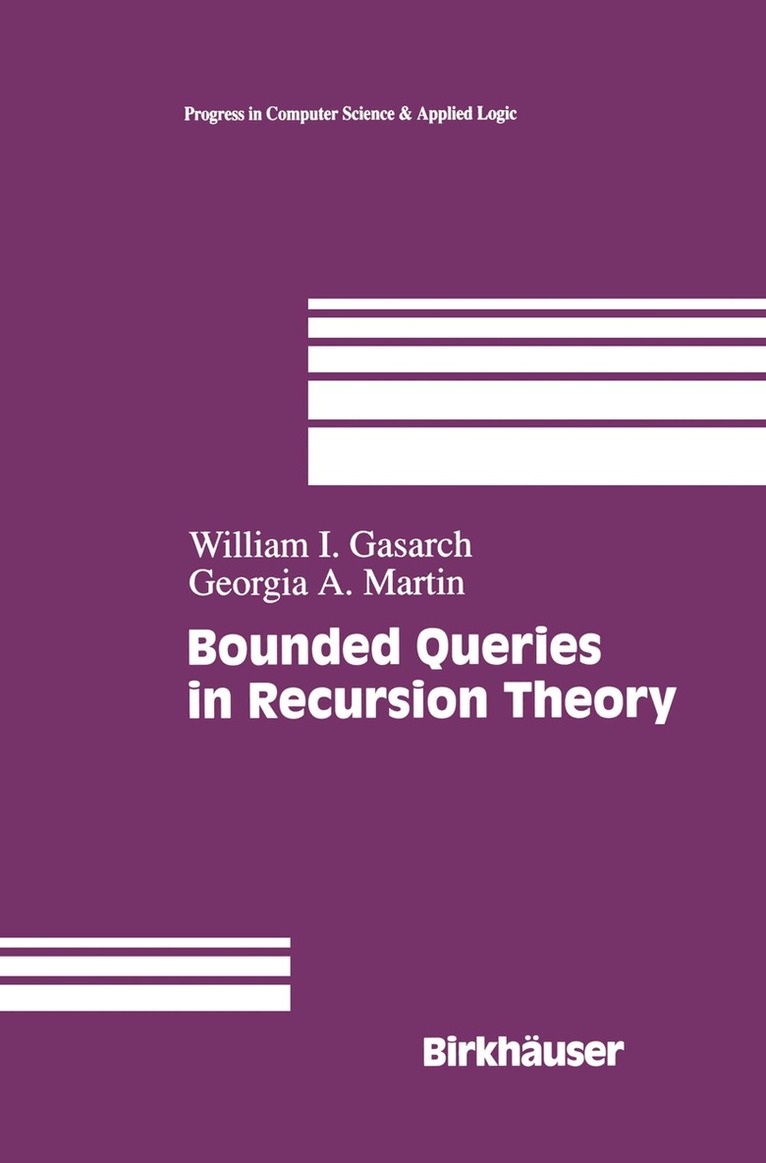
Bounded Queries in Recursion Theory
Av William Levine, Georgia Martin
Inbunden, 1998
1094 kr
Lägg i varukorg
One of the major concerns of theoretical computer science is the classifi cation of problems in terms of how hard they are. The natural measure of difficulty of a function is the amount of time needed to compute it (as a function of the length of the input). Other resources, such as space, have …
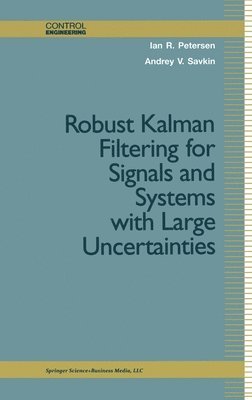
Robust Kalman Filtering for Signals and Systems with Large Uncertainties
Av Ian Petersen, Andrey Savkin m. fl.
Inbunden, 1999
933 kr
Lägg i varukorg
1 Introduction.- 2 Continuous-Time Quadratic Guaranteed Cost Filtering.- 3 Discrete-Time Quadratic Guaranteed Cost Filtering.- 4 Continuous-Time Set-Valued State Estimation and Model Validation.- 5 Discrete-Time Set-Valued State Estimation.- 6 Robust State Estimation with Discrete and Continuous …
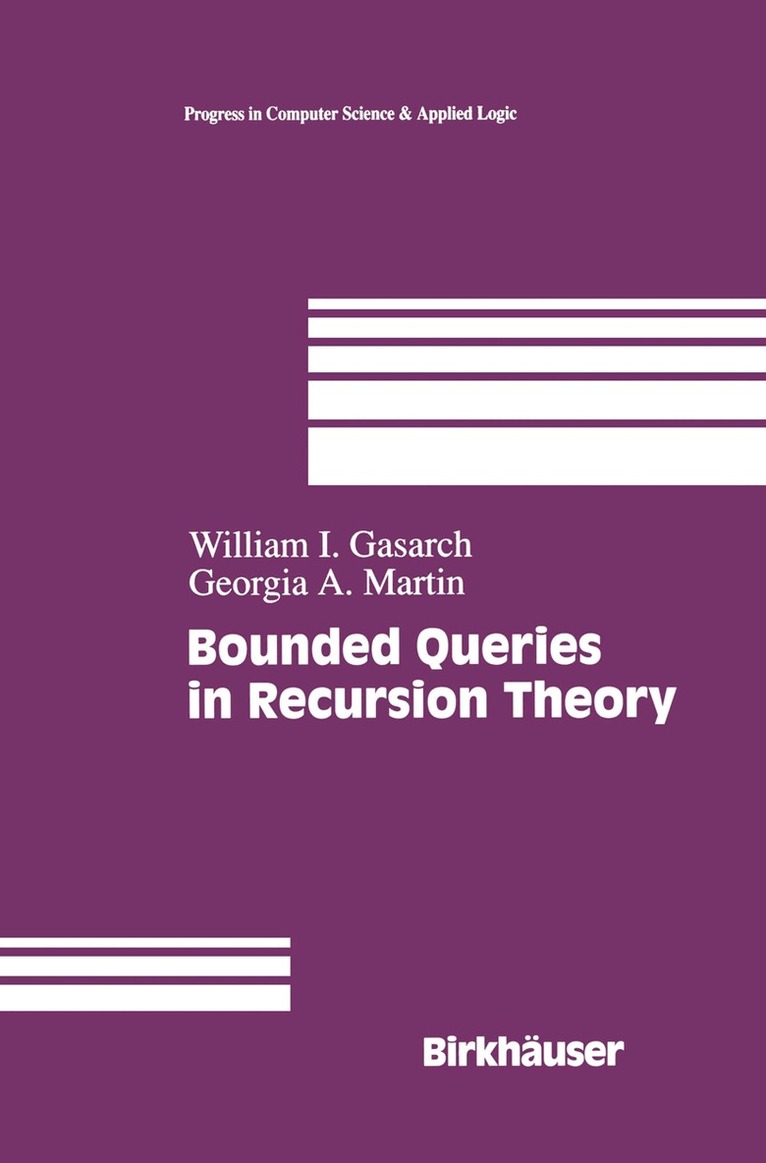
Bounded Queries in Recursion Theory
Av Georgia Martin, William Levine
E-bok, 2012
1459 kr
Lägg i varukorg
One of the major concerns of theoretical computer science is the classifi cation of problems in terms of how hard they are. The natural measure of difficulty of a function is the amount of time needed to compute it (as a function of the length of the input). Other resources, such as space, have …
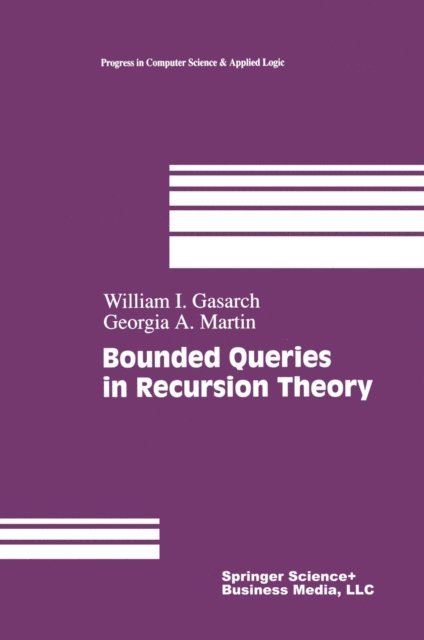
Bounded Queries in Recursion Theory
Av William Levine, Georgia Martin
Häftad, 2013
1096 kr
Lägg i varukorg
One of the major concerns of theoretical computer science is the classifi cation of problems in terms of how hard they are. The natural measure of difficulty of a function is the amount of time needed to compute it (as a function of the length of the input). Other resources, such as space, have …