William M. Kelso - Böcker
Visar alla böcker från författaren William M. Kelso. Handla med fri frakt och snabb leverans.
6 produkter
6 produkter
372 kr
Skickas inom 7-10 vardagar
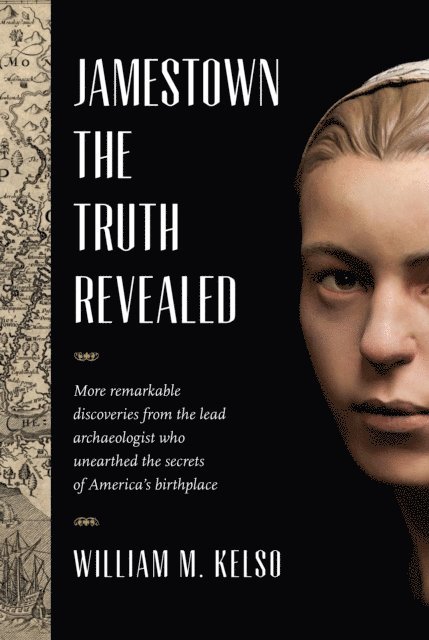
What was life really like for the band of adventurers who first set foot on the banks of the James River in 1607? Important as the accomplishments of these men and women were, the written records pertaining to them are scarce, ambiguous, and often conflicting. In Jamestown, the Truth Revealed, William Kelso takes us literally to the soil where the Jamestown colony began, unearthing footprints of a series of structures, beginning with the James Fort, to reveal fascinating evidence of the lives and deaths of the first settlers, of their endeavors and struggles, and new insight into their relationships with the Virginia Indians. He offers up a lively but fact-based account, framed around a narrative of the archaeological team's exciting discoveries.Unpersuaded by the common assumption that James Fort had long ago been washed away by the James River, William Kelso and his collaborators estimated the likely site for the fort and began to unearth its extensive remains, including palisade walls, bulwarks, interior buildings, a well, a warehouse, and several pits. By Jamestown's quadricentennial over 2 million objects were cataloged, more than half dating to the time of Queen Elizabeth and King James.Kelso's work has continued with recent excavations of numerous additional buildings, including the settlement's first church, which served as the burial place of four Jamestown leaders, the governor's rowhouse during the term of Samuel Argall, and substantial dump sites, which are troves for archaeologists. He also recounts how researchers confirmed the practice of survival cannibalism in the colony following the recovery from an abandoned cellar bakery of the cleaver-scarred remains of a young English girl. CT scanning and computer graphics have even allowed researchers to put a face on this victim of the brutal winter of 1609–10, a period that has come to be known as the ""starving time.""Refuting the now decades-old stereotype that attributed the high mortality rate of the Jamestown settlers to their laziness and ineptitude, Jamestown, the Truth Revealed produces a vivid picture of the settlement that is far more complex, incorporating the most recent archaeology and using twenty-first-century technology to give Jamestown its rightful place in history, thereby contributing to a broader understanding of the transatlantic world.
Captain Jones's Wormslow
A Historical, Archaeological, and Architectural Study of an Eighteenth-Century Plantation Site near Savannah, Georgia
Häftad, Engelska, 2008
422 kr
Skickas inom 5-8 vardagar
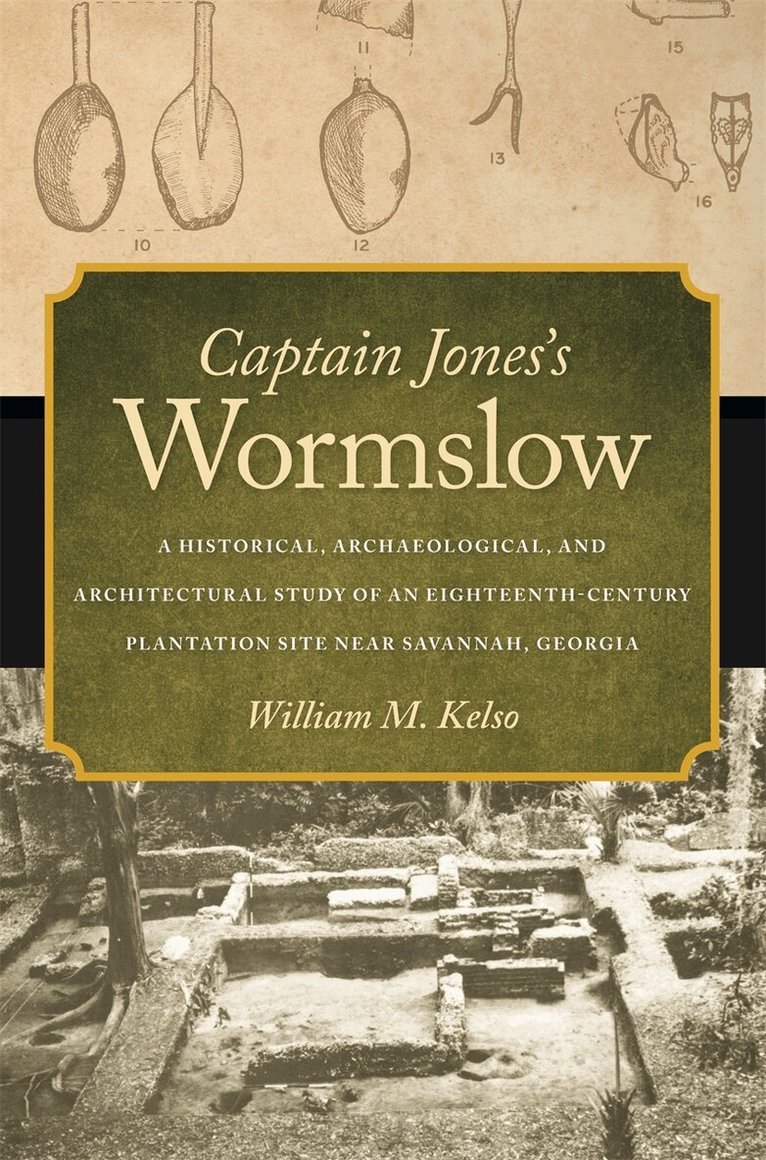
During the fall of 1968 and the summer of 1969, William Kelso conducted archaeological excavations at the site of eighteenth-century ruins at Wormslow, near Savannah, Georgia. Historical records indicated that the ruins were the remains of Fort Wimberly, most likely constructed by Noble Jones, an original settler of Georgia. Records further suggested that Fort Wimberly had been constructed on the site of Jones's earlier fortification, a timber guardhouse known as Jones's Fort, built in 1739 and 1740.The existence of these two structures, built at different times on the same location, made possible an archaeological study of two periods of Georgia coastal fortifications. The earlier was built as a major link in General James Oglethorpe's chain of defenses against the Spanish threat from Florida in the 1740s and the later presumably was built to repel the French. The project also presented another important opportunity—the chance to define what effect the semitropical, hostile border environment of colonial Georgia had on the plantation development scheme of at least one English settler.Mr. Kelso's report of his excavations begins with a documentary history of Wormslow, followed by a presentation of the archaeological evidence that correlates it with the historical documents. Ultimately he reconstructs the site based on the historical and archaeological evidence, an architectural study of the ruins, and information about early Georgia architecture in general and other eighteenth-century buildings in particular. The report concludes with a detailed study of the artifacts with illustrations, descriptions, and identifications of the important pieces.
Captain Jones's Wormslow
A Historical, Archaeological, and Architectural Study of an Eighteenth-Century Plantation Site near Savannah, Georgia
Inbunden, Engelska, 2017
1 315 kr
Skickas inom 5-8 vardagar
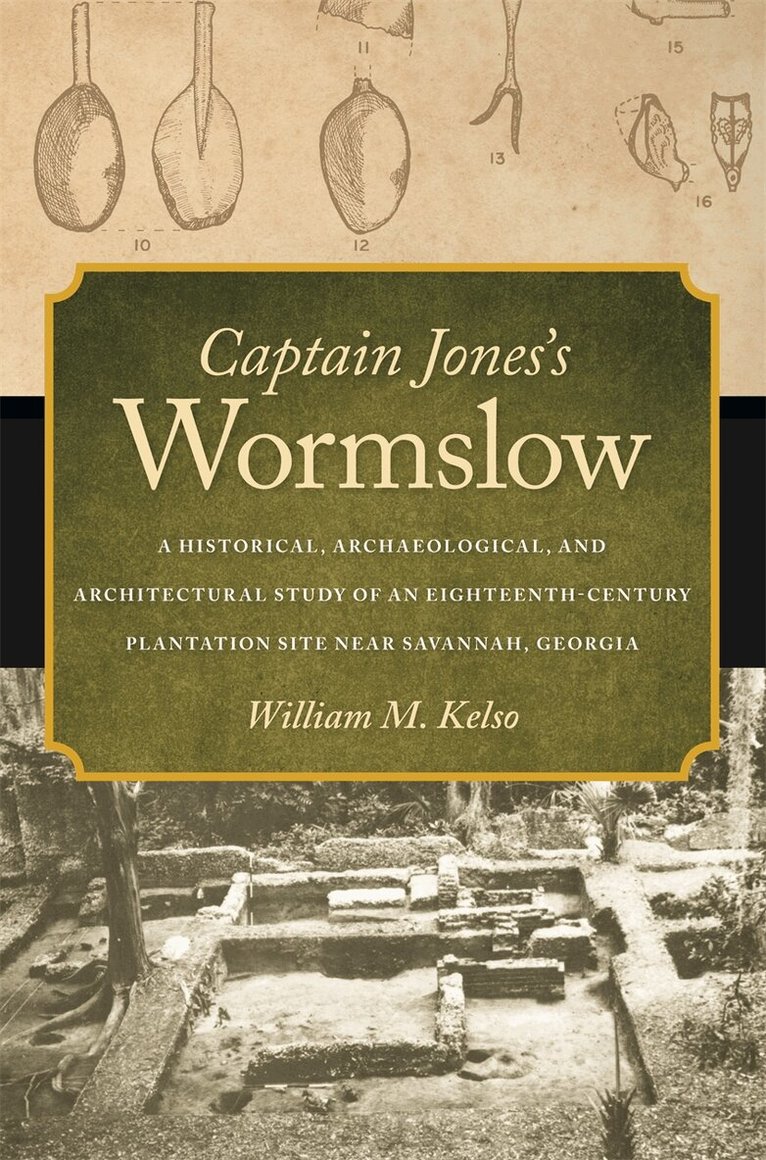
During the fall of 1968 and the summer of 1969, William Kelso conducted archaeological excavations at the site of eighteenth-century ruins at Wormslow, near Savannah, Georgia. Historical records indicated that the ruins were the remains of Fort Wimberly, most likely constructed by Noble Jones, an original settler of Georgia. Records further suggested that Fort Wimberly had been constructed on the site of Jones's earlier fortification, a timber guardhouse known as Jones's Fort, built in 1739 and 1740.The existence of these two structures, built at different times on the same location, made possible an archaeological study of two periods of Georgia coastal fortifications. The earlier was built as a major link in General James Oglethorpe's chain of defenses against the Spanish threat from Florida in the 1740s and the later presumably was built to repel the French. The project also presented another important opportunity—the chance to define what effect the semitropical, hostile border environment of colonial Georgia had on the plantation development scheme of at least one English settler.Mr. Kelso's report of his excavations begins with a documentary history of Wormslow, followed by a presentation of the archaeological evidence that correlates it with the historical documents. Ultimately he reconstructs the site based on the historical and archaeological evidence, an architectural study of the ruins, and information about early Georgia architecture in general and other eighteenth-century buildings in particular. The report concludes with a detailed study of the artifacts with illustrations, descriptions, and identifications of the important pieces.
592 kr
Skickas inom 10-15 vardagar
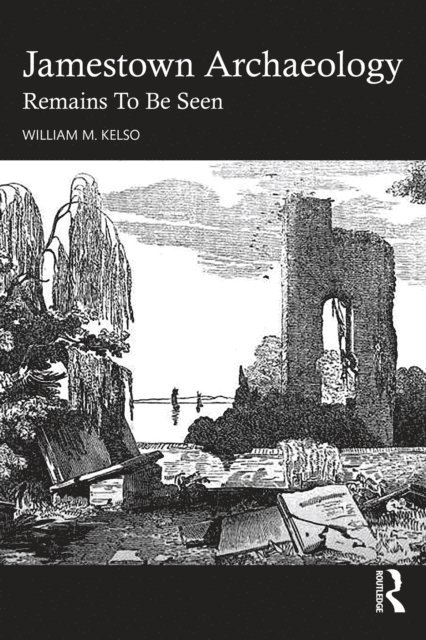
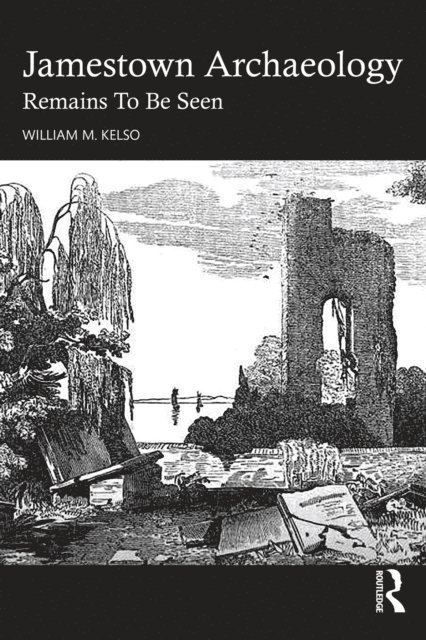
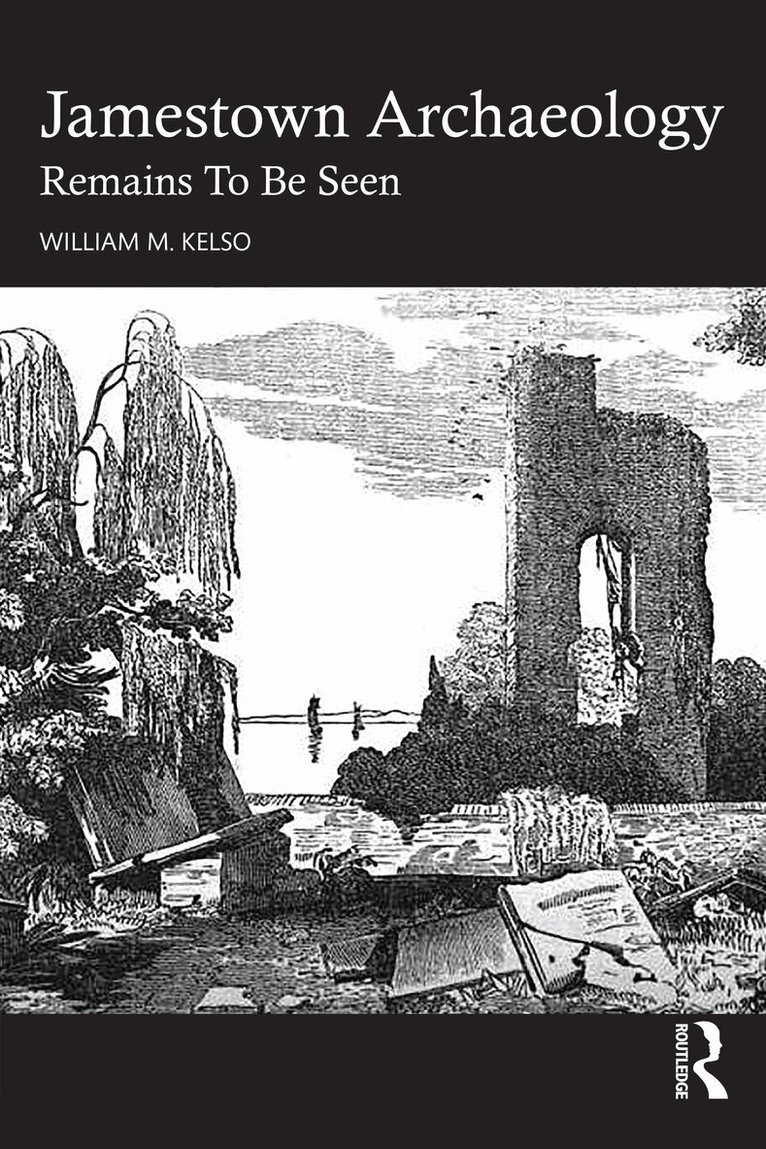
This book showcases the latest information and newly discovered seventeenth-century artifacts from Jamestown, Virginia, the first permanent English settlement in America.Jamestown Archaeology: Remains to be Seen uses archaeological discoveries to greatly augment what we know about the settlement from written records. It discusses how the archaeological revelations recreate the backdrop where, amid Jamestown's growing fortifications, its houses, government buildings, churches, graves and village streets, the rule of law, representative democratic government, and venture capitalism took root in America. The volume examines the archaeological discoveries that date from the time of the first fortifications (James Fort 1607–1624) to the middle of the eighteenth century. It includes a chapter devoted specifically to how the fort was built, then redesigned and enlarged. It also addresses the archaeological examination of sites and artifacts relating to the Virginia Indians including a discussion of Pocahontas and the location of her lost grave in England. The 1676 "Bacon's" Rebellion is explored along with various episodes of destruction and the building of the first Virginia Capitol building, the Ludwell Statehouse Complex. The last chapter presents a comparative review of Jamestown Island maps drawn every century since the town was founded showing photographically and cartographically how much of the Island and its archaeological sites have been lost to erosion and rising water for 400 years, ending with thoughts about the need for rescuing sites today in the face of climate change, sea level rise, and more Island land erosion.This book is for historical archaeologists and historians as well as readers with an interest in the beginnings of America.
2 167 kr
Skickas inom 10-15 vardagar
This book showcases the latest information and newly discovered seventeenth-century artifacts from Jamestown, Virginia, the first permanent English settlement in America.Jamestown Archaeology: Remains to be Seen uses archaeological discoveries to greatly augment what we know about the settlement from written records. It discusses how the archaeological revelations recreate the backdrop where, amid Jamestown's growing fortifications, its houses, government buildings, churches, graves and village streets, the rule of law, representative democratic government, and venture capitalism took root in America. The volume examines the archaeological discoveries that date from the time of the first fortifications (James Fort 1607–1624) to the middle of the eighteenth century. It includes a chapter devoted specifically to how the fort was built, then redesigned and enlarged. It also addresses the archaeological examination of sites and artifacts relating to the Virginia Indians including a discussion of Pocahontas and the location of her lost grave in England. The 1676 "Bacon's" Rebellion is explored along with various episodes of destruction and the building of the first Virginia Capitol building, the Ludwell Statehouse Complex. The last chapter presents a comparative review of Jamestown Island maps drawn every century since the town was founded showing photographically and cartographically how much of the Island and its archaeological sites have been lost to erosion and rising water for 400 years, ending with thoughts about the need for rescuing sites today in the face of climate change, sea level rise, and more Island land erosion.This book is for historical archaeologists and historians as well as readers with an interest in the beginnings of America.
Archaeology of Early European Colonial Settlement In the Emerging Atlantic World
Häftad, Engelska, 2009
462 kr
Skickas inom 5-8 vardagar