William Noble - Böcker
Visar alla böcker från författaren William Noble. Handla med fri frakt och snabb leverans.
5 produkter
5 produkter
441 kr
Skickas inom 7-10 vardagar
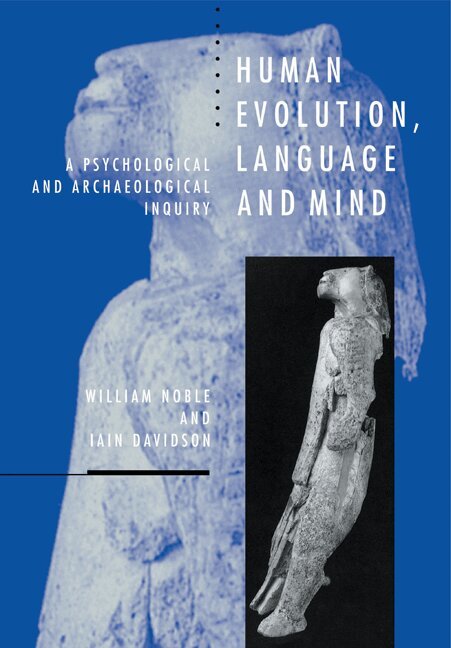
The question of how modern human behaviour emerged from pre-human hominid behaviour is central to discussions of human evolution. This important book argues that the capacity to use signs in a symbolic way, identified by the authors as language, is the basis for behaviour that can be described as human. The book is the product of a unique collaboration between the key disciplines in the debate about human evolution and mentality - psychology and archaeology. It investigates the significance and nature of the emergence of linguistic behaviour. The text critically examines the archaeological record of hominid evolution and argues that linguistic behaviour emerged no earlier than 100,000 years ago. The book's interdisciplinary approach allows critical attention to be given to an impressively broad range of relevant literature. For the first time, all the known pieces of this evolutionary puzzle are examined in detail.
222 kr
Skickas inom 3-6 vardagar
509 kr
Skickas inom 3-6 vardagar
334 kr
Skickas inom 3-6 vardagar
1 382 kr
Skickas inom 5-8 vardagar
Revised edition of: Self-assessment of hearing and related functions / William Noble. 1998. Self-Assessment of Hearing, Second Edition is about self-assessment of hearing loss and related dysfunctions in the various circumstances of clinical and research activity addressed to this aspect of human functioning. The author aims to display the place of self-assessment in the patchwork of audiological appraisal, argue certain positions with respect to the status and significance of self-assessment in research and clinical investigation, and challenge received positions on conceptual and nomenclatural matters. In the opening chapter, the author discusses matters of theoretical debate relevant to the self-assessment approach overall, as well as to technical points from the world of psychometrics, then considers the motive for using self-assessment - in effect, expanding on the above claim about measurement of disability. Chapter 2 focuses on the current WHO scheme and the one it superseded. The related discussion then follows about identifying communication disability, and the limits of normal hearing function.Chapter 3 records the known principal self-assessment measures concerning hearing loss that have emerged to date, plus subsequent published work developing or applying one or more of these scales.Chapter 4 solely focuses on an analysis of one measure, the Speech, Spatial and Qualities of Hearing scale. Chapter 6 covers studies in adults that have included self-assessment measures applied in the case of cochlear implants and in the case of middle-ear implants. In Chapter 7 the author reviews work that has involved one or another self-assessment approach to tinnitus in the context of research inquiry and/or clinical management. The final chapter addresses other areas of audiological and related practice and research where self-assessment has emerged.